Showing posts with label Human Experimentation. Show all posts

Thursday, January 01, 2015

‘Unbroken’ tells half of Japan’s war story

See HERE for more picture of Omori POW Camp,
One of Camps where Zamperini was held
“Unbroken” describes not just Louis Zamperini’s spirit, but the resilience of Japan’s rightists.

By James Gibney, Editorial Writer on international affairs for Bloomberg View and APP Member.

First Published by Bloomberg News, December 31, 2014


In the just-released film “Unbroken,” as in real life, U.S. Army Air Corps Lt. Louis Zamperini was beaten, starved and forced to work as a slave laborer by his Japanese captors.

Things could have been worse. Like some other war prisoners held by the Japanese, Zamperini could have been used in biological warfare experiments. Or vivisected. Or beheaded, with parts of his body then eaten by his captors. As the historian Daqing Yang notes, 9 out of 10 U.S. POWs who died in captivity in World War II did so at the hands of the Japanese.

In Japan, where “Unbroken” does not yet — and may never — have a release date, right-wing nationalists have protested the film as racist and inaccurate. “It’s pure fabrication,” asserted a representative of one such pressure group, the Society for the Dissemination of Historical Fact. Online petitions have described director Angelina Jolie as a “demon” and called for her to be banned from Japan.

Unfortunately, the attacks on Jolie’s film, which is really much less about Japanese brutality than the resilience of the human spirit, are part of a revisionist recrudescence under the administration of Prime Minister Shinzo Abe. Several of his Cabinet members and appointees have pushed to whitewash or deny the Japanese military’s forced wartime recruitment of women as prostitutes, the 1937 Nanjing Massacre of Chinese civilians by Japanese troops and other wartime atrocities, targeting journalists and scholars who dare to disagree.

Such behavior has roiled Japan’s relations with China and South Korea and undermined its alliance with the United States. And it has cast an ugly shadow over the impending 70th anniversary of World War II’s end. Yet that occasion also offers an opportunity for both Japan and the U.S. to relearn lessons about the uses and abuses of history, beginning with the folly of trying to cover it up.

In the two weeks following the end of hostilities on Aug. 15, 1945, and the arrival of the first U.S. troops on Aug. 28, Japan’s military engaged in a wholesale destruction of its files. Some Japanese historians estimate, for instance, that as much as 70 percent of the army’s wartime records were lost. Although the Americans, British, Chinese, Dutch, Filipinos and Russians each held separate war-crimes trials of Japanese defendants, their documentation has never been gathered in one place, making it harder to access. Meanwhile, Japanese rightists have sought to discredit the remembered accounts of Korean “comfort women” as anecdotal or concocted memory. They have also exploited inaccuracies in sensationalist best-sellers such as Iris Chang’s “The Rape of Nanking” to try to discredit larger truths.

Yet not only have many Japanese contributed unflinching histories of Japan’s wartime behavior — many available in English — but voluminous, and damning, official records exist that have yet to be fully exploited. In 2006, the U.S. government’s National Archives and Records Administration published “Researching Japanese War Crimes,” a guide to U.S. intelligence reports, captured Japanese documents and contemporary news accounts contained in various U.S. public archives.

It’s not the kind of stuff you want to read on a full stomach: In the National Archives, for instance, you can find the transcript of the trial of Japanese officers who ordered the execution, and then the cooking, of four U.S. Navy airmen downed in raids on Chichi-Jima — a fate that Lt. George H.W. Bush, who was also shot down on the raid, barely avoided.

To their credit, many Japanese scholars have drawn on such materials in their own work: U.S. documents on Japan’s biological warfare experiments on Chinese prisoners, for instance, helped to blunt the 1980s attempt by Japan’s Ministry of Education to censor references to such crimes in history textbooks.

Any forthright exploration of Japan’s wartime cruelties, of course, must be matched by an acknowledgment of the battlefield savagery of U.S. troops in the Pacific, where some members of the Greatest Generation pried gold teeth out of the mouths of still-living Japanese soldiers, strafed airmen in their parachutes, shot surrendering soldiers and sent Japanese skulls home to their sweethearts as table ornaments. Compared with the European theater, it was not exactly the Good War: “Subhuman, inhuman, lesser human, superhuman — all that was lacking in the perception of the Japanese enemy was a human like oneself,” observed the historian John Dower.

Moreover, U.S. archives lay bare another troubling aspect of U.S. wartime history: the willingness to collaborate with Japanese war criminals in the name of larger strategic interests. As Michael Petersen documents, Gen. Charles Willoughby, a die-hard anticommunist who was Douglas MacArthur’s intelligence chief, oversaw a (remarkably feckless) postwar spy network that included Masanobu Tsuji, the Imperial Army officer who helped organize the Bataan Death March that killed so many of the U.S. soldiers that MacArthur abandoned in the Philippines.

Still missing are documents showing what happened to data from the human experiments by Unit 731, the notorious Japanese chemical and biological warfare outfit headed by Gen. Shiro Ishii, who was never prosecuted by the Allies. The records also shine a light on the expedient clemency policies toward suspected war criminals such as Nobusuke Kishi, a postwar prime minister who also happens to be Abe’s grandfather.

That raises a final historical irony worth pondering over the coming anniversary year: the U.S. responsibility for shielding the progenitors of Japan’s latter-day revisionists from accountability and prosecution. Even as late as the 1990s, the U.S. State Department was arguing against releasing information on early Cold War payments by the CIA to right-wing politicians from Japan’s ruling Liberal Democratic Party. Such behavior helps explain why “Unbroken” describes not just Louis Zamperini’s spirit, but the resilience of Japan’s rightists.

Sunday, July 21, 2013

Guam's Liberation Day


July 21 is Guam's liberation day.

Marine Landing first hour
In 1944, after hours of Naval bombardment, American Marines and Infantry soldiers stormed the beaches. Marine Major General Roy S. Geiger, commanding general of III Amphibious Corps urged them forward saying "You have been honored. The eyes of the nation watch you as you go into battle to liberate this former American bastion from the enemy. The honor which has been bestowed on you is a signal one. May the glorious traditions of the Marine Corps' esprit de corps spur you to victory. You have been honored."

The Battle for Guam, lasting 21 days, was as nasty and brutal as any had been in the Pacific. The Imperial Japanese forces put up a tenacious resistance exacting heavy casualties. Japanese stragglers fought for months after the defeat and the last one was not found until 1972.

Soon, from airfields on Guam, as well as those on Tinian, B-29s were bombing the Japanese home islands. Hard fighting was yet to be experienced by Marine divisions on Peleliu, Iwo Jima, and Okinawa. But whether they knew it or not, the end of the war was less than a year away.

The War in the Pacific National Historical Park is a memorial to the citizens and liberators of Guam. It was established in 1978 to commemorate the bravery and sacrifice of those participating in the campaigns of the Pacific Theater of World War II and to conserve and interpret outstanding natural, scenic, and historic values and objects of the island of Guam. The National Park Service's website on Guam is an excellent historical resource including first person accounts and photos.

Part of Japan's terrible cost on Guam were 10,971 battlefield casualties, and more than 8,500 Japanese were killed or captured on Guam between August 1944 and the end of war in August 1945. In the 21 days of the Guam campaign ending 10 August, American Marine units of the III Amphibious Corps reported 1,190 men killed in action, 377 dead of wounds, and 5,308 wounded. The 77th Division's casualties were 177 soldiers killed and 662 wounded.

According to Captured: The Forgotten Men of Guam, an account of the POWs from Guam, there were 414 civilian and military, men and women POWs (five Navy nurses and a civilian wife and infant). Somehow, despite desperate conditions and dismal leadership only three percent perished. They were all taken to Japan aboard the Argentina Maru in January 1942 and first held at the Zentsuji POW Camp on Shikoku. There they did agricultural and stevedore labor. Some reportedly were used for human experimentation.

Today, of the more than 22,000 people who lived in Guam through World War II, less than 1,000 are still alive to share their memories. One constant, is the respect the people of Guam hold for their liberators, the US Marine Corps. The above video is from this past weekend's memorial ceremony.

Wednesday, October 17, 2012

Ten Days in October

FM Gemba with American former POWs of Japan
For the third time in as many years, seven nonagenarian veterans of World War II become "guests of Emperor." These men were tortured, starved, beaten, and forced to work in dangerous conditions by Imperial Japan as prisoners of war. Unlike their first trip to Japan, which was by Hell Ship or parachute, they traveled by a first class ticket on a Japanese airline.

For the third time, Japan's Foreign Minister faced the American POWs and apologized for his government for their suffering under Imperial Japan (photo above). The men and their caregivers are touring Japan and visiting the sites of their incarceration and slave labor. They slaved for well-know Japanese firms such as Hitachi, Mitsubishi, Nippon Express, Rinko, and Ube Industries.

Initiated in 2010, the visitation program for American former POWs of Japan is a model for Japanese government war apologies. There is a formal presentation of an apology and a concerted act of contrition. It is unfortunate, however, that the Japanese Government does not publicize this successful program and has not pushed the Japanese companies that were complicit in the torture and abuse of the POWs to also acknowledge and apologize. Indeed, the companies have been largely silent and some have refused to allow these elderly men to revisit the sites of their first stay in Japan.

Here are brief biographies of the men in Japan from October 12 to 21.

>Randall S. Edwards, 95, lives in Lakeland, Florida. Born in Wyoming, he grew up in Nebraska and enlisted in the U.S. Navy in 1935 after high school to see the world. He was sent to the Philippines in 1940 and assigned as a Radioman 1ST Class to the submarine tender, the USS Canopus, which had been ordered to stay in Manila Bay after the bombing of Pearl Harbor in December 1941. Bombed and strafed continually, the ship was finally scuttled in Mariveles Bay on April 8, 1942 with the crew escaping to the fortress island of Corregidor in the mouth of Manila Bay. On Corregidor, the crew served in beach defense with the Fourth Marines. He was a POW at Cabanatuan 3 and shipped to Mukden, China (today’s Shenyang) in October 1942 on Mitsubishi’s Hellship Tottori Maru via Formosa and Korea to Manchukuo (Manchuria). Edwards was a slave laborer at MKK (Manshu Kosaku Kikai, which some researchers believe was owned by Mitsubishi and known as Manchuria Mitsubishi Machine Tool Company, Ltd.). He worked on multiple machines from grinders to lathes, carefully sabotaging each task. Toward the end, he was made to haul pig iron to the company’s foundry. He believes that the multiple shots and blood tests that he received while at Mukden were part of human medical experiments conducted by the Imperial Army’s 731st Biological Warfare Unit. After the war, Edwards remained in the Navy where he received over 40 medals during his service and retired in 1955 as a Warrant Officer. From 1948-1950, he was with U.S. Occupation Forces in Yokosuka, Japan in charge of the Base’s radio station. He found there that the Japanese were “not all demons.” After the Navy, he received his BS in Electrical Engineering from the University of Florida, Gainesville and went to work as a research engineer on fusion energy at the Oak Ridge National Laboratory in Oak Ridge, Tennessee. After retiring in 1982, he became a National Service officer for American Defenders of Bataan and Corregidor and American Ex-Prisoners of War to help his fellow veterans with their VA claims. He enjoys golf and international travel with his wife Rose Mary.
POW# 104
Member of: DAV, American Defenders of Bataan & Corregidor, American Ex-Prisoners of War

>Robert W. Ehrhart, 89, lives in Carmichael, California. He grew up in Oakland, California and enlisted in the Marine Corps Reserve during high school. His unit was activated November 6, 1940 and sent to the Philippines in April 1941 to join the Marine Detachment at Cavite.  On May 1, the 1st Separate Marine Battalion, unique in that it trained to function either as infantry or antiaircraft artillery, was activated. Relocated fall 1941 to the Olongapo Navy Yard near Subic Bay, the unit was moved during December 1941 to Corregidor Island. On January 1, 1942 they were redesignated the Third Battalion, Fourth Marines and joined the Battle of Corregidor through surrender on May 6, 1942. Ehrhart was sent to the Cabanatuan POW Camp where he was on a burial detail, burying as many as forty men a day. He remembers that the “bodies were like skeletons and when you lifted them onto the window shutters, which were used for litters, their skin would peel back and stick to your hands.” To bolster his morale and that of his fellow POWs, he started to draw cartoons, risking severe punishment if discovered. He had a pencil, but paper was almost impossible to obtain. He bartered for whatever writing material anyone had with the rare Carnation Milk can label his greatest canvas. In September 1943, Ehrhart was transferred to Japan aboard the Hellship Taga Maru (aka Coral Maru). He was sent to Osaka 4-D Sakurajima were he was a slave laborer at Hitachi Zosen’s Sakurajima Shipyard (today’s Universal Shipping Corporation). He worked as a riveter helping build military ships and oil tankers. Today, the site of this POW camp is the Universal Studios Japan theme park. After the camp was bombed in May 1945, he was sent to Osaka 6-B, Akenobe, POW Camp where he was a slave laborer working as a stope driller in a copper mine for Mitsubishi Mining (today’s Mitsubishi Materials Corporation). When the POWs realized that the war had ended, they pieced together an American flag to fly on the camp flagpole, which they believe was the first postwar U.S. symbol in Japan. After recuperating in military hospitals from vitamin deficiency, malnutrition, and various tropic diseases, he was discharged April 29 1946. He then studied Mechanical Engineering at the University of California, Berkeley. After graduation, he worked for the Navy and eventually joined the State of California’s Department of Water Resources as a hydroelectric engineer. Since retiring in 1983, he has pursued his passions of travel and fine photography. The Veteran’s History Project of the U.S. Library of Congress holds a recording of his oral history.
POW# 221
Member of DAV, VFW, American Defenders of Bataan & Corregidor, American Ex-Prisoners of War

>David G. Farquhar, Jr., 90, resides among orange groves in Redlands, California where he has lived all his life. He joined the U.S. Army Air Force in 1942. He trained in Nebraska and was assigned as a Technical Sergeant to General Curtis LeMay’s 20th Air Force, 24th Squadron, 313th Bomb Wing, 6th bomb group, Crew #2404. He was sent with the 6th Bomb Group to Tinian in the Northern Marianas in January 1945. Farquhar participated in 18 missions over the Pacific and Mainland Japan. On May 23, 1945, he was a turret gunner when his B-29 was shot down over Tokyo by flak and fighter planes. He and his 11 crewmates all bailed out safely and were captured. They were taken to the infamous horse stalls outside of the Kempeitai (military police of the Imperial Army) Headquarters in Tokyo near the Emperor’s palace. They were not considered POWs but “special prisoners” who were war criminals. Beaten, starved, and tortured, they were denied clothes, basic hygiene, and medical treatment. On August 15th, the day Japan surrendered, he was transferred to a cell at Tokyo Base Camp #1 Omori where he was liberated August 28, 1945. Omori was the first POW camp liberated. After a series of hospital stays he was discharged in 1946 and returned to San Diego State College (today’s San Diego State University) for a BA in Engineering. He then obtained an MA in Education from the University of Redlands. From 1950 to 1993, Farquhar taught both junior high and high school mathematics and science. He has been married to Jacqueline for nearly 66 years. He currently tends his orange grove, serves on various boards, and participates in community activities.
POW# Not known to “special prisoners” 
Member of American Ex-Prisoners of War 

>Douglas Northam, 93, lives in Reno, Nevada. Born in Morris County, Texas, he grew up in nearby Naples, Texas. After graduating from high school in 1937, he enlisted in the Civilian Conservation Corps and in 1940 in the U.S. Navy. He was transferred to China in February of 1941 and assigned to the USS Oahu (PR-6), a Yangtze River Patrol boat ported in Shanghai. The USS Oahu, never designed for open sea operations, was sent to Manila Bay in November 1941, arriving two days before the Japanese attack on Pearl Harbor. The gunboat operated in and around Manila Bay and Cavite Navy Yard on inshore patrol and in support of U.S.-Filipino forces on Bataan until after its fall April 8, 1942 and then continued to operate about the island fortress of Corregidor until sunk by enemy gunfire May 5th. Northam was then assigned to an artillery group on Corregidor, which was surrendered on May 7th when Corregidor fell. As a POW of Japan he was sent to Bilibid POW Camp in Manila and then moved to Cabanatuan 1 and 2. In November 1942, he was sent to Japan aboard Mitsubishi’s Hellship the Nagato Maru. He worked for Nippon Express as a slave stevedore in the freight yards in and around the city of Osaka at Umeda Bunsho Camp in Osaka (Osaka 2-D UMEDA). In March 1945, after his POW camp was firebombed, he was transferred to Osaka POW Camp 5-B TSURUGA were he was a slave stevedore again for Nippon Express and Tsuruga Transportation Company. After the war, Northam utilized the GI Bill to study geology at the University of California, Berkley. He joined Shell Oil Company in 1951 as a laboratory technician and retired 1977 as research technician. He has been married to Hazel for 64 years. In retirement he was a volunteer at a local elementary school and the VA Hospital. His hobbies include gardening, horse racing, and cooking.
POW# 117
Member of DAV, American Defenders of Bataan & Corregidor, American Ex-Prisoners of War, AMVETS 

>John Leroy Mims, 90, lives in Aberdeen, North Carolina. Born in Ashburn, Georgia, he grew up in Florida and enlisted in the Army at age 16 in 1938, but was discharged a year later after it was discovered that he was underage. Still hungry and jobless, he re-enlisted February 15, 1941 and was assigned to Company B, 1st Battalion of the famous 31st Infantry Regiment sometimes referred to as the “American Foreign Legion.” In April 1941, he was sent to the Philippines aboard the USAT Republic and stationed at Cuartel de España in Manila. He fought in the Battle for Bataan and as a POW forced on the Bataan Death March. During the war, his Filipino fiancée Juanita worked as a secretary for a Japanese general and bravely aided the resistance by sending shortwave radio messages to Allied forces in the Pacific. As a POW, the Japanese repeatedly beat and tortured Mims . Although they were able to break his body, they could never come close to breaking his spirit. During his captivity, the Japanese broke his back, neck and both of his legs and shattered many of the bones in his face. The beatings briefly left him a paraplegic on two separate occasions and he retains a limp. Mims lost over 120 pounds as a POW dropping from 190 pounds to 67 pounds. Of the 1,600 soldiers in the 31st Infantry Regiment who surrendered, less than half survived Japanese captivity. In September 1944, he was sent to Japan on board Mitsubishi’s Nippon Yusen Kaisha (NYK) Hellship Sekiho Maru (Canadian Inventor [the Mati Mati Maru or slow slow ship]). Mims became a slave laborer mining coal for Ube Kosan’s Sanyo Muen Kogyo Sho (Ube Industries’ Sanyo Smokeless Coal Work, which is still known today as Ube Industries Ltd.) at Hiroshima #6B - Omine (Sanyo) POW Camp in Omine-machi, Yamaguchi Prefecture. After the war, Mims remained in the Army for the next 27 years, attaining the rank of Sergeant First Class. He returned to Japan from 1952-54 to be in charge of the Tokyo Quartermaster Depot. He retired in 1963 and involved himself in real estate, construction, and mining. He and Juanita were married 59 years until her death in 2004. They are parents of three biological and 22 adopted children. He remarried in 2009 to another beautiful Filipina, Nena Sabal. His hobbies include reading and recounting his history story as a POW of Japan, especially on how he survived the infamous Bataan Death March. The Veteran’s History Project of the U.S. Library of Congress holds a recording of his oral history.
POW# 429
Member of DAV, VFW, American Legion, Military Order of the Purple Heart, and National Order of the Trench Rats, American Defenders of Bataan & Corregidor

>John Real, 90, lives in Ventura, California. A California native he enlisted in the US Army Air Corps after graduating from high school in 1940. He was sent to the Philippines in April 1941 and assigned to aerial reconnaissance at Clark Field with the 2nd Observation Squadron, 27th Bombardment Group, V Bomber Command, 20th Air Force. Real and his unit manned an observation tower on top of Mt. Mariveles, Bataan during Japan’s invasion of the Philippines where he tracked Japanese ship movement around the Olongapo Navy Yard. He walked down the mountain to surrender on April 9, 1942 and was stripped of all his belongings before being forced on the Bataan Death March. At the start of the march, he and others were used as human shields by being forced to walk in front of seized American 155mm calibre field guns (Long Toms) that the Japanese were firing at Corregidor. He was a POW at both Camp O’Donnell and Cabanatuan 1. He avoided a certain death at O’Donnell by volunteering for a work detail on Bataan. In September 1943, he was sent to Moji, Japan aboard the Hellship Taga Maru (aka Coral Maru) via Formosa. At Tokyo 5-B POW Camp in Niigata he was a slave laborer unloading coal ships for Niigata Kairiku Unso, now part of the Rinko Corporation (however, POWs remember Rinko as their “employer”). After the war, Real received a BA in Business Administration from the University of California, Santa Barbara and a MA from the Thunderbird School of Global Management in Arizona, where he met his wife with whom he had three children and was married to for 49 years until she passed away in 2006. After graduation, he pursued a career in pharmaceutical sales with various companies, retiring with Berlex Labs, at the time a division of Schering AG. In retirement, he has been an active member of the Museum of Ventura County and the J. Paul Getty Museum at the Getty Villa in Malibu.
POW# 514 
Member of DAV, VFW, American Legion, American Ex-Prisoners of War, American Defenders of Bataan & Corregidor, AMVETS 

>George R. Summers, 90, lives in Riverside, California. Born in the Philippines, he grew up in California where he joined the Marine Corps Reserve in February 1941. Activated in June 1941, his unit was sent to Guam, an American territory, in September 1941. Japan invaded the island on December 8, 1941 and he was taken prisoner upon the surrender of the island on the 10th--the first American territory to fall. Summers was on the first transport of Allied POWs to Japan, the Argentina Maru with 420 American POWs from Guam to Tadotsu on the north coast of Shikoku. After arriving in Japan on January 16, 1942, the POWs were transported to Zentsuji (Hiroshima Branch #1), a POW camp about eight kilometers from Tadotsu. He spent six months there clearing a mountainside to plant apple trees. He was then transferred to Tanagawa Osaka Area POW Command #4B Camp. At Tanagawa, he helped to manually tear down a mountainside building a breakwater for a primitive dry-dock and submarine base. This camp was noted for its severe malnutrition and extreme death rate. Six months later, he was sent to Umeda Bunsho Camp in Osaka (Osaka 2-D UMEDA), Japan where he worked for Nippon Express as a slave stevedore. He was transferred to a total of six POW camps due to American bombings. His last camp was the Nagoya 10-B Fushiki Camp, where he worked as a stevedore slave unloading soybeans from Korea for Fushiki Kairiku Unso until Japan’s surrender. After his release, he was hospitalized for six months at the Long Beach Naval Hospital. Like many veterans, he then shifted between various odd jobs and classes. In 1947, he joined the U.S. Merchant Marine. From 1955 to 1968 he worked for General Telephone Company, which later became GTE and is today’s Verizon. After GTE, he served as a financial clerk for the City of Anaheim from 1968 to 1978. Married to Juanita Louise Summers since 1970, he has two children from his first marriage. In retirement, he has focused on real estate investment and his hobbies of collecting Koi fish and exotic birds.
POW# 347 
Member of DAV, American Ex-Prisoners of War, Military Order of the Purple Heart

Friday, June 08, 2012

Louis Zamperini on the Tonight Show

Sadly, NBC took down its links to Mr. Zamperini's appearance on the Tonight Show and blocked others from displaying the now-historic interview. [Update 7/13/14]

However, here see a better, longer piece by CBS Sunday Morning (produced by a high school classmate of mine) May 27, 2012.


 Louis Zamperini, the subject of the best-selling book Unbroken, was interviewed by Jay Leno on the Tonight Show Thursday, June 7, 2012. Zamperini talks about how he was tortured and experimented upon by the Japanese on a Pacific island after he was captured having survived 47 days on a life raft. He was eventually shipped to Japan for further torture and ended up as a slave laborer for Japanese corporations. He survived the infamous Ofuna Naval Interogation Center in Kamakura and was then shipped to two of Japan's most horrific prison camps near Tokyo: Omori where he slaved for Nippon Express and then Naoetsu where he labored for Shin-Etsu Chemical and Nippon Stainless (NSSC). These multi-national companies still exist with their same names.

Unbroken will be translated into 23 languages worldwide. Japanese is not one of the languages as no publisher in Japan has shown an interest in this bestseller.

Unbroken will be released as a movie sometime in 2013 by Universal and directed by Francis Lawrence.

Later: Here Mr. Zamperini is interviewed back stage at the Tonight Show and adds a bit more about his 1936 Olympics roommate, Jesse Owens.

Monday, October 17, 2011

2nd US POW Delegation to Japan, October 15-23, 2011

On Saturday, October 15, 2011, the second delegation of American former POWs of Japan left the United States to visit Japan. They are guests of the Japanese government. It is unclear when the Japan's Foreign Ministry will announce the trip.

To honor these men, Representative Mike Honda (D-CA) took to the floor of the House on October 13th:

Mr. HONDA. Mr. Speaker, I rise today to honor veterans from America's greatest generation and thank the Government of Japan for recognizing the sacrifices of these men. On Saturday, October 15, seven former members of the U.S. Army and Army Air Corps, who fought in the Battle for the Philippines at the start of World War II, from December 1941 to May 1942, will travel to Tokyo as guests of the Japanese government. These brave soldiers and airmen were all prisoners of war of Imperial Japan.

The conditions in which they were held are unimaginable. Their first trip to Japan was on aging freighters called "Hellships,'' where the men were loaded into suffocating holds with little space, water, food, or sanitation. At the POW camps in the Philippines, Japan and China, they suffered unmerciful abuse aggravated by the lack of food, medical care, clothing, and appropriate housing.

Each POW also became a slave laborer at the mines, factories, smelters, and docks of Japan's largest companies, including Mitsui, Nippon Steel, Showa Denko, Mitsubishi, and Japan Metals & Chemicals Company. In the end, nearly 40% of the American POWs of Japan perished; compared to the two percent of those in Nazi Germany's POW camps.
 
The men traveling to Japan this weekend include five residents of California, one from Arizona and one from Missouri. There are two survivors of the infamous Bataan Death March and four who were captured during the surrender of Corregidor. Furthermore, two of the veterans believe that they were subject to medical experimentation.

In September 2010, the Japanese government delivered to the first American POW delegation an official apology for the damage and suffering these men endured. Although the Japanese government had hosted POWs from U.S. wartime Allies, this was the first trip to Japan for American POWs. It was also the first official apology to any prisoners of war held by Japan.

I know that the American POWs fought hard for this recognition. I appreciate the courage of the Japanese government for their historic and meaningful apology. I thank the POWs for their persistent pursuit of justice, and commend the U.S. State Department for helping them. Now, it is time for the many Japanese companies that used POWs for slave labor during World War II to follow the example of their government by offering an apology and supporting programs for lasting remembrance and reconciliation. Furthermore, I invite my colleagues on both sides of the aisle to join me in a making a small, but significant, gesture to show these men that Congress has not forgotten their experience and sacrifice by cosponsoring House Resolution 333, which I introduced earlier this year.

I wish these men a fulfilling trip to Japan, and I hope that their trip contributes to securing the historic peace between the U.S. and our important ally Japan. Second U.S. POW Delegation to Japan, October 15-23, 2011

Harold A. Bergbower, 91, lives in Peoria, Arizona. He joined the U.S. Army Air Corps in 1939 and was part of V Bomber Command, 19th Bomb Group, 28th Bombardment Squadron, Far East Air Force. He was at Clarke Field when Japan attacked on December 8, 1941. He was knocked out in the bombardment and when he awoke he found himself in the morgue at Fort Stotsenburg. Bergbower crawled out and went back to his squadron to fight in the Battle of Bataan. By escaping to Mindanao after surrender, he avoided the Bataan Death March and was captured in May. On the Philippines, he was imprisoned at Malaybalay on Mindanao and the Davao Penal Colony. In August 1944, he survived the sinking of several Hellships only to end up on Mitsubishi's Noto Marti; a trip he has completely blocked out. He was a slave laborer scooping iron ore into an open hearth furnace at the Nagoya-6B-Nomachi (Takaoka) camp for the Hokkai Denka Company which was involved in ferro-alloy smelting. Today, the site remains in ferro-alloy business as Takaoka Works. It is, as was Hokkai Denka, still part of Japan Metals & Chemicals Co., Ltd (JMC, Nihon Jukagaku Kogyo). Bergbower stayed in the U.S. Air Force and returned to Japan (1954-1957) to train Japan's Air Self-Defense Force. He and his family lived near air bases in Hamamatsu, Shizuoka Prefecture and in Fukuoka (Itazuke), Fukuoka Prefecture. After retiring in 1969, he became a golf pro for Dell Webb's Sun City, Arizona. He is a past Commander of the American Defenders (2005-6) and helped to establish its Descendant's Group.
POW#89
Trent Franks (R-AZ) 

James C. Collier, 88, lives in Salinas, California. He enlisted in the U.S. Army in 1940 at the age of 16. As a member of U.S. Army 59th Coast Artillery, Battery D ``Cheney'' he was captured on Corregidor. Before being shipped from the Philippines to Japan on Mitsubishi's Noto Maru in August 1944, he was held in Cabanatuan and Clark Field. Collier was a slave laborer feeding iron ore into the open hearth furnace at the Nagoya-6B-Nomachi (Takaoka) camp for the Hokkai Denka Company, which was involved in ferro-alloy smelting. Today, the site remains in ferroalloy business as Takaoka Works. It is, as was Hokkai Denka, still part of Japan Metals & Chemicals Co., Ltd (JMC, Nihon Jukagaku Kogyo). After WWII, he earned two master's degrees: one in the Teaching of English from San Jose State and another in School Counseling from the University of Oregon, Eugene. He taught English and Psychology and worked as a guidance counselor in a high school and community college for 31 years.
POW#130
Sam Farr (D-CA) 

Harry Corre, 88, lives in Los Angeles, California. He joined the U.S. Army in 1941 and was sent to the Philippines as part of the 59th Coast Artillery Regiment, Battery C "Wheeler.'' He was captured by the Japanese with the surrender of Bataan on April 9, 1942 and began the infamous Bataan Death March. He escaped by swimming, with the assistance of a hastily improvised floatation device, the three-and-a-half miles to Corregidor, where he rejoined his unit. Corre was surrendered on Corregidor and imprisoned at Cabanatuan #1 and #3. He was shipped to Japan in July 1943 on Mitsubishi's Clyde Maru to mine coal at Omuta Fukuoka #17 Branch POW Camp for Mitsui Mining (now Mitsui's Nippon Coke & Engineering Company Co., Ltd., NB: Mitsui-aflliated companies now have a minority stake in this company, of which Nippon Steel and Sumitomo hold the majority of shares. See FY2010 Annual Report, page 27, in Japanese only.). After the war he worked odd jobs for several years and then moved to California to work in the aerospace industry. He returned to school in 1971 and graduated from Western Electronic Institute in Los Angeles as an electronics engineer. He worked in the aerospace industry for 40 years with his last position at TRW. Corre presently works at the Los Angeles, California Veterans Administration Hospital as a Patient Advocate and as a Veterans Service Officer for the American Ex-Prisoners of War as well as a POW Coordinator for the Veterans Administration Hospital & West Los Angeles Veterans Administration Regional Office.
POW# 283
Karen Bass (D-CA) 

Roy Edward Friese, 88, lives in Calimesa, California. He joined the U.S. Army in 1941 and became a member of the 60th Coast Artillery Regiment Battery E ``Erie.'' He arrived in the Philippines in April 1941 for basic training. He was assigned to a searchlight battery on the tip of Bataan and then evacuated to Corregidor when Bataan fell April 9, 1942. He was imprisoned on the Philippines in Bilibid and Cabanatuan. Friese was shipped to Japan in July 1943 on Mitsubishi's Clyde Maru to mine coal at Omuta Fukuoka #17 Branch POW Camp for Mitsui Mining (now Mitsui's Nippon Coke & Engineering Company, NB: Mitsui-aflliated companies now have a minority stake in this company, of which Nippon Steel and Sumitomo hold the majority of shares. See FY2010 Annual Report, page 27, in Japanese only.).  After WWII, he reenlisted in the U.S. Army and in 1947 transferred to the U.S. Air Force. He retired after 20 years of service. In civilian life he was employed doing various types of electronics work. In 1975, Friese established his own company installing & repairing micrographic equipment. In retirement he pursues hobbies of travel, photography, woodworking, and collecting antique clocks.
POW#173

Ralph E. Griffith, 88, lives in Hannibal, Missouri. He enlisted in the army in 1941 at the age of 17 and received his basic training on Corregidor, the Philippines. He was captured on Corregidor in May 1942 with his unit, the U.S. Army 60th Coast Artillery Regiment Battery F ``Flint.'' On the Philippines he was a POW in Bilibid and Cabanatuan. He was shipped to Mukden, China (today's Shenyang) in October 1942 on Mitsubishi's Tottori Maru via Korea to Manchuria. Griffith was a slave laborer at MKK (Manshu Kosaku Kikai, which some researchers believe was owned by Mitsubishi and known as Manchuria Mitsubishi Machine Tool Company, Ltd.) factory working as a planer operator. He believes that the multiple shots and blood tests that he received while at Mukden were part of human medical experiments conducted by the Imperial Army's 731st Biological Warfare Unit. At liberation, he walked out the main gate of the POW camp and was immediately taken by the hand by a little Chinese girl. She brought him to her home where her family had prepared a meal for him. This family fed and cared for him until he was repatriated. Ever since, whenever he sees a Chinese family dining at a restaurant he quietly pays their bill. After the war, he went to work for railways both in Missouri and Alaska. Not liking the cold weather, he went to work for the Elgin, Joliet & Eastern Railway in northern Indiana. After 37 years, he retired from the Railway and returned to his hometown of Hannibal, Missouri where he was born and raised.
POW#552
Sam Graves (R-MO)

Oscar L. Leonard, 92, lives in Paradise, California. He joined the Idaho National Guard 116th Cavalry in 1939 and the U.S. Army Air Corps in 1940. He was sent to the Philippines to be an airplane mechanic with 28th Heavy Bomb Squadron at Clark Field. He was surrendered on Mindanao in May 1942 and held as a POW in Malaybalay and Bilibid. Leonard was then shipped to Japan on Mitsubishi's Tottori Maru in October 1942. In Japan, he was held in a prison in Kawasaki and at Tokyo-2B-Kawasaki POW Camp (Mitsui Wharf Co., Ltd. known as "Mitsui Madhouse'') to be used as stevedore and steel mill slave labor for the Mitsui Corporation as well as mixing chemicals for ammunition for Showa Denko. He was then held at Tokyo-5D-Kawasaki POW Camp where he was forced to work at a steel mill for Nihon Kokan (Japan Steel Pipe, now part of JFE Holdings). He was sent finally to Tokyo-7B-Hitachi POW Camp to refine copper ore for Nippon Mining (today, JX Holdings Ltd., Inc.). He weighed only 85 pounds at liberation. After World War II, Leonard felt he was too old to return to medical school and decided to become a pharmacist. He attended Marin College and graduated from Idaho State College School of Pharmacy Pocatello in 1954. He still works relief at local pharmacies, sometimes helps his youngest daughter plant trees on her ten acres of land, cuts and chops his own firewood, and enjoys world travel.
POW#247

Robert J. Vogler, Jr., 90, lives in Rancho Bernardo, San Diego, California. He joined the U.S. Army Air Corps in January 1940 at the age of 19. Stationed in Manila as part of the 24th Pursuit Group 17th Pursuit Squadron, he completed aircraft instrument training and attended the University of Philippines to study engineering. He serviced aircraft and then fought as an infantry soldier during the Battle of Bataan. As a POW, he survived the Bataan Death March, Camp O'Donnell, and Cabanatuan in the Philippines. He was shipped to Mukden, China (today's Shenyang) in October 1942 on Mitsubishi's Tottori Maru via Korea to Manchuria. Vogler was a slave laborer at MKK factory (Manshu Kosaku Kikai, which some researchers believe was owned by Mitsubishi and known as Manchuria Mitsubishi Machine Tool Company, Ltd.), working as a grinding specialist. He believes that the multiple shots and rectal probes that he received while at Mukden were human medical experiments conducted by the Imperial Army's 731st Biological Warfare Unit. In May 1944, he and 150 American POWs were transferred to Nagoya-1B-Kamioka, Japan as punishment for bad behavior to be slave laborers for Mitsui Mining (now Kamioka Kogyo, a 100% subsidiary of Mitsui Mining & Smelting Co., Ltd.) mining lead and zinc. Mitsui now operates a recycling center at the former POW camp site. The mine was also the source of one of Japan's four major cases of mass industrial poisoning in the 1960s. After the war, he remained in the U.S. Air Force, retiring in 1960. He was then employed by General Dynamics as a manufacturing and development engineer, but was forced to retire in 1976 due to health issues caused by his POW experience. In 2000, Mr. Volger and his wife returned to Kamioka to a warm welcome from mine representatives, town officials, citizens, and school children. He said that the visit brought him to tears and helped rest the many demons that haunted him from his maltreatment in Japan's POW camps.
POW#138 and #0336
Darrell Issa (R-CA) 

None of these veteran's Representatives have become co-sponsors of H. Res. 333. (November 1, 2011)


Friday, July 15, 2011

Best Seller: Unbroken


Since the day it was published in November 2010, Laura Hillenbrand's Unbroken: A World War II Story of Survival, Resilience, and Redemption has been a bestseller. This memoir of an American POW of Japan has remained among the top ten on the New York Times, Wall Street Journal, Barnes & Noble, and Amazon lists.
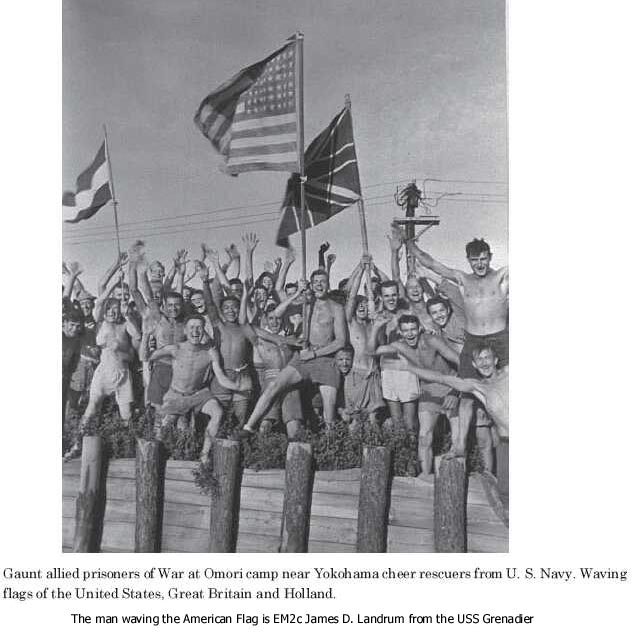
Californian, Olympian, airman, Louis Zamperini experienced the worst of Imperial Japan's POW camps. He was tortured, experimented upon, interrogated, beaten, whipped, starved, humiliated, and forced to give a radio broadcast. He survived torture at the infamous Ofuna Naval Interogation station in Kamakura and was then shipped to to work in Japan's two most horrific prison camps: Omori where he slaved for Nippon Express and then Naoetsu where he labored for Shinetsu Chemical and Nippon Stainless. These companies still exist.

As Hillenbrand writes: 
Virtually nothing about Japan's use of POWs was in keeping with the Geneva Convention. To be an enlisted prisoner of war under the Japanese was to be a slave. The Japanese government made contracts with private entities to send enlisted POWs to factories, mines, docks, and railways, where men were forced into exceptionally arduous war-production or war-transport labor. The labor, performed under club-wielding foremen, was so dangerous and exhausting that thousands of POWs died on the job. In the extremely rare instances in which the Japanese compensated the POWs for their work, payment amounted to almost nothing, equivalent to a few pennies a week. (p. 234)