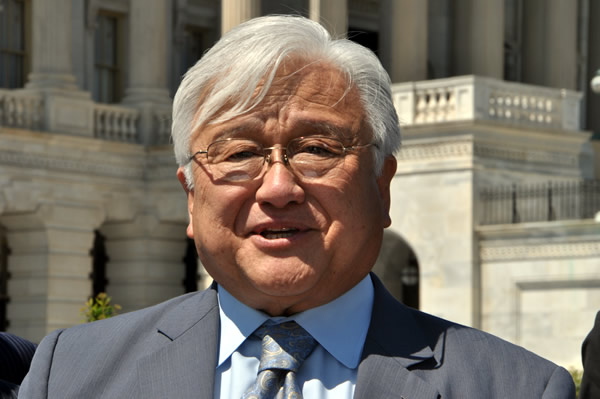
From October 13 to 21, seven former members or widows of former members of the U.S. Army, U.S. Army Air Corps, and U.S. Marines who fought in the Pacific Theater of World War II and were taken prisoner by Imperial Japanese Forces will be guests of the Government of Japan. This is the fourth American POW delegation to visit Japan. Temple University in Tokyo will host a public event.
Tuesday, October 15, 2013
7:00pm
Institute of Contemporary Asian Studies (ICAS)
5F
Tokyo, Japan
The trip includes visits to sites of the former prison camps where the POWs were slave laborers. Many of the camps/mines/docks are in the regions that Japan would like UNESCO to designate as
World Modern Industrial Heritage sites. Mitsui, Mitsubishi, Hitachi, Sumitomo, and Nippon Steel all originated in these regions. All used POW slave labor and forced labor from Japanese colonies. And today all also want to bid for American high speed rail projects.
Japan’s historic official apology--one of only four that have been cabinet approved and the only one victim-specific--and continued support for the POW Visitation Program has improved our relations with Japan, established a viable path for reconciliation with other victims of Imperial Japan, and, most important, has had a positive effect on the former POWs and their families.
It is in everyone’s interest that the POW Visitation Program continues. I hope that you will help the Abe Administration understand this as it is a program they want to end.
The program needs to evolve by including children and other descendants of the American POWs of Japan as well as to expand to support research into the POW experience under Imperial Japan. These are worthy goals of our broadening alliance with Japan. As we know today, the legacy of torture and abuse affects generations of a family and society.
Below is the list of participants, which include 3 Death March survivors, a Marine on Guam, and a Native American.
4th Delegation of American Former POWs of Japan
October 13-21 2013
Phillip W. COON, 94, is a full blood Muscogee Creek who grew up in Oklahoma. After graduating from the Haskell Institute (today’s
Haskell Indian Nations University) in Lawrence, Kansas, he enlisted in the U.S. Army on September 29, 1941. He was assigned to the 31st Infantry Regiment and sent immediately to the Philippines Islands aboard the
USAT Willard A. Holbrook arriving on October 23, 1941. At Fort McKinley he trained as a .30 caliber machine gunner (M1919 Browning). He fought on Bataan Peninsula against the invading Japanese forces and was surrendered on April 9th. Forced on the infamous 65-mile Bataan Death March, he was subjected to capricious cruelty and abuse, denied water, food, rest and protection from the sun. Nearly all on the March had surrendered sick and malnourished causing thousands to die before they reached their destination of Camp O’Donnell. Coon credits his survival to God, or as he said, “We ran out of food, ammunition and men, but we didn't run out of prayer.” His first POW Camp was
Camp O’Donnell where he worked burial detail. For the next two years, he was held at
Cabanatuan, Camp Lipa-Batangas, Camp Murphy-Rizal, and
Bilibid. On October 1, 1944, he was shipped via Hong Kong on the
Hellship Hokusen Maru to Taiwan where he was held briefly at the
Inrin Temporary POW Camp. From Taiwan he was sent to Moji, Japan via the
Hellship Melbourne Maru arriving January 23, 1945. He was then shipped north to Sendai and became a slave laborer mining cooper for Fujita Gumi Kosaka Kozan (today’s
Dowa Holdings Co. Ltd) at the
Sendai-#8B Kosaka POW Camp. After his liberation in September 1945, he returned to the U.S. and was discharged from service as a Corporal on June 24, 1946. He returned home to work as Union Painter doing high-scaffold work. Helen, his wife of 67 years, died this spring. Mr. Coon lives with his son, Michael, a Vietnam vet who works with
DAV Creek County Chapter #9 as a Service Officer helping veterans with their disability claims. Six members of the Muscogee Creek Nation became prisoners of Japan on the Philippines: five from Corregidor and Mr. Coon who was on Bataan.
POW# UNKNOWN
Lora CUMMINS, 87, is the widow of
Ferron E. CUMMINS (1917-1990). She lives in San Antonio, Texas. Mr. Cummins grew up in New Mexico where he graduated in 1938 from
Tyler Commercial College in Texas and went to work as a bookkeeper for the First National Bank in Hagerman, New Mexico (today’s
First American Bank). In November 1940, he enlisted in the U.S. Army Air Corps and had his Basic Training at Brooks and Kelly Fields near San Antonio, Texas. He was assigned to the V Interceptor Command, 24th Pursuit Group, 34th Pursuit Squadron at Hamilton Field, California. In November 1941, Cummins was transferred to the Philippines Islands aboard the
USS Coolidge. He arrived on November 20th and was assigned to
Nichols Field. When the Japanese invaded the Philippines on December 8th, he was sent to Aglaloma Point, Bataan to fight with the 71st Infantry joining men from all branches of the Armed Services. He was surrendered on April 9, 1942 and forced on the infamous 65-mile Bataan Death March on April 10, 1942 from Mariveles to Camp O'Donnell arriving on April 21, 1942. From
Camp O’Donnell, he was moved to
Cabanatuan, then
Bilibid. At these camps he survived sunstroke, dysentery, malaria, denuge fever, wet and dry beriberi, yellow jaundice, and blindness. In August 1944, he was shipped to Moji, Japan aboard the
Hellship Noto Maru. He was taken to Hiroshima and became a slave stevedore for Hitachi Shipyard (today’s
Hitachi Zosen Corporation) at
Mukaijima [Mukaishima] Hiroshima Sub-camp #4. A Japanese elementary school in
Mukaishima today honors the memory of the men of this camp. On August 6, 1945, he felt the air warm and watched a three-mile high mushroom cloud rise above Hiroshima from the atomic bomb. He was officially liberated September 14, 1945. He returned to Lake Arthur, New Mexico where he remained in the Air Force and married the girl down the street, Lora Mae Lane. Upon retirement, he owned a laundry and vending machine business. In 1967, the family moved to San Antonio, Texas and where he worked for SEARS. He and Lora had one child, Glenda, and were married 43 years. Lora was a civilian employee of the Air Force. He passed away on March 26, 1990 of a heart attack just days after returning from his second trip to the Philippines with his wife, daughter, son-in-law, and grandson, Ferron. Mr. Cummins is buried at Fort Sam Houston National Cemetery in San Antonio, Texas.
Autobiography
POW# 115
Robert B. HEER, 92, lives in Sequim, Washington. He grew up in Iowa and joined the U.S. Army Air Corps in June 1940 becoming a carpenter with the 30th Bombardment Squadron,
19th Bomb Group (Heavy), V Bomber Command stationed at March Field, California. He was stationed at Kirtland Field in Albuquerque, New Mexico before being ordered to the Philippine Islands in October 1941 He arrived on October 23, 1941 aboard
USAT Willard A. Holbrook and was sent to
Clark Field. On December 29, 1941, the 30th Bombardment Squadron was evacuated to Mindanao and he was sent to the
Del Monte Airfield. He was surrendered on May 10th and sent to
Camp Casisang, about five kilometers southwest of Malaybalay, Mindanao. On September 6, 1942 the Generals and Colonels were removed from Camp Casisang and sent to Formosa (Taiwan). Heer served as an orderly to Brig, General Joseph P. Vachon, the former C.O. of the Philippine Army’s 101st Division on Mindanao, with whom Bob Heer was sent to
Karenko POW Camp via the freighter
Suzuya Maru. At Karenko he wrote a message to his family that the
Japanese broadcast to the U.S. over shortwave radio. In May 1943, he was shipped to
Heito POW Camp to clear and work in sugar cane fields. He remained there nearly a year before being moved to
Taihoku POW Camp #6 where he slaved at building a memorial park for Japanese soldiers and a man-made lake for the irrigation of rice fields. In early 1945, he was shipped to Japan, first to the port of Moji on Kyushu and then north to Hokkaido. There he was first a slave stevedore for the Hakodate Port Transportation Company at Hakodate 2-D POW. In late May 1945, he was moved north to become a slave laborer mining coal for Sumitomo Mining (today’s
Sumitomo Metal Mining Co. Ltd) at
Hakodate #2 Akihira POW Camp. He was liberated in early September 1945, when American Army records clerks arrived and told them the war was over. After liberation, Heer remembers eating well and gaining 40 pounds in Japan, making friends with post-war civilians there. “I was giving food to the Japanese,” he said, even eating dinner with one family who invited him in after he gave them matches and soap, which was in short supply. On April 20, 1946, Heer was honorably discharged from the Air Corps at Camp Beale (Beale A.F.B.) in California. He used the GI Bill to earn a degree in photography from the
Fred Archer School of Photography in Los Angeles, California. Missing friends and the military life, he returned to active duty with the Air Force in 1950, retiring in 1966 as a Technical Sergeant. In retirement he has worked as an amateur historian of American POWs of Japan and embarked on a “third career” as a house husband. He has been married to Karen Harper since 1989, and has four children from two previous marriages.
Oral History
Biography
POW# 330
Esther JENNINGS, 90, is the widow of
Clinton S. JENNINGS (1919-2004). She lives in San Francisco, California. Mr. Jennings, a California native, served in the Civilian Conservation Corps before enlisting in the U.S. Army in 1941. He was sent to the Philippine Islands the same year aboard the
USS Republic (AP-33). On Corregidor, he joined Battery “K” 59th Coast Artillery Regiment where he helped man fixed 60" Searchlights No. 1 through 8, plus a number of 60" and 30" mobile seacoast searchlights. Surrendered on May 6, 1942, he was sent to a series of POW camps on the Philippines: Bongabong,
Cabanatuan, Lipa- Batanga, and
Bilibid. In July 1944, he was herded along with 1,600 other American POWs aboard the
Hellship Nissyo Maru to be shipped to Japan. The
nightmarish two-week voyage to Moji, Japan included an attack by an American submarine wolfpack on the unmarked transport. Jennings was first held in
Fukuoka-23-Keisen as slave laborer mining coal for Meiji Mining [Meiji Kogyo] Hirayama Mine (The company was dissolved in 1969, but its exploration and research division became independent as
Meiji Consultant Co., Ltd. in 1965, and still exists). He was then transferred to
Fukuoka #9B, located near the town of Miyata (now the city of Miyawaka), again to be a slave laborer mining coal, but for Kaijima Coal Mining Onoura Mine (the company no longer exists). After the war, he spent 25 years in the Army working in finance. He retired in 1965 and worked in public finance at the Bank of America retiring again in 1985. Jennings was a dedicated volunteer: he spent 27 years at KQED; 24 years at the
Fine Arts Museums of San Francisco; and 20 years for the San Francisco Opera Guild where he enjoyed being a supernumerary. He was a member of American Defenders of Bataan & Corregidor; American Ex-Prisoners of War; Philippine Scouts Heritage Society; American Legion; San Francisco History Association; VFW; Military Order of the Purple Heart; Past President of Golden Gate Chapter #18 of National Sojourners; Native Sons of the Golden West, Guadalupe Parlor; The Great War Society; Past Master of Masonic Lodge San Francisco #120; Scottish Rite, Shriners; President of the National Assn. of Civilian Conservation Corps Alumni; The Retired Officers Association and the Reserve Officers Association. He was married to Esther Bloom for 34 years and had three children from a prior marriage. He succumbed to cancer on October 28, 2004. Mr. Jennings is buried at Hills of Eternity, Colma, California.
POW# UNKNOWN
Erwin R. JOHNSON, 91, divides his time between Wynantskill, New York outside of Albany and Lacombe, Louisiana. He grew up in New Orleans, Louisiana and enlisted in the U.S. Army Air Corps in September 1940. He was assigned to the 48th Materiel Squadron,
27th Bombardment Group (Light), V Bomber Command where he was trained as a mechanic for A-20 fighter planes. He was transferred to the Philippines Islands aboard the
USS President Coolidge in November 1941, arriving on November 20th and was deployed to Fort McKinley south of Manila. When Japanese forces attacked the Philippine Islands in December 1941, though not trained as an infantryman, Johnson was issued a rifle and ordered to defend against the Japanese advance. He and all American and Filipino troops on the Bataan Peninsula were surrendered on April 9, 1942. Immediately, he was forced on the infamous 65-mile Bataan Death March to
Camp O'Donnell. He recalls many horrific events during the March; maybe the worst was a Japanese guard bayoneting to death a Filipino mother and her baby for trying to pass food to the starving, sick POWs. At Camp O’Donnell he volunteered for work duty building bridges and other projects. Later that year, he was transferred to
Cabanatuan where he volunteered for work details outside of the Camp. He was among 500 other American POWs shipped from the tropical Philippines to the freezing Mukden, China (today’s Shenyang) in October 1942 aboard Mitsubishi’s
Hellship Tottori Maru via Formosa and Korea to Manchukuo (Manchuria). None of the men had winter clothing. Johnson was housed at the
Hoten POW Camp and became was a slave laborer at MKK (Manshu Kosaku Kikai or Manchouko Kibitsu Kaishi, which some researchers believe was owned by Mitsubishi and known as Manchuria Mitsubishi Machine Tool Company, Ltd.). The camp was liberated in August 1945 by Russian and OSS forces. Discharged in June 1946, he used his GI bill to obtain a mechanical engineering degree from Tulane University. He worked for a number of technology manufacturing companies in Southern California including
North American Aviation (today’s Boeing) and eventually returned to Louisiana, retiring from the Port of New Orleans in 1993. In retirement, he and his wife Margaret traveled throughout the United States and were active in a number of veterans and POW organization. Margaret, his wife of 53 years passed away in 2010. Together they raised five boys. In 2011, he married Ann Wilbur Lampins whose brother, Staff Sgt Charles S. Wilbur, was also a member of the U.S. Army Air Corps. He was with the 28th Materiel Squadron, 20th Air Base Group, Far East Air Force on the Philippines. He too became of prisoner of Imperial Japan and was also shipped to Mukden. He died of pneumonia soon after arrival on December 28, 1942. The Johnsons are active members of the
Mukden POW Survivors group and other veterans’ organizations.
Memoir By the Grace of God can be found at the Veteran's History Project of the US Library of Congress.
POW # 277
Marjean McGREW, 87, is the widow of
Alfred Curtis McGREW (1922-2008). She lives in San Diego, California. Mr. McGrew grew up in Columbus, Ohio. After high school and briefly working with the Civilian Conservation Corps, he enlisted in the U.S. Army at Fort Hayes. In January 1941, his unit sailed to the Philippine Islands aboard the
USS Republic (AP-33). He took Basic Training at the
92nd Garage on Corregidor and was assigned to Battery “D” (Denver)
60th Coast Artillery (A.A.). He was transferred to
Battery “H” (Hartford), 60th, Coast Artillery (A.A.) at Herring Field, Middleside and was taken prisoner there on May 6, 1942 with the surrender of Corregidor and the Philippines. He was held in the following POW camps:
92nd Garage,
Bilibid,
Cabanatuan 2 and 1;
Camp O'Donnell,
Nichols Field. In August 1944, he was shipped to Moji, Japan aboard the
Hellship Noto Maru. In Japan, McGrew became a slave stevedore for
Nippon Express (same name, sam company today) at
Omori Tokyo Base Camp; then a slave stevedore for
Nisshin Flour Milling Dispatched Camp (Tokyo 24-D) (today’s
Nisshin Seifun Group); and finally at
Suwa Branch Camp (Tokyo 6-B) he was a slave laborer for Nippon Steel Tube & Mining Company (today’s
JFE Holdings). He was liberated in Yokohama on September 6, 1945. He later became an Honorary Member and friend of the
U.S. Army 503rd Parachute Regiment Combat Team (RCT) who liberated Corregidor from the Japanese in 1945, and the
4th Marine Regiment who had defended it. After returning to Columbus, he met and married Marjean Herres of Bellefontaine, Ohio (the love of his life for 59 years). They moved to San Diego to be nearer the ocean and raise their two children, Vicki and Steve. He retired from
Control Data Corporation after 27 years when the manufacturing division left San Diego. In retirement, McGrew traveled back to Corregidor many times to collect photos, documents, and data from those who served on Corregidor. During his many trips back, he sat in the ruins of Corregidor thinking of the great times and the bad times as well as the many young friends he lost. As a long-time amateur historian, he assisted many family and friends in their search for information on their loved ones serving and/or captured on Corregidor. McGrew’s approach to life was to use humor as a base for survival and survive he did several times in his life. For fun, he enjoyed scuba diving, golfing, table tennis, camping, and traveling with his wife around the U.S. in their R.V. Mrs. McGrew was a nurse and an avid folk dancer. He succumbed to cancer on January 27, 2008 surrounded by his loving children and his wife. Mr. McGrew is buried at Fort Rosecrans National Cemetery, Point Loma, California.
Oral History
POW# UNKNOWN
Marvin A. ROSLANSKY, 91, lives with his wife Josephine in Mesa, Arizona. Mr. Roslansky grew up in Minnesota and enlisted in the Marine Corps in the spring of 1941. He was sent to Guam in September 1941. He was one of 153 Marines assigned to defend Guam, a U.S. territory administered by the U.S. Navy in the Pacific. As a member of the Insular Patrol Unit he fought in the
brief defense of the island (December 8-9, 1941) and was captured by
invading Japanese forces. On January 10, 1942, the American prisoners of the Guam garrison including five nurses and a civilian mother and child were shipped to prison camps in Japan aboard the
MS Argentina Maru, what was
Mitsui’s OSK Line’s fastest ship. Arriving in Japan on January 16, 1942, he was taken to Shikoku and imprisoned at the
Zentsuji POW Camp (Zentsuji was originally built to house German prisoners of the Japanese in World War I). The camp was on an island about 400 miles west of Tokyo. He
spent the rest of the war there as a slave stevedore for
Nippon Express (still in operation under the same name) working 12-hour days at the Sakaide Rail Yards and the Port of Takamatsu. He was liberated September 27, 1945. After the war, he lived in Racine, Wisconsin where he owned an auto parts business. Retired in 1981, he volunteered at the
Clement J. Zablocki VA Medical Center in Milwaukee as well as doing veterans service work for the DAV, the American Defenders of Bataan and Corregidor, and the Milwaukee Barb Wire, East Valley, and Prairieland Minnesota Chapters of AXPOW. With his first wife, Iva they raised four daughters and three sons. He married Josephine Plourde in 2010.
Interview by Concordia University, St Paul
POW# none