Showing posts with label Nippon Express. Show all posts
Showing posts with label Nippon Express. Show all posts
Friday, October 18, 2013
For the Record


Monday, October 14, 2013
4th American POW Delegation in Japan this week
From October 13 to 21, seven former members or widows of former members of the U.S. Army, U.S. Army Air Corps, and U.S. Marines who fought in the Pacific Theater of World War II and were taken prisoner by Imperial Japanese Forces will be guests of the Government of Japan. This is the fourth American POW delegation to visit Japan. Temple University in Tokyo will host a public event.
The trip includes visits to sites of the former prison camps where the POWs were slave laborers. Many of the camps/mines/docks are in the regions that Japan would like UNESCO to designate as World Modern Industrial Heritage sites. Mitsui, Mitsubishi, Hitachi, Sumitomo, and Nippon Steel all originated in these regions. All used POW slave labor and forced labor from Japanese colonies. And today all also want to bid for American high speed rail projects.
Japan’s historic official apology--one of only four that have been cabinet approved and the only one victim-specific--and continued support for the POW Visitation Program has improved our relations with Japan, established a viable path for reconciliation with other victims of Imperial Japan, and, most important, has had a positive effect on the former POWs and their families.
It is in everyone’s interest that the POW Visitation Program continues. I hope that you will help the Abe Administration understand this as it is a program they want to end.
The program needs to evolve by including children and other descendants of the American POWs of Japan as well as to expand to support research into the POW experience under Imperial Japan. These are worthy goals of our broadening alliance with Japan. As we know today, the legacy of torture and abuse affects generations of a family and society.
Below is the list of participants, which include 3 Death March survivors, a Marine on Guam, and a Native American.
POW# UNKNOWN
Lora CUMMINS, 87, is the widow of Ferron E. CUMMINS (1917-1990). She lives in San Antonio, Texas. Mr. Cummins grew up in New Mexico where he graduated in 1938 from Tyler Commercial College in Texas and went to work as a bookkeeper for the First National Bank in Hagerman, New Mexico (today’s First American Bank). In November 1940, he enlisted in the U.S. Army Air Corps and had his Basic Training at Brooks and Kelly Fields near San Antonio, Texas. He was assigned to the V Interceptor Command, 24th Pursuit Group, 34th Pursuit Squadron at Hamilton Field, California. In November 1941, Cummins was transferred to the Philippines Islands aboard the USS Coolidge. He arrived on November 20th and was assigned to Nichols Field. When the Japanese invaded the Philippines on December 8th, he was sent to Aglaloma Point, Bataan to fight with the 71st Infantry joining men from all branches of the Armed Services. He was surrendered on April 9, 1942 and forced on the infamous 65-mile Bataan Death March on April 10, 1942 from Mariveles to Camp O'Donnell arriving on April 21, 1942. From Camp O’Donnell, he was moved to Cabanatuan, then Bilibid. At these camps he survived sunstroke, dysentery, malaria, denuge fever, wet and dry beriberi, yellow jaundice, and blindness. In August 1944, he was shipped to Moji, Japan aboard the Hellship Noto Maru. He was taken to Hiroshima and became a slave stevedore for Hitachi Shipyard (today’s Hitachi Zosen Corporation) at Mukaijima [Mukaishima] Hiroshima Sub-camp #4. A Japanese elementary school in Mukaishima today honors the memory of the men of this camp. On August 6, 1945, he felt the air warm and watched a three-mile high mushroom cloud rise above Hiroshima from the atomic bomb. He was officially liberated September 14, 1945. He returned to Lake Arthur, New Mexico where he remained in the Air Force and married the girl down the street, Lora Mae Lane. Upon retirement, he owned a laundry and vending machine business. In 1967, the family moved to San Antonio, Texas and where he worked for SEARS. He and Lora had one child, Glenda, and were married 43 years. Lora was a civilian employee of the Air Force. He passed away on March 26, 1990 of a heart attack just days after returning from his second trip to the Philippines with his wife, daughter, son-in-law, and grandson, Ferron. Mr. Cummins is buried at Fort Sam Houston National Cemetery in San Antonio, Texas.
Autobiography
POW# 115
Marjean McGREW, 87, is the widow of Alfred Curtis McGREW (1922-2008). She lives in San Diego, California. Mr. McGrew grew up in Columbus, Ohio. After high school and briefly working with the Civilian Conservation Corps, he enlisted in the U.S. Army at Fort Hayes. In January 1941, his unit sailed to the Philippine Islands aboard the USS Republic (AP-33). He took Basic Training at the 92nd Garage on Corregidor and was assigned to Battery “D” (Denver) 60th Coast Artillery (A.A.). He was transferred to Battery “H” (Hartford), 60th, Coast Artillery (A.A.) at Herring Field, Middleside and was taken prisoner there on May 6, 1942 with the surrender of Corregidor and the Philippines. He was held in the following POW camps: 92nd Garage, Bilibid, Cabanatuan 2 and 1; Camp O'Donnell, Nichols Field. In August 1944, he was shipped to Moji, Japan aboard the Hellship Noto Maru. In Japan, McGrew became a slave stevedore for Nippon Express (same name, sam company today) at Omori Tokyo Base Camp; then a slave stevedore for Nisshin Flour Milling Dispatched Camp (Tokyo 24-D) (today’s Nisshin Seifun Group); and finally at Suwa Branch Camp (Tokyo 6-B) he was a slave laborer for Nippon Steel Tube & Mining Company (today’s JFE Holdings). He was liberated in Yokohama on September 6, 1945. He later became an Honorary Member and friend of the U.S. Army 503rd Parachute Regiment Combat Team (RCT) who liberated Corregidor from the Japanese in 1945, and the 4th Marine Regiment who had defended it. After returning to Columbus, he met and married Marjean Herres of Bellefontaine, Ohio (the love of his life for 59 years). They moved to San Diego to be nearer the ocean and raise their two children, Vicki and Steve. He retired from Control Data Corporation after 27 years when the manufacturing division left San Diego. In retirement, McGrew traveled back to Corregidor many times to collect photos, documents, and data from those who served on Corregidor. During his many trips back, he sat in the ruins of Corregidor thinking of the great times and the bad times as well as the many young friends he lost. As a long-time amateur historian, he assisted many family and friends in their search for information on their loved ones serving and/or captured on Corregidor. McGrew’s approach to life was to use humor as a base for survival and survive he did several times in his life. For fun, he enjoyed scuba diving, golfing, table tennis, camping, and traveling with his wife around the U.S. in their R.V. Mrs. McGrew was a nurse and an avid folk dancer. He succumbed to cancer on January 27, 2008 surrounded by his loving children and his wife. Mr. McGrew is buried at Fort Rosecrans National Cemetery, Point Loma, California.
Oral History
POW# UNKNOWN
 |
| Mukaishima POW Camp |
Tuesday, October 15, 2013
7:00pm
Institute of Contemporary Asian Studies (ICAS)
5F
Tokyo, Japan
The trip includes visits to sites of the former prison camps where the POWs were slave laborers. Many of the camps/mines/docks are in the regions that Japan would like UNESCO to designate as World Modern Industrial Heritage sites. Mitsui, Mitsubishi, Hitachi, Sumitomo, and Nippon Steel all originated in these regions. All used POW slave labor and forced labor from Japanese colonies. And today all also want to bid for American high speed rail projects.
Japan’s historic official apology--one of only four that have been cabinet approved and the only one victim-specific--and continued support for the POW Visitation Program has improved our relations with Japan, established a viable path for reconciliation with other victims of Imperial Japan, and, most important, has had a positive effect on the former POWs and their families.
It is in everyone’s interest that the POW Visitation Program continues. I hope that you will help the Abe Administration understand this as it is a program they want to end.
The program needs to evolve by including children and other descendants of the American POWs of Japan as well as to expand to support research into the POW experience under Imperial Japan. These are worthy goals of our broadening alliance with Japan. As we know today, the legacy of torture and abuse affects generations of a family and society.
Below is the list of participants, which include 3 Death March survivors, a Marine on Guam, and a Native American.
4th Delegation of American Former POWs of Japan
October 13-21 2013
Phillip W. COON, 94, is a full blood Muscogee Creek who grew up in Oklahoma. After graduating from the Haskell Institute (today’s Haskell Indian Nations University) in Lawrence, Kansas, he enlisted in the U.S. Army on September 29, 1941. He was assigned to the 31st Infantry Regiment and sent immediately to the Philippines Islands aboard the USAT Willard A. Holbrook arriving on October 23, 1941. At Fort McKinley he trained as a .30 caliber machine gunner (M1919 Browning). He fought on Bataan Peninsula against the invading Japanese forces and was surrendered on April 9th. Forced on the infamous 65-mile Bataan Death March, he was subjected to capricious cruelty and abuse, denied water, food, rest and protection from the sun. Nearly all on the March had surrendered sick and malnourished causing thousands to die before they reached their destination of Camp O’Donnell. Coon credits his survival to God, or as he said, “We ran out of food, ammunition and men, but we didn't run out of prayer.” His first POW Camp was Camp O’Donnell where he worked burial detail. For the next two years, he was held at Cabanatuan, Camp Lipa-Batangas, Camp Murphy-Rizal, and Bilibid. On October 1, 1944, he was shipped via Hong Kong on the Hellship Hokusen Maru to Taiwan where he was held briefly at the Inrin Temporary POW Camp. From Taiwan he was sent to Moji, Japan via the Hellship Melbourne Maru arriving January 23, 1945. He was then shipped north to Sendai and became a slave laborer mining cooper for Fujita Gumi Kosaka Kozan (today’s Dowa Holdings Co. Ltd) at the Sendai-#8B Kosaka POW Camp. After his liberation in September 1945, he returned to the U.S. and was discharged from service as a Corporal on June 24, 1946. He returned home to work as Union Painter doing high-scaffold work. Helen, his wife of 67 years, died this spring. Mr. Coon lives with his son, Michael, a Vietnam vet who works with DAV Creek County Chapter #9 as a Service Officer helping veterans with their disability claims. Six members of the Muscogee Creek Nation became prisoners of Japan on the Philippines: five from Corregidor and Mr. Coon who was on Bataan. POW# UNKNOWN
Lora CUMMINS, 87, is the widow of Ferron E. CUMMINS (1917-1990). She lives in San Antonio, Texas. Mr. Cummins grew up in New Mexico where he graduated in 1938 from Tyler Commercial College in Texas and went to work as a bookkeeper for the First National Bank in Hagerman, New Mexico (today’s First American Bank). In November 1940, he enlisted in the U.S. Army Air Corps and had his Basic Training at Brooks and Kelly Fields near San Antonio, Texas. He was assigned to the V Interceptor Command, 24th Pursuit Group, 34th Pursuit Squadron at Hamilton Field, California. In November 1941, Cummins was transferred to the Philippines Islands aboard the USS Coolidge. He arrived on November 20th and was assigned to Nichols Field. When the Japanese invaded the Philippines on December 8th, he was sent to Aglaloma Point, Bataan to fight with the 71st Infantry joining men from all branches of the Armed Services. He was surrendered on April 9, 1942 and forced on the infamous 65-mile Bataan Death March on April 10, 1942 from Mariveles to Camp O'Donnell arriving on April 21, 1942. From Camp O’Donnell, he was moved to Cabanatuan, then Bilibid. At these camps he survived sunstroke, dysentery, malaria, denuge fever, wet and dry beriberi, yellow jaundice, and blindness. In August 1944, he was shipped to Moji, Japan aboard the Hellship Noto Maru. He was taken to Hiroshima and became a slave stevedore for Hitachi Shipyard (today’s Hitachi Zosen Corporation) at Mukaijima [Mukaishima] Hiroshima Sub-camp #4. A Japanese elementary school in Mukaishima today honors the memory of the men of this camp. On August 6, 1945, he felt the air warm and watched a three-mile high mushroom cloud rise above Hiroshima from the atomic bomb. He was officially liberated September 14, 1945. He returned to Lake Arthur, New Mexico where he remained in the Air Force and married the girl down the street, Lora Mae Lane. Upon retirement, he owned a laundry and vending machine business. In 1967, the family moved to San Antonio, Texas and where he worked for SEARS. He and Lora had one child, Glenda, and were married 43 years. Lora was a civilian employee of the Air Force. He passed away on March 26, 1990 of a heart attack just days after returning from his second trip to the Philippines with his wife, daughter, son-in-law, and grandson, Ferron. Mr. Cummins is buried at Fort Sam Houston National Cemetery in San Antonio, Texas.
Autobiography
POW# 115
Robert B. HEER, 92, lives in Sequim, Washington. He grew up in Iowa and joined the U.S. Army Air Corps in June 1940 becoming a carpenter with the 30th Bombardment Squadron, 19th Bomb Group (Heavy), V Bomber Command stationed at March Field, California. He was stationed at Kirtland Field in Albuquerque, New Mexico before being ordered to the Philippine Islands in October 1941 He arrived on October 23, 1941 aboard USAT Willard A. Holbrook and was sent to Clark Field. On December 29, 1941, the 30th Bombardment Squadron was evacuated to Mindanao and he was sent to the Del Monte Airfield. He was surrendered on May 10th and sent to Camp Casisang, about five kilometers southwest of Malaybalay, Mindanao. On September 6, 1942 the Generals and Colonels were removed from Camp Casisang and sent to Formosa (Taiwan). Heer served as an orderly to Brig, General Joseph P. Vachon, the former C.O. of the Philippine Army’s 101st Division on Mindanao, with whom Bob Heer was sent to Karenko POW Camp via the freighter Suzuya Maru. At Karenko he wrote a message to his family that the Japanese broadcast to the U.S. over shortwave radio. In May 1943, he was shipped to Heito POW Camp to clear and work in sugar cane fields. He remained there nearly a year before being moved to Taihoku POW Camp #6 where he slaved at building a memorial park for Japanese soldiers and a man-made lake for the irrigation of rice fields. In early 1945, he was shipped to Japan, first to the port of Moji on Kyushu and then north to Hokkaido. There he was first a slave stevedore for the Hakodate Port Transportation Company at Hakodate 2-D POW. In late May 1945, he was moved north to become a slave laborer mining coal for Sumitomo Mining (today’s Sumitomo Metal Mining Co. Ltd) at Hakodate #2 Akihira POW Camp. He was liberated in early September 1945, when American Army records clerks arrived and told them the war was over. After liberation, Heer remembers eating well and gaining 40 pounds in Japan, making friends with post-war civilians there. “I was giving food to the Japanese,” he said, even eating dinner with one family who invited him in after he gave them matches and soap, which was in short supply. On April 20, 1946, Heer was honorably discharged from the Air Corps at Camp Beale (Beale A.F.B.) in California. He used the GI Bill to earn a degree in photography from the Fred Archer School of Photography in Los Angeles, California. Missing friends and the military life, he returned to active duty with the Air Force in 1950, retiring in 1966 as a Technical Sergeant. In retirement he has worked as an amateur historian of American POWs of Japan and embarked on a “third career” as a house husband. He has been married to Karen Harper since 1989, and has four children from two previous marriages.
Oral History
Biography
POW# 330
Esther JENNINGS, 90, is the widow of Clinton S. JENNINGS (1919-2004). She lives in San Francisco, California. Mr. Jennings, a California native, served in the Civilian Conservation Corps before enlisting in the U.S. Army in 1941. He was sent to the Philippine Islands the same year aboard the USS Republic (AP-33). On Corregidor, he joined Battery “K” 59th Coast Artillery Regiment where he helped man fixed 60" Searchlights No. 1 through 8, plus a number of 60" and 30" mobile seacoast searchlights. Surrendered on May 6, 1942, he was sent to a series of POW camps on the Philippines: Bongabong, Cabanatuan, Lipa- Batanga, and Bilibid. In July 1944, he was herded along with 1,600 other American POWs aboard the Hellship Nissyo Maru to be shipped to Japan. The nightmarish two-week voyage to Moji, Japan included an attack by an American submarine wolfpack on the unmarked transport. Jennings was first held in Fukuoka-23-Keisen as slave laborer mining coal for Meiji Mining [Meiji Kogyo] Hirayama Mine (The company was dissolved in 1969, but its exploration and research division became independent as Meiji Consultant Co., Ltd. in 1965, and still exists). He was then transferred to Fukuoka #9B, located near the town of Miyata (now the city of Miyawaka), again to be a slave laborer mining coal, but for Kaijima Coal Mining Onoura Mine (the company no longer exists). After the war, he spent 25 years in the Army working in finance. He retired in 1965 and worked in public finance at the Bank of America retiring again in 1985. Jennings was a dedicated volunteer: he spent 27 years at KQED; 24 years at the Fine Arts Museums of San Francisco; and 20 years for the San Francisco Opera Guild where he enjoyed being a supernumerary. He was a member of American Defenders of Bataan & Corregidor; American Ex-Prisoners of War; Philippine Scouts Heritage Society; American Legion; San Francisco History Association; VFW; Military Order of the Purple Heart; Past President of Golden Gate Chapter #18 of National Sojourners; Native Sons of the Golden West, Guadalupe Parlor; The Great War Society; Past Master of Masonic Lodge San Francisco #120; Scottish Rite, Shriners; President of the National Assn. of Civilian Conservation Corps Alumni; The Retired Officers Association and the Reserve Officers Association. He was married to Esther Bloom for 34 years and had three children from a prior marriage. He succumbed to cancer on October 28, 2004. Mr. Jennings is buried at Hills of Eternity, Colma, California.
POW# UNKNOWN
Erwin R. JOHNSON, 91, divides his time between Wynantskill, New York outside of Albany and Lacombe, Louisiana. He grew up in New Orleans, Louisiana and enlisted in the U.S. Army Air Corps in September 1940. He was assigned to the 48th Materiel Squadron, 27th Bombardment Group (Light), V Bomber Command where he was trained as a mechanic for A-20 fighter planes. He was transferred to the Philippines Islands aboard the USS President Coolidge in November 1941, arriving on November 20th and was deployed to Fort McKinley south of Manila. When Japanese forces attacked the Philippine Islands in December 1941, though not trained as an infantryman, Johnson was issued a rifle and ordered to defend against the Japanese advance. He and all American and Filipino troops on the Bataan Peninsula were surrendered on April 9, 1942. Immediately, he was forced on the infamous 65-mile Bataan Death March to Camp O'Donnell. He recalls many horrific events during the March; maybe the worst was a Japanese guard bayoneting to death a Filipino mother and her baby for trying to pass food to the starving, sick POWs. At Camp O’Donnell he volunteered for work duty building bridges and other projects. Later that year, he was transferred to Cabanatuan where he volunteered for work details outside of the Camp. He was among 500 other American POWs shipped from the tropical Philippines to the freezing Mukden, China (today’s Shenyang) in October 1942 aboard Mitsubishi’s Hellship Tottori Maru via Formosa and Korea to Manchukuo (Manchuria). None of the men had winter clothing. Johnson was housed at the Hoten POW Camp and became was a slave laborer at MKK (Manshu Kosaku Kikai or Manchouko Kibitsu Kaishi, which some researchers believe was owned by Mitsubishi and known as Manchuria Mitsubishi Machine Tool Company, Ltd.). The camp was liberated in August 1945 by Russian and OSS forces. Discharged in June 1946, he used his GI bill to obtain a mechanical engineering degree from Tulane University. He worked for a number of technology manufacturing companies in Southern California including North American Aviation (today’s Boeing) and eventually returned to Louisiana, retiring from the Port of New Orleans in 1993. In retirement, he and his wife Margaret traveled throughout the United States and were active in a number of veterans and POW organization. Margaret, his wife of 53 years passed away in 2010. Together they raised five boys. In 2011, he married Ann Wilbur Lampins whose brother, Staff Sgt Charles S. Wilbur, was also a member of the U.S. Army Air Corps. He was with the 28th Materiel Squadron, 20th Air Base Group, Far East Air Force on the Philippines. He too became of prisoner of Imperial Japan and was also shipped to Mukden. He died of pneumonia soon after arrival on December 28, 1942. The Johnsons are active members of the Mukden POW Survivors group and other veterans’ organizations.
Memoir By the Grace of God can be found at the Veteran's History Project of the US Library of Congress.
POW # 277
Oral History
Biography
POW# 330
Esther JENNINGS, 90, is the widow of Clinton S. JENNINGS (1919-2004). She lives in San Francisco, California. Mr. Jennings, a California native, served in the Civilian Conservation Corps before enlisting in the U.S. Army in 1941. He was sent to the Philippine Islands the same year aboard the USS Republic (AP-33). On Corregidor, he joined Battery “K” 59th Coast Artillery Regiment where he helped man fixed 60" Searchlights No. 1 through 8, plus a number of 60" and 30" mobile seacoast searchlights. Surrendered on May 6, 1942, he was sent to a series of POW camps on the Philippines: Bongabong, Cabanatuan, Lipa- Batanga, and Bilibid. In July 1944, he was herded along with 1,600 other American POWs aboard the Hellship Nissyo Maru to be shipped to Japan. The nightmarish two-week voyage to Moji, Japan included an attack by an American submarine wolfpack on the unmarked transport. Jennings was first held in Fukuoka-23-Keisen as slave laborer mining coal for Meiji Mining [Meiji Kogyo] Hirayama Mine (The company was dissolved in 1969, but its exploration and research division became independent as Meiji Consultant Co., Ltd. in 1965, and still exists). He was then transferred to Fukuoka #9B, located near the town of Miyata (now the city of Miyawaka), again to be a slave laborer mining coal, but for Kaijima Coal Mining Onoura Mine (the company no longer exists). After the war, he spent 25 years in the Army working in finance. He retired in 1965 and worked in public finance at the Bank of America retiring again in 1985. Jennings was a dedicated volunteer: he spent 27 years at KQED; 24 years at the Fine Arts Museums of San Francisco; and 20 years for the San Francisco Opera Guild where he enjoyed being a supernumerary. He was a member of American Defenders of Bataan & Corregidor; American Ex-Prisoners of War; Philippine Scouts Heritage Society; American Legion; San Francisco History Association; VFW; Military Order of the Purple Heart; Past President of Golden Gate Chapter #18 of National Sojourners; Native Sons of the Golden West, Guadalupe Parlor; The Great War Society; Past Master of Masonic Lodge San Francisco #120; Scottish Rite, Shriners; President of the National Assn. of Civilian Conservation Corps Alumni; The Retired Officers Association and the Reserve Officers Association. He was married to Esther Bloom for 34 years and had three children from a prior marriage. He succumbed to cancer on October 28, 2004. Mr. Jennings is buried at Hills of Eternity, Colma, California.
POW# UNKNOWN
Erwin R. JOHNSON, 91, divides his time between Wynantskill, New York outside of Albany and Lacombe, Louisiana. He grew up in New Orleans, Louisiana and enlisted in the U.S. Army Air Corps in September 1940. He was assigned to the 48th Materiel Squadron, 27th Bombardment Group (Light), V Bomber Command where he was trained as a mechanic for A-20 fighter planes. He was transferred to the Philippines Islands aboard the USS President Coolidge in November 1941, arriving on November 20th and was deployed to Fort McKinley south of Manila. When Japanese forces attacked the Philippine Islands in December 1941, though not trained as an infantryman, Johnson was issued a rifle and ordered to defend against the Japanese advance. He and all American and Filipino troops on the Bataan Peninsula were surrendered on April 9, 1942. Immediately, he was forced on the infamous 65-mile Bataan Death March to Camp O'Donnell. He recalls many horrific events during the March; maybe the worst was a Japanese guard bayoneting to death a Filipino mother and her baby for trying to pass food to the starving, sick POWs. At Camp O’Donnell he volunteered for work duty building bridges and other projects. Later that year, he was transferred to Cabanatuan where he volunteered for work details outside of the Camp. He was among 500 other American POWs shipped from the tropical Philippines to the freezing Mukden, China (today’s Shenyang) in October 1942 aboard Mitsubishi’s Hellship Tottori Maru via Formosa and Korea to Manchukuo (Manchuria). None of the men had winter clothing. Johnson was housed at the Hoten POW Camp and became was a slave laborer at MKK (Manshu Kosaku Kikai or Manchouko Kibitsu Kaishi, which some researchers believe was owned by Mitsubishi and known as Manchuria Mitsubishi Machine Tool Company, Ltd.). The camp was liberated in August 1945 by Russian and OSS forces. Discharged in June 1946, he used his GI bill to obtain a mechanical engineering degree from Tulane University. He worked for a number of technology manufacturing companies in Southern California including North American Aviation (today’s Boeing) and eventually returned to Louisiana, retiring from the Port of New Orleans in 1993. In retirement, he and his wife Margaret traveled throughout the United States and were active in a number of veterans and POW organization. Margaret, his wife of 53 years passed away in 2010. Together they raised five boys. In 2011, he married Ann Wilbur Lampins whose brother, Staff Sgt Charles S. Wilbur, was also a member of the U.S. Army Air Corps. He was with the 28th Materiel Squadron, 20th Air Base Group, Far East Air Force on the Philippines. He too became of prisoner of Imperial Japan and was also shipped to Mukden. He died of pneumonia soon after arrival on December 28, 1942. The Johnsons are active members of the Mukden POW Survivors group and other veterans’ organizations.
Memoir By the Grace of God can be found at the Veteran's History Project of the US Library of Congress.
POW # 277
Marjean McGREW, 87, is the widow of Alfred Curtis McGREW (1922-2008). She lives in San Diego, California. Mr. McGrew grew up in Columbus, Ohio. After high school and briefly working with the Civilian Conservation Corps, he enlisted in the U.S. Army at Fort Hayes. In January 1941, his unit sailed to the Philippine Islands aboard the USS Republic (AP-33). He took Basic Training at the 92nd Garage on Corregidor and was assigned to Battery “D” (Denver) 60th Coast Artillery (A.A.). He was transferred to Battery “H” (Hartford), 60th, Coast Artillery (A.A.) at Herring Field, Middleside and was taken prisoner there on May 6, 1942 with the surrender of Corregidor and the Philippines. He was held in the following POW camps: 92nd Garage, Bilibid, Cabanatuan 2 and 1; Camp O'Donnell, Nichols Field. In August 1944, he was shipped to Moji, Japan aboard the Hellship Noto Maru. In Japan, McGrew became a slave stevedore for Nippon Express (same name, sam company today) at Omori Tokyo Base Camp; then a slave stevedore for Nisshin Flour Milling Dispatched Camp (Tokyo 24-D) (today’s Nisshin Seifun Group); and finally at Suwa Branch Camp (Tokyo 6-B) he was a slave laborer for Nippon Steel Tube & Mining Company (today’s JFE Holdings). He was liberated in Yokohama on September 6, 1945. He later became an Honorary Member and friend of the U.S. Army 503rd Parachute Regiment Combat Team (RCT) who liberated Corregidor from the Japanese in 1945, and the 4th Marine Regiment who had defended it. After returning to Columbus, he met and married Marjean Herres of Bellefontaine, Ohio (the love of his life for 59 years). They moved to San Diego to be nearer the ocean and raise their two children, Vicki and Steve. He retired from Control Data Corporation after 27 years when the manufacturing division left San Diego. In retirement, McGrew traveled back to Corregidor many times to collect photos, documents, and data from those who served on Corregidor. During his many trips back, he sat in the ruins of Corregidor thinking of the great times and the bad times as well as the many young friends he lost. As a long-time amateur historian, he assisted many family and friends in their search for information on their loved ones serving and/or captured on Corregidor. McGrew’s approach to life was to use humor as a base for survival and survive he did several times in his life. For fun, he enjoyed scuba diving, golfing, table tennis, camping, and traveling with his wife around the U.S. in their R.V. Mrs. McGrew was a nurse and an avid folk dancer. He succumbed to cancer on January 27, 2008 surrounded by his loving children and his wife. Mr. McGrew is buried at Fort Rosecrans National Cemetery, Point Loma, California.
Oral History
POW# UNKNOWN
Marvin A. ROSLANSKY, 91, lives with his wife Josephine in Mesa, Arizona. Mr. Roslansky grew up in Minnesota and enlisted in the Marine Corps in the spring of 1941. He was sent to Guam in September 1941. He was one of 153 Marines assigned to defend Guam, a U.S. territory administered by the U.S. Navy in the Pacific. As a member of the Insular Patrol Unit he fought in the brief defense of the island (December 8-9, 1941) and was captured by invading Japanese forces. On January 10, 1942, the American prisoners of the Guam garrison including five nurses and a civilian mother and child were shipped to prison camps in Japan aboard the MS Argentina Maru, what was Mitsui’s OSK Line’s fastest ship. Arriving in Japan on January 16, 1942, he was taken to Shikoku and imprisoned at the Zentsuji POW Camp (Zentsuji was originally built to house German prisoners of the Japanese in World War I). The camp was on an island about 400 miles west of Tokyo. He spent the rest of the war there as a slave stevedore for Nippon Express (still in operation under the same name) working 12-hour days at the Sakaide Rail Yards and the Port of Takamatsu. He was liberated September 27, 1945. After the war, he lived in Racine, Wisconsin where he owned an auto parts business. Retired in 1981, he volunteered at the Clement J. Zablocki VA Medical Center in Milwaukee as well as doing veterans service work for the DAV, the American Defenders of Bataan and Corregidor, and the Milwaukee Barb Wire, East Valley, and Prairieland Minnesota Chapters of AXPOW. With his first wife, Iva they raised four daughters and three sons. He married Josephine Plourde in 2010.
Interview by Concordia University, St Paul
Interview by Concordia University, St Paul
POW# none
Sunday, January 20, 2013
Will the POW's reconciliation tours to Japan end?
POW’s Japan reconciliation tours may end
George Summers of Riverside, California said he was captured shortly after the start of the war with Japan and spent nearly four years as a POW.
BY Mark MuckenfussThe Press-Enterprise, January 04, 2013
Riverside resident George Summers may be one of the last World War II prisoners of war to participate in a reconciliation tour with Japan.
Summers, 90, spent the entire war in Japanese prison camps. In October, he traveled to Japan with a group of other former POWs, visiting some of the sites where he was held captive and talking to school children and community leaders about his experiences.
The tour is meant to serve both as an apology by the Japanese government for how Summers and others were treated during the war, and as a way to educate younger generations about the culture of the time.
Four out of 10 Americans never made it out of Japan’s prison camps. The men were routinely starved and beaten at the same time they were being ordered to perform strenuous manual labor such as moving rocks, digging coal or unloading freight.
The Japanese government has apologized to those who were held as prisoners during the war and for years has sponsored reconciliation trips for former POWs. But not American POWs. Only in the past three years have groups from the United States been invited.
Lester Tenney, 90, a former POW who recounted his war experiences in a book called “My Hitch in Hell,” said he found out about the trips because of a close relationship he had with Ichiro Fujisaki, the former Japanese ambassador to the United States.
Tenney said he was upset when he found out that American POWs had been excluded.
Fujisaki passed along Tenney’s complaint, and the Japanese government responded. Tenney, who lives in Carlsbad, said he was asked to arrange a tour of American POWs. The first group of 14 went in 2010. He also organized groups in 2011 and 2012.
Now, he feels like he is getting to old to continue to substantial work it takes to keep setting up the tours.
“If they ask me to do it,” Tenney said, “I may just recommend somebody else.”
Finding someone may not be easy.
“There’s not a lot of people around that would be willing to do this,” Tenney said. “It can’t be a POW, because they’re all sick and old. They’re like me.”
LESSONS FROM WAR
Summers said he hopes the program will continue. He believes it’s beneficial for the younger generations to hear first-hand about the horrors inflicted on the 27,000 American POWs by the Japanese military. He especially wants to show youngsters how terrible war can be.
After sharing his experience with a group of Japanese fifth-graders, he said, he tried to relate it to their mindset.
“I told them, ‘What would it be like if you, who are 10 years old, just eight years later had to go through this?’” he said. “I said, ‘War is the curse of mankind.’”
Summers was 18 when he enlisted in the Marine reserves in his hometown of Pasadena. Activated later that year, he was one of the first Americans captured during the war. He was part of a small contingent on Guam when the island was attacked just minutes after the first wave of Japanese planes swept into Pearl Harbor. He was on guard duty at the time.
He recalled seeing villagers from the town below scrambling up the hill toward the base as they were strafed by Japanese planes. There was no order or coordinated counterattack by the Americans, he said. When a bomb blast at a barracks wounded him in the leg, he and a fellow Marine fled into the nearby coconut groves.
They hid for two days, believing that if they surrendered, they would be killed. In desperation, Summers took off his T-shirt and waved it as a flag of surrender. Instead of facing bullets, he said, they were treated kindly.
“We were the only ones that were treated good by the Japanese,” he said. The soldier guarding them gave them rice and corned beef. “I liked that Japanese guy.” It didn’t last.
Aboard a transport ship to Japan, he said, “they were throwing us rotten rice and radishes. A lot of it had maggots in it.” Dysentery was rampant.
“We lost two or three (men) on the ship,” he said. “I’m not sure.”
Many more were lost in the camps. He spent six months in the notorious prison camp at Tanagawa, near Osaka, known for the severe malnutrition and high death rate among its POWs.
“We were supposed to get a rice ball and a pickled radish at noontime,” he said. “If you got sick they gave you nothing but liquid rice.”
Bombing by allied planes forced a move to another camp, Umida Bonshu, also in Osaka. Conditions there were far better.
“I gained some weight there because things were good,” he said.
FIGHTING STARVATION
Of the nearly four years Summers spent in captivity, nearly three were spent working at Umida Bonshu [Umeda Bunsho, near Osaka run by Nippon Express, still a thriving company] as a stevedore, unloading freighters.
But six months before the war was over, he was moved again. He found himself in Fushiki, on the west coast of Honshu. The conditions were the most dire he had faced.
“The whole time it was a matter of getting food,” he said. “We were starving to death. There was nothing to eat there but raw soy beans.”
He resorted to desperate measures.
“We had to clean out the Japanese toilets,” he said.
Among the human waste, he said, were undigested soy beans that had been swallowed whole.
“I was picking out the soy beans and washing them off. I was eating them like crazy.”
Whether his fellow prisoners were doing the same when they had latrine duty, he doesn’t know.
“Nobody talked about stuff like that at the time,” he said.
Summers said he had a hard time readjusting to civilian life after the war.
He left the service and spent seven years in the Merchant Marine, going on to work for General Telephone [GTE] and as a financial clerk for the city of Anaheim. He has lived in his Riverside home, with an orange grove next to his house, since 1972 and still works in real estate investment.
Although a curio cabinet in his home is filled with Japanese figures, and a Japanese curtain hangs in the doorway of his office, his recent trip was the first time he had visited the country since the 1950s. He believes one of the docks he saw in a harbor might have been there during the war. If so, it was the only landmark he recognized.
“It’s all new,” he said. “It’s a beautiful place. The people are so kind.”
A few of the people he met there may not have felt the same way about him.
“The only ones that haven’t apologized are the companies that we worked for. To this day, they still don’t want to compensate the POWs for the slave labor we provided. I mentioned it to them when we met with officials with Mitsubishi.
“Everybody thought I was going to start another world war over there,” he said with a laugh.
He recalled seeing villagers from the town below scrambling up the hill toward the base as they were strafed by Japanese planes. There was no order or coordinated counterattack by the Americans, he said. When a bomb blast at a barracks wounded him in the leg, he and a fellow Marine fled into the nearby coconut groves.
They hid for two days, believing that if they surrendered, they would be killed. In desperation, Summers took off his T-shirt and waved it as a flag of surrender. Instead of facing bullets, he said, they were treated kindly.
“We were the only ones that were treated good by the Japanese,” he said. The soldier guarding them gave them rice and corned beef. “I liked that Japanese guy.” It didn’t last.
Aboard a transport ship to Japan, he said, “they were throwing us rotten rice and radishes. A lot of it had maggots in it.” Dysentery was rampant.
“We lost two or three (men) on the ship,” he said. “I’m not sure.”
Many more were lost in the camps. He spent six months in the notorious prison camp at Tanagawa, near Osaka, known for the severe malnutrition and high death rate among its POWs.
“We were supposed to get a rice ball and a pickled radish at noontime,” he said. “If you got sick they gave you nothing but liquid rice.”
Bombing by allied planes forced a move to another camp, Umida Bonshu, also in Osaka. Conditions there were far better.
“I gained some weight there because things were good,” he said.
FIGHTING STARVATION
Of the nearly four years Summers spent in captivity, nearly three were spent working at Umida Bonshu [Umeda Bunsho, near Osaka run by Nippon Express, still a thriving company] as a stevedore, unloading freighters.
But six months before the war was over, he was moved again. He found himself in Fushiki, on the west coast of Honshu. The conditions were the most dire he had faced.
“The whole time it was a matter of getting food,” he said. “We were starving to death. There was nothing to eat there but raw soy beans.”
He resorted to desperate measures.
“We had to clean out the Japanese toilets,” he said.
Among the human waste, he said, were undigested soy beans that had been swallowed whole.
“I was picking out the soy beans and washing them off. I was eating them like crazy.”
Whether his fellow prisoners were doing the same when they had latrine duty, he doesn’t know.
“Nobody talked about stuff like that at the time,” he said.
Summers said he had a hard time readjusting to civilian life after the war.
He left the service and spent seven years in the Merchant Marine, going on to work for General Telephone [GTE] and as a financial clerk for the city of Anaheim. He has lived in his Riverside home, with an orange grove next to his house, since 1972 and still works in real estate investment.
Although a curio cabinet in his home is filled with Japanese figures, and a Japanese curtain hangs in the doorway of his office, his recent trip was the first time he had visited the country since the 1950s. He believes one of the docks he saw in a harbor might have been there during the war. If so, it was the only landmark he recognized.
“It’s all new,” he said. “It’s a beautiful place. The people are so kind.”
A few of the people he met there may not have felt the same way about him.
“The only ones that haven’t apologized are the companies that we worked for. To this day, they still don’t want to compensate the POWs for the slave labor we provided. I mentioned it to them when we met with officials with Mitsubishi.
“Everybody thought I was going to start another world war over there,” he said with a laugh.
Wednesday, October 17, 2012
Ten Days in October
 |
| FM Gemba with American former POWs of Japan |
For the third time, Japan's Foreign Minister faced the American POWs and apologized for his government for their suffering under Imperial Japan (photo above). The men and their caregivers are touring Japan and visiting the sites of their incarceration and slave labor. They slaved for well-know Japanese firms such as Hitachi, Mitsubishi, Nippon Express, Rinko, and Ube Industries.
Initiated in 2010, the visitation program for American former POWs of Japan is a model for Japanese government war apologies. There is a formal presentation of an apology and a concerted act of contrition. It is unfortunate, however, that the Japanese Government does not publicize this successful program and has not pushed the Japanese companies that were complicit in the torture and abuse of the POWs to also acknowledge and apologize. Indeed, the companies have been largely silent and some have refused to allow these elderly men to revisit the sites of their first stay in Japan.
Here are brief biographies of the men in Japan from October 12 to 21.
>Randall S. Edwards, 95, lives in Lakeland ,
Florida Wyoming , he grew up in Nebraska and enlisted in the U.S. Navy in
1935 after high school to see the world. He was sent to the Philippines in 1940 and assigned as a Radioman 1ST
Class to the submarine tender, the USS Canopus, which had been
ordered to stay in Manila Bay after the bombing of Pearl
Harbor in December 1941. Bombed and strafed continually, the ship was
finally scuttled in Mariveles Bay on April 8, 1942 with the crew escaping to the
fortress island of Corregidor in the mouth of Manila Bay Corregidor , the crew served in beach
defense with the Fourth Marines. He was a POW at Cabanatuan
3 and shipped to Mukden,
China (today’s Shenyang )
in October 1942 on Mitsubishi’s Hellship Tottori Maru via Formosa and Korea
to Manchukuo (Manchuria ).
Edwards
was a slave laborer at MKK (Manshu Kosaku Kikai,
which some researchers believe was owned by Mitsubishi and known as Manchuria Mitsubishi Machine Tool Company, Ltd.). He
worked on multiple machines from grinders to lathes, carefully sabotaging each
task. Toward the end, he was made to haul pig iron to the company’s foundry. He
believes that the multiple shots and blood tests that he received while at Mukden were part of human medical experiments conducted
by the Imperial Army’s 731st Biological Warfare Unit. After the war, Edwards remained
in the Navy where he received over 40 medals during his service and retired in
1955 as a Warrant Officer. From 1948-1950, he was with U.S. Occupation Forces
in Yokosuka,
Japan in charge of the Base’s radio station. He found there that the
Japanese were “not all demons.” After the Navy, he received his BS in
Electrical Engineering from the University of
Florida, Gainesville and went to work as a research engineer on fusion
energy at the Oak Ridge National Laboratory
in Oak Ridge , Tennessee
POW# 104
Member of: DAV, American Defenders of Bataan & Corregidor, American
Ex-Prisoners of War
>Robert W. Ehrhart, 89, lives in Carmichael ,
California Oakland , California Philippines
in April 1941 to join the Marine Detachment at Cavite .
On May 1, the 1st Separate Marine Battalion, unique in that it trained
to function either as infantry or antiaircraft artillery, was activated.
Relocated fall 1941 to the Olongapo Navy Yard near Subic Bay, the unit was
moved during December 1941 to Corregidor
Island Japan aboard
the Hellship Taga Maru (aka Coral Maru). He was sent to Osaka
4-D Sakurajima were he was a slave laborer at Hitachi Zosen’s
Sakurajima Shipyard (today’s Universal
Shipping Corporation). He worked as a riveter
helping build military ships and oil tankers. Today, the site of this POW camp
is the Universal Studios Japan
theme park. After the camp was bombed in May 1945, he
was sent to Osaka
6-B, Akenobe, POW Camp where he was a slave laborer working as a stope
driller in a copper mine for Mitsubishi Mining (today’s Mitsubishi Materials Corporation).
When the POWs realized that the war had ended, they pieced together an American
flag to fly on the camp flagpole, which they believe was the first postwar U.S. symbol in Japan . After recuperating in
military hospitals from vitamin deficiency, malnutrition, and various tropic
diseases, he was discharged April 29 1946. He then studied Mechanical
Engineering at the University of California,
Berkeley. After graduation, he worked for the Navy and eventually joined
the State of California ’s
Department of Water Resources as a hydroelectric engineer. Since retiring in
1983, he has pursued his passions of travel and fine photography. The Veteran’s
History Project of the U.S. Library of Congress holds a recording of his
oral history.
POW# 221
Member of DAV, VFW, American Defenders of Bataan & Corregidor,
American Ex-Prisoners of War
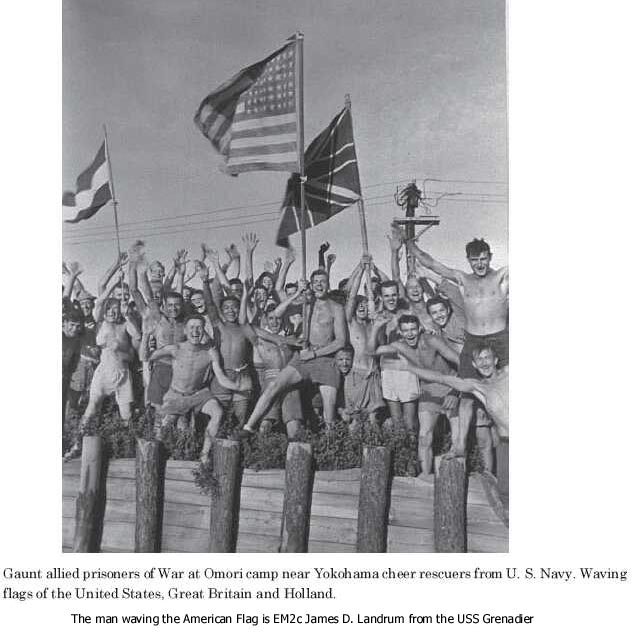
POW# Not known to “special prisoners”
Member of American Ex-Prisoners of War
>Douglas Northam, 93, lives in Reno, Nevada. Born in Morris County, Texas, he grew up in nearby Naples, Texas. After graduating from high school in 1937, he enlisted in the Civilian Conservation Corps and in 1940 in the U.S. Navy. He was transferred to China in February of 1941 and assigned to the USS Oahu (PR-6), a Yangtze River Patrol boat ported in Shanghai. The USS Oahu, never designed for open sea operations, was sent to Manila Bay in November 1941, arriving two days before the Japanese attack on Pearl Harbor. The gunboat operated in and around Manila Bay and Cavite Navy Yard on inshore patrol and in support of U.S.-Filipino forces on Bataan until after its fall April 8, 1942 and then continued to operate about the island fortress of Corregidor until sunk by enemy gunfire May 5th. Northam was then assigned to an artillery group on Corregidor, which was surrendered on May 7th when Corregidor fell. As a POW of Japan he was sent to Bilibid POW Camp in Manila and then moved to Cabanatuan 1 and 2. In November 1942, he was sent to Japan aboard Mitsubishi’s Hellship the Nagato Maru. He worked for Nippon Express as a slave stevedore in the freight yards in and around the city of Osaka at Umeda Bunsho Camp in Osaka (Osaka 2-D UMEDA). In March 1945, after his POW camp was firebombed, he was transferred to Osaka POW Camp 5-B TSURUGA were he was a slave stevedore again for Nippon Express and Tsuruga Transportation Company. After the war, Northam utilized the GI Bill to study geology at the University of California, Berkley. He joined Shell Oil Company in 1951 as a laboratory technician and retired 1977 as research technician. He has been married to Hazel for 64 years. In retirement he was a volunteer at a local elementary school and the VA Hospital. His hobbies include gardening, horse racing, and cooking.
POW# 117
Member of DAV, American Defenders of Bataan & Corregidor, American Ex-Prisoners of War, AMVETS
>John Leroy Mims, 90, lives in Aberdeen, North Carolina. Born in Ashburn, Georgia, he grew up in Florida and enlisted in the Army at age 16 in 1938, but was discharged a year later after it was discovered that he was underage. Still hungry and jobless, he re-enlisted February 15, 1941 and was assigned to Company B, 1st Battalion of the famous 31st Infantry Regiment sometimes referred to as the “American Foreign Legion.” In April 1941, he was sent to the Philippines aboard the USAT Republic and stationed at Cuartel de España in Manila. He fought in the Battle for Bataan and as a POW forced on the Bataan Death March. During the war, his Filipino fiancée Juanita worked as a secretary for a Japanese general and bravely aided the resistance by sending shortwave radio messages to Allied forces in the Pacific. As a POW, the Japanese repeatedly beat and tortured Mims . Although they were able to break his body, they could never come close to breaking his spirit. During his captivity, the Japanese broke his back, neck and both of his legs and shattered many of the bones in his face. The beatings briefly left him a paraplegic on two separate occasions and he retains a limp. Mims lost over 120 pounds as a POW dropping from 190 pounds to 67 pounds. Of the 1,600 soldiers in the 31st Infantry Regiment who surrendered, less than half survived Japanese captivity. In September 1944, he was sent to Japan on board Mitsubishi’s Nippon Yusen Kaisha (NYK) Hellship Sekiho Maru (Canadian Inventor [the Mati Mati Maru or slow slow ship]). Mims became a slave laborer mining coal for Ube Kosan’s Sanyo Muen Kogyo Sho (Ube Industries’ Sanyo Smokeless Coal Work, which is still known today as Ube Industries Ltd.) at Hiroshima #6B - Omine (Sanyo) POW Camp in Omine-machi, Yamaguchi Prefecture. After the war, Mims remained in the Army for the next 27 years, attaining the rank of Sergeant First Class. He returned to Japan from 1952-54 to be in charge of the Tokyo Quartermaster Depot. He retired in 1963 and involved himself in real estate, construction, and mining. He and Juanita were married 59 years until her death in 2004. They are parents of three biological and 22 adopted children. He remarried in 2009 to another beautiful Filipina, Nena Sabal. His hobbies include reading and recounting his history story as a POW of Japan, especially on how he survived the infamous Bataan Death March. The Veteran’s History Project of the U.S. Library of Congress holds a recording of his oral history.
POW# 429
Member of DAV, VFW, American Legion, Military Order of the Purple Heart, and National Order of the Trench Rats, American Defenders of Bataan & Corregidor
>John Real, 90, lives in Ventura, California. A California native he enlisted in the US Army Air Corps after graduating from high school in 1940. He was sent to the Philippines in April 1941 and assigned to aerial reconnaissance at Clark Field with the 2nd Observation Squadron, 27th Bombardment Group, V Bomber Command, 20th Air Force. Real and his unit manned an observation tower on top of Mt. Mariveles, Bataan during Japan’s invasion of the Philippines where he tracked Japanese ship movement around the Olongapo Navy Yard. He walked down the mountain to surrender on April 9, 1942 and was stripped of all his belongings before being forced on the Bataan Death March. At the start of the march, he and others were used as human shields by being forced to walk in front of seized American 155mm calibre field guns (Long Toms) that the Japanese were firing at Corregidor. He was a POW at both Camp O’Donnell and Cabanatuan 1. He avoided a certain death at O’Donnell by volunteering for a work detail on Bataan. In September 1943, he was sent to Moji, Japan aboard the Hellship Taga Maru (aka Coral Maru) via Formosa. At Tokyo 5-B POW Camp in Niigata he was a slave laborer unloading coal ships for Niigata Kairiku Unso, now part of the Rinko Corporation (however, POWs remember Rinko as their “employer”). After the war, Real received a BA in Business Administration from the University of California, Santa Barbara and a MA from the Thunderbird School of Global Management in Arizona, where he met his wife with whom he had three children and was married to for 49 years until she passed away in 2006. After graduation, he pursued a career in pharmaceutical sales with various companies, retiring with Berlex Labs, at the time a division of Schering AG. In retirement, he has been an active member of the Museum of Ventura County and the J. Paul Getty Museum at the Getty Villa in Malibu.
POW# 514
Member of DAV, VFW, American Legion, American Ex-Prisoners of War, American Defenders of Bataan & Corregidor, AMVETS
>George R. Summers, 90, lives in Riverside, California. Born in the Philippines, he grew up in California where he joined the Marine Corps Reserve in February 1941. Activated in June 1941, his unit was sent to Guam, an American territory, in September 1941. Japan invaded the island on December 8, 1941 and he was taken prisoner upon the surrender of the island on the 10th--the first American territory to fall. Summers was on the first transport of Allied POWs to Japan, the Argentina Maru with 420 American POWs from Guam to Tadotsu on the north coast of Shikoku. After arriving in Japan on January 16, 1942, the POWs were transported to Zentsuji (Hiroshima Branch #1), a POW camp about eight kilometers from Tadotsu. He spent six months there clearing a mountainside to plant apple trees. He was then transferred to Tanagawa Osaka Area POW Command #4B Camp. At Tanagawa, he helped to manually tear down a mountainside building a breakwater for a primitive dry-dock and submarine base. This camp was noted for its severe malnutrition and extreme death rate. Six months later, he was sent to Umeda Bunsho Camp in Osaka (Osaka 2-D UMEDA), Japan where he worked for Nippon Express as a slave stevedore. He was transferred to a total of six POW camps due to American bombings. His last camp was the Nagoya 10-B Fushiki Camp, where he worked as a stevedore slave unloading soybeans from Korea for Fushiki Kairiku Unso until Japan’s surrender. After his release, he was hospitalized for six months at the Long Beach Naval Hospital. Like many veterans, he then shifted between various odd jobs and classes. In 1947, he joined the U.S. Merchant Marine. From 1955 to 1968 he worked for General Telephone Company, which later became GTE and is today’s Verizon. After GTE, he served as a financial clerk for the City of Anaheim from 1968 to 1978. Married to Juanita Louise Summers since 1970, he has two children from his first marriage. In retirement, he has focused on real estate investment and his hobbies of collecting Koi fish and exotic birds.
POW# 347
Member of DAV, American Ex-Prisoners of War, Military Order of the Purple Heart
Friday, June 08, 2012
Louis Zamperini on the Tonight Show
Sadly, NBC took down its links to Mr. Zamperini's appearance on the Tonight Show and blocked others from displaying the now-historic interview. [Update 7/13/14]
However, here see a better, longer piece by CBS Sunday Morning (produced by a high school classmate of mine) May 27, 2012.
However, here see a better, longer piece by CBS Sunday Morning (produced by a high school classmate of mine) May 27, 2012.
Louis Zamperini, the subject of the best-selling book Unbroken, was interviewed by Jay Leno on the Tonight Show Thursday, June 7, 2012. Zamperini talks about how he was tortured and experimented upon by the Japanese on a Pacific island after he was captured having survived 47 days on a life raft. He was eventually shipped to Japan for further torture and ended up as a slave laborer for Japanese corporations. He survived the infamous Ofuna Naval Interogation Center in Kamakura and was then shipped to two of Japan's most horrific prison camps near Tokyo: Omori where he slaved for Nippon Express and then Naoetsu where he labored for Shin-Etsu Chemical and Nippon Stainless (NSSC). These multi-national companies still exist with their same names.
Unbroken will be translated into 23 languages worldwide. Japanese is not one of the languages as no publisher in Japan has shown an interest in this bestseller.
Unbroken will be released as a movie sometime in 2013 by Universal and directed by Francis Lawrence.
Later: Here Mr. Zamperini is interviewed back stage at the Tonight Show and adds a bit more about his 1936 Olympics roommate, Jesse Owens.
Unbroken will be translated into 23 languages worldwide. Japanese is not one of the languages as no publisher in Japan has shown an interest in this bestseller.
Unbroken will be released as a movie sometime in 2013 by Universal and directed by Francis Lawrence.
Later: Here Mr. Zamperini is interviewed back stage at the Tonight Show and adds a bit more about his 1936 Olympics roommate, Jesse Owens.
Saturday, December 17, 2011
Salinas California's National Guard
 |
| M3 Stuart Tank Captured in 1942 |
Three federalized National Guard units were the first to see action in World War II. They participated in the heroic defense of Bataan in the Philippines before finally surrendering to the Japanese in April 1942.
The 40th Tank Company (later Company C, 194th Tank Battalion) of Salinas, California was one of these National Guard units. Approximately 105 Salinas men (rosters vary) were sent to the Philippines in September 1941 as part of two U.S. Army light tank battalions to reinforce General Douglas MacArthur's forces defending the Philippine Islands. The men from Salinas, armed with antiquated weapons and under-trained, had the distinction of being the first U.S. Armored Force deployed overseas in what was soon to become the Pacific front in World War II.
When the war broke out on December 7, 1941 (December 8th in the Philippines), the company fought on Luzon. It was the last U.S. element to pull back to the Bataan Peninsula. Although outnumbered and without effective anti-personnel and anti-tank ammunition, Company C and other former National Guard Companies slowed the rate of the Japanese advance and delayed the ultimate loss of the Philippines. Their official After-Action Report is available by clicking here.
When American and Filipino forces surrendered on April 9, 1941, the survivors of the Battle for Bataan were forced to participate in the infamous Bataan Death March. Conservative estimates believe that 6,000-10,000 Filipino and 600-1000 U.S. soldiers died on the 65-mile forced march. Three Presidential unit citations were awarded to the 40th Tank Company for outstanding performance in combat operations.
Burton Anderson in his illustrated history of the Salinas National Guard (1995) reports that of the 105 men he notes in his research as belonging to Company C only 47 returned home alive. Fifty-eight men died: most of whom died in their first months of captivity at Camp O'Donnell (4) and Cabanatuan (33). These men died of all manner of tropical diseases, abuse, and malnutrition.
Among the deaths, one man died on the Bataan Death March and two escaped to become guerrillas. They were, however, later captured and executed. Ten men died on Hellships to Japan (Arisan-maru: 6, Oryoku-maru: 1, Enoura-maru: 2, Brazil-maru: 1). (N.B.: We researched only the names that Mr. Anderson attached to his research. There are other lists, but it would take a professional military historian many months to untangle the inconsistencies.)
 |
| POW Memorial at Kinkaseki Dedicated November 2011 |
Cave-ins, injury, disease, malnutrition, and executions made Kinkaseki one of the worst of Japan's POW camps. Fewer than 100 of the Allied prisoners held at Kinkaseki are believed to have survived to war's end. The mine was owned by Nippon Mining Company, today's JX Nippon Mining & Metals Corp. of JX Holdings. You can access the Hong Kong War Crimes trial documents of military officers responsible for the atrocities at Kinkaseki HERE.
Thirty-eight men were shipped to Japan on Hellships to become slave laborers at 13 different companies at 18 camps on Japan's main islands. Two men died in the POW camps. Below we identify the best we can, with the resources available, the camps and companies where the men of Salinas were held in Japan.
Sendai 6-B: Hanawa (Osarizawa)
POWs: 3 survived
Labor: Copper mining
Company: Mitsubishi Goushi Company [三菱合資会社]
Company Today: Mitsubishi Materials (Mitsubishi Material Kabushiki Kaisha, 三菱マテリアル株式会社)
Sendai 7-B: Hanaoka
POWs: 2 survived
Labor: Copper mining
Company: Fujita-gumi Construction Company
Company Today: Dowa Holdings Co., Ltd. (DOWA Holdings Kabushiki Kaisha, DOWA ホールディングス株式会社)
Tokyo 1-B: Kawasaki
POWs: 1 survived
Labor: Slave labor in Kawasaki shipyard
Company: Nippon Tsuun
Company Today: Nippon Express Company, Limited (Nippon Tsuun Kabushikigaisha, 日本通運株式会社)
Tokyo 5-B: Niigata
POWs: 1 survived
Labor: Stevedore, foodstuffs and coal, labor at a foundry
Company: Niigata Kairiku Unso
Company Today: Rinko Corporation (Kabushikigaisha Rinko Corporation, 株式会社リンコーコーポレーション) *Niigata Kairiku Unso Merged to Rinko Corporation in 1960
Tokyo 16-B: Kanose
POWs: 2 survived
Labor: Slave labor in a carbide mill, manufacture of carbon rods
Company: Showa Denko
Company Today: Showa Denko K.K. (Showa Denko Kabushikigaisha, 昭和電工株式会社)
CONTINUED ON THE NEXT PAGE
Saturday, September 10, 2011
Best Seller Still
 |
| Other photos of the Omori rescue and Ofuna rescue HERE |
 passed the one-million-copy milestone in hardcover sales. Currently there are no plans to issue the book in paperback.
Hillenbrand's story of Louis Zamperini, a World War II bombardier who crashed in the Pacific, was marooned on a raft for 47 days and survived brutal internment in Japanese POW camps, was first published in November 2010.
Zamperini endured sadistic torture and abuse at the infamous Ofuna Naval Interrogation station (he was water-boarded) in Kamakura and was then sold to Japanese companies to be a slave laborer in Japan's two most horrific prison camps: Omori where he slaved for Nippon Express and then Naoetsu where he labored for Shinetsu Chemical and Nippon Stainless. These companies still exist and have retained their original names.
The book has spent 41 weeks on USA TODAY's Best-Selling Books list. It was the best-selling hardcover nonfiction title of the first half of 2011, according to Bookscan. E-book sales to date: approximately 650,000 copies.
The book has spent 41 weeks on USA TODAY's Best-Selling Books list. It was the best-selling hardcover nonfiction title of the first half of 2011, according to Bookscan. E-book sales to date: approximately 650,000 copies.
Thursday, August 11, 2011
Sendai's POW Camps
 |
| Map courtesy of Wes Injerd |
Of the 88 POW camps for Allied prisoners of war on Japan's main islands (96 more throughout the Empire) there were 11 in the Sendai region between the years of 1942-1945. All used POW slave labor and a number were associated with companies involved with critical war production that were the first bombing targets of the U.S. Navy in 1945. At least 32 POWs were killed by the shelling. Exact information is hard to come by as research on the POWs of Japan is still evolving and slowly becoming more sophisticated and professional.
All of the companies that used POW slave labor still exist and prosper. The name of each of the eight wartime Japanese companies that used POW slave labor in the Sendai region is identified below along with its contemporary name in English and Japanese. The eight companies are today: Joban Kyodo Power Co. Ltd.; Furukawa Co. Ltd.; Mitsubishi Materials; Nippon Steel Company; Nippon Express Company; Dowa Holdings Co., Ltd.; Tohoku Electric Power; and JX Nippon Mining & Metals. None have apologized or offered to make amends for their use of slave labor.
Each of the 11 camps that researchers has been able to identify in the region that held Allied POW slave laborers is listed below, along with the type of slave labor performed and the modern name of the town, if it was changed. More detailed information is available through the hyperlinks. A number of the now-closed mines have been turned into tourist attractions, albeit with no mention of Allied POW slave labor or the tens of thousand of Chinese and Korean forced laborers. The rails that transported the POWs to the camps and factories are now owned by JR East.
1-B: Yumoto
Town: Fukushima-ken, Iwaki-gun, Yumoto-machi [Contemporary city name: Fukushima-ken, Iwaki-shi, Joban Yumoto, 福島県いわき市常磐湯元] MAP
Labor: Coal mining
Company: Joban Coal (Tanko) Company
Company Today: Joban Kyodo Power Co. Ltd. (Joban Kyodo Karyoku Kabushiki Kaisha 常磐共同火力株式会社)
Notes: The largest of the Sendai Group camps, with a liberation total of 232 British, 198 Canadian, 135 Dutch, and only two American POWs; there were 32 deaths. The coast side of the city was destroyed by the March 2011 earthquake and tsunami, but inner town had no major damage.
2-B: Yoshima
Town: Fukushima-ken, Iwaki-gun, Yoshima-mura [Contemporary City Name: Fukushima-ken, Iwaki-shi, Yoshima 福島県いわき市好間] MAP
Labor: Coal mining
Company: Furukawa Mining Company
Company Today: Furukawa Co. Ltd. (Furukawa Kikai Kinzoku Kabushiki Kaisha 古河機械金属株式会社)
Notes: Mostly British POWs were here, but also an international mix of American, Canadian, Australian, Norwegian, Belgian, French, Danish, Irish, Portuguese, Czech, Romanian, and Polish POWs. The area of Yoshima-machi suffered no major damage from the March 2011 earthquake and tsunami.
3-B: Hosokura
Town: Miyagi-ken, Kurihara-gun, Uguisusawa-mura [Contemporary City Name: Miyagi-ken, Kurihara-shi, Uguisusawa 宮城県栗原市鶯沢] MAP
Labor: Coal, lead, zinc mining
Company: Mitsubishi Mining Company
Company Today: Mitsubishi Materials (Mitsubishi Material Kabushiki Kaisha 三菱マテリアル株式会社)
Notes: Mostly American POWs. The mine was closed in 1987 and turned into an amusement and theme park (Hosokura Mine Park) by the City of Kurihara in 1990 where visitors can walk through its main tunnel. There are explanation boards throughout the tunnel, but the wartime use of Allied POWs is not mentioned. The city of Kurihara did not suffer major damage from the March 2011 earthquake.
4-B: Ohashi
Town: Iwate-ken, Kaihei-gun, Katsushi-mura [Contemporary City Name: Iwate-ken, Kamaishi-shi, Katsushi-cho 岩手県釜石市甲子町] MAP
Labor: Iron mining and charcoal manufacturing
Company: Kamaishi Iron Mining Company and the Nitto Company Charcoal Manufacturing Plant
Company Today: Nippon Steel Company (Shin Nihon Seitetsu Kabushiki Kaisha 新日本製鐵株式会社)
Notes: Mostly Canadian POWs. Camp to which POWs were evacuated to after the July and August shelling of the Kamaishi camp.
5-B: Kamaishi
Town: Iwate-ken, Kamaishi-shi, Yanoura [Contemporary City Name: Iwate-ken, Kamaishi-shi岩手県釜石市] MAP
Labor: Iron milling
Company: Nippon Steel - a Mitsubishi Company at the time
Company Today: Nippon Steel Company (Shin Nihon Seitetsu Kabushiki Kaisha 新日本製鐵株式会社)
Notes: Mostly Dutch POWs. Kamaishi, an important foundry town, was the first city bombarded by the US Navy in WWII. The largest number of POW deaths occurred here, 50, 32 killed by the US Navy shelling in July and August 1945. A video of the shelling can be found HERE. The town was devastated by the March 2011 earthquake and tsunami.
CLICK THE LINK BELOW TO CONTINUE
Monday, August 01, 2011
Motionless
 |
| Everett Reamer 2011 |
According to a Guinness official we contacted, Om Prakash Singh of India holds the record of standing motionlessness with 20 hours 10 minutes and 6 seconds. Mr. Singh’s record was last included in 2006 Edition of the Guinness Book of World Records. Thereafter, the record was removed from the book, but not from the database, due to the space limitations according to the Guinness representative.
Eliminated from the Guinness database--and we asked--appear to be two records that far exceed Mr. Singh’s. The Guinness Book of World Records in the 1987 through 1991 editions all noted Pvt Everett Reamer stood at attention for 132 hours without food, water or relief.
Ohio native, Pvt Reamer fought on Corregidor with the 60th Coast Artillery Antiaircraft. As a POW he was sent to Japan to be a slave laborer for Nippon Express (Nippon Tsuun) at the Osaka Main Headquarters Camp No. 1-B (Chikko). After “stealing” Red Cross boxes that the Japanese had withheld, he and others were tortured and forced to stand at attention on August 15, 1944. He was the last to drop, 132 hours later on August 20, 1944.
He was then taken to Japanese Army Headquarters in Osaka where he was sentenced to solitary confinement at Osaka's Sakai Prison. His cell was 5 x 8 feet with solid concrete walls. There were no bars and no window—just a small slit at eye level for the guards to pass food through. There was no bed, no heat, and no running water. He slept on the concrete floor. His toilet was a wooden pail. He wasn’t allowed to stand; he could only sit on the floor. He says he kept sane by repeating the 23rd Psalm each day.
He remained there until August 22, 1945 when the guards gave him a huge bowl of rice. “I thought I had died and gone to heaven,” Reamer says. Then they called him out of his cell, along with the seven other allied POWs. He was certain they were to be shot. Instead, they were told that the war was over and “we are now friends.”
 |
| click to order |
You can read Mr. Reamer's story in his memoir Unconquerable Faith: Surviving Corregidor, Bataan, and Japan or HERE or HERE.
or HERE or HERE.
Mr. Reamer was able to give us copies of his Guinness Book entries, but we could not confirm Sgt Sam Moody’s claim that he too was included. Mr. Moody died in 1999. However, there are still POWs alive who were with him at Nippon Sharyo’s Narumi POW camp who remember the incident.
Samuel Moody, who his fellow prisoners said was always getting in trouble, was forced to stand at attention for stealing a bowl of rice (in some accounts it was a canteen of cooking oil). He stood in the prison camp yard for 53 hours.
 Before he died, Moody fought to receive token compensation from the Japanese companies that enslaved him and other POWs. In 1992, Masashi Mazobuchi, a spokesman for the Japanese Embassy in Washington said that although the Japanese government ''deeply regrets'' all wartime incidents, all legal questions were settled in the Tokyo war crimes trials. ''Of course, morally, some individuals are not satisfied,'' he said.
Moody was one of six Lynn, Massachusetts men who survived the Bataan Death March. He was considered the city’s preeminent war hero and his portrait was included in the 1949 time capsule buried in the cornerstone of the Lynn Memorial City Hall and Auditorium.
As previously noted, Mr. Moody’s last congressman was John Mica (R-FL). You can obtain a free copy of Sam Moody’s memoir, Reprieve from Hell from Mr. Mica's office. The current congressman from Lynn, Massachusetts is John Tierney (D-MA). Everett Reamer’s congressman is Trent Franks (R-AZ). None of these representatives has yet to become co-sponsors of H. Res. 333.
If you wish to follow up with the Guinness Book of World Records, try HERE.
Friday, July 15, 2011
Best Seller: Unbroken
Since the day it was published in November 2010, Laura Hillenbrand's Unbroken: A World War II Story of Survival, Resilience, and Redemption
has been a bestseller. This memoir of an American POW of Japan has remained among the top ten on the New York Times, Wall Street Journal, Barnes & Noble, and Amazon lists.Californian, Olympian, airman, Louis Zamperini experienced the worst of Imperial Japan's POW camps. He was tortured, experimented upon, interrogated, beaten, whipped, starved, humiliated, and forced to give a radio broadcast. He survived torture at the infamous Ofuna Naval Interogation station in Kamakura and was then shipped to to work in Japan's two most horrific prison camps: Omori where he slaved for Nippon Express and then Naoetsu where he labored for Shinetsu Chemical and Nippon Stainless. These companies still exist.
As Hillenbrand writes:
Virtually nothing about Japan's use of POWs was in keeping with the Geneva Convention. To be an enlisted prisoner of war under the Japanese was to be a slave. The Japanese government made contracts with private entities to send enlisted POWs to factories, mines, docks, and railways, where men were forced into exceptionally arduous war-production or war-transport labor. The labor, performed under club-wielding foremen, was so dangerous and exhausting that thousands of POWs died on the job. In the extremely rare instances in which the Japanese compensated the POWs for their work, payment amounted to almost nothing, equivalent to a few pennies a week. (p. 234)
Subscribe to:
Posts (Atom)