Showing posts with label Honda Mike. Show all posts

Thursday, November 12, 2015

Veterans Day Justice Elusive

On Veterans Day, One World War II POW Is Still Seeking Justice

by Dr. Lester Tenney, past National Commander of the American Defenders of Bataan and Corregidor

first published on Veterans Day, November 11, 2015 on the National Interest

For seventy years I dealt with my PTSD by looking forward, or as I say, “for the next carabao.” This is how I learned to survive the Bataan Death March and over three years of brutal captivity on the Philippines and Japan. It is a lesson I like to share.

After the surrender of Bataan to the Japanese in April 1942, 70,000 American and Filipino troops began a sixty-five-mile forced march up the Bataan Peninsula. We walked in the tropical heat with no food, little water and rare relief. I bear a shoulder wound from a botched beheading.

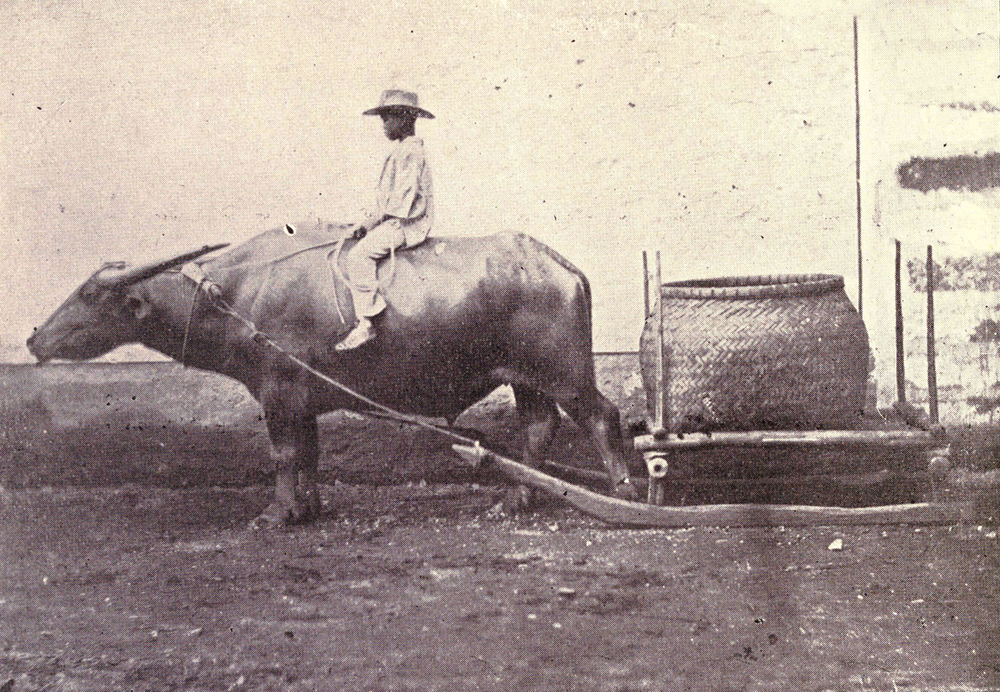
From time to time, we passed carabao, the water buffalo that is the national animal of the Philippines, trying to keep cool in swamps and rice paddies. I knew that once I saw one carabao, there would be another one up the road. If I could just make it to the next carabao and then the next, I would make it to the end.

I made it through the March and through the ordeals of the next three-and-a-half years. But we surviving POWs are still looking for the last carabao.

click to order
Seven years ago, on Veterans Day 2008, I found the next one. I had just completed laying the American Defenders of Bataan and Corregidor’s last memorial wreath at the Tomb of the Unknowns in Arlington National Cemetery. As I started to leave, my cell phone rang. It was Japan’s ambassador to the United States, Ichiro Fujisaki. He asked to see me.

For decades, I had harbored anger and resentment toward both the Japanese who tortured me and the American government that refused me justice. The Army prohibited me from talking about the horrors I endured, and the 1951 San Francisco Peace Treaty barred me from seeking redress for my slave labor. Multimillion-dollar lobbying campaigns by Japan and a White House intent on protecting its Japanese ally stymied all Congressional efforts to help the POWs.


It is hard to explain my excitement at the call. Never before had any Japanese official been willing to meet with a former POW. My wife and I took a taxi directly from the cemetery to the ambassador’s residence.

Ambassador Fujisaki met us at the door. In an extraordinary gesture, Mrs. Fujisaki met us with a bow and extended both her hands. She then led us on a tour of her home. She stayed with her husband to listen. A Washington “Japan hand” told me not to smile. That was advice I ignored.

I was not there to negotiate. I was there to tell my story, to share the pain of the Death March, the Hellship and the Mitsui coal mine; to describe the torture, mistreatment and starvation; and to explain why 40 percent of the nearly 28,000 Americans who were POWs of Japan did not return home. I wanted to know why the Japanese government did not include Americans in their $14 million-plus outreach programs for hundreds of British, Australian and Dutch former POWs and their families.

Ambassador Fujisaki listened. He heard that, even for decades after the war, we American POWs had been denied our dignity and humanity. But Red Cross boxes could not be delivered or medicines administered to the dead. Japan could not undo its lobbying campaign or retrieve the $12 million it had paid to Washington lobbyists. But he wanted to know how we could move beyond this and forward together to reach the next “carabao.”

To me, it was simple: an official government apology for all the POWs. For the survivors, a chance to participate in Japan’s POW visitation program. And for all the POWs who slaved at the mines, docks and factories of over sixty well-known corporations, apologies from those companies to restore a measure of dignity.

For the first time, I had been heard.

The next month, Ambassador Fujisaki wrote me that the Government of Japan offered its apology to “those who have undergone tragic experiences in the Bataan Peninsula and Corregidor Island in the Philippines.” By February 2009, a Cabinet Decision [Japanese] confirmed the statement, saying that the government extended “a heartfelt apology for our country having caused tremendous damage and suffering to many people, including prisoners of wars, those who have undergone tragic experiences in the Bataan Peninsula, Corregidor Island, in the Philippines, and other places.” This inclusive statement for all the POWs of Japan is one of only four official, Cabinet-approved apologies for any of Imperial Japan’s excessives and aggression.

In April 2009, my friend Ambassador Fujisaki accepted my invitation to repeat this apology before my fellow POWs at the American Defenders of Bataan and Corregidor’s last convention in San Antonio, Texas. Not all were ready to let go of their anger, but everyone admired his courage.

That fall, the new Obama administration built on this progress. With the Japanese government, they established a program for former POWs to visit Japan and their former POW camps. I led the first group of seven in September 2010, where we received an apology directly from the foreign minister. The seventh delegation will travel to Japan next month.

My last carabao is elusive. It is an apology from the Mitsui Corporation for forcing me into a dangerous coal mine and allowing their employees to beat me. Baron Mitsui often motored into my camp [Fukuoka #17 Omuta] to examine his Western charges in the primitive, if not primal, confines of his facility. Today, this mine is an UNESCO World Industrial Heritage site. There is no mention of the mine’s history of slave labor.

I hope I can still make it to this last one. On this Veterans Day, my friend Congressman Mike Honda from California has arranged for me to have breakfast at the White House. He wants me to tell the President about my carabao and to not forget World War II vets like me.

Dr. Lester Tenney was a member of the 192nd Tank Battalion on Bataan, The Philippines.The 192nd was deployed to the Philippines on October 27 and arrived on November 20, 1941. Tenney was part of American defensive efforts to hold the islands, but he was taken captive on April 9, 1942. As a Japanese prisoner, he took part in the infamous Bataan Death March. Liberated in September of 1945, Tenney went to the University of Southern California where he received his BA, MA and PhD. He became a professor of finance and insurance at Arizona State University. After he retired as a professor emeritus, Tenney wrote his memoir My Hitch in Hell, about his experiences as a POW under the Japanese.

Saturday, July 04, 2015

US Congressmen ask UNESCO to honor the American POWs

MICHAEL M. HONDA
17TH DISTRICT, CALIFORNIA
1713 LONGWORTH HOUSE OFFICE BUILDING
WASHINGTON, DC 20515

July 1, 2015

Frau
Staatsministerin
Prof. Dr. Maria Böhmer Auswartiges Amt
KurstraBe 36
11013 Berlin
Germany

Dear Frau Stastministerin:

We urge that UNESCO work with the Government of Japan to amend its application to nominate the “Sites of Japan’s Meij i Industrial Revolution: Kyushu-Yamaguchi and Related Areas” for the UNESCO World Heritage List.

We do not object to Japan highlighting its modern history, but we are very concerned that the nomination is missing the history of Allied prisoners of war (POW5) held captive by Imperial Japan during the Second World War. The story of these sites is incomplete without an official recognition of Imperial Japan’s use of POW slave labor. Japan’s nomination features eight industrial areas. Five of these areas housed a total of 26 POW camps, which provided slave labor to Japan’s industrial giants including Mitsui, Mitsubishi, Sumitomo, Aso Group, Ube Industries, Tokai Carbon, Nippon Coke & Engineering, Nippon Steel & Sumitomo Metal Corporation, Furukawa Company Group and Denka.

The Japanese application for World Heritage status focuses only on the history of these mining and steel industries, but completely omits the history of the POWs. Japan’s nomination does not mention the over 13,000 POW slave laborers who worked at or near the nominated sites. The POWs included 4,385 Dutch, 3,860 British, 3,023 Americans, 1,207 Australians, 358 Canadians, 133 Indians, 22 Chinese, nine Portuguese, five New Zealanders, four Jamaicans, six Norwegians, two Czechs, two South African, two Arabs and two Malays. POWs from India, Malaysia Jamaica, Finland, Poland, and Portugal all of which sit on the UNESCO World Heritage committee—were held captive on mainland Japan. Another committee member, South Korea, saw hundreds of thousands of its men and women conscripted to work in near-slavery conditions.

The lack of any reference to the Allied POWs’ role in the history of these sites would appear to contradict not only UNESCO’s mandate of ensuring that World Heritage sites have “Outstanding Universal Value” but also the UN’ s Universal Declaration of Human Rights which states that “recognition of the inherent dignity and of the equal and inalienable rights of all members of the human family is the foundation of freedom, justice and peace in the world.”

We welcome the efforts of our Japanese friends to share their history with the world, but even a close alliance cannot negate historical facts. Imperial Japan’s use of Allied POW slave labor is an essential feature of the history of the nominated sites’ industrial heritage.

We therefore urge UNESCO to work with the Government of Japan to amend its application to tell the full history of Japan’s industrialization by including its history of POW slave labor. This would not only address the concerns of our constituents, but would also ensure that the nomination in question conveys the totality of the story, helping it transcend national boundaries, and highlighting its universal importance.

Thank you for your prompt attention to the concerns of our brave veterans and their elected representatives. We look forward to the World Heritage Centre’s response.

Saturday, July 12, 2014

Olympian, Airman, POW, Inspiration

On July 3rd, Louis Zamperini died. He had faced death many times as a young man. And defied the "odds" many more. As a POW of Japan he was beaten, starved, degraded, experimented upon, and dehumanized. It was with God's grace that he survived to be 97.

On this coming Christmas Day, the triumph and inspiration of his life will be released as a movie that is based on the still-best seller Unbroken. See below for the just released "unofficial" trailer.

It is hoped that the movie will inspire today's Japanese corporations that used and abused the POWs they requested from Imperial Japan's Army Ministry to finally acknowledge how they treated POWs and to offer an apology. Zamperini, as noted in the essay honoring him below, was tormented by Japanese corporate employees as much as by soldiers.

All the companies that allowed their employees to abuse Zamperini, such as the infamous Bird, to abuse their POW slave laborers still exist: Nippon Express, ShinEtsu Chemical, and Nippon Steel and Sumikin Stainless Corp. (NSSC, formerly Nippon Stainless). Although Bird was a military POW guard, his job was to ensure discipline for the company that used the camp's slave labor. It is likely that he was, like many guards and camp employees, paid by the company. As it was, the companies had already paid the War Ministry for the "white slaves" as they were called.


Farewell to America’s ‘Unbroken’ Hero
The Weekly Standard, July 9, 2014
by Dennis P. Halpin (A former Peace Corps volunteer in Korea and a former adviser on Asian affairs to the House Foreign Affairs Committee. He is a visiting scholar at the U.S.-Korea Institute at SAIS (Johns Hopkins) and a consultant to the Poblete Analysis Group)

America, just before its Fourth of July birthday, lost one of the greatest of the generation that guided it through the Great Depression, World War II, and the Cold War. Louis Zamperini was 97, so this was not entirely surprising. Zamperini, the American who couldn’t be broken by Nazis in Berlin or sadistic guards in POW camps in Japan, had been designated to be the grand marshal of the 2015 Tournament of Roses parade. My grandfather, a World War I veteran, used to say “give me my roses while I’m alive.” Unfortunately, the Rose Parade organizing committee waited too long. (Zamperini will still be honored posthumously as grand marshal next New Year’s Day.)

“Lucky Louie,” as he called himself, was a rambunctious kid from an immigrant family, who learned to use his fists after being picked on in school for speaking the broken English he learned from his Italian father. He referred to himself in his memoirs as “a rebel with a chip on his shoulder,” sort of like one of those Hollywood “Little Rascals” for which his prewar generation was famous. After several run-ins with the Torrance, Calif., police and the local parish priest, Louie’s older brother Pete introduced him to athletic running as a means of focusing his energy. Louie began competing in track in what he referred to in his book Devil at My Heels as “the first wise decision of my life.”

The rest is history. The track record of “the Torrance Tornado” took him all the way to the 1936 Berlin Olympics and a handshake with Hitler himself. Louie did not medal—he said he was saving that for the anticipated 1940 Tokyo Olympics. (Zamperini, of course, made it to Japan, but only as a POW slave laborer.)

But Zamperini had run an astonishing 56 seconds in the final quarter mile of the 5,000 meter event in Berlin so the Fuehrer wanted to meet him. Goebbels brought Zamperini to Hitler who observed, “you’re the boy with the fast finish.” Louie said the American athletes in 1936 considered Hitler “only as a dangerous clown.”

Louie still had some of his rambunctious qualities because, on a tour of Berlin with a teammate, he decided that he wanted a swastika souvenir when they stopped in front of the Reich Chancellery to take photos. As they stood there Hitler again appeared with a contingent of armed guards and went inside. After the building’s guards had goose-stepped past, Louis made a run for the building, climbed a flag pole and grabbed a Nazi banner. The guards saw Zamperini as he attempted to make his escape, shouted “halt” and started firing. Louie wisely stopped and was handcuffed. However, upon seeing his Olympic uniform and hearing that he had wanted the swastika as a souvenir, the German commandant of the building let “Lucky Louie” keep the banner.

It was in the Pacific Theater where Louis Zamperini made his name as a war hero. Anticipating America’s entry into the war, he enlisted in the army in September 1941. He went to Officers Candidate and bombardier school in Midland, Texas. In October 1942 he was assigned as an Army Air Corps second lieutenant to Hickam Field in Honolulu with the B24 bombing unit of the Forty-second Squadron. His first raid took place on Christmas Eve, 1942, the target was Japanese-occupied Wake Island.

On May 26, 1943, in an aircraft dubbed the Green Hornet, which Zamperini noted “couldn’t fly straight,” he and his fellow crew members crash landed in the Pacific. His harrowing 47 days on the high seas, including near starvation (his weight dropped to 67 pounds), thirst, encounters with sharks, killing and eating raw sea birds, and the death at sea of a fellow crew member, are graphically recorded in Laura Hillenbrand’s best-selling Unbroken: A World War II Story of Survival, Resilience and Redemption. That story will also be retold in a movie directed by Angelina Jolie which is to be released in December.

Zamperini and another crewmember, Second Lieutenant Russell Phillips, were captured by the Japanese and taken first to the island of Kwajalein and then to mainland Japan as POWs. His parents received a letter from President Franklin Roosevelt informing them that their son had “died in the service of his country” and that “he stands in the unbroken line of patriots who have dared to die that freedom might live.” His mother, however, never gave up hope that he was alive.

Louis Zamperini’s treatment as a brutalized prisoner of war continues to have relevance today because of the ongoing debate in Asia over Japan’s war crimes. Article 2 of the 1929 Geneva Convention Relative to the Treatment of Prisoners of War reads: “They must at all times be humanly treated and protected, particularly against acts of violence, insults and public curiosity. Measures of reprisal against them are prohibited.” The death rates of American POWs held by Nazi Germany and Japan during the Second World War provide a stark contrast. Statistics indicate that only 1,121 of 93,941 U.S. POWs died in Nazi internment camps (a rate of about 1.1 percent) while 13,851 of 36,260 POWs died while in Imperial Japanese custody (a rate of 38.2 percent.) This is evidence not only of abuse and brutality but of clear violations of the Geneva Convention by Imperial Japanese authorities.

Zamperini became aware of these violations from his first days of captivity on Kwajalein. A native islander, who worked for the Japanese, approached him in his cell because of his Olympic notoriety. This person informed him that the nine U.S. Marines who had left messages scrawled in Zamperini’s cell had been summarily executed, “decapitated with a samurai sword.” Zamperini described how his guards taunted him and his crewmate: “they jabbed us with sticks, spit on us, tossed hot tea in our faces. Sometimes they made us sing and dance—as if we could—for their amusement.” He also observed Comfort Women, the current focus of so much historic controversy, while imprisoned on Kwajalein. In his memoirs, he recorded: “on the way I passed two somber young girls, very out of place in a combat zone. They shuffled and stared at the ground.”

Later, on the prison ship transporting him to mainland Japan, guards examined Zamperini’s wallet. There they discovered a Stars and Stripes newspaper clipping regarding his Olympic background and his participation in the Wake Island raid. They were so angered that they broke his nose. He was transferred to a series of POW camps where he spent the next two years as a slave laborer. “Brutal beatings, with fist or club, were the daily rule,” he recorded.

Zamperini made a mental note of guards and officials who were especially brutal and sadistic in their treatment of the POWs. At Camp Ofuna, in the foothills near Yokohama [Kamakura], there was a medic named Kitamura, nicknamed “the Quack,” who sadistically beat POW Marine Bill Harris almost to death for concealing a map of Allied military advances. There was James Sasaki, who had attended USC with Louis Zamperini, undercover as a Japanese spy, and then returned to Japan to become the head interrogator for the prison camp system. Above all, there was Sergeant Matsuhiro Watanabe, who was assigned to Camp Omori, where Louis was transferred, and was nicknamed “the Bird.” Zamperini described him as “deranged, brutal beyond belief.” He took a personal dislike to “Lucky Louie” and tormented him both verbally and with great physical brutality.

“The Bird” disappeared near the war’s end and hid in the mountains of Japan for seven or eight years, until a general amnesty, to escape trial as a war criminal (Watanabe had been classified as a class-A war criminal, number 23 of the top 40 most wanted men, for his crimes against humanity.) When Louis returned to Japan in1998 to carry the torch for the Winter Olympics in Nagano, near the site of his final internment camp, he asked to meet with Watanabe, who had been located by journalists. Louis wanted closure and reconciliation but “the Bird,” in a final act of degradation, refused to meet with him. (Decades earlier, after hearing Reverend Billy Graham preach, Louie had met some of his other captors in Japan and had forgiven them all.)

At that last internment facility, Camp 4-B [Naoestu], near Nagano, where Louis Zamperini would return over a half century later, Louis and his fellow POWs were forced to engage in slave labor for Japanese corporations: “every day, gangs marched to the nearby steel mill, train yard and port. Although we had shoes, most of us walked the two miles to work barefoot in the March snow and ice, our feet wrapped in rags, because the Bird had a rule: whoever had dirty shoes got beaten and had to lick them clean.”

Two of the companies for which Louie and his fellow prisoners were forced to labor, Shinetsu Chemical and Nippon Stainless [NSSC], continue to exist today. A number of these corporations which used slave labor also continue to do business in the United States. As former POW Edward Jackfert pointed out in a recent article in the National Interest, Sumitomo, Kawasaki, and Mitsui, all of which used POW slave labor in their wartime factories, have sold rail cars which run on Virginia’s VRE rail line. Yet, unlike German corporations, which used slave labor, these corporations have never offered an apology to our old soldiers who are slowly fading away.

In 2000, then British Prime Minister Tony Blair agreed to a “multi-million pound compensation package” for former British prisoners of war in Japan in recognition of their “appalling” experiences—ex gratia payments from the UK government. As a result of Blair’s example, legislation was introduced in Congress which instead sought direct compensation for America’s POWs from Japanese corporations rather than from the U.S. taxpayer—the “Justice for the U.S. POWs Act of 2001”—with bipartisan sponsorship from two legislators from Louis Zamperini’s home state of California, Dana Rohrabacher and Mike Honda.

The bill was designed “to preserve certain actions in Federal court brought by members of the United States Armed Forces held as prisoners of war by Japan during World War II against Japanese nationals seeking compensation for mistreatment or failure to pay wages in connection with labor performed in Japan to the benefit of the Japanese nationals.” The legal bureau of the State Department, however, supported the Japanese government’s position that all such claims were settled by the 1951 Treaty of San Francisco, so the proposed legislation got nowhere. There has thus been no formal U.S. recognition of the debt owed our POW slave laborers.

Former Ambassador of Japan to the United States, Ichiro Fujisaki, did take an important step in offering his government’s first official apology in 2009 to survivors of the Bataan Death March at their organization’s final national convention in San Antonio, Texas. Ambassador Fujisaki stated, according to the Las Cruces Sun-News, "As former prime ministers of Japan have repeatedly stated: The Japanese people should bear in mind that we must look into the past to learn from the lessons of history. We extend a heartfelt apology for our country having caused tremendous damage and suffering to many people, including prisoners of war, those who have undergone tragic experiences in the Bataan Peninsula, in Corregidor Island in the Philippines and other places.” [NB: No official  text of this speech has ever been issued. The exact apology words used in Japanese are unknown.]

Perhaps the passing of the “Unbroken” Louis Zamperini will be an occasion for Japanese corporations involved in slave labor to join in extending their apologies to the dwindling number of America’s World War II POW veterans. Is saying sorry so hard? “Lucky Louie” certainly wouldn’t think so.

Friday, October 18, 2013

For the Record

On October 15th, Congressman Mike Honda (D-CA) entered into the Congressional Record the names of the seven participants of the 4th American POW Delegation to Japan. He introduced the former POWs and the widows of former POWs with the following "extension of remarks":


  • Mr. HONDA. Mr. Speaker, I rise today to honor veterans from America's greatest generation and thank the Government of Japan for recognizing the sacrifices of these men. On Sunday, October 13, seven former members or widows of former members of the U.S. Army, U.S. Army Air Corps, and U.S. Marines who fought in the Pacific Theater of World War II--and who were once prisoners of war of Imperial Japan--will travel to Japan as guests of the Japanese government. Marking an act of historic reconciliation and remembrance, this is the fourth delegation of U.S. POWs to visit Japan through this program.

  • Their first trip to Japan was on aging freighters called ``Hellships,'' where the men were loaded into suffocating holds with little space, water, food, or sanitation. The conditions in which they were held are unimaginable. At the POW camps in the Philippines, Japan and China, they suffered unmerciful abuse aggravated by the lack of food, medical care, clothing, and appropriate housing. Each POW also became a slave laborer at the mines, factories, and docks of some of Japan's largest companies. In the end, nearly 40 percent of the American POWs held by Japan perished; compared to two percent of those in Nazi Germany's POW camps. The POWs of this delegation slaved for Mitsubishi, Nippon Express, Sumitomo, Nisshin Flour, Hitachi, Dowa Holdings, and JFE Holdings.

  • In September 2010, the Japanese government delivered to the first American POW delegation an official, Cabinet-approved apology for the damage and suffering these men endured. Although the Japanese government had hosted POWs from the wartime Allies of the United States since the late 1990s, the 2010 trip was the first trip to Japan for American POWs. It was also the first official apology to any prisoners of war held by Japan.

  • I know that the American POWs fought hard for this recognition. Dr. Lester Tenney of California, a former POW who mined coal for Mitsui, was instrumental in persuading the Government of Japan to offer the apology and initiate the trips of reconciliation. He says he is ``honored to have had the opportunity of assisting the U.S. State Department and the Japanese Embassy in arranging this year's POW Visitation Program. Like the years past, the visit will no doubt yield many memories while at the same time erase many bad experiences that left its mark on the POWs. This year, for the first time, Japan's Minister of Foreign Affairs has allowed three widows of former POWs to participate in the program and visit the sites of their husbands' Japanese prison camps located in various cities in Japan.''

  • I thank the POWs for their persistent pursuit of justice, and commend the U.S. State Department for helping them. I also appreciate the willingness of the Japanese government to pursue an historic and meaningful apology. It is my hope that the POW Visitation Program continues to expand, and that it will be a healing mechanism for the POWs, their families and communities.

  • Now, it is time for the many Japanese companies that used POWs for slave labor during World War II to follow the example of their government by offering an apology and supporting programs for lasting remembrance and reconciliation.

  • Mr. Speaker, I wish these men a fulfilling trip to Japan, and I hope that their trip contributes to securing the historic peace between the U.S. and our important ally Japan. 

  • [Biographies of participants follow in text.]

    Friday, November 09, 2012

    Remembering Bataan & Corregidor

    In late April of this year, five former POWs of Japan who fought on Bataan and Corregidor visited Washington, DC to commemorate these historic battles. Congressmen Mike Honda (D-CA), Brian Bilbray (R-CA), and Bill Huizenga (R-MI) were the only members of Congress to greet these veterans.

    However, these members of America's greatest generation made a big impression on the people they did meet at the National Guard Association, the Heritage Foundation, the State Department, and the World War II memorial. As you will see in this video, young people are eager to meet and learn from them.


    We have extensive video footage of the visit to Washington former by these former POWs of Japan, which we would like to turn into a a short documentary. Your contributions to help make this happen are much needed.

    Monday, October 17, 2011

    2nd US POW Delegation to Japan, October 15-23, 2011

    On Saturday, October 15, 2011, the second delegation of American former POWs of Japan left the United States to visit Japan. They are guests of the Japanese government. It is unclear when the Japan's Foreign Ministry will announce the trip.

    To honor these men, Representative Mike Honda (D-CA) took to the floor of the House on October 13th:

    Mr. HONDA. Mr. Speaker, I rise today to honor veterans from America's greatest generation and thank the Government of Japan for recognizing the sacrifices of these men. On Saturday, October 15, seven former members of the U.S. Army and Army Air Corps, who fought in the Battle for the Philippines at the start of World War II, from December 1941 to May 1942, will travel to Tokyo as guests of the Japanese government. These brave soldiers and airmen were all prisoners of war of Imperial Japan.

    The conditions in which they were held are unimaginable. Their first trip to Japan was on aging freighters called "Hellships,'' where the men were loaded into suffocating holds with little space, water, food, or sanitation. At the POW camps in the Philippines, Japan and China, they suffered unmerciful abuse aggravated by the lack of food, medical care, clothing, and appropriate housing.

    Each POW also became a slave laborer at the mines, factories, smelters, and docks of Japan's largest companies, including Mitsui, Nippon Steel, Showa Denko, Mitsubishi, and Japan Metals & Chemicals Company. In the end, nearly 40% of the American POWs of Japan perished; compared to the two percent of those in Nazi Germany's POW camps.
     
    The men traveling to Japan this weekend include five residents of California, one from Arizona and one from Missouri. There are two survivors of the infamous Bataan Death March and four who were captured during the surrender of Corregidor. Furthermore, two of the veterans believe that they were subject to medical experimentation.

    In September 2010, the Japanese government delivered to the first American POW delegation an official apology for the damage and suffering these men endured. Although the Japanese government had hosted POWs from U.S. wartime Allies, this was the first trip to Japan for American POWs. It was also the first official apology to any prisoners of war held by Japan.

    I know that the American POWs fought hard for this recognition. I appreciate the courage of the Japanese government for their historic and meaningful apology. I thank the POWs for their persistent pursuit of justice, and commend the U.S. State Department for helping them. Now, it is time for the many Japanese companies that used POWs for slave labor during World War II to follow the example of their government by offering an apology and supporting programs for lasting remembrance and reconciliation. Furthermore, I invite my colleagues on both sides of the aisle to join me in a making a small, but significant, gesture to show these men that Congress has not forgotten their experience and sacrifice by cosponsoring House Resolution 333, which I introduced earlier this year.

    I wish these men a fulfilling trip to Japan, and I hope that their trip contributes to securing the historic peace between the U.S. and our important ally Japan. Second U.S. POW Delegation to Japan, October 15-23, 2011

    Harold A. Bergbower, 91, lives in Peoria, Arizona. He joined the U.S. Army Air Corps in 1939 and was part of V Bomber Command, 19th Bomb Group, 28th Bombardment Squadron, Far East Air Force. He was at Clarke Field when Japan attacked on December 8, 1941. He was knocked out in the bombardment and when he awoke he found himself in the morgue at Fort Stotsenburg. Bergbower crawled out and went back to his squadron to fight in the Battle of Bataan. By escaping to Mindanao after surrender, he avoided the Bataan Death March and was captured in May. On the Philippines, he was imprisoned at Malaybalay on Mindanao and the Davao Penal Colony. In August 1944, he survived the sinking of several Hellships only to end up on Mitsubishi's Noto Marti; a trip he has completely blocked out. He was a slave laborer scooping iron ore into an open hearth furnace at the Nagoya-6B-Nomachi (Takaoka) camp for the Hokkai Denka Company which was involved in ferro-alloy smelting. Today, the site remains in ferro-alloy business as Takaoka Works. It is, as was Hokkai Denka, still part of Japan Metals & Chemicals Co., Ltd (JMC, Nihon Jukagaku Kogyo). Bergbower stayed in the U.S. Air Force and returned to Japan (1954-1957) to train Japan's Air Self-Defense Force. He and his family lived near air bases in Hamamatsu, Shizuoka Prefecture and in Fukuoka (Itazuke), Fukuoka Prefecture. After retiring in 1969, he became a golf pro for Dell Webb's Sun City, Arizona. He is a past Commander of the American Defenders (2005-6) and helped to establish its Descendant's Group.
    POW#89
    Trent Franks (R-AZ) 

    James C. Collier, 88, lives in Salinas, California. He enlisted in the U.S. Army in 1940 at the age of 16. As a member of U.S. Army 59th Coast Artillery, Battery D ``Cheney'' he was captured on Corregidor. Before being shipped from the Philippines to Japan on Mitsubishi's Noto Maru in August 1944, he was held in Cabanatuan and Clark Field. Collier was a slave laborer feeding iron ore into the open hearth furnace at the Nagoya-6B-Nomachi (Takaoka) camp for the Hokkai Denka Company, which was involved in ferro-alloy smelting. Today, the site remains in ferroalloy business as Takaoka Works. It is, as was Hokkai Denka, still part of Japan Metals & Chemicals Co., Ltd (JMC, Nihon Jukagaku Kogyo). After WWII, he earned two master's degrees: one in the Teaching of English from San Jose State and another in School Counseling from the University of Oregon, Eugene. He taught English and Psychology and worked as a guidance counselor in a high school and community college for 31 years.
    POW#130
    Sam Farr (D-CA) 

    Harry Corre, 88, lives in Los Angeles, California. He joined the U.S. Army in 1941 and was sent to the Philippines as part of the 59th Coast Artillery Regiment, Battery C "Wheeler.'' He was captured by the Japanese with the surrender of Bataan on April 9, 1942 and began the infamous Bataan Death March. He escaped by swimming, with the assistance of a hastily improvised floatation device, the three-and-a-half miles to Corregidor, where he rejoined his unit. Corre was surrendered on Corregidor and imprisoned at Cabanatuan #1 and #3. He was shipped to Japan in July 1943 on Mitsubishi's Clyde Maru to mine coal at Omuta Fukuoka #17 Branch POW Camp for Mitsui Mining (now Mitsui's Nippon Coke & Engineering Company Co., Ltd., NB: Mitsui-aflliated companies now have a minority stake in this company, of which Nippon Steel and Sumitomo hold the majority of shares. See FY2010 Annual Report, page 27, in Japanese only.). After the war he worked odd jobs for several years and then moved to California to work in the aerospace industry. He returned to school in 1971 and graduated from Western Electronic Institute in Los Angeles as an electronics engineer. He worked in the aerospace industry for 40 years with his last position at TRW. Corre presently works at the Los Angeles, California Veterans Administration Hospital as a Patient Advocate and as a Veterans Service Officer for the American Ex-Prisoners of War as well as a POW Coordinator for the Veterans Administration Hospital & West Los Angeles Veterans Administration Regional Office.
    POW# 283
    Karen Bass (D-CA) 

    Roy Edward Friese, 88, lives in Calimesa, California. He joined the U.S. Army in 1941 and became a member of the 60th Coast Artillery Regiment Battery E ``Erie.'' He arrived in the Philippines in April 1941 for basic training. He was assigned to a searchlight battery on the tip of Bataan and then evacuated to Corregidor when Bataan fell April 9, 1942. He was imprisoned on the Philippines in Bilibid and Cabanatuan. Friese was shipped to Japan in July 1943 on Mitsubishi's Clyde Maru to mine coal at Omuta Fukuoka #17 Branch POW Camp for Mitsui Mining (now Mitsui's Nippon Coke & Engineering Company, NB: Mitsui-aflliated companies now have a minority stake in this company, of which Nippon Steel and Sumitomo hold the majority of shares. See FY2010 Annual Report, page 27, in Japanese only.).  After WWII, he reenlisted in the U.S. Army and in 1947 transferred to the U.S. Air Force. He retired after 20 years of service. In civilian life he was employed doing various types of electronics work. In 1975, Friese established his own company installing & repairing micrographic equipment. In retirement he pursues hobbies of travel, photography, woodworking, and collecting antique clocks.
    POW#173

    Ralph E. Griffith, 88, lives in Hannibal, Missouri. He enlisted in the army in 1941 at the age of 17 and received his basic training on Corregidor, the Philippines. He was captured on Corregidor in May 1942 with his unit, the U.S. Army 60th Coast Artillery Regiment Battery F ``Flint.'' On the Philippines he was a POW in Bilibid and Cabanatuan. He was shipped to Mukden, China (today's Shenyang) in October 1942 on Mitsubishi's Tottori Maru via Korea to Manchuria. Griffith was a slave laborer at MKK (Manshu Kosaku Kikai, which some researchers believe was owned by Mitsubishi and known as Manchuria Mitsubishi Machine Tool Company, Ltd.) factory working as a planer operator. He believes that the multiple shots and blood tests that he received while at Mukden were part of human medical experiments conducted by the Imperial Army's 731st Biological Warfare Unit. At liberation, he walked out the main gate of the POW camp and was immediately taken by the hand by a little Chinese girl. She brought him to her home where her family had prepared a meal for him. This family fed and cared for him until he was repatriated. Ever since, whenever he sees a Chinese family dining at a restaurant he quietly pays their bill. After the war, he went to work for railways both in Missouri and Alaska. Not liking the cold weather, he went to work for the Elgin, Joliet & Eastern Railway in northern Indiana. After 37 years, he retired from the Railway and returned to his hometown of Hannibal, Missouri where he was born and raised.
    POW#552
    Sam Graves (R-MO)

    Oscar L. Leonard, 92, lives in Paradise, California. He joined the Idaho National Guard 116th Cavalry in 1939 and the U.S. Army Air Corps in 1940. He was sent to the Philippines to be an airplane mechanic with 28th Heavy Bomb Squadron at Clark Field. He was surrendered on Mindanao in May 1942 and held as a POW in Malaybalay and Bilibid. Leonard was then shipped to Japan on Mitsubishi's Tottori Maru in October 1942. In Japan, he was held in a prison in Kawasaki and at Tokyo-2B-Kawasaki POW Camp (Mitsui Wharf Co., Ltd. known as "Mitsui Madhouse'') to be used as stevedore and steel mill slave labor for the Mitsui Corporation as well as mixing chemicals for ammunition for Showa Denko. He was then held at Tokyo-5D-Kawasaki POW Camp where he was forced to work at a steel mill for Nihon Kokan (Japan Steel Pipe, now part of JFE Holdings). He was sent finally to Tokyo-7B-Hitachi POW Camp to refine copper ore for Nippon Mining (today, JX Holdings Ltd., Inc.). He weighed only 85 pounds at liberation. After World War II, Leonard felt he was too old to return to medical school and decided to become a pharmacist. He attended Marin College and graduated from Idaho State College School of Pharmacy Pocatello in 1954. He still works relief at local pharmacies, sometimes helps his youngest daughter plant trees on her ten acres of land, cuts and chops his own firewood, and enjoys world travel.
    POW#247

    Robert J. Vogler, Jr., 90, lives in Rancho Bernardo, San Diego, California. He joined the U.S. Army Air Corps in January 1940 at the age of 19. Stationed in Manila as part of the 24th Pursuit Group 17th Pursuit Squadron, he completed aircraft instrument training and attended the University of Philippines to study engineering. He serviced aircraft and then fought as an infantry soldier during the Battle of Bataan. As a POW, he survived the Bataan Death March, Camp O'Donnell, and Cabanatuan in the Philippines. He was shipped to Mukden, China (today's Shenyang) in October 1942 on Mitsubishi's Tottori Maru via Korea to Manchuria. Vogler was a slave laborer at MKK factory (Manshu Kosaku Kikai, which some researchers believe was owned by Mitsubishi and known as Manchuria Mitsubishi Machine Tool Company, Ltd.), working as a grinding specialist. He believes that the multiple shots and rectal probes that he received while at Mukden were human medical experiments conducted by the Imperial Army's 731st Biological Warfare Unit. In May 1944, he and 150 American POWs were transferred to Nagoya-1B-Kamioka, Japan as punishment for bad behavior to be slave laborers for Mitsui Mining (now Kamioka Kogyo, a 100% subsidiary of Mitsui Mining & Smelting Co., Ltd.) mining lead and zinc. Mitsui now operates a recycling center at the former POW camp site. The mine was also the source of one of Japan's four major cases of mass industrial poisoning in the 1960s. After the war, he remained in the U.S. Air Force, retiring in 1960. He was then employed by General Dynamics as a manufacturing and development engineer, but was forced to retire in 1976 due to health issues caused by his POW experience. In 2000, Mr. Volger and his wife returned to Kamioka to a warm welcome from mine representatives, town officials, citizens, and school children. He said that the visit brought him to tears and helped rest the many demons that haunted him from his maltreatment in Japan's POW camps.
    POW#138 and #0336
    Darrell Issa (R-CA) 

    None of these veteran's Representatives have become co-sponsors of H. Res. 333. (November 1, 2011)

    Friday, September 16, 2011

    Where is Congress?

    Congress Is Missing in Action for the POWs/MIAs


    by Ralph Levenberg, USAF (Retired)
    The Huffington Post, September 16, 2011


    On this National POW/MIA Recognition Day, I am at a loss as to why H. Res. 333 honoring POWs from World War II languishes in the House of Representatives. The Resolution, introduced by Representative Mike Honda (D-CA), thanks the Government of Japan for offering last year an apology to the American POWs of Japan and encourages the Japanese companies that used them as slave labor to follow the example of their government. Most important, it acknowledges the sacrifices of these veterans of whom nearly 40 percent died in merciless captivity.

    My story is not much different than many Americans captured by Japan. I was a member of the Army Air Corps stationed on the Philippines when the Japanese invaded in December 1941. I was surrendered by my commanding officers on April 9, 1942 and survived the infamous 65-mile Bataan Death March in the tropical sun with little water and no food. I saw my friends beheaded, bayoneted and beaten to death.

    The violence did not end at the POW camps on the Philippines where I helped bury hundreds of fellow POWs who died of disease, abuse, and malnutrition. In 1944, I was shipped to Japan in a Hell Ship, the Nissyo Maru, owned and operated by Mitsui. Nearly 1,600 POWs were herded into the freighter's dark hold and given little food or water. After 17 hellish days with no sanitation or fresh air, we arrived in Moji, Japan.

    We were then transported by train to the village of Narumi on the main island of Honshu. The military had sold 200 Americans as property to Nippon Sharyo to labor at its locomotive factory to maintain war production. Both the guards and company employees routinely and capriciously beat us. We subsisted on little food, clothing and medical care. We were never given Red Cross boxes or mail.

    Nippon Sharyo profited from our labor. The company, now owned by the Shinkansen operator JR Central, remains one of Japan's principal rail car makers and has robust sales in the United States. It is also a central player in Japan's bid for American high-speed rail contracts.

    At Nippon Sharyo, I remember watching a starving Staff Sergeant, Sam Moody, brought to the camp yard after stealing a cup of rice. He was beaten and left to stand at attention in the summer sun with six other POWs. The slightest movement or twitch led to a harsh blow from the passing guards. He stood there for a remarkable 53 hours until he was tossed back into the barracks. Rep. John Mica (R-FL)*, chair of the House Transportation Committee reprinted Moody's POW memoir to distribute to all visiting veterans.

    The abuse, violence, and murders in Nippon Sharyo's Narumi POW camp and factory led to one of the highest number of convicted Japanese war criminals: 22.

    But this doesn't make up for the fact that both the Japanese government and its wealthiest companies colluded to enslave tens of thousands of American and Allied POWs, in clear violation of the Geneva Convention. Companies like Mitsui, Mitsubishi, Sumitomo, Kawasaki and Hitachi requested and purchased us from Japan's War Ministry. Often these corporations were more abusive than Imperial Japan's military.

    Last September the Japanese government officially apologized to the American POWs and, in March, to the Australian POWs. The government established a provisional visitation program to Japan for U.S. veterans and our descendants -- 15 years after Tokyo had established a similar program for Allied POWs. Although my health prevented me from participating, it was profoundly meaningful for me to know that my fellow POWs who participated in the inaugural visit were treated with kindness and respect. 


    The experience of being a POW and slave laborer for Japan stripped me of my dignity and my youth. It astounds me that Nippon Sharyo and other Japanese corporations neither acknowledge nor apologize for willfully enslaving American forces. But it bothers me more, that members of Congress, many who exhibit POW/MIA flags outside their Capitol Hill offices, hesitate at becoming co-sponsors of H.Res.333.

    It is time for Japan's companies to follow their government's lead, and apologize to the POWs and establish a program of remembrance. Our blood and despair helped sustain these companies. I do not want compensation. I simply ask for a genuine apology and that my presence be remembered. But first, Congress must stand by our side.


    * Congressman John Mica has not become a co-sponsor of H.Res. 333. You can find the introduction he wrote for Sam Moody's memoir HERE.            

    Thursday, July 28, 2011

    Congressional Hearings on American POWs of Japan

    It was not until 2000, that the U.S. Congress held hearings on how the 1951 San Francisco Peace treaty with Japan abrogated the right of American former POWs of Japan to sue Japanese companies for compensation for their forced labor or on how the POWs were treated in Japan in violation of the Geneva Convention.

    There had also never been congressional discussion on how the POWs were treated upon return. Many were forced to sign military gag orders not to discuss any details of their imprisonment. Researchers have found that American POWs of Japan died at four times the rate of other veterans of WWII after their first year back. Further, POWs of Japan suffered the highest rate of Post-traumatic Stress Disorder (PTSD, which was not given an official name until 1980) of any WWII veteran. (Soldier from the War Returning: The Greatest Generation's Troubled Homecoming from World War II by Thomas Childers, Houghton Mifflin Harcourt, 2009)

    In 2000, the full Senate Judiciary Committee held a hearing on if and how the U.S. can assist POWs to obtain compensation for forced labor and inhumane imprisonment. In 2002, the Subcommittee on Immigration, Border Security and Claims of the House Judiciary Committee held a hearing on the Justice for POWs Act, H.R. 1198 [107].

    This legislation was popular in the 107th House of Representatives. Introduced by Dana Rohrabacher (R-CA), there were 230 co-sponsors. Despite this strong support, much of it promoted by then-Majority Whip Tom "The Hammer" Delay, the bill never made it out of the three committees it was referred to, thus never getting to the floor of the House for a vote. There was also no companion legislation in the Senate (necessary for bill to become a law).

    For a full analysis of all the legislation concerning the American POWs of Japan see "Critical Documents" on this blog: Legislative History. Below are the tables of contents of both hearings and the links to these documents. They are excellent compendiums of the issues involved with reconciliation and Japanese war crimes.


    ON

    DETERMINING WHETHER THOSE WHO PROFITED FROM THE
    FORCED LABOR OF AMERICAN WORLD WAR II PRISONERS OF
    WAR ONCE HELD AND FORCED INTO LABOR FOR PRIVATE
    JAPANESE COMPANIES HAVE AN OBLIGATION TO REMEDY THEIR
    WRONGS AND WHETHER THE UNITED STATES CAN HELP
    FACILITATE AN APPROPRIATE RESOLUTION

    JUNE 28, 2000

    STATEMENTS OF COMMITTEE MEMBERS

    Hatch, Hon. Orrin G., U.S. Senator from the State of Utah ................................ 1
    Feinstein, Hon. Dianne, U.S. Senator from the State of California ...................... 5
    Grassley, Hon. Charles E., U.S. Senator from the State of Iowa ....................... 22
    Leahy, Hon. Patrick J., U.S. Senator from the State of Vermont ...................... 23

    CHRONOLOGICAL LIST OF WITNESSES

    Statement of Hon. Jeff Bingaman, U.S. Senator from the State of New Mexico.... 3

    Panel consisting of David W. Ogden, Acting Assistant Attorney General,
    Civil Division, U.S. Department of Justice; and Ronald J. Bettauer, 
    Deputy Legal Adviser, Department of State, Washington, DC............................. 6

    Panel consisting of Harold W. Poole, former World War II prisoner of war
    in Japan, Salt Lake City, UT; Frank Bigelow, former World War II prisoner
    of war in Japan, Brooksville, FL; Maurice Mazer, former World War II
    prisoner of war in Japan, Boca Raton, FL; Lester I. Tenney, former World
    War II prisoner of war in Japan, LaJolla, CA; Edward Jackfert, former
    World War II prisoner of war in Japan, and commander, American Defenders
    of Bataan and Corregidor, Inc., Wellsburg, WV; and Harold G. Maier,
    professor of law, Vanderbilt University, Nashville, TN .................................. 28

    ALPHABETICAL LIST AND MATERIALS SUBMITTED

    Bettauer, Ronald J.: Testimony.......................................................10
    Prepared statement ....................................................................... 14

    Bigelow, Frank: Testimony ............................................................ 31

    Bingaman, Hon. Jeff: Testimony .......................................................3

    Jackfert, Edward: Testimony .......................................................... 35

    Maier, Harold G.: Testimony.......................................................... 38
    Prepared statement ....................................................................... 39

    Mazer, Maurice: Testimony ........................................................... 32

    Ogden, David W.: Testimony .......................................................... 6
    Prepared statement ......................................................................... 8

    Poole, Harold W.: Testimony ......................................................... 28
    Prepared statement ........................................................................ 29

    Tenney, Lester I.: Testimony ........................................................... 33


    APPENDIX

    QUESTIONS AND ANSWERS
    Responses to questions of Senator Hatch from:

    The Department of Justice ............................................................................ 47

    Ronald J. Bettauer ......................................................................................... 53

    ADDITIONAL SUBMISSIONS FOR THE RECORD

    Text of e-mail message to Senator Hatch from Rabbi Abraham Cooper of
    the Simon Wiesenthal Center, Berlin, Germany, dated June 26, 2000 ............ 55

    Prepared statements of:

    Bruce R. Harder, director, National Security and Foreign Affairs, Veterans
    of Foreign Wars of the United States .......................................................... 55

    Linda G. Holmes ............................................................................................. 56

    Chalmers Johnson .......................................................................................... 59

    Prime Minister Tomiichi Murayama, dated Aug. 15, 1995....................... 61

    Michael D. Ramsey ......................................................................................... 61

    Paul W. Reuter ............................................................................................... 65

    John M. Rogers ............................................................................................. 67

    Joseph A. Violante ......................................................................................... 72

    Letters to:

    Senator Hatch from Edward Jackfert, past national commander, American
    Defenders of Bataan & Corregidor, Inc., dated June 20, 2000 .............. 73

    Stuart Eizenstat, Deputy Secretary of the U.S. Treasury, from Michael
    Engelberg, M.D., the American Center for Civil Justice, 
    dated June 10, 2000 ..................................................................................... 74

    Hiroaki Yano, president, Mitsubishi International Corp., from Michael
    Engelberg, M.D., the American Center for Civil Justice, 
    dated June 13, 2000 ..................................................................................... 74

    Hiroshi Noda, Kawasaki Heavy Industries U.S.A.), Inc., from Michael
    Engelberg, M.D., the American Center for Civil Justice, 
    dated June 13, 2000 ...................................................................................... 75

    Senator Hatch from Michael M. Honda, California State Legislature,
    dated June 30, 2000 ..................................................................................... 75

    Senator Hatch from Gilbert M. Hair, executive director, the Center for
    Internee Rights, Inc., dated June 22, 2000 ............................................... 76

    Chart: Information on U.S. POW’s held in World War II ........................ 78

    Senator Hatch from John E. Julian, first selectman, Office of Selectman,
    State of Connecticut ...................................................................................... 79

    Senator Hatch from John F. Sommers, Jr., executive director, the American
    Legion, dated June 27, 2000 ....................................................................... 79

    Senator Hatch from Charles L. Taylor, AMVETS national commander,
    dated June 26, 2000 .................................................................................... 80

    Senator Hatch from Bob Weygand, Member of Congress, House of
    Representatives, dated June 23, 2000 ...................................................... 80

          Senator Hatch from Frank G. Wickersham, III, national legislative director,
    Military Order of the Purple Heart, dated June 23, 2000 ...................... 81

    HOUSE 2002 JUDICIARY COMMITTEE HEARING NEXT PAGE

    Wednesday, July 13, 2011

    Honda introduces resolution honoring American POWs

    REP. HONDA INTRODUCES BIPARTISAN RESOLUTION TO HONOR WORLD WAR II U.S. PRISONERS OF WAR

    Michael Shank, Office of Mike Honda (D-CA) Press Secretary
    (202) 225-2531
    michael.shank [@] mail.house.gov

    Wednesday, 22 June 2011

    WASHINGTON, DC – Today, Representative Michael Honda (CA-15), Chairman Emeritus of the Congressional Asian Pacific American Caucus, introduced a bipartisan resolution [H. Res. 333] honoring United States veterans who were held as prisoners of war during World War II.

    The resolution commemorates the courageous and faithful men and women who were taken as U.S. POWs in the Pacific. It also commends the Government of Japan for the steps it has taken to provide some justice to former U.S. POWs, recognizes America’s strong alliance with Japan and calls on the private Japanese companies that profited from U.S. POW labor to apologize and support programs for lasting remembrance and reconciliation.

    “I have long felt that Congress has a moral obligation to honor the men and women who suffered grave injustices during World War II,” said Rep. Honda. “With fewer than 500 surviving POWs alive today, I ask my colleagues on both sides of the aisle to join me in making this small, but significant, gesture to show these brave men and women that Congress has not forgotten about their experience and sacrifice, and that we appreciate Japan for the steps it has taken.”

    During World War II, an estimated 27,000 men and women of the U.S. Armed Forces were captured by Imperial Japan’s military. These American POWs were subjected to brutal and inhumane conditions and forced labor, and nearly 40 percent perished.

    “I wholeheartedly support this resolution, as it reminds both Japanese and Americans that no apology is ever too late and that justice for American veterans cements the postwar peace and friendship between the U.S. and Japan,” said 90-year-old Dr. Lester Tenney, a former U.S. POW and survivor of the Bataan Death March. Tenney served as the last National Commander of the American Defenders of Bataan and Corregidor and as a Chairman of Care Packages From Home, a nationally recognized non-profit organization that sends boxes of necessities to U.S. troops serving overseas. “I urge Congress to pass this Resolution as soon as possible as 66 years is too long for this injustice to American veterans to go unacknowledged and unresolved. Because of Japan’s apology for the abuse of us American POWs, it is now easy for me to acknowledge a true feeling of friendship between our two countries."

    Dr. Tenney went on to reflect on the importance of Congress taking up this resolution. “Sixty-six years is a long time to wait for an apology, and it is unfortunate that not many POWs are left to hear it. But it is important for Congress to acknowledge Japan’s reconciliation efforts and to encourage its great companies to follow suit. This resolution reassures us veterans that no matter the passage of time or how distant an injustice, Congress will stand by us. This resolution reminds us that the US-Japan Alliance has its history and its obligations. Passage is critical to both American veterans and to the Japanese for the respect of both.”

    The Government of Japan (GOJ) has, in recent years, taken positive steps to address this issue. Last year, Japan’s Ambassador to the U.S., Ichiro Fujisaki, delivered an apology on behalf of the GOJ at a U.S. POW convention. This welcome apology was historic, demonstrating that the GOJ realizes the pain still felt by many surviving U.S. POWs and their family members today. In addition to offering an apology, the GOJ also invited last year, for the first time, several U.S. POWs to Japan for an exchange program of reconciliation and remembrance.

    “The Descendants of the American Defenders of Bataan and Corregidor applaud Representative Honda’s House Resolution commending the Japanese government’s apology to former prisoners of war and its establishment of a visitation program,” said Jan Thompson, President of the POWs descendants group, and the daughter of POW survivor and Kansas City native Robert Thompson, who survived the infamous “Hell Ship” journey on the Oryoku Maru to Japan. “As the daughter of an American POW who witnessed the official apology and visited Japan during the first year of the Japanese/American POW Friendship Program, I can attest to the importance of continuing the program and expanding it to include educational initiatives and other remembrance efforts. It is our hope that Congress’ call for certain Japanese private firms to follow the Government of Japan’s example in acknowledging their misuse of POW labor will be an important step in establishing foundations dedicated to preserving the history of American prisoners of war of Imperial Japan.”

    The national Reserve Officers Association (ROA) and the National Guard Association of the United States (NGAUS) also expressed support for Rep. Honda’s resolution honoring U.S. former POWs.

    “The Reserve Officers Association supports the continuing pursuit towards a global standard of proper treatment for prisoners of war. Nations that violate this standard must accept accountability for such transgressions,” said Executive Director Major General David R. Bockel, USA (Ret.). “The Reserve Officers Association approves of Japan's renewed commitment to this standard and honors the service of these former POWs, whose sacrifice will never be forgotten.”

    NGAUS (National Guard Association of the US) strongly supports Congressman Honda’s Resolution which dutifully reminds us that the service and extended suffering of our POWs in the Pacific theater during WWII must never be forgotten,” said Deputy Director of Legislation Peter J. Duffy, Colonel US Army (Ret.). “We are thankful for the apology from the government of Japan as a welcomed and healing gesture from a true friend whose population also suffered mightily from the war.”

    The bipartisan resolution is supported by 15 original cosponsors of both parties.