Showing posts with label Apology. Show all posts

Thursday, February 01, 2024

Nippon Steel's Legacy of POW Slave Labor

‘Zero ethics’? Japan-US war wounds reopen over POW abuse as Nippon Steel buys American rival

Relatives say they are disappointed the US government failed to pressure Tokyo to face up to the historic abuses of prisoners by the Japanese firms during WWII
Americans would be shocked if they knew of the ‘inhumane’ treatment suffered by US prisoners at Japanese companies supporting the war effort, the relatives add


Relatives of American prisoners who were used as slave labourers during World War II have expressed anger at the purchase of US Steel by Nippon Steel Corp, claiming the Japanese company has made no effort to atone for or even admit the brutal treatment that was meted out to POWs.

They are also disappointed at the US government’s failure to pressure Japan to face up to the historic abuses of tens of thousands of POWs at the hands of companies that are today among the wealthiest in the world.

Workers at US Steel, union members and American consumers would be outraged if they knew what the forerunner of Nippon Steel had put captured servicemen through, they add.

The agreement for Nippon Steel to acquire the 122-year-old US firm for US$14.9 billion was announced in December, immediately triggering opposition from the United Steelworkers union and members of Congress.

Those complaints, however, were focused narrowly on concern over the “dire implications for the industrial base of the United States”, according to a letter signed by three Republican senators addressed to Janet Yellen, US Treasury secretary and chair of the Committee on Foreign Investment in the United States. The deal is expected to close in the second quarter of 2024, subject to regulatory approvals.

Relatives of men who endured years of abuse and appalling conditions as they laboured in mines, shipyards and other industrial plants that supported Japan’s war effort say they are still waiting for a meaningful apology from industrial giants like Nippon Steel, which merged with Sumitomo Metal Industries in 2012 to form one of the largest steel conglomerates in the world.

Historians estimate that Nippon Steel and its ancillary companies used at least 4,000 American and Allied POWs at its industrial sites.

Nippon Steel is also embroiled in a bitter legal fight in South Korea, where courts have repeatedly ruled that it must pay compensation to the descendants of former forced labourers.

“I am disappointed to learn of Nippon Steel’s attempted acquisition of US Steel and I remain irate that Nippon Steel still has not apologised for or even acknowledged the use of POW labourers during World War II,” said Patrick Regan, 51, from Bolingbrook in Illinois.

“A company that cannot at least admit past misdeeds cannot be believed or trusted to do the right thing going forward,” said Regan, whose grandfather, US Army Air Corp Technical Sergeant Donald C Regan, was captured during the fall of Bataan in the Philippines in April 1942. “Its monetary value may be immense, but its ethical value is zero.”

Regan was held in the Philippines for 18 months after his surrender and “exploited as a slave labourer by Nippon Steel” at the 12-B Osaka camp, also known as Hirohata, for the last two years of the war, his grandson told This Week in Asia.

“He suffered from malaria, optic atrophy, severe malnutrition and other ailments during his time as a POW … As a labourer at Nippon Steel, his fingers were crushed while moving a heavy piece of equipment,” he said.

“The physical scars from that injury were still visible when I saw them as a young boy, and the emotional scars of his treatment as a POW remained until his death in 1984.”

Patrick Regan travelled to Japan with his father in 2023, visiting the site of his grandfather’s POW camp and the steel mill where he was put to work.

“The camp is now a quiet suburban neighbourhood,” he said. “There’s no mention of the POW camp that once stood there. The security gate outside the Nippon Steel complex … makes no hint of that history.”

Teresa Goodell, 64, from Beaverton in Oregon, echoes that anger over the mistreatment of her father, Commander Zemo C Tarnowski, in Japanese captivity and forced to labour as a stevedore at docks in Japan.

“The cruelty he suffered while imprisoned morphed into suffering for his family, despite his good intentions to the contrary,” she said. “This is what trauma does; it lives on.”

Expressing her “strong opposition to the US Steel purchase”, Goodell added that “Americans who were directly and indirectly harmed by Japanese cruelty deserve a greatly overdue formal apology from Nippon Steel prior to approval of the acquisition”..

Jan Thompson, president of the American Defenders of Bataan and Corregidor Memorial Society, said: “I am shocked this is happening. US Steel symbolised America’s strength during World War II … The unions at US Steel also symbolise America’s ideals – fair wages, fair treatment and looking out for the welfare of workers.

“However, the POWs who were slave labourers for Nippon Steel or Sumitomo … were inhumanely treated as slave labourers and if they did not slave, they were not fed,” she said. “Work conditions were unsafe and beatings happened every day.”

Thompson’s father, Robert E Thompson, was a US Navy medic who spent three years in a prison hospital in Manila after the fall of the Philippines before being placed on a “hell ship” to Japan. After a journey during which both “hell ships” he was put on were sunk, his third transport finally arrived at the Japanese port of Moji. Only around 600 individuals from the 1,619 men who had left Manilla survived.

After his repatriation, Thompson would never allow any Japanese product into the family’s home.

“I do not think ordinary Americans know anything about the history of our POWs in Japan,” Jan Thompson said. “If they did know, I believe there would be blowback. I believe our veterans’ organisations would be outraged. I wonder why our government would allow this to happen.”

Mindy Kotler, director of Washington-based Asia Policy Point and a historian of Imperial Japan’s Allied prisoners of war, said no Japanese steel company had acknowledged POW slave labour or offered an apology.

“Many ordinary Americans do not even know that Japan was an enemy in World War II,” Kotler said. “And there is some surprise the Japanese companies have never done what German companies have, which is to apologise, pay compensation and teach the history of slave labour.”

In 1999, European steel giants Thyssen AG and Krupp agreed to a merger, subject to a condition requiring the creation of a foundation to make “humanitarian payments” to former forced labourers and other victims of the Nazi regime.

While ThyssenKrupp has contributed generously to the foundation, Tokyo has resisted efforts to encourage Japanese companies to take a similar path and insists that all claims were settled under the terms of the San Francisco Peace Treaty.

Kotler also noted that Tokyo’s position was contrary to that of Prime Minister Fumio Kishida, who in September began advocating “human dignity” as a key principle alongside the “rule of law” in Japanese foreign policy.

“Here is an opportunity for Nippon Steel to do the right thing, to live up to its current corporate principles and Japan’s new efforts to ask its companies to engage in responsible business conduct by respecting human rights,” Kotler said.

“Maybe the company will finally acknowledge its use of American and Allied POW slave labour.”

----
Julian Ryall never expected to still be in Japan 24 years after he first arrived, but he quickly realised its advantages over his native London. He lives in Yokohama with his wife and children and writes for publications around the world.
Japan

Saturday, August 01, 2020

Remembering a POW legend, Ed Jackfert

Ed Jackert with Senator Barbara Boxer
With sadness, I report that on July 24th, Sgt Edward Jackfert, 98, of Wellsburg, West Virginia and Tampa, Florida passed away. 


His funeral was Saturday, August 1, 2020. The West Virginia (WV) Patriot Guard Riders escorted the WWII hero from the Chambers Funeral Home to a public graveside service at Franklin Cemetery, Wellsburg, WV, held with Military Honors by the WV Army National Guard. Ed was with the U.S. Army Air Corps in the Philippines where he was surrendered to become a POW of Japan for more than three years. He was liberated in Japan 75 years ago this August. You can leave a note, send flowers or plant a tree HERE.


Ed graduated in 1939 from Wellsburg High School and enlisted in the United States Army Air Corps on September 11, 1940. He was sent to aircraft engineers’ school, and then to the Philippine Islands, arriving in June 1941. He was assigned to the 28th Bomb Squadron which later became a part of the 19th Bombardment Group.  The unit was based at Clark Field as the bomber command of the Far East Air Force.


Ed was a mechanic at Clark Field when Imperial Japanese Navy planes attacked on December 8, 1941. The airfield was destroyed in less than an hour. Clark Field as a tactical base was virtually destroyed. The casualties were very high, about 100 wounded and 55 dead. Survivors were evacuated on December 24th to the Bataan Peninsula and Mindanao island.


Ed fought as part of a provisional infantry formed on Mindanao. First, he was assigned to guard Carmen Ferry near Davao and the newly constructed Del Monte Air Field. In mid-April 1942, he was sent to the new Maramag Field in central Mindanao to help put up a last-ditch offense, known as the Royce Mission. Mindanao was surrendered to the Japanese on May 10th. (Mother’s Day 1942. The POWs captured on Mindanao were consolidated at Camp Casisang, about five kilometers southwest of Malaybalay, Mindanao. They were miles away from Bataan and the infamous Bataan Death March.


On October 3, 1942, he and 268 POWs at Camp Casisang were transported by the hellship Tamohoko Maru from Bugu, Mindanao to Manila.  They were loaded aboard the hellship Tottori Maru for a month-long trip via Formosa (Taiwan) and Chosen (Korea) to Japan arriving November 11, 1942.


In October 1942, he was transported to Japan aboard the hellship Tottori Mari arriving November 11, 1942. He was primarily a slave laborer at Tokyo-2B-Kawasaki POW Camp (Mitsui Wharf Co., Ltd. known as “Mitsui Madhouse” for its brutal and chaotic conditions as well the language problems created by the many nationalities at the camp). There he was used as stevedore and day laborer for the Mitsui Senpaku KK [today’s Mitsui OSK Lines Ltd], Mitsubishi’s NYK Line (name unchanged today), Nisshin Flour (today’s Nisshin Seifu Group), Kawasaki Railroad Electric Power Plant, KYK Brick Factory (Kojima or Kawasaki Yogyo Co., Ltd., today’s Shinagawa Refactory), and Nippon Steel (name unchanged today). He was also traded around the Kawasaki, Kanagawa area spending time as a slave laborer for Nisshin Flour Milling (Tokyo 24-D)Showa Denko Chemical (Tokyo-16-B- Niigata [Kanosetoday’s Showa Denko K.K.where he mixed chemicals for ammunitionand Japan Steel Pipe [Japan Kokantoday’s JFE Holdings] (Tokyo 5D Kawasaki). Starting in January 1945, the camps came under constant air attack from American bombing raids. On July 25, 1945, Tokyo-2B was destroyed and 22 POWs were killed.


The camp was liberated on August 30, 1945. Among the 139 POWs in the camp, there were 59 Americans, 25 British, 6 Australians, 44 Italians and 5 Norwegians. He was evacuated to the hospital ship USS Benevolence (AH-13) for processing and then eventually on to a plane to Manila. There, on September 18, they boarded a troop transport and arrived in Los Angeles [possibly] on October 3.


Ed returned home to West Virginia to heal and reconstitute his life. He went to Bethany College and received a degree in economics. From there he joined the Internal Revenue Service as a Criminal Investigator and worked primarily in the field of organized crime and corruption of public officials. He retired from the government in February 1977.


Ed was a valiant and tireless advocate for the American POWs of Japan. He was one of five POWs who testified in person on June 28, 2000 to the U.S. Senate Judiciary Committee on how the 1951 San Francisco Peace Treaty with Japan abrogated the right of former POWs of Japan to sue Japanese companies for compensation for their forced labor or on how the POWs were mistreated by their Japanese capturers in violation of the Geneva Convention.


In September 2010, he participated in the first delegation of American POWs on a “friendship” trip to Japan. There he met with Japan’s Foreign Minister Katsuya Okada who offered an official apology to the POWs of Japan. This apology appeared as a Cabinet Decision in February 2009 making it one of only four official Japanese government apologies.


He was twice elected National Commander of the American Defenders of Bataan and Corregidor (ADBC, today the ADBC Memorial Society), in 1984 and 1999. His passion has been to ensure the legacy of the POWs by creating the ADBC Museum, Education & Research Center in Wellsburg, WV to preserve the history of the defense of the Philippines and to teach the lessons of war. 


The Museum received in 2015 the only atonement payment from a Japanese company, Mitsubishi Materials Corporation, for the company’s wartime abuse of POW slave laborers in its mines. You have to dig deep into the company's 2016 social responsibility report on page 70 to find mention of the apology on the Mitsubishi Materials website. There is one sentence. It mentions an "apology made to former US prisoners who were forced to work." In other words, the apology is not "offered" as reconciliation experts suggest; non-US POWs are not included (British, Australian, South African, Irish); and the rightwing euphemism "forced to work" is used. 


Ed wrote a memoir of his time as a POW called, Service to my Country

POW#246


Requiescat in pace

Saturday, April 08, 2017

Bataan Death March survivor will be missed by his Japanese friends

Tokudome and Tenney
Champion for the American POWs of Japan
By Kinue Tokudome, founder and director of US-Japan Dialogue on POWs
Fox News Opinion, April 7, 2017

Dr. Lester Tenney, a Bataan Death March survivor, and I exchanged thousands of emails since we first met in 1999. Initially, I became interested in his POW experience as a Japanese journalist. But it did not take long before I found myself working with him to bring an honorable closure to the history of American POWs of the Japanese. Our emails were always upbeat, discussing what more we could do together.

But in late January, Lester sent me an email that was uncharacteristic of him:

I am on my last trip, travel to a new world. So nice having you as a friend. If I am still alive I will be speaking in front of 200 people on January 27th how forgiveness works wonders. If you could come, it would be the culmination of many good years together.

How could I refuse such a request? So I flew from Japan and joined Lester in Carlsbad, Calif. as he spoke to a local audience.

Towards the end of his speech, Lester called me onto the stage and had me read from a letter he had just received from Mitsubishi Materials. It was a report on memorial plaques that the company had placed last November at four mines where its predecessor enslaved American POWs during WWII. Lester wanted me to read the inscription to the audience. After stating how many American POWs were forced to work and how many died at each mine, the inscription ended with following sentence.

Reflecting on these tragic past events with the deepest sense of remorse, Mitsubishi Materials offers its heartfelt apologies to all former POWs who were forced to work under appalling conditions in the mines of the former Mitsubishi Mining Company, and reaffirms its unswerving resolve to contribute to the creation of a world in which fundamental human rights and justice are fully guaranteed.

Lester had already received an apology from the Japanese government for the inhumane treatment American POWs were subjected to. In 2010, the Japanese Foreign Ministry started a reconciliation program in which it invited former POWs and their families to Japan. They all became possible because of Lester’s tenacity in seeking them. I had the privilege of helping him as he faced many obstacles along the way.

What Mitsubishi Materials wrote on their plaques was what Lester wanted the most and what took him the longest to obtain. It was not from Mitsui Mining that enslaved him, but as a longtime leader of former POWs he was genuinely pleased with Mitsubishi Materials’ sincerity.

As we parted, I said to Lester, “Let’s work harder so we will get apologies from other companies.” That was the last time I saw him. I would go back to Carlsbad to attend the memorial service for Lester a month later.

Lester was among some 27,000 American soldiers who became POWs after the largest surrender in the US military history that took place in the Philippines in the spring of 1942.

Forty percent of them would die while in captivity. Those who were surrendered on April 9, including Lester, were forced to walk what became known as the Bataan Death March. Lester was later sent to Japan and became a forced laborer in Mitsui coalmine.

Of some 12,000 American POWs who were sent to Japan to work for Japanese companies 1,115 died due to harsh working conditions, abuse, diseases and malnutrition. In addition to Mitsui Mine and Mitsubishi Mining, they included internationally known companies like Nippon Steel, Mitsubishi Heavy Industries, Kawasaki Heavy Industries, Nippon Express and Nippon Sharyo (now owned by JR Central).

Lester was determined not to let the world forget this tragic chapter of the Pacific War, although he had long forgiven the Japanese. His lawsuit against Mitsui was dismissed as the U.S. court found that POWs’ claims had been waived by the 1951 Peace Treaty.

But since money was not his goal, he did not stop. In fact, it was through his quest for justice and reconciliation that Lester made many Japanese friends. I witnessed Lester and his wife Betty develop a beautiful friendship with Japanese Ambassador to the U.S. Mr. Ichiro Fujisaki and Mrs. Fujisaki. He dearly loved the Japanese exchange student who stayed at his home. He spoke to thousands of Japanese young people and enjoyed every opportunity to do so. His memoir was translated into Japanese by a group of English teachers in Japan who listened to his speech and were touched by his humanity.

The only thing I regret was that Lester did not receive much support from his own government. Having read the Mitsubishi Materials’ inscription and realized its significance, I asked the U.S. Embassy in Tokyo if Ambassador (Caroline) Kennedy could attend the unveiling ceremony. After all, there was not a single memorial built by the Japanese government for the American POWs who died in Japan.

But the Embassy told me that not only could Ambassador Kennedy not attend but also it could not send anyone to represent the U.S. government.

It was widely reported that Ambassador Kennedy worked very hard to pave the way for President Obama’s visit to Hiroshima.

Candidate Obama compared his campaign to the Bataan Death March and never apologized. This could have been the opportunity for the Obama administration to pay respect to POWs. And it would have encouraged other companies to come forward.

Shortly before his passing, Lester read a piece in the Washington Post that praised Ambassador Kennedy for her effort for reconciliation. He sent a letter to the paper writing in part:

As the last Commander of the American Defenders of Bataan and Corregidor, a recognized military organization of former POWs of the Japanese during WWII, I myself as well as our members have been working for reconciliation for many years.

I wish Ambassador Kennedy had supported our effort in seeking reconciliation with those Japanese companies that enslaved us. Most of the companies have not acknowledged their involvement in POW forced labor, much less apologized. So far only one company, Mitsubishi Materials, has come forward and apologized to the American POWs.

I was pleased that Ambassador Kennedy visited Hiroshima and Nagasaki and paid respect to the victims of the end of this tragic war. I wish Ms. Kennedy had also paid tribute to those American POWs who died in Japan as forced laborers.

The letter was never published. But Lester would not live his life with bitterness. In our last exchange ten days before his passing we wrote to each other:

As you did so many times when you faced adversities in your life, I am confident that you two remain positive and live in the present and enjoy everything. Love, Kinue

You are right… just another hurdle in my life of living. I must realize I am 96 years old, and that is already way beyond the most. It is the unknown that gets me. Love, Lester

Dr. Lester Tenney will be missed by many Japanese friends he made.

Monday, January 09, 2017

Japanese officials now less apologetic about WW II

Says an Editorial appearing January 4, 2017 in THE MANILA TIMES 

OFFICIALS of Japan have until last Thursday Dec. 29 taken every effort to show remorse for their forebears having started and pursued World War II.

Japan’s officials to show their remorse—and to signal to the world that their country, as the constitution commands, will never ever again go to war— avoid publicizing their visits to the Imperial Shrine of Yasukuni.

More casually known as the Yasukuni Shrine it is a Shinto shrine in Chiyoda, Tokyo. It was founded by the Meiji Emperor to honor those who died in service of the Empire of Japan. This existed from the Meiji Restoration of 1869 until the Japanese Empire disappeared with its defeat in World War II and Japan’s occupation by Allied Forces. Subsequently, the shrine’s reason for existence has been expanded to commemorate also those who died in Japan’s service during wars during the Meiji, Taisho and part of the Showa period.

The shrine honors 2,466,532 people and animals—with their names, birthplaces and dates of birth and death recorded, including 1,068 war criminals (some of whom served in or commanded forces in the Philippines).

To millions of Japanese, the dead in Yasukuni are heroes. And to prevent disdain among peoples of countries that Japanese forces invaded, occupied and committed atrocities in, Japanese officials have tried to keep their visits to Yasukuni unpublicized.

This sensitivity was probably terminated last Thursday Dec. 29 by female Defense Minister Tomomi Inada.

Japan Times’
Reiji Yoshida reported it, as follows, in the Times article with the head “Defense chief Inada disrupts Abe’s historic moment by visiting Yasukuni.” Here are excerpts from the article:

A day after Prime Minister Shinzo Abe repeated during his historic visit to Pearl Harbor that Japan would never again wage war, Defense Minister Tomomi Inada raised eyebrows by paying a visit to war-linked Yasukuni Shrine on Thursday (Dec 29).

The move immediately drew protests from China and South Korea, former victims of Japan who regard the Shinto site as a symbol of Japan’s fervent militarism from the 1930s and 1940s. The shrine honors Class-A war criminals along with Japan’s war dead.

The visit is controversial because Inada, once a frequent visitor to Yasukuni, is widely regarded as a historical revisionist and an ardent defender of the wars Japan has waged. It was her first visit to the politically sensitive shrine since she became defense minister on Aug. 3.

In an apparent effort to avoid controversy, Inada skipped her regular visit on Aug. 15, the anniversary of Japan’s World War II surrender, and flew to Djibouti instead to inspect the Self-Defense Forces contingent stationed there.

Facing reporters at Yasukuni Shrine on Thursday, Inada said her visit was intended to pay tribute to “those who dedicated their lives to their country” in war.

“This year the president of the country which dropped an atomic bomb visited Hiroshima, and yesterday Prime Minister Abe visited Pearl Harbor and offered words to pay condolences” to the war dead, Inada said, referring to Obama’s May visit to Hiroshima.

“I paid a visit (to Yasukuni) with my determination to build up peace for Japan and the world with a future-oriented perspective,” Inada said in a video clip aired on NHK.

“Whatever historical view one may have, whether they are an enemy or ally, I believe people in any country would understand the act of paying tribute and expressing appreciation for those who dedicated their lives to their country,” she added.

According to Kyodo News, South Korea’s Foreign Ministry immediately released a statement criticizing Inada and calling her visit “deplorable.” Chinese media outlets were also critical.

Yasukuni honors the souls of 2.46 million people, mainly Japanese soldiers. Among them are 12 convicted Class-A war criminals from World War II, including wartime Prime Minister Gen. Hideki Tojo, and another two suspects who died in detention.

Many supporters of the shrine are right-leaning nationalists who defend Japan’s offensives against China and the West. Inada is considered among them, although she has pledged in public to uphold the government’s official apology statements on World War II as defense chief.

In December 2013, Abe made a visit to Yasukuni Shrine that drew protests from China, South Korea and even the United States. He has since refrained from visiting in public.

Abe, Inada and other lawmakers who have visited the shrine have all emphasized that they did so to commemorate those who were killed, not to justify the acts of war criminals.

Still, visits by Cabinet ministers have created controversies throughout the postwar era.

Before becoming defense chief, Inada was policy chief of the ruling Liberal Democratic Party and often visited the shrine.

(These excerpts are copyrighted by the Japan Times (Tokyo) and distributed by Tribune Content Agency, LLC.)

Tuesday, January 03, 2017

Words cannot see - Abe's Pearl Harbor

Anemone 
Kazuhiko Kuwata 
Views Of War Museum Directors Split Over Abe's Pearl Harbor Visit

Tokyo, Dec. 29 (Jiji Press)--The directors of three museums focusing on war history in Japan expressed different views on Wednesday about Japanese Prime Minister Shinzo Abe's visit to Pearl Harbor on Tuesday.

Kazushige Todaka, the 68-year-old director of the Kure Maritime Museum, better known as Yamato Museum, in the western prefecture of Hiroshima, described Abe's visit as "very good." "It was meaningful that the leaders of Japan and the United States together mourned for the victims" of the 1941 Japanese attack on the Hawaiian harbor, Todaka said.

He supported the absence of an apology for the attack in Abe's speech delivered in Pearl Harbor, saying that "people can't blame one side or the other for a war that requires reflection, not apology." Abe's Pearl Harbor visit was "remarkable in terms of history," Todaka said.

Katsumoto Saotome, the 84-year-old director of the Center of the Tokyo Raids and War Damage, in Japan's capital, expressed concerns over the emphasis on the Japan-U.S. alliance in Abe's speech, terming it "a military alliance." The words "tolerance" and "reconciliation," both used in Abe's speech, sounded "hollow," Saotome said, referring to the Japanese government's resumption on Tuesday of work to build a new military facility in Okinawa Prefecture to relocate the U.S. Marine Corps' Futenma air station there.

"I think apologies to people in China and the Korean Peninsula, which Japan invaded and colonized, should be made first," added Saotome, who also works as a novelist.

"I felt (Abe's visit) was like a ceremony, themed 'reconciliation without apology,' jointly organized by Japan and the United States," said Seiichiro Kuboshima, the 75-year-old director of a gallery that collects artworks by students who died in war, in Ueda, Nagano Prefecture, central Japan[Mugonkan or Silent Museum]

"The fundamental contradiction of avoiding an apology led to words with no power," Kuboshima said, referring to Abe's Pearl Harbor speech.

"Japan could join a war for the United States," he warned. Abe "lacked a humble attitude" after Japan made the mistake of supporting World War II in the past, he added.

Monday, July 25, 2016

Congressional Testimony on slave labor used by Japanese high speed rail companies


Statement for the Record
to the 
House Oversight and Government Reform Committee
Subcommittee on Transportation and Public Assets

Hearing on
LAGGING BEHIND: THE STATE OF HIGH SPEED RAIL IN THE UNITED STATES

By
Ms. Jan Thompson

President, American Defenders of Bataan and Corregidor-Memorial Society

14 July 2016

Japanese Corporate Use of U.S. POWs as Slave Labor

Chairman Mica and Ranking Member Duckworth, I speak to you on behalf of the American Defenders of Bataan and Corregidor-Memorial Society, the successor organization to the American Defenders of Bataan and Corregidor (ADBC), founded in 1946. We represent the surviving prisoners of war of Japan, their families, researchers and historians. Our goal is to preserve the history of the American POW experience in the Pacific and to communicate its enduring spirit and inspiration to future generations

Although I cannot address the delays in contracting and construction of High Speed Rail (HSR) in the United States, I would like to call your and the Committee’s attention to the delay by Japanese HSR companies in acknowledging and addressing their wartime use of American POWs as slave labor. The failure of these companies to do so is an affront to the Americans who must fund the purchase of Japanese HSR technologies in our country and to the memory of our World War II veterans who fought tyranny. It also ignores the Charter of Corporate Behavior set by Keidanren, Japan’s major business organization, that asks its members to conduct their business with a “strong sense of ethical values,” “respect [for] human rights and other international norms of behavior,” and “socially responsible behavior within their supply chain.”

Many of the Japanese companies that intend to bid on High-Speed Rail contracts in the United States profited from their wartime use of American and Allied POW slave labor in the most brutal of conditions. And, like France’s HSR company SNCF, the two Japanese consortia bidding for HSR contracts in the United States, JR East and JR Central are the successor companies to state-owned rail lines that transported American and Allied POWs to slavery, torture, and death.

These companies, unlike those in Germany, Austria, and France, have never made amends for – or even acknowledged – their role in the gross violations of human rights and breach of the Third Geneva Convention on the treatment of POWs.

We are concerned that taxpayer dollars may go to Japanese corporations that still do not respect American veterans and are unwilling to take responsibility for violations of international law and human rights.

Among the POWs enslaved to support Japanese companies was, Chairman Mica, one of your late constituents, Sgt Sam Moody. We deeply appreciate that you have urged several Congresses to enact legislation in his name: the “Samuel B. Moody Bataan Death March Compensation Act.” We also understand that you honor Sgt Moody daily by giving visiting veterans a copy of his memoir Reprieve from Hell with a forward by you. Sgt Moody was tortured at a camp operated by one of today’s key participants in Japan’s HSR consortia—Nippon Sharyo. This company made and still makes Japan’s rail cars. It is also famous for having built the engines used on the Thai-Burma Death Railway.

Sgt Moody, who survived the Bataan Death March and a “Hell Ship” to Japan was caught stealing a cup of sugar. As punishment, he was made to stand at attention in the Nippon Sharyo camp yard. The 24-year old Massachusetts native remained there for a record-setting 53 hours. The camp reportedly held 273 men of whom 189 were American with the rest being British, Canadian, Dutch, Polish, Portuguese, Czech, Russian, Jamaican, and Finish.

The use of POWs to support Japanese industry during the War was not an isolated event, but was by government design. Imperial Japan’s Ministry of Munitions under Nobusuke Kishi in coordination with the War Ministry headed by General Hideki Tojo created a broad government program to supply over 60 private Japanese corporations with POW labor. These companies requested, paid the government for, and effectively enslaved POWs in order to maintain wartime industrial production.

In Japan, some 32,000 Allied POWs endured abuses at the hands of the employees of these companies that were comparable to, and sometimes worse than, those inflicted upon them by the Japanese military. As a result, more than a 1,000 American POWs (over 3,500 Allied POWs) died on the main islands of Japan alone. Of those who survived, many suffered permanent physical or psychological damage.

Nearly all of the Japanese companies that want to bring High-Speed Rail to California, the Baltimore-Washington Corridor, and Texas used POW slave labor. In their corporate histories they boast over 100 years of continuous operation spanning three centuries. Most retain their original names. Many utilized labor from multiple POW camps for their mines, factories, foundries, and docks. Some of the camps were in Japan’s occupied territories. Current research finds the number of POW camps associated with Japanese companies bidding on HSR contracts as follows: Mitsui-9; Hitachi-7, Nippon Steel (Nippon Steel Sumitomo Metal)-6, Mitsubishi-5, Sumitomo-5, Kawasaki-2, Nippon Sharyo-2, and Toshiba-1.

Only one of the Mitsubishi Group’s companies, Mitsubishi Materials Corporation (MMC), and only last year, has acknowledged its involvement in POW forced labor and maltreatment. This is in stark contrast to German (Siemens) and French (SNCF) bidders for the High-Speed Rail projects, both of which have not only apologized for their war crimes during WWII but also committed themselves to supporting extensive projects of remembrance, reconciliation, and reparation.

JR East and JR Central manage the two Japanese HSR consortia. Both have their own histories of involvement with slave labor as both were part of the Japan’s national railway. The rails of JR East transported prisoners to 46 POW camps including the infamous Ofuna Interrogation Center where American Naval officers, such as Olympian Louis Zamperini, were routinely tortured. And the rails of JR Central transported prisoners to 12 POW camps, including the ones supplying slave laborers to Nippon Sharyo. JR Central now owns this company.

In 2009, the Government of Japan finally offered its apology and established a visitation program (modeled on a longstanding Japanese program for POWs of other allied nations) for American former prisoners of war of Imperial Japan. Since 2010, there have been seven trips to Japan for 43 former POWs, all in their late 80s or 90s, and three widows and two descendants.

On July 19, 2015, MMC became the first Japanese company to officially apologize to American POWs who were used as slave laborers to maintain war production. The historic apology was to those who were forced to work in four mines operated by Mitsubishi Mining, Inc., the predecessor company of MMC. This apology was followed by a $50,000 one-time donation to a museum in the United States.

It is time for all Japan’s private companies that plan to bid on American HSR projects to follow their government’s lead, as well as that of MMC, SNCF, and Siemens, and offer their own programs of reconciliation. That the transportation of POWs to “death-by-work” camps and widespread forced labor constitute war crimes is self-evident. Yet, the Japanese companies have been allowed to delay their responsibility to the American people and to justice.

It is our hope that the U.S. Congress will consider among the “delays” that have to be addressed in bringing HSR to the U.S. is Japanese corporate commitment to fostering respect for the life histories of those who they enslaved and abused. We would welcome an opportunity to share our thoughts on how this can be accomplished.

The ordeal of the American POWs of Japan is not just another facet of war history. Nor is it simply another saga of WWII suffering. It is a history of resilience, survival, and the human spirit, good and bad. And it has become an example of a path toward mutual understanding and justice between Japan and its former victims.

Ms. Jan Thompson
President
American Defenders of Bataan & Corregidor Memorial Society
Daughter of PhM2c Robert E. Thompson USN, Bilibid, Fukuoka 3B, & Mukden, POW# 2011

Later: The Committee Staff accepted the testimony and considered it part of the record. However, it was not included in the written report nor on the hearing website. None of the testimonies for the record were.

Friday, April 22, 2016

Mr. President a visit to Hiroshima cannot be outside the context of the Pacific War

Secretary of State Kerry bows at Hiroshima, April 11, 2016
On April 19, 2016, Lester Tenney, Past National Commander, American Defenders of Bataan and Corregidor wrote President Barack Obama the following letter:

The White House
1600 Pennsylvania Avenue, NW
Washington, DC 20500

Dear Mr. President:

We met at your annual Veterans’ Day breakfast last year. I was the former POW of Japan who gave you my book describing how I survived the Battle of Bataan, the Bataan Death March, a “hell ship” to Japan, and slave labor in a Mitsui coal mine.

Whereas I encourage a visit to Hiroshima, I do object to any visit that does not first acknowledge the American and Allied forces that fought and died for freedom in the Pacific. To focus solely on the effects of a nuclear weapon removes all responsibility from Imperial Japan for starting the war and conducting it with gross inhumanity.

American POWs of Japan are particularly sensitive to being left behind and ignored when presidents pursue big policies. President Roosevelt and Prime Minister Churchill’s “Europe First” policy abandoned us to fight without resupply or reinforcement on the Philippines at the start of World War II. Isolated, sick, and without ammunition, food, or medicine, we had no choice but to be surrendered and become prisoners of Japan for over three years

Upon liberation most of us were forced to sign gag orders not to discuss the horrors of our imprisonment. The policy was to pacify Japan by erasing its history of atrocities. At home, the VA refused to give us full disability and ignored or misunderstood the aftereffects of vitamin deficiency, tropic disease, and trauma. It took two acts of Congress before we received any compensation and only at a rate of $1.50/day for lost meals.

In 1995, we sued the Japanese companies that used us as slaves. We were thwarted in court by the U.S. State Department siding with the Japanese. The Peace Treaty with Japan, written when Japan was believed destitute, was designed to preclude further war claims. The young lawyer in the State Department’s Office of the Legal Adviser who worked on the brief was even given an award for his successful efforts against us veterans.

In Congress, the U.S. Defense Department, State Department, and a multi-million dollar lobbying campaign by Japanese companies and government joined to stop legislation that would allow the POWs to sue Japanese companies or to have the U.S. government provide ex gratia compensation as all other Allied governments and Norway had to their POWs of Japan.

Efforts to compel Japanese companies to apologize and to give atonement payments for their brutal slave labor have produced very little. Among the nearly 60 well-known companies such as Mitsui, Mitsubishi, Sumitomo, Kawasaki, and Nippon Sharyo, only Mitsubishi Materials Company, that used POWs in four of its mines during the War, has come forward to apologize. Last year they held a ceremony in Los Angeles and donated $50,000 to a museum. No other company has followed.

Yes, over the past decade the Japanese government has worked to make amends to the American POWs. They offered an official apology in 2009. With your urging, they established in 2010 a reconciliation program for former POWs to visit Japan. However, the help of your Administration seems to have stopped there.

Port of Moji, Kyushu

Mr. President, I do not want you to add to the sorry tale of abandonment of the American POWs of Japan. I urge you to ensure that the history of the war in the Pacific is fully remembered and memorialized. Most of all I want you to understand that Hiroshima does not and cannot exist outside the context of the Asia Pacific War and all its dead.

Thus, I urge you to include in your visit to Japan with a visit to the American section of the Commonwealth Cemetery in Tokyo. Then you should go to the port of Moji on Kyushu to break ground for a memorial to the American and Allied POWs carried to Japan aboard “hell ships.” At Hiroshima, please include a stop at the memorial plaque to the 12 POWs killed near the hypocenter.

I also urge you Mr. President to ask Prime Minister Shinzo Abe two things: 1) to make permanent the reconciliation visitation program so that descendants and historians can be included and expand it into a joint educational program; and 2) to urge those companies that used POW slave labor to emulate their government’s honorable gesture of acknowledging their inhumane treatment of American POWs and apologizing for it.

At 95, I have witnessed the worst and the best of Japan. What I suggest can help you advance our important relationship with Japan by bringing an honorable closure and healing to its darkest history.

I wish you a very successful and fruitful trip to Japan.

Sincerely yours,

Lester Tenney

Past National Commander, American Defenders of Bataan and Corregidor

Thursday, November 12, 2015

Veterans Day Justice Elusive

On Veterans Day, One World War II POW Is Still Seeking Justice

by Dr. Lester Tenney, past National Commander of the American Defenders of Bataan and Corregidor

first published on Veterans Day, November 11, 2015 on the National Interest

For seventy years I dealt with my PTSD by looking forward, or as I say, “for the next carabao.” This is how I learned to survive the Bataan Death March and over three years of brutal captivity on the Philippines and Japan. It is a lesson I like to share.

After the surrender of Bataan to the Japanese in April 1942, 70,000 American and Filipino troops began a sixty-five-mile forced march up the Bataan Peninsula. We walked in the tropical heat with no food, little water and rare relief. I bear a shoulder wound from a botched beheading.

From time to time, we passed carabao, the water buffalo that is the national animal of the Philippines, trying to keep cool in swamps and rice paddies. I knew that once I saw one carabao, there would be another one up the road. If I could just make it to the next carabao and then the next, I would make it to the end.

I made it through the March and through the ordeals of the next three-and-a-half years. But we surviving POWs are still looking for the last carabao.

click to order
Seven years ago, on Veterans Day 2008, I found the next one. I had just completed laying the American Defenders of Bataan and Corregidor’s last memorial wreath at the Tomb of the Unknowns in Arlington National Cemetery. As I started to leave, my cell phone rang. It was Japan’s ambassador to the United States, Ichiro Fujisaki. He asked to see me.

For decades, I had harbored anger and resentment toward both the Japanese who tortured me and the American government that refused me justice. The Army prohibited me from talking about the horrors I endured, and the 1951 San Francisco Peace Treaty barred me from seeking redress for my slave labor. Multimillion-dollar lobbying campaigns by Japan and a White House intent on protecting its Japanese ally stymied all Congressional efforts to help the POWs.


It is hard to explain my excitement at the call. Never before had any Japanese official been willing to meet with a former POW. My wife and I took a taxi directly from the cemetery to the ambassador’s residence.

Ambassador Fujisaki met us at the door. In an extraordinary gesture, Mrs. Fujisaki met us with a bow and extended both her hands. She then led us on a tour of her home. She stayed with her husband to listen. A Washington “Japan hand” told me not to smile. That was advice I ignored.

I was not there to negotiate. I was there to tell my story, to share the pain of the Death March, the Hellship and the Mitsui coal mine; to describe the torture, mistreatment and starvation; and to explain why 40 percent of the nearly 28,000 Americans who were POWs of Japan did not return home. I wanted to know why the Japanese government did not include Americans in their $14 million-plus outreach programs for hundreds of British, Australian and Dutch former POWs and their families.

Ambassador Fujisaki listened. He heard that, even for decades after the war, we American POWs had been denied our dignity and humanity. But Red Cross boxes could not be delivered or medicines administered to the dead. Japan could not undo its lobbying campaign or retrieve the $12 million it had paid to Washington lobbyists. But he wanted to know how we could move beyond this and forward together to reach the next “carabao.”

To me, it was simple: an official government apology for all the POWs. For the survivors, a chance to participate in Japan’s POW visitation program. And for all the POWs who slaved at the mines, docks and factories of over sixty well-known corporations, apologies from those companies to restore a measure of dignity.

For the first time, I had been heard.

The next month, Ambassador Fujisaki wrote me that the Government of Japan offered its apology to “those who have undergone tragic experiences in the Bataan Peninsula and Corregidor Island in the Philippines.” By February 2009, a Cabinet Decision [Japanese] confirmed the statement, saying that the government extended “a heartfelt apology for our country having caused tremendous damage and suffering to many people, including prisoners of wars, those who have undergone tragic experiences in the Bataan Peninsula, Corregidor Island, in the Philippines, and other places.” This inclusive statement for all the POWs of Japan is one of only four official, Cabinet-approved apologies for any of Imperial Japan’s excessives and aggression.

In April 2009, my friend Ambassador Fujisaki accepted my invitation to repeat this apology before my fellow POWs at the American Defenders of Bataan and Corregidor’s last convention in San Antonio, Texas. Not all were ready to let go of their anger, but everyone admired his courage.

That fall, the new Obama administration built on this progress. With the Japanese government, they established a program for former POWs to visit Japan and their former POW camps. I led the first group of seven in September 2010, where we received an apology directly from the foreign minister. The seventh delegation will travel to Japan next month.

My last carabao is elusive. It is an apology from the Mitsui Corporation for forcing me into a dangerous coal mine and allowing their employees to beat me. Baron Mitsui often motored into my camp [Fukuoka #17 Omuta] to examine his Western charges in the primitive, if not primal, confines of his facility. Today, this mine is an UNESCO World Industrial Heritage site. There is no mention of the mine’s history of slave labor.

I hope I can still make it to this last one. On this Veterans Day, my friend Congressman Mike Honda from California has arranged for me to have breakfast at the White House. He wants me to tell the President about my carabao and to not forget World War II vets like me.

Dr. Lester Tenney was a member of the 192nd Tank Battalion on Bataan, The Philippines.The 192nd was deployed to the Philippines on October 27 and arrived on November 20, 1941. Tenney was part of American defensive efforts to hold the islands, but he was taken captive on April 9, 1942. As a Japanese prisoner, he took part in the infamous Bataan Death March. Liberated in September of 1945, Tenney went to the University of Southern California where he received his BA, MA and PhD. He became a professor of finance and insurance at Arizona State University. After he retired as a professor emeritus, Tenney wrote his memoir My Hitch in Hell, about his experiences as a POW under the Japanese.

Sunday, September 06, 2015

Legacy: Being a War Criminal's Granddaughter

Makoto Inaki's POW Camp
Sendai 5-B
Newsweek Japan in its August 11-18, 2015 (Magazine released on August 4, 2015, Pages 34-40.) edition published a long piece by a Japanese reporter on her encounter with the POWs once entrusted to her grandfather's care.

She has written about this in other publications, generally conservative ones. She wants to believe that he was not a war criminal and that he did not make conditions in the POW camp so miserable that men died.

Her quest is a tricky one as she is dependent upon her hope and the memory old, traumatized men. POWs of Japan had their very survival dependent upon their ability to please; they curated their memories in order to coexist with them; and they barely had the strength to remember one day from the next. Among these fragments of memory she sought and found forgiveness. She should not, however, interpret this as absolution or confirmation that her grandfather was not fanatically cruel.

The lesson for her and what all historians grapple with is that POWs simply need to forget.

The following is a provisional translation by George Washington University graduate students who intern at Asia Policy Point, Han Yanchu and Lu Pengqiao. They used the piece to practice their translation skills with the hope of making this available for the personal use of the POW families mentioned in the article and to assist the POW the research community. They welcome your suggestions, edits, and comments.

SEEKING A SENSE OF CLOSURE
遠い記憶の先に終止符を探して


Granddaughter of a Former WWII Camp Commander Faces an ex-POW of Japan
元捕虜収容所長を祖父に持つ記者が日本軍の捕虜だったアメリカ兵と向き合う

By KOGURE Satoko
小 暮 聡 子(本誌編集部)

8月15 日、日本は戦後70周年を迎える。日本が語る「国家」としての歴史が議論される一方で、第二次大戦には当時を生きた一人一人の物語がある。それはそれぞれの国で、体験者それぞれの「真実」として、多くの場合苦しみを伴いながら今後も語られていく。その戦争の記憶に「終止符」を打てる日は来るのだろうか

On August 15th, Japan marks its 70th anniversary of the end of World War II. While Japan’s historical narrative as a “state” has been discussed, there are also stories of individuals who lived through the war. These stories were of people from different countries, each with their own “truth”. In most cases these stories were accompanied by suffering, and will continue to be told in the future. Will the day come when we can put an end to the memory of war?


捕虜たちが見た地獄
The Hell Prisoners of War Had Seen


6月初め、私は祖父が残した物語といま一度向き合うため、赴任先のニューヨークから米南部のニューオーリンズ空港に降り立った。ジャズの街ニューオーリンズは既に夏真っ盛りで、空港を出るとむわっという熱気が身を包む。車で30分も走れば音楽と酒にまみれた繁華街フレンチクオーターに到着するが、私を乗せたタクシーが向かう先は陽気な観光地ではない。

In order to look once more into the story my grandfather left behind, I flew to New Orleans International Airport in southern United States from my new post in New York. It’s already at the height of the summer in the Jazz town of New Orleans, and when I walk out of the airport I’m immediately surrounded by hot air. A 30 minute drive can take you to the downtown French Quarter filled by music and liquor, but the destination of my taxi is not a cheerful tourist destination.

旅の目的は、戦時中にフィリピンのバターン半島とコレヒドール島で日本軍の捕虜となったアメリカの元兵士や民間人、その家族や遺族が集う戦友会に参加すること。この「全米バターン・コレヒドール防衛兵の会 (ADBC)」年次総会では、1つのホテルに集った参加者が数日間にわたり戦中・戦後の体験を共有し、次世代に語り継ぐ。私がこの戦友会に参加するのは22 歳だった03年以来、 12年ぶりだ。

The purpose of my journey is to attend a comrades-in-arms meeting of veterans, civilians, and bereaved families. These veterans became prisoners of war (POWs) of Japan when defending Bataan Peninsula and Corregidor Island, Philippines during WWII. On this annual meeting held by the American Defenders of Bataan and Corregidor (ADBC), participants will gather in one hotel and share their stories during and after the war, and hand down their war experiences from generation to generation. It has been 12 years since my first participation of the meeting in 2003, when I was 22 years old.

日本軍に捕らわれた捕虜たちにとって、捕虜生活は「生きるか死ぬか」の戦いそのものだった。1941年 12月 8日、日本軍が真珠湾を攻撃して太平洋戦争に突入すると、本間雅晴中将率いる日本軍はダグラス・マッカーサー米極東陸軍司令官下のフィリピンに侵 攻を開始。首都マニラからマニラ湾を挟んで対岸に位置するバターン半島とコレヒドール島の米軍とフィリピン軍は、日本軍との戦闘を経て42年4月以降相次いで降伏、捕虜となった。

For those POWs captured by Japanese military, life was the very fight for survival. On December 8, 1941, Japan attacked the Pearl Harbor and initiated the Pacific War. Japanese military led by lieutenant general Homma Masaharu invaded the Philippines under the command of Douglas MacArthur, Commander of United States Army Forces in the Far East. Stationed in Bataan Peninsula and Corregidor Island on the opposite shore across the Manila Bay from the capital Manila, American and Filipino militaries fought several battles with Japanese troops, before surrendering and being taken prisoners after April 1942.

その後、日本軍が7万人余りの捕虜を約100キロ先の収容所まで炎天下のなか飢餓状態で歩かせ、約3万人の死者を出した「バターン死の行進」は、アメリカでは今も旧日本軍の残虐性の象徴とされている。

After that, the Japanese army forcibly transferred more than 70,000 Filipino and American POWs to a detention camp 100 km [or 65 miles] away. Starving POWs were forced to walk under the scorching sun in Bataan, and around 30,000 POWs died along the way. The so-called “Bataan Death March” is remembered by Americans even today as a symbol of the brutality of Japanese Imperial Army.

日本の市民団体「POW (戦争捕虜) 研究会」によれば、第二次大戦中、日本軍がフィリピンなどアジア・太平洋地域で捕らえた連合軍の捕虜は約14万人。そのうち約3万6000人は水や食糧、衛生設備が欠如した輸送船、いわゆる「地獄船」で日本に送られた。航海中は連合軍からの攻撃も加わって多くが命を落としたが、生き延びて日本に到着した捕虜たちは全国約130カ所の捕虜収容所に連行され、炭鉱や鉱山、造船所や工場などで働かされた。戦争末期にかけて日本側も疲弊するなか、捕虜たちの生活は過酷を極め、 終戦までに約3500人が死亡したという。死因は飢えや病、事故や虐待、連合軍による爆撃などだった。

According to Japanese civic group POW Research Network Japan, Japanese captured around 140,000 Allied POWs in the Philippines and other Asian Pacific regions during WWII. Among these POWs, an estimate of 36,000 POWs were sent to Japan via “hell ships”, transport ships with a significant shortage of provisions and unpleasant health conditions. Many of POWs lost their lives as a result of Allies’ attack on the sea, and those who survived the trip were taken to around 130 POW camps on Japan’s homeland, and were forced to work in mines, shipyards, factories, and other facilities. As Japan became impoverished towards the end of the war, life of POWs turned extremely harsh. An estimate of 3,500 POWs had died before the war ended. Causes of death include starvation, disease, accident, maltreatment, and Allied bombing.

ADBCのメンバーは、こうした悲惨な捕虜生活を生き抜いた人とその家族、または捕虜のまま亡くなった人の遺族たちだ。元捕虜の年齢が90歳を超え、組織の主体はその子供たちの世代に代替わりしているが、子世代もまた親の苦しみを受け継いでいる。元捕虜の多くが帰還後も心的外傷後ストレス障害(PTSD)に悩まされ、捕虜体験に口を閉ざす一方で、父親を理解しようと調べる内に日本に対して憎悪を抱く子世代も多いという。

Members of ADBC are former soldiers who lived through such miserable life, and their family members, as well as those bereaved families of those who died as POWs during imprisonment. As most of ex-POWs are over 90 years old, the majority of members are now from their children’s generation and they inherited their parents’ sufferings. Many of the ex-POWs have been haunted by PTSD after returning from Japan, and never talked about their experiences as POWs. On the other hand, many from the children’s generation began to harbor hatred against Japan while doing research to find out what their fathers had gone through.

そんな戦友会で受付登録を済ませた私は、03年にこの会に参加して以来元捕虜やその家族と面会するたび幾度となく経験してきた「居心地の悪さ」を感じた。もちろんここは、見知らぬ日本人がハグとキスで歓迎されるような場所ではない。だがそれ以上に、私 には参加者を遠ざける肩書があった。私は、「元捕虜収容所長の孫」。そして祖父は戦後、「戦争犯罪人」として裁かれた人物だったからだ。

I’ve been a registered member of ADBC’s meeting since 2003, and time and again I have an uncomfortable feeling when I meet with ex-POWs and their families. Of course this is not a place to welcome strange Japanese people by kissing and hugging, but my identity makes me even more alienated from participants—I’m the grandchild of a former POW camp commander, and my grandfather was tried as a war criminal after the war ended.

波乱含みで始まった取材
The interview with an unexpected start


参加1日目、体験談を聞くセミナーが続き、元捕虜のうち一人と翌日に個別にインタビューする約束を取り付けた。自己紹介の際には「記者」を名乗った。元収容所長の孫だと言えば、相手を怒らせるか、傷つけかねない。何より、先入観なく本音を語って欲しかった。だが結局、この取材は思わぬ方向に走り出すことになる。

On the first day of the meeting, a seminar on war experiences continued, and I made an interview appointment with one of the ex-POWs on the next day. I introduced myself as a journalist. If I introduce myself as the grandchild of a former POW camp commander, I could have offended or hurt him. Most of all, I wanted to hear what he really thinks without any prejudice. However, this interview ended up unfolding in an unexpected direction.

元捕虜ダレル・スターク(92)のインタビュー当日、約束の時間の少し前にホテルのロビーに行くと、別の捕虜の娘で、知り合って二年になるパム・エスリンガーが男性と談笑していた。エスリンガーは、私の祖父が元収容所長であることをこの会場で知る数少ない一人だ。そこに、スタークと娘のジュディ・ギルバードが現れた。

On the day of my interview with ex-POW Darrell Stark (92 years old), as I arrived at the lobby of the hotel a little earlier before the promised time, I found that Pam Eslinger, the daughter of another ex-POW whom I’ve known for two years, was chatting with a man. Eslinger is one of the few persons present that know my grandfather’s identity. Then, Stark appeared with his daughter Judy Gilbert.

エスリンガーはスターク親子と知り合いらしく、二年前に私がオクラホマ州に彼女の父親を訪ねたこと、今年秋には日本に行って私の両親に会うことを嬉しそうに話す。スタークの娘が私たちの関係を尋ねると、エスリンガーは少し戸惑い、間をあけたあとこういった。「彼女のおじいさんは、父がいた収容所の所長だったの」

Eslinger seemed to know Stark’s daughter, and she happily talked to them about my visit to her father in Oklahoma two years ago, and her visit to Japan in this fall to meet my parents. When Stark’s daughter asked about her relationship with me, Eslinger was a little puzzled. She thought for a while, and answered: “Her grandfather was the commander of the POW camp where my father was held.”

エスリンガーの父親ジャック・ヴォーナー(93)は、祖父が管理していた収容所にいた捕虜の一人だった。二年半前にニューヨーク支局に赴任した私は、知人を通してその存在を知っていたヴォーナーに連絡を取り、翌年に彼の自宅を訪ねた。ヴォーナーには祖父や日本への憎しみや敵意は全く見られず、私は彼の四世代にわたる大家族から思いもかけないもてなし出迎えられ、そのあとも交流が続いている。

Eslinger’s father, Jack Warner (93 years old [Mr Warner will travel to Japan October 2015 as part of the 6th POW Friendship Delegation), was one of the POWs held at the camp my grandfather managed. Two years ago when I was appointed to the New York bureau, I got in touch with Warner through an acquaintance and visited his home the next year. Warner didn’t show hatred or hostility towards my grandfather and Japan at all. Instead, I received a warm welcome that I’d never thought would come from his big four-generation family. We have been in touch since then.

だがスターク親子はそれを知らない。そのあとの数分間、これまでなんども見てきた光景と同じだった。祖父の話を切り出された相手は一様に、表情をこわばらせたまま固まる。

However, Stark and his daughter didn’t know that. For several minutes, I was seeing what I’ve seen for so many times—when told about my grandfather’s identity, every listener’s face stiffens and freezes.

驚いた様子のスタークの娘は、耳が悪くて聞き取れなかったオヤジにエスリンガーの言葉を繰り返す。すると、今度はスタークが目を大きく見開いてこちらを見た。エスリンガーがすかさず「父は、彼女のおじいさんはいい所長だったと言っている」というと、父娘の表情はいくらか和らいだ。そしてスタークは「君には、すべてを話す。私が知っているすべてを話す」と、怖い顔をして立ち上がった。私は自分の心も、みるみるうちに固まっていくのを感じていた。

With a surprised face, Stark’s daughter repeated to his father, who has a bad hearing, what Eslinger has said. This time, it’s Stark’s turn to look at my direction wide-eyed. Eslinger said immediately that “my father told me that her grandpa was a good person”, and the facial expressions of Stark and his daughter became somewhat softened. Stark stood up with a scary look, saying “I’ll tell everything to you. I’ll tell you everything I know.” At the time, I felt my heart was stiffening quickly.

Saturday, August 22, 2015

Earl Szwabo - In Memoriam


Earl Martin Szwabo, a veteran of the Battle of Corregidor, passed peacefully on Saturday, August 15, 2015 at the age of 90. His wife of 69 years, Mary Elizabeth, died in June.

Szwabo joined the U.S. Army at Jefferson Barracks, Missouri in September 1941. He was sent immediately to the Philippines aboard the USAT Willard Holbrook arriving in late October. His basic training took place directly on the fortress island of Corregidor in Manila Bay with the 59th Coast Artillery Regiment, 1st Battalion C Battery (Wheeler).

12" DC Gun
His unit manned two 12" Disappearing Carriage (DC) guns at Ft. Mills on Corregidor under the command of Capt. Harry W. Schenk, a 1933 West Point graduate. Schenk died February 1945 in Japan at the Fukuoka #3 POW camp that provided slave labor to the Yawata steel mills. This site was given UNESCO World Heritage status in 2015.

From the start of the Japanese invasion of the Philippines on December 8, 1941 to Corregidor's surrender on May 6, 1942, Szwabo fought nonstop to defend the island. After surrender, most of the 12,000 Americans on Corregidor were crowded into a small open beach area, the 92nd Garage  to wait in the tropical sun for nearly three weeks before going by boat to Manila. 

They were then made to wade ashore before being paraded through the streets on a Victory March" display of POWs to Bilibid Prison. After a short stay at Bilibid, he was packed into a freight car and sent to Cabanatuan where 30-50 men a day died from disease, starvation, and torture. On August 1, 1942, he and 346 men were sent to the island of Palawan, over 300 miles southwest of Manila on the edge of the Sulu Sea.

Through all this, Private First Class Earl M Szwabo was only 17.


Palawan Massacre Grave
The POWs were tasked with building an airfield. In face of the arduous labor, they were starved, denied medical care, and routinely and capriciously beaten. Prisoners who attempted to escape were tortured and executed while their fellow POWs were forced to watch.

Sometime in the early summer of 1944, Szwabo was returned to Manila. He was among a lucky 150 who were not present for the infamous December 14th Palawan Massacre. Fearing an American invasion, the Kempeitai-led Japanese troops on that day herded the remaining Americans into "air raid shelters," drenched them with gasoline, and tossed in matches. Grenades and machine gun fire followed. Somehow 11 men were able to escape and to preserve this history.

Tears always came to Mr. Szwabo when he remembered his friends who died that day.

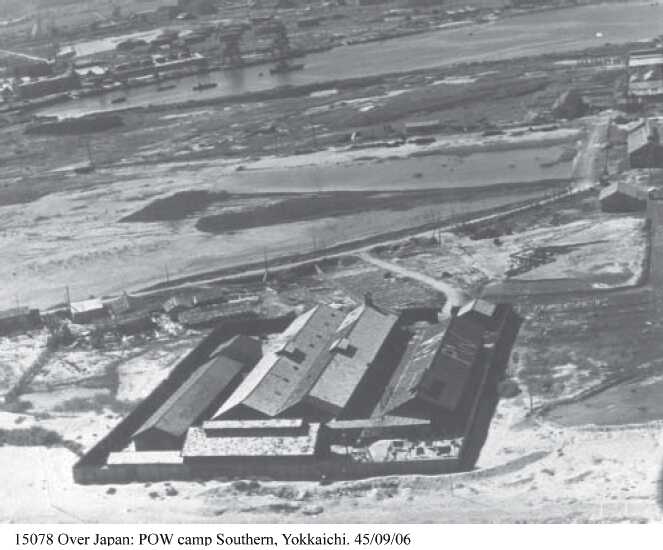
Nagoya #5-B
Szwabo had been sent to Nagoya, Japan the summer before the massacre. On July 4, 1944, he and over 1,000 POWs began a harrowing two month journey that took them to Formosa and Okinawa aboard the Sekiho Maru, better known as the SS Canadian Inventor or Mati Mati Maru [Wait Wait Ship].

The ship ended its journey on September 1, 1944 as so many other POW Hellships in Moji.  On September 4, Pvt Szwabo turned 20 at Nagoya #5-B Yokkaichi a POW camp supplying labor to a copper foundry and sulphuric acid factory owned by Ishihara Sangyo Kaisha in Nagoya, a port city south of Tokyo. He remembers melting down church and temple bells Japanese troops had looted from all over Asia.

Book on Nagoya #5-B
click to order
According to a diary by a Dutch POW, the first few months that the Americans were at the camp, were marked by earthquakes and tsunamis. American planes begin to bomb the facility and Nagoya on June 17, 1945. In the afternoon of August 15, 1945 the POWs were released from work and told the war was over. On August 29th, the air drops of food and medicine began. Excess was shared with the Korean laborers in an associated camp.

On the afternoon of September 4th, the men were put aboard a train in Nagoya to Hamamatsu. They were then taken by landing craft to the U.S.S. “The Rescue” (a hospital ship). From there Szwabo was flown to recuperate in Manila and soon returned to the United States for recovery and treatment. He remained hospitalized for several months as doctors helped him regain his health after 42 months of near starvation, deplorable living conditions, and abuse in Japan.

Szwabo, knowing his need for continued medical care,  decided to stay in the Army and advanced in rank to become a chief warrant officer. He retired November 1, 1960. For the next 41 years, he served as director of personnel and purchasing for the city of Florissant, Missouri. He volunteered for many years at the USO in Lambert Airport.

In September 2010, 65 years after his liberation from Japanese captivity, Earl Szwabo was one six POWs who participated in the first American POW trip to Japan to receive the Japanese government's apology for their abuse and use as slave laborers.

The Yokkaichi facility where Mr. Szwabo slaved still exists and Ishihara Sangyo Kaisha (ISK) has prospered worldwide. The company did allow him to visit. He and his wife traveled to the Yokkaichi facility in Nagoya and met with plant officials who expressed their regret for his mistreatment, but emphasized that they were not part of the same company. They refused to speak on the record or offer a corporate apology. He also visited a memorial that company had built to the souls of all those who died laboring for the company at this site. However, as you can see, memorial mentions nothing about POWs or slave labor.

Yokkaichi Memorial
Mr. Szwabo accepted and appreciated the understanding he received from ISK's Yokkaichi plant managers. The hope is that someday, ISK's Chairman will deliver an apology and support efforts to remember the POW experience in Japan. On July 19, 2015, Mitsubishi Materials Corporation became the first Japanese company to offer an apology to the Americans who slaved for them during the War.

Szwabo said his trip to Japan gave him peace.

"I figure I was lucky," he said. "A lot of POWs didn't make it back."

Accepting an apology, however, doesn't mean that the horrors should be forgotten, as Mr. Szwabo told the St. Louis Beacon:
A POW will never forget. I dream still of different things, and think about it," he said. "I lost my outfit on Palawan when they burned 150 alive there. I was lucky that I got shipped out. I guess God was on my side. And I know why I was picked; I was in better shape than the older guys, and the Japanese took the ones who looked the best physically, so they could work us to death. The bad part is you can't forget it.
Memorial donations may be sent to Descendants Group-American Defenders of Bataan and Corregidor in care of Ms. Judy Pruitt, 23 Elwell, Jamaica Plain, MA 02130.

Tuesday, July 21, 2015

Mitsubishi Materials Apology to an American POW


Former POW of Japan James Murphy who was a slave laborer in Mitsubishi Material's Osarizawa Copper Mine in Sendai sitting next to Ms. Jan Thompson president of the American Defenders of Bataan and Corregidor Memorial Society and daughter of former POW who was held in Mukden, China.

Murphy's POW Memoir
click to order
The apology was delivered in Japanese by Mr. Hikaru Kimura, a Senior Corporate Executive of Mitsubishi Materials Corporation and Senior General Manager of Global Business Management at Paint Finishing System Division of Taikisha Ltd. He did not use the formal apology word shazai and  he described the POWs as being "forced to work under harsh condition" as opposed to "forced" or "slave" labor,

The formal text was distributed in English. It was accepted and appreciated with grace and exuberance. Mr. Murphy said, "it is a glorious day."

Mitsubishi Material's apology, constrained by an impenitent political climate, will be strengthened over time by the truth. The apology is a beginning and an opening. It allows the POW history of endurance and misery to be told and believed. The telling of this history will make it clear that it was Mitsubishi that purchased the men, that forced them to work in horrific conditions, and that allowed them to be beaten and maimed for the war effort. Mitsubishi was not merely a collaborator. The Mitsubishi Zaibatsu had an unofficial seat on Tojo's wartime Cabinet.


Here is the statement released in Los Angeles, California at the Museum of Tolerance by Mitsubishi Materials Corporation on July 19, 2015. We will post the Japanese as soon as we can obtain it. Neither, as of July 24, 2015, on the MMC website.

Statement by Mitsubishi Materials Corporation 
Senior Executive Officer Hikaru Kimura in the Meeting With 
a Former American POW and Families of Former POWs

Good afternoon, ladies and gentlemen, speaking on behalf of Mitsubishi Materials, thank you very much for this opportunity to meet with you today at the Museum of Tolerance.

Mitsubishi Mining Company Limited, the predecessor of Mitsubishi Materials, was engaged in coal and metal mining during World War II. As the war intensified, prisoners of war were placed in a wide range of industries to offset labor shortages. As part of this, close to 900 American POWs were allocated to four mines operated by Mitsubishi Mining in Japan.

I joined Mitsubishi Materials as a postwar baby-boomer and have worked in the company for 34 years. I have read the memoirs of Mr. James Murphy, who is present here at this ceremony, and those of other former POWs, as well as records of court trials. Through these accounts, I have learned about the terrible pain that POWs experienced in the mines of Mitsubishi Mining.

The POWs, many of whom were suffering from disease and injury, were subjected to hard labor, including during freezing winters, working without sufficient food, water, medical treatment or sanitation. When we think of their harsh lives in the mines, we cannot help feeling deep remorse.

I would like to express our deepest sense of ethical responsibility for the tragic experiences of all U.S. POWs, including Mr. James Murphy, who were forced to work under harsh conditions in the mines of the former Mitsubishi Mining.

On behalf of Mitsubishi Materials, I offer our sincerest apology.

I also extend our deepest condolence to their fellow U.S. POWs who worked alongside them but have since passed away.

To the bereaved families who are present at this ceremony, I also offer our most remorseful apology.

This cannot happen again, and of course, Mitsubishi Materials intends to never let this happen again.

We now have a clear corporate mission of working for the benefit of all people, all societies and indeed the entire globe. Respecting the basic human rights of all people is a core principle of Mitsubishi Materials, and we will continue to strongly adhere to this principle.

Our management team wishes for the health and happiness of our employees every day, and we ask that all of them work not only diligently, but also with a sense of ethics.

Mitsubishi Materials supplies general materials that enrich people’s lives, from cement to cellphone components and auto parts, all of which are closely related to people’s lives. We also place a strong emphasis on recycling for more sustainable societies, such as recovering valuable metals from used electrical appliances and other scrapped materials.

Here in the United States, we have plants for cement and ready-mixed concrete, and a sales headquarters for our advanced materials and tools business, all in California, as well as a polysilicon plant in Alabama. We believe that our company provides fulfilling jobs for local employees and contributes to host communities through its business.

The American Defenders of Bataan & Corregidor Museum in Wellsburg, West Virginia archives extensive records and memorabilia of POWs. These records and memorabilia will be handed down to future generations for educational purposes.

I will visit the museum the day after tomorrow to view the exhibits and visualize how POWs were forced to work under harsh conditions. For now, however, I am pleased to announce that Mitsubishi Materials has donated 50,000US dollars to the museum to support its activities.

Finally, I sincerely thank Ms. Kinue Tokudome and the members of the American Defenders of Bataan & Corregidor Memorial Society for creating this opportunity to meet with you today. I also express my sincere thanks to Rabbi Abraham Cooper for offering the Museum of Tolerance as a venue for the ceremony. And I express my deep gratitude to all others involved in arranging this gathering.

I would also like to thank the family members of a non-U.S. POW who have come from very far away to attend this ceremony.

I truly hope that this gathering marks the starting point of a new relationship between former POWs and Mitsubishi Materials.

Thank you very much.