Showing posts with label Hitachi. Show all posts

Monday, April 19, 2021

Congresswoman Jahana Hayes honors POW of Japan

Congressional Record Vol. 167, No. 66 (Extensions of Remarks - April 16, 2021)

 RECOGNIZING DANIEL CROWLEY OF SIMSBURY, CONNECTICUT

                 ______

              HON. JAHANA HAYES

              of Connecticut

               in the House of Representatives

                Friday, April 16, 2021

Mrs. HAYES. Madam Speaker, I rise today to call your attention to National Former Prisoner of War Recognition Day, which takes place annually on April 9th. This day honors the men and women who fought two battles, one in combat and another in enduring untold brutality by our enemies.

April 9th is also the 79th anniversary of the start of the infamous 1942 Bataan Death March in the Philippines. Invading Imperial Japanese forces forced more than 80,000 American and Filipino soldiers, sailors, airmen, and Marines to walk 65 miles up the Bataan Peninsula in the tropical heat without food, water, or medical care while subjecting them to beatings, bayonetting, and beheading. Thousands died.

One of my constituents, Daniel Crowley of Simsbury, Connecticut, is a survivor of the Battle of Bataan. A member of the U.S. Army Air Corps, he was sent to Bataan in December 1941 after Japan destroyed the military airfields in the Philippines. He was part of the United States Army's Provisional Air Corps Infantry Regiment and fought in the historic Battle of the Points on the Peninsula.

Daniel avoided the Bataan Death March by swimming from Mariveles on Bataan through three miles of shark-infested and mined waters to the fortress island of Corregidor. There, he became part of the 4th Marines Regimental Reserve who fought a dangerous and desperate shore defense until Corregidor fell to Japan on May 6, 1942.

He was one of 300 Prisoners of War sent to build an airstrip on Palawan Island for the Japanese Army. Today this site serves as the Philippine Air Force's Antonio Bautista Air Base. Daniel was fortunate to be transferred off the island before the December 14, 1944 Palawan Massacre where the 150 Prisoners of War remaining on the island were doused with aircraft fuel, set afire, and machine gunned to death.

Instead, Daniel was shipped to Japan aboard a ``hellship'' to be a laborer in two copper mines: one owned by Hitachi Ltd. and the other, Ashio, owned by the Furukawa Company Group. He labored alongside Japanese and conscripted Korean miners as well as Allied and American Prisoners of War from the United States, United Kingdom, Singapore, Hong Kong, Dutch East Indies, Norway, Australia, and China.

After liberation in September 1945, Daniel returned home to Connecticut. He raised a family and became a storied salesman for Northwestern Mutual.

On January 4, 2021, Connecticut Governor Ned Lamont proclaimed "Pacific War Heroes Day" in Daniel's honor. After 76 years, Daniel, 98, finally received his long-denied Combat Infantryman Badge, a Prisoner of War Medal, and his previously unknown 1945 promotion to Sergeant in a ceremony held at the Air National Guard Base outside Hartford, Connecticut.

Madam Speaker, I ask my colleagues to join me in honoring now Sergeant Daniel Crowley for his extraordinary service to our country fighting tyranny and oppression. His and the more than 200 American Prisoners of War of Japan from Connecticut have a history we must never forget.

Sunday, November 06, 2016

A week for remembering the Prisoner of War

On November 11th, Veterans Day, Dan Crowley, 94, will join President Barack Obama for his annual breakfast for representatives from America's Veterans Service Organizations. He will represent the American Defenders of Bataan and Corregidor Memorial Society.

Mr. Crowley was sent to the Philippines as an enlisted member of the Army Air Corps in 1941 untrained and unarmed. When the Japanese attacked the Philippines on December 8, 1941, he fought in an improvised air defense at Nichols Field near Manila. After the Field's destruction, the airmen were moved to Bataan to join the US Army Infantry in the Battle of the Points repelling three waves of the Japanese invasion. He avoided the Bataan Death March after Bataan's surrender by swimming and clinging to life rafts to Corregidor Island fortress where he engaged in shore defense with the 4th Marines. He was surrendered on May 6, 1942.

In August 1942, he was sent as a POW to help construct the infamous air field on Palawan Island. Starvation, beatings, and unworkable conditions prolonged the task. He was shipped to Japan aboard the Hellship Taikoku Maru in March 1944 to be slave laborer, thus missing the Palawan Massacre of 150 of his fellow POWs on December 14, 1944.

First taken to POW Camp Tokyo #8B, a Hitachi copper mine, Crowley was liberated in September 1945 from another copper mine near Tokyo, Ashio POW Camp Tokyo #9 owned by the Furukawa Company, today a major multinational.

Its US subsidiary, Furukawa Rock Drill, located in Kent, Ohio is barely 100 miles from Port Clinton, Ohio. Company C 192nd Tank Battalion sent to the Philippines in October 1941 was a unit whose core was comprised of men from the Port Clinton area. The 32 Port Clinton men were soon engaged in the Defense of the Philippine Islands. Only 10 of the 32 local men survived the Bataan Death March and three and a half years as POWs.

On November 18, from 10:00 to 11:00am, the Marysville, Ohio Public Library will hold a lecture on the 192nd Tank Battalion: The Bataan Death March and the local men who died as POWs of Japan. Marysville was one of the first American towns (1979) to receive extensive Japanese foreign investment with the establishment of a Honda plant and its various subcontractors. According to the local newspaper in 2013, "Since Honda of America Mfg. came to town more than 30 years ago, the company and the suppliers that followed have invested almost $5 billion in the county."

In 2014, he participated in a Japanese reconciliation program began in 2010 for former American POWs to visit Japan. Unfortunately, representatives from Furukawa refused to meet with Mr. Crowley or to offer an apology. However, he was able to visit the mine where he toiled as it is now a museum and amusement park. There is no mention of the American and Allied POW labor at these facilities.

You can find out more about Mr. Crowley at the Library of Congress' Veterans History Project or from this pamphlet by Central Connecticut  State University.

We are fundraising to support Mr. Crowley's travel to Washington. A tax-deductible donation can be made through PayPal HERE.

Mr. Crowley will give two presentations open to the public, among the many veterans programs this week.

click to order
LAST RING HOME. NOVEMBER 9, Noon-2:30pm, Washington, DC. Sponsor: US Navy Memorial Foundation and Asia Policy Point. Author Minter Dial II discusses his new book The Last Ring Home: A POW’s Lasting Legacy of Courage, Love and Honor in World War II (Myndset Press, 2016) and documentary on his grandfather, Lt Minter Dial who commanded the USS Napa (AT-32) until ordered to Corregidor in March 1942. Lt Dial's Annapolis Naval Academy ring, miraculously made its way home 17 years after he was killed as a POW of Japan on the Philippines in December 1944. After his remarks, there will be a special advance screening of the new PBS documentary The Last Ring Home based on Dial's book.

Dan Crowley, a former POW of Japan who fought on Corregidor at the same time as Lt Dial, will be a special guest. After the Dial presentation, over a lite lunch. Mr. Crowley will offer his observations on Japan's invasion of the Philippines, the battles that followed, the historic surrender of American troops by their officers, and his over three years as a POW of Imperial Japan.

THE BATTLE OF THE PHILIPPINES 75 YEARS LATER: A VETERAN'S TALE. NOVEMBER 10, 1:00-2:30pm, Washington, DC. Sponsor: Sigur Center, George Washington University and the American Defenders of Bataan and Corregidor Memorial Society. Speaker: Dan Crowley, veteran of the Battle for the defense of Philippines with the US Army Air Corps, Army Infantry, and Marines; former POW of Japan in the Philippines and Japan, slave laborer in copper mines owned by Hitachi and Furukawa.
Mr. Crowley will offer his observations on Japan's invasion of the Philippines, the battles that followed, the historic surrender of American troops by their officers, his over three years as a POW of Imperial Japan, and his struggle to forgive. Mr. Crowley will be a special guest of President Obama at his Veterans Day Breakfast on the 11th. Location: Sigur Center, Elliott School of International Affairs, George Washington University, 1957 E Street, NW, Chung-wen Shih Conference Room, Suite 503.

Mr. Crowley is a life member of the VFW.

VFW NATIONAL COMMANDER BRIAN DUFFY will give a press conference on NOVEMBER 10th at 10:00am at the National Press Club in Washington, DC. He will discuss the needs of the nation’s 20 million veterans and the plans of veterans’ groups to move President Obama's successor and the next Congress to improve the delivery of promised benefits. The VFW, which traces its roots to the Spanish-American War, requires its members to have served in combat zones overseas.

Putting Mr. Crowley's POW experience in historical perspective will be the following program.

PRISONERS OF WAR
. NOVEMBER 14, 6:45-8:45pm, Washington, DC. Sponsor: Smithsonian Connections. Speaker: Judge Evan J. Wallach, an expert on war crimes and the law of war, circuit judge at the Court of Appeals for the Federal Circuit. Location: Smithsonian, S. Dillon Ripley Center, 1100 Jefferson Drive, SW.
War has always resulted in prisoners, and their treatment has always been problematic. The settings in which they have been held extend from the Revolutionary War’s prison ships to the Civil War’s infamous Andersonville camp, Japanese slave labor camps and German concentration camps during WWII, and North Korean brainwashing centers through to Guantanamo Bay and Abu Ghraib. Just as war has changed dramatically over the years, so has the treatment of captured prisoners. 
Evan J. Wallach, an expert on war crimes and the law of war, finds that how a country treats—or mistreats—captured enemy prisoners is a key gauge of its values as a society and its views of international human rights. He discusses the history of prisoners of war, how POW status is defined in modern warfare, the current required treatment of prisoners, limits to their interrogation, and potential domestic and international legal sanctions for their mistreatment. 
Wallach is a circuit judge at the Court of Appeals for the Federal Circuit. He served as a combat engineer in Vietnam and Cambodia and in the Pentagon as a U.S. Army judge advocate during the Persian Gulf War, where he was responsible for prisoner of war issues and wrote the Army’s investigation of Iraqi war crimes including mistreatment of coalition POWs.

Friday, October 18, 2013

For the Record

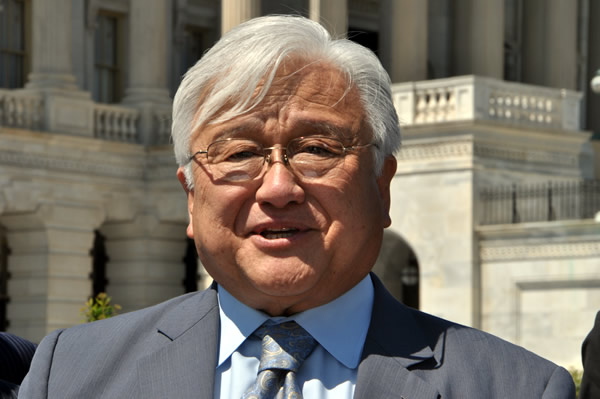
On October 15th, Congressman Mike Honda (D-CA) entered into the Congressional Record the names of the seven participants of the 4th American POW Delegation to Japan. He introduced the former POWs and the widows of former POWs with the following "extension of remarks":


  • Mr. HONDA. Mr. Speaker, I rise today to honor veterans from America's greatest generation and thank the Government of Japan for recognizing the sacrifices of these men. On Sunday, October 13, seven former members or widows of former members of the U.S. Army, U.S. Army Air Corps, and U.S. Marines who fought in the Pacific Theater of World War II--and who were once prisoners of war of Imperial Japan--will travel to Japan as guests of the Japanese government. Marking an act of historic reconciliation and remembrance, this is the fourth delegation of U.S. POWs to visit Japan through this program.

  • Their first trip to Japan was on aging freighters called ``Hellships,'' where the men were loaded into suffocating holds with little space, water, food, or sanitation. The conditions in which they were held are unimaginable. At the POW camps in the Philippines, Japan and China, they suffered unmerciful abuse aggravated by the lack of food, medical care, clothing, and appropriate housing. Each POW also became a slave laborer at the mines, factories, and docks of some of Japan's largest companies. In the end, nearly 40 percent of the American POWs held by Japan perished; compared to two percent of those in Nazi Germany's POW camps. The POWs of this delegation slaved for Mitsubishi, Nippon Express, Sumitomo, Nisshin Flour, Hitachi, Dowa Holdings, and JFE Holdings.

  • In September 2010, the Japanese government delivered to the first American POW delegation an official, Cabinet-approved apology for the damage and suffering these men endured. Although the Japanese government had hosted POWs from the wartime Allies of the United States since the late 1990s, the 2010 trip was the first trip to Japan for American POWs. It was also the first official apology to any prisoners of war held by Japan.

  • I know that the American POWs fought hard for this recognition. Dr. Lester Tenney of California, a former POW who mined coal for Mitsui, was instrumental in persuading the Government of Japan to offer the apology and initiate the trips of reconciliation. He says he is ``honored to have had the opportunity of assisting the U.S. State Department and the Japanese Embassy in arranging this year's POW Visitation Program. Like the years past, the visit will no doubt yield many memories while at the same time erase many bad experiences that left its mark on the POWs. This year, for the first time, Japan's Minister of Foreign Affairs has allowed three widows of former POWs to participate in the program and visit the sites of their husbands' Japanese prison camps located in various cities in Japan.''

  • I thank the POWs for their persistent pursuit of justice, and commend the U.S. State Department for helping them. I also appreciate the willingness of the Japanese government to pursue an historic and meaningful apology. It is my hope that the POW Visitation Program continues to expand, and that it will be a healing mechanism for the POWs, their families and communities.

  • Now, it is time for the many Japanese companies that used POWs for slave labor during World War II to follow the example of their government by offering an apology and supporting programs for lasting remembrance and reconciliation.

  • Mr. Speaker, I wish these men a fulfilling trip to Japan, and I hope that their trip contributes to securing the historic peace between the U.S. and our important ally Japan. 

  • [Biographies of participants follow in text.]

    Monday, October 14, 2013

    4th American POW Delegation in Japan this week

    From October 13 to 21, seven former members or widows of former members of the U.S. Army, U.S. Army Air Corps, and U.S. Marines who fought in the Pacific Theater of World War II and were taken prisoner by Imperial Japanese Forces will be guests of the Government of Japan. This is the fourth American POW delegation to visit Japan. Temple University in Tokyo will host a public event.

    Mukaishima POW Camp


    Tuesday, October 15, 2013
    7:00pm

    Institute of Contemporary Asian Studies (ICAS)
    5F
    Tokyo, Japan

    The trip includes visits to sites of the former prison camps where the POWs were slave laborers. Many of the camps/mines/docks are in the regions that Japan would like UNESCO to designate as World Modern Industrial Heritage sites. Mitsui, Mitsubishi, Hitachi, Sumitomo, and Nippon Steel all originated in these regions. All used POW slave labor and forced labor from Japanese colonies. And today all also want to bid for American high speed rail projects.

    Japan’s historic official apology--one of only four that have been cabinet approved and the only one victim-specific--and continued support for the POW Visitation Program has improved our relations with Japan, established a viable path for reconciliation with other victims of Imperial Japan, and, most important, has had a positive effect on the former POWs and their families.

    It is in everyone’s interest that the POW Visitation Program continues. I hope that you will help the Abe Administration understand this as it is a program they want to end.

    The program needs to evolve by including children and other descendants of the American POWs of Japan as well as to expand to support research into the POW experience under Imperial Japan. These are worthy goals of our broadening alliance with Japan. As we know today, the legacy of torture and abuse affects generations of a family and society.

    Below is the list of participants, which include 3 Death March survivors, a Marine on Guam, and a Native American.

    4th Delegation of American Former POWs of Japan
    October 13-21 2013 

    Phillip W. COON, 94, is a full blood Muscogee Creek who grew up in Oklahoma. After graduating from the Haskell Institute (today’s Haskell Indian Nations University) in Lawrence, Kansas, he enlisted in the U.S. Army on September 29, 1941. He was assigned to the 31st Infantry Regiment and sent immediately to the Philippines Islands aboard the USAT Willard A. Holbrook arriving on October 23, 1941. At Fort McKinley he trained as a .30 caliber machine gunner (M1919 Browning). He fought on Bataan Peninsula against the invading Japanese forces and was surrendered on April 9th. Forced on the infamous 65-mile Bataan Death March, he was subjected to capricious cruelty and abuse, denied water, food, rest and protection from the sun. Nearly all on the March had surrendered sick and malnourished causing thousands to die before they reached their destination of Camp O’Donnell. Coon credits his survival to God, or as he said, “We ran out of food, ammunition and men, but we didn't run out of prayer.” His first POW Camp was Camp O’Donnell where he worked burial detail. For the next two years, he was held at Cabanatuan, Camp Lipa-Batangas, Camp Murphy-Rizal, and Bilibid. On October 1, 1944, he was shipped via Hong Kong on the Hellship Hokusen Maru to Taiwan where he was held briefly at the Inrin Temporary POW Camp. From Taiwan he was sent to Moji, Japan via the Hellship Melbourne Maru arriving January 23, 1945. He was then shipped north to Sendai and became a slave laborer mining cooper for Fujita Gumi Kosaka Kozan (today’s Dowa Holdings Co. Ltd) at the Sendai-#8B Kosaka POW Camp. After his liberation in September 1945, he returned to the U.S. and was discharged from service as a Corporal on June 24, 1946. He returned home to work as Union Painter doing high-scaffold work. Helen, his wife of 67 years, died this spring. Mr. Coon lives with his son, Michael, a Vietnam vet who works with DAV Creek County Chapter #9 as a Service Officer helping veterans with their disability claims. Six members of the Muscogee Creek Nation became prisoners of Japan on the Philippines: five from Corregidor and Mr. Coon who was on Bataan.
    POW# UNKNOWN

    Lora CUMMINS, 87, is the widow of Ferron E. CUMMINS (1917-1990). She lives in San Antonio, Texas. Mr. Cummins grew up in New Mexico where he graduated in 1938 from Tyler Commercial College in Texas and went to work as a bookkeeper for the First National Bank in Hagerman, New Mexico (today’s First American Bank). In November 1940, he enlisted in the U.S. Army Air Corps and had his Basic Training at Brooks and Kelly Fields near San Antonio, Texas. He was assigned to the V Interceptor Command, 24th Pursuit Group, 34th Pursuit Squadron at Hamilton Field, California. In November 1941, Cummins was transferred to the Philippines Islands aboard the USS Coolidge. He arrived on November 20th and was assigned to Nichols Field. When the Japanese invaded the Philippines on December 8th, he was sent to Aglaloma Point, Bataan to fight with the 71st Infantry joining men from all branches of the Armed Services. He was surrendered on April 9, 1942 and forced on the infamous 65-mile Bataan Death March on April 10, 1942 from Mariveles to Camp O'Donnell arriving on April 21, 1942. From Camp O’Donnell, he was moved to Cabanatuan, then Bilibid. At these camps he survived sunstroke, dysentery, malaria, denuge fever, wet and dry beriberi, yellow jaundice, and blindness. In August 1944, he was shipped to Moji, Japan aboard the Hellship Noto Maru. He was taken to Hiroshima and became a slave stevedore for Hitachi Shipyard (today’s Hitachi Zosen Corporation) at Mukaijima [Mukaishima] Hiroshima Sub-camp #4. A Japanese elementary school in Mukaishima today honors the memory of the men of this camp. On August 6, 1945, he felt the air warm and watched a three-mile high mushroom cloud rise above Hiroshima from the atomic bomb. He was officially liberated September 14, 1945. He returned to Lake Arthur, New Mexico where he remained in the Air Force and married the girl down the street, Lora Mae Lane. Upon retirement, he owned a laundry and vending machine business. In 1967, the family moved to San Antonio, Texas and where he worked for SEARS. He and Lora had one child, Glenda, and were married 43 years. Lora was a civilian employee of the Air Force. He passed away on March 26, 1990 of a heart attack just days after returning from his second trip to the Philippines with his wife, daughter, son-in-law, and grandson, Ferron. Mr. Cummins is buried at Fort Sam Houston National Cemetery in San Antonio, Texas.
    Autobiography
    POW# 115


    Robert B. HEER, 92, lives in Sequim, Washington. He grew up in Iowa and joined the U.S. Army Air Corps in June 1940 becoming a carpenter with the 30th Bombardment Squadron, 19th Bomb Group (Heavy), V Bomber Command stationed at March Field, California. He was stationed at Kirtland Field in Albuquerque, New Mexico before being ordered to the Philippine Islands in October 1941 He arrived on October 23, 1941 aboard USAT Willard A. Holbrook and was sent to Clark Field. On December 29, 1941, the 30th Bombardment Squadron was evacuated to Mindanao and he was sent to the Del Monte Airfield. He was surrendered on May 10th and sent to Camp Casisang, about five kilometers southwest of Malaybalay, Mindanao. On September 6, 1942 the Generals and Colonels were removed from Camp Casisang and sent to Formosa (Taiwan). Heer served as an orderly to Brig, General Joseph P. Vachon, the former C.O. of the Philippine Army’s 101st Division on Mindanao, with whom Bob Heer was sent to Karenko POW Camp via the freighter Suzuya Maru. At Karenko he wrote a message to his family that the Japanese broadcast to the U.S. over shortwave radio. In May 1943, he was shipped to Heito POW Camp to clear and work in sugar cane fields. He remained there nearly a year before being moved to Taihoku POW Camp #6 where he slaved at building a memorial park for Japanese soldiers and a man-made lake for the irrigation of rice fields. In early 1945, he was shipped to Japan, first to the port of Moji on Kyushu and then north to Hokkaido. There he was first a slave stevedore for the Hakodate Port Transportation Company at Hakodate 2-D POW. In late May 1945, he was moved north to become a slave laborer mining coal for Sumitomo Mining (today’s Sumitomo Metal Mining Co. Ltd) at Hakodate #2 Akihira POW Camp. He was liberated in early September 1945, when American Army records clerks arrived and told them the war was over. After liberation, Heer remembers eating well and gaining 40 pounds in Japan, making friends with post-war civilians there. “I was giving food to the Japanese,” he said, even eating dinner with one family who invited him in after he gave them matches and soap, which was in short supply. On April 20, 1946, Heer was honorably discharged from the Air Corps at Camp Beale (Beale A.F.B.) in California. He used the GI Bill to earn a degree in photography from the Fred Archer School of Photography in Los Angeles, California. Missing friends and the military life, he returned to active duty with the Air Force in 1950, retiring in 1966 as a Technical Sergeant. In retirement he has worked as an amateur historian of American POWs of Japan and embarked on a “third career” as a house husband. He has been married to Karen Harper since 1989, and has four children from two previous marriages.
    Oral History
    Biography
    POW# 330


    Esther JENNINGS, 90, is the widow of Clinton S. JENNINGS (1919-2004). She lives in San Francisco, California. Mr. Jennings, a California native, served in the Civilian Conservation Corps before enlisting in the U.S. Army in 1941. He was sent to the Philippine Islands the same year aboard the USS Republic (AP-33). On Corregidor, he joined Battery “K” 59th Coast Artillery Regiment where he helped man fixed 60" Searchlights No. 1 through 8, plus a number of 60" and 30" mobile seacoast searchlights. Surrendered on May 6, 1942, he was sent to a series of POW camps on the Philippines: Bongabong, Cabanatuan, Lipa- Batanga, and Bilibid. In July 1944, he was herded along with 1,600 other American POWs aboard the Hellship Nissyo Maru to be shipped to Japan. The nightmarish two-week voyage to Moji, Japan included an attack by an American submarine wolfpack on the unmarked transport. Jennings was first held in Fukuoka-23-Keisen as slave laborer mining coal for Meiji Mining [Meiji Kogyo] Hirayama Mine (The company was dissolved in 1969, but its exploration and research division became independent as Meiji Consultant Co., Ltd. in 1965, and still exists). He was then transferred to Fukuoka #9B, located near the town of Miyata (now the city of Miyawaka), again to be a slave laborer mining coal, but for Kaijima Coal Mining Onoura Mine (the company no longer exists). After the war, he spent 25 years in the Army working in finance. He retired in 1965 and worked in public finance at the Bank of America retiring again in 1985. Jennings was a dedicated volunteer: he spent 27 years at KQED; 24 years at the Fine Arts Museums of San Francisco; and 20 years for the San Francisco Opera Guild where he enjoyed being a supernumerary. He was a member of American Defenders of Bataan & Corregidor; American Ex-Prisoners of War; Philippine Scouts Heritage Society; American Legion; San Francisco History Association; VFW; Military Order of the Purple Heart; Past President of Golden Gate Chapter #18 of National Sojourners; Native Sons of the Golden West, Guadalupe Parlor; The Great War Society; Past Master of Masonic Lodge San Francisco #120; Scottish Rite, Shriners; President of the National Assn. of Civilian Conservation Corps Alumni; The Retired Officers Association and the Reserve Officers Association. He was married to Esther Bloom for 34 years and had three children from a prior marriage. He succumbed to cancer on October 28, 2004. Mr. Jennings is buried at Hills of Eternity, Colma, California.
    POW# UNKNOWN

    Erwin R. JOHNSON, 91, divides his time between Wynantskill, New York outside of Albany and Lacombe, Louisiana. He grew up in New Orleans, Louisiana and enlisted in the U.S. Army Air Corps in September 1940. He was assigned to the 48th Materiel Squadron, 27th Bombardment Group (Light), V Bomber Command where he was trained as a mechanic for A-20 fighter planes. He was transferred to the Philippines Islands aboard the USS President Coolidge in November 1941, arriving on November 20th and was deployed to Fort McKinley south of Manila. When Japanese forces attacked the Philippine Islands in December 1941, though not trained as an infantryman, Johnson was issued a rifle and ordered to defend against the Japanese advance. He and all American and Filipino troops on the Bataan Peninsula were surrendered on April 9, 1942. Immediately, he was forced on the infamous 65-mile Bataan Death March to Camp O'Donnell. He recalls many horrific events during the March; maybe the worst was a Japanese guard bayoneting to death a Filipino mother and her baby for trying to pass food to the starving, sick POWs. At Camp O’Donnell he volunteered for work duty building bridges and other projects. Later that year, he was transferred to Cabanatuan where he volunteered for work details outside of the Camp. He was among 500 other American POWs shipped from the tropical Philippines to the freezing Mukden, China (today’s Shenyang) in October 1942 aboard Mitsubishi’s Hellship Tottori Maru via Formosa and Korea to Manchukuo (Manchuria). None of the men had winter clothing. Johnson was housed at the Hoten POW Camp and became was a slave laborer at MKK (Manshu Kosaku Kikai or Manchouko Kibitsu Kaishi, which some researchers believe was owned by Mitsubishi and known as Manchuria Mitsubishi Machine Tool Company, Ltd.). The camp was liberated in August 1945 by Russian and OSS forces. Discharged in June 1946, he used his GI bill to obtain a mechanical engineering degree from Tulane University. He worked for a number of technology manufacturing companies in Southern California including North American Aviation (today’s Boeing) and eventually returned to Louisiana, retiring from the Port of New Orleans in 1993. In retirement, he and his wife Margaret traveled throughout the United States and were active in a number of veterans and POW organization. Margaret, his wife of 53 years passed away in 2010. Together they raised five boys. In 2011, he married Ann Wilbur Lampins whose brother, Staff Sgt Charles S. Wilbur, was also a member of the U.S. Army Air Corps. He was with the 28th Materiel Squadron, 20th Air Base Group, Far East Air Force on the Philippines. He too became of prisoner of Imperial Japan and was also shipped to Mukden. He died of pneumonia soon after arrival on December 28, 1942. The Johnsons are active members of the Mukden POW Survivors group and other veterans’ organizations.
    Memoir By the Grace of God can be found at the Veteran's History Project of the US Library of Congress.
    POW # 277

    Marjean McGREW, 87, is the widow of Alfred Curtis McGREW (1922-2008). She lives in San Diego, California. Mr. McGrew grew up in Columbus, Ohio. After high school and briefly working with the Civilian Conservation Corps, he enlisted in the U.S. Army at Fort Hayes. In January 1941, his unit sailed to the Philippine Islands aboard the USS Republic (AP-33). He took Basic Training at the 92nd Garage on Corregidor and was assigned to Battery “D” (Denver) 60th Coast Artillery (A.A.). He was transferred to Battery “H” (Hartford), 60th, Coast Artillery (A.A.) at Herring Field, Middleside and was taken prisoner there on May 6, 1942 with the surrender of Corregidor and the Philippines. He was held in the following POW camps: 92nd Garage, Bilibid, Cabanatuan 2 and 1; Camp O'Donnell, Nichols Field. In August 1944, he was shipped to Moji, Japan aboard the Hellship Noto Maru. In Japan, McGrew became a slave stevedore for Nippon Express (same name, sam company today) at Omori Tokyo Base Camp; then a slave stevedore for Nisshin Flour Milling Dispatched Camp (Tokyo 24-D) (today’s Nisshin Seifun Group); and finally at Suwa Branch Camp (Tokyo 6-B) he was a slave laborer for Nippon Steel Tube & Mining Company (today’s JFE Holdings). He was liberated in Yokohama on September 6, 1945. He later became an Honorary Member and friend of the U.S. Army 503rd Parachute Regiment Combat Team (RCT) who liberated Corregidor from the Japanese in 1945, and the 4th Marine Regiment who had defended it. After returning to Columbus, he met and married Marjean Herres of Bellefontaine, Ohio (the love of his life for 59 years). They moved to San Diego to be nearer the ocean and raise their two children, Vicki and Steve. He retired from Control Data Corporation after 27 years when the manufacturing division left San Diego. In retirement, McGrew traveled back to Corregidor many times to collect photos, documents, and data from those who served on Corregidor. During his many trips back, he sat in the ruins of Corregidor thinking of the great times and the bad times as well as the many young friends he lost. As a long-time amateur historian, he assisted many family and friends in their search for information on their loved ones serving and/or captured on Corregidor. McGrew’s approach to life was to use humor as a base for survival and survive he did several times in his life. For fun, he enjoyed scuba diving, golfing, table tennis, camping, and traveling with his wife around the U.S. in their R.V. Mrs. McGrew was a nurse and an avid folk dancer. He succumbed to cancer on January 27, 2008 surrounded by his loving children and his wife. Mr. McGrew is buried at Fort Rosecrans National Cemetery, Point Loma, California.
    Oral History
    POW# UNKNOWN


    Marvin A. ROSLANSKY, 91, lives with his wife Josephine in Mesa, Arizona. Mr. Roslansky grew up in Minnesota and enlisted in the Marine Corps in the spring of 1941. He was sent to Guam in September 1941. He was one of 153 Marines assigned to defend Guam, a U.S. territory administered by the U.S. Navy in the Pacific. As a member of the Insular Patrol Unit he fought in the brief defense of the island (December 8-9, 1941) and was captured by invading Japanese forces. On January 10, 1942, the American prisoners of the Guam garrison including five nurses and a civilian mother and child were shipped to prison camps in Japan aboard the MS Argentina Maru, what was Mitsui’s OSK Line’s fastest ship. Arriving in Japan on January 16, 1942, he was taken to Shikoku and imprisoned at the Zentsuji POW Camp (Zentsuji was originally built to house German prisoners of the Japanese in World War I). The camp was on an island about 400 miles west of Tokyo. He spent the rest of the war there as a slave stevedore for Nippon Express (still in operation under the same name) working 12-hour days at the Sakaide Rail Yards and the Port of Takamatsu. He was liberated September 27, 1945. After the war, he lived in Racine, Wisconsin where he owned an auto parts business. Retired in 1981, he volunteered at the Clement J. Zablocki VA Medical Center in Milwaukee as well as doing veterans service work for the DAV, the American Defenders of Bataan and Corregidor, and the Milwaukee Barb Wire, East Valley, and Prairieland Minnesota Chapters of AXPOW. With his first wife, Iva they raised four daughters and three sons. He married Josephine Plourde in 2010.
    Interview by Concordia University, St Paul
    POW# none

    Friday, April 26, 2013

    Memorial to POW slave laborers for Hitachi

    Col. James C. Stewart
    Onomichi site serves as POW memorial

    DVIDS - News - April 26, 2013

    IWAKUNI, Japan - War is a horrendous business; families torn apart, relationships put asunder and service members killed or taken captive. Dignitaries attended a memorial relocation and dedication ceremony held April 15, 2013, to pay homage and honor to enemy prisoners who were captives at Hiroshima Prisoner of War Sub-Camp No. 4 [Hiroshima 4-B MUKAIJIMA (Mukaishima)] during World War II.

    On a stretch of bustling road in the heart of Onomichi City, in the Mitsugi District of Hiroshima prefecture, Japan, sits a very unassuming grocery store named “Every.” Right outside its walls stands a stoic monument to Hiroshima Prisoner of War Sub- Camp No. 4. The ground the store occupies was once the camp. As the saying goes, if we do not know our history, we are doomed to repeat it, that only by learning from our mistakes can we understand ourselves and grow as a people.

    “Any site of rest and memory to those service members who have gone before us and who have made the ultimate sacrifice warrants our continued visitation and remembrance,” said Col. James C. Stewart, Marine Corps Air Station Iwakuni commanding officer.

    “Today’s ceremony signifies the collective remembrance and dedication of all nations to those military service memebers who have endured the privation of detention during conflict.” The part of Onomichi where the memorial stands was once known as Mukaishima, and it is here where more than 200 Allied service members toiled in shipyards [Owned by Hitachi Zosen], carrying materials until the war’s end in 1945.

    Dainichi Maru
    Most of these men were brought there aboard Japanese “hell ships,” war-era transports especially known for their dreadful living conditions and barbaric treatment toward captives [and unmarked as POW transports]. One hundred British airmen arrived at the POW camp in November 1942 by way of the hell ship, Dainichi Maru [Operated by Mitsui], along with another 100 American troops who came from the Philippines by way of the Noto Maru in September 1944. Twenty-four of those 200 died from the combination of backbreaking labor, inhumane treatment and conditions suffered in that time period. One of those was U.S. Army Air Force Pfc. George B. Scott, who died from his wounds Feb. 13, 1945. An additional 10 POWs arrived Aug. 8, 1945, when a U.S. B-29 bomber crashed into the Japanese Sea 50 miles off the coast. At the end of the war, all surviving members were transported back to their homelands.

    Mukaishima POWs
    The ceremony opened with a guitar rendition of “Amazing Grace,” followed by remarks by Mitsuo Minamizawa, Onomichi Red Brick Society and Japan-U.K. Friendship Monument Society chairman, followed by both a Christian and Buddhist invocation.

    Once unveiled, a floral tribute commenced with bouquets laid at the base of the memorial, followed by guest remarks and a song by students from the Mukaishima Chuo Elementary School.

    The theme of the ceremony focused on passing an understanding of the sacrifices made by the departed to future generations. “I greatly hope from this occasion today this memorial plate will be a symbol of peace and friendship and extend friendship amongst our people,” said Yuko Hiratani, Onomichi City mayor. “I sincerely hope our wish for eternal peace is passed down to future generations.”

    Noto Maru
    Etched in one of the memorial’s plated faces are the names of the British troops. Old Glory, the Union Jack and the Hinomaru (circle of the sun) flapped in the wind above, silent guardians to the memory of the dead and an example of the continued unified support of the three nations toward everlasting peace.

    “It is important for us to continue to remember the men and women from all nations who fought in the great conflict,” said Stewart. “This memorial will stand as a reminder of their tremendous sacrifice and our desire for world peace. Today, Japan and the United States and the United Kingdom form the strongest and most important security alliance in the world.”

    After nearly 70 years, representatives from the three nations continued to reflect and sustain the hope for abstinence from war, the endurance of their alliance, and the wish to never need similar monuments in the future.

    Monday, October 22, 2012

    American POWs Visit Osaka, Hitachi


    On Wednesday and Thursday, October 18 and 19, three American former POWs of Japan visited Osaka, the site of their imprisonment and slave labor. They visited Takami Elementary School, which sits atop the ruins of the POW camp, Umeda Bunsho Camp in Osaka, at which two of the POWs were held.

    The POWs had lunch with the children and shared their stories with them.

    Wednesday, October 17, 2012

    Ten Days in October

    FM Gemba with American former POWs of Japan
    For the third time in as many years, seven nonagenarian veterans of World War II become "guests of Emperor." These men were tortured, starved, beaten, and forced to work in dangerous conditions by Imperial Japan as prisoners of war. Unlike their first trip to Japan, which was by Hell Ship or parachute, they traveled by a first class ticket on a Japanese airline.

    For the third time, Japan's Foreign Minister faced the American POWs and apologized for his government for their suffering under Imperial Japan (photo above). The men and their caregivers are touring Japan and visiting the sites of their incarceration and slave labor. They slaved for well-know Japanese firms such as Hitachi, Mitsubishi, Nippon Express, Rinko, and Ube Industries.

    Initiated in 2010, the visitation program for American former POWs of Japan is a model for Japanese government war apologies. There is a formal presentation of an apology and a concerted act of contrition. It is unfortunate, however, that the Japanese Government does not publicize this successful program and has not pushed the Japanese companies that were complicit in the torture and abuse of the POWs to also acknowledge and apologize. Indeed, the companies have been largely silent and some have refused to allow these elderly men to revisit the sites of their first stay in Japan.

    Here are brief biographies of the men in Japan from October 12 to 21.

    >Randall S. Edwards, 95, lives in Lakeland, Florida. Born in Wyoming, he grew up in Nebraska and enlisted in the U.S. Navy in 1935 after high school to see the world. He was sent to the Philippines in 1940 and assigned as a Radioman 1ST Class to the submarine tender, the USS Canopus, which had been ordered to stay in Manila Bay after the bombing of Pearl Harbor in December 1941. Bombed and strafed continually, the ship was finally scuttled in Mariveles Bay on April 8, 1942 with the crew escaping to the fortress island of Corregidor in the mouth of Manila Bay. On Corregidor, the crew served in beach defense with the Fourth Marines. He was a POW at Cabanatuan 3 and shipped to Mukden, China (today’s Shenyang) in October 1942 on Mitsubishi’s Hellship Tottori Maru via Formosa and Korea to Manchukuo (Manchuria). Edwards was a slave laborer at MKK (Manshu Kosaku Kikai, which some researchers believe was owned by Mitsubishi and known as Manchuria Mitsubishi Machine Tool Company, Ltd.). He worked on multiple machines from grinders to lathes, carefully sabotaging each task. Toward the end, he was made to haul pig iron to the company’s foundry. He believes that the multiple shots and blood tests that he received while at Mukden were part of human medical experiments conducted by the Imperial Army’s 731st Biological Warfare Unit. After the war, Edwards remained in the Navy where he received over 40 medals during his service and retired in 1955 as a Warrant Officer. From 1948-1950, he was with U.S. Occupation Forces in Yokosuka, Japan in charge of the Base’s radio station. He found there that the Japanese were “not all demons.” After the Navy, he received his BS in Electrical Engineering from the University of Florida, Gainesville and went to work as a research engineer on fusion energy at the Oak Ridge National Laboratory in Oak Ridge, Tennessee. After retiring in 1982, he became a National Service officer for American Defenders of Bataan and Corregidor and American Ex-Prisoners of War to help his fellow veterans with their VA claims. He enjoys golf and international travel with his wife Rose Mary.
    POW# 104
    Member of: DAV, American Defenders of Bataan & Corregidor, American Ex-Prisoners of War

    >Robert W. Ehrhart, 89, lives in Carmichael, California. He grew up in Oakland, California and enlisted in the Marine Corps Reserve during high school. His unit was activated November 6, 1940 and sent to the Philippines in April 1941 to join the Marine Detachment at Cavite.  On May 1, the 1st Separate Marine Battalion, unique in that it trained to function either as infantry or antiaircraft artillery, was activated. Relocated fall 1941 to the Olongapo Navy Yard near Subic Bay, the unit was moved during December 1941 to Corregidor Island. On January 1, 1942 they were redesignated the Third Battalion, Fourth Marines and joined the Battle of Corregidor through surrender on May 6, 1942. Ehrhart was sent to the Cabanatuan POW Camp where he was on a burial detail, burying as many as forty men a day. He remembers that the “bodies were like skeletons and when you lifted them onto the window shutters, which were used for litters, their skin would peel back and stick to your hands.” To bolster his morale and that of his fellow POWs, he started to draw cartoons, risking severe punishment if discovered. He had a pencil, but paper was almost impossible to obtain. He bartered for whatever writing material anyone had with the rare Carnation Milk can label his greatest canvas. In September 1943, Ehrhart was transferred to Japan aboard the Hellship Taga Maru (aka Coral Maru). He was sent to Osaka 4-D Sakurajima were he was a slave laborer at Hitachi Zosen’s Sakurajima Shipyard (today’s Universal Shipping Corporation). He worked as a riveter helping build military ships and oil tankers. Today, the site of this POW camp is the Universal Studios Japan theme park. After the camp was bombed in May 1945, he was sent to Osaka 6-B, Akenobe, POW Camp where he was a slave laborer working as a stope driller in a copper mine for Mitsubishi Mining (today’s Mitsubishi Materials Corporation). When the POWs realized that the war had ended, they pieced together an American flag to fly on the camp flagpole, which they believe was the first postwar U.S. symbol in Japan. After recuperating in military hospitals from vitamin deficiency, malnutrition, and various tropic diseases, he was discharged April 29 1946. He then studied Mechanical Engineering at the University of California, Berkeley. After graduation, he worked for the Navy and eventually joined the State of California’s Department of Water Resources as a hydroelectric engineer. Since retiring in 1983, he has pursued his passions of travel and fine photography. The Veteran’s History Project of the U.S. Library of Congress holds a recording of his oral history.
    POW# 221
    Member of DAV, VFW, American Defenders of Bataan & Corregidor, American Ex-Prisoners of War

    >David G. Farquhar, Jr., 90, resides among orange groves in Redlands, California where he has lived all his life. He joined the U.S. Army Air Force in 1942. He trained in Nebraska and was assigned as a Technical Sergeant to General Curtis LeMay’s 20th Air Force, 24th Squadron, 313th Bomb Wing, 6th bomb group, Crew #2404. He was sent with the 6th Bomb Group to Tinian in the Northern Marianas in January 1945. Farquhar participated in 18 missions over the Pacific and Mainland Japan. On May 23, 1945, he was a turret gunner when his B-29 was shot down over Tokyo by flak and fighter planes. He and his 11 crewmates all bailed out safely and were captured. They were taken to the infamous horse stalls outside of the Kempeitai (military police of the Imperial Army) Headquarters in Tokyo near the Emperor’s palace. They were not considered POWs but “special prisoners” who were war criminals. Beaten, starved, and tortured, they were denied clothes, basic hygiene, and medical treatment. On August 15th, the day Japan surrendered, he was transferred to a cell at Tokyo Base Camp #1 Omori where he was liberated August 28, 1945. Omori was the first POW camp liberated. After a series of hospital stays he was discharged in 1946 and returned to San Diego State College (today’s San Diego State University) for a BA in Engineering. He then obtained an MA in Education from the University of Redlands. From 1950 to 1993, Farquhar taught both junior high and high school mathematics and science. He has been married to Jacqueline for nearly 66 years. He currently tends his orange grove, serves on various boards, and participates in community activities.
    POW# Not known to “special prisoners” 
    Member of American Ex-Prisoners of War 

    >Douglas Northam, 93, lives in Reno, Nevada. Born in Morris County, Texas, he grew up in nearby Naples, Texas. After graduating from high school in 1937, he enlisted in the Civilian Conservation Corps and in 1940 in the U.S. Navy. He was transferred to China in February of 1941 and assigned to the USS Oahu (PR-6), a Yangtze River Patrol boat ported in Shanghai. The USS Oahu, never designed for open sea operations, was sent to Manila Bay in November 1941, arriving two days before the Japanese attack on Pearl Harbor. The gunboat operated in and around Manila Bay and Cavite Navy Yard on inshore patrol and in support of U.S.-Filipino forces on Bataan until after its fall April 8, 1942 and then continued to operate about the island fortress of Corregidor until sunk by enemy gunfire May 5th. Northam was then assigned to an artillery group on Corregidor, which was surrendered on May 7th when Corregidor fell. As a POW of Japan he was sent to Bilibid POW Camp in Manila and then moved to Cabanatuan 1 and 2. In November 1942, he was sent to Japan aboard Mitsubishi’s Hellship the Nagato Maru. He worked for Nippon Express as a slave stevedore in the freight yards in and around the city of Osaka at Umeda Bunsho Camp in Osaka (Osaka 2-D UMEDA). In March 1945, after his POW camp was firebombed, he was transferred to Osaka POW Camp 5-B TSURUGA were he was a slave stevedore again for Nippon Express and Tsuruga Transportation Company. After the war, Northam utilized the GI Bill to study geology at the University of California, Berkley. He joined Shell Oil Company in 1951 as a laboratory technician and retired 1977 as research technician. He has been married to Hazel for 64 years. In retirement he was a volunteer at a local elementary school and the VA Hospital. His hobbies include gardening, horse racing, and cooking.
    POW# 117
    Member of DAV, American Defenders of Bataan & Corregidor, American Ex-Prisoners of War, AMVETS 

    >John Leroy Mims, 90, lives in Aberdeen, North Carolina. Born in Ashburn, Georgia, he grew up in Florida and enlisted in the Army at age 16 in 1938, but was discharged a year later after it was discovered that he was underage. Still hungry and jobless, he re-enlisted February 15, 1941 and was assigned to Company B, 1st Battalion of the famous 31st Infantry Regiment sometimes referred to as the “American Foreign Legion.” In April 1941, he was sent to the Philippines aboard the USAT Republic and stationed at Cuartel de España in Manila. He fought in the Battle for Bataan and as a POW forced on the Bataan Death March. During the war, his Filipino fiancée Juanita worked as a secretary for a Japanese general and bravely aided the resistance by sending shortwave radio messages to Allied forces in the Pacific. As a POW, the Japanese repeatedly beat and tortured Mims . Although they were able to break his body, they could never come close to breaking his spirit. During his captivity, the Japanese broke his back, neck and both of his legs and shattered many of the bones in his face. The beatings briefly left him a paraplegic on two separate occasions and he retains a limp. Mims lost over 120 pounds as a POW dropping from 190 pounds to 67 pounds. Of the 1,600 soldiers in the 31st Infantry Regiment who surrendered, less than half survived Japanese captivity. In September 1944, he was sent to Japan on board Mitsubishi’s Nippon Yusen Kaisha (NYK) Hellship Sekiho Maru (Canadian Inventor [the Mati Mati Maru or slow slow ship]). Mims became a slave laborer mining coal for Ube Kosan’s Sanyo Muen Kogyo Sho (Ube Industries’ Sanyo Smokeless Coal Work, which is still known today as Ube Industries Ltd.) at Hiroshima #6B - Omine (Sanyo) POW Camp in Omine-machi, Yamaguchi Prefecture. After the war, Mims remained in the Army for the next 27 years, attaining the rank of Sergeant First Class. He returned to Japan from 1952-54 to be in charge of the Tokyo Quartermaster Depot. He retired in 1963 and involved himself in real estate, construction, and mining. He and Juanita were married 59 years until her death in 2004. They are parents of three biological and 22 adopted children. He remarried in 2009 to another beautiful Filipina, Nena Sabal. His hobbies include reading and recounting his history story as a POW of Japan, especially on how he survived the infamous Bataan Death March. The Veteran’s History Project of the U.S. Library of Congress holds a recording of his oral history.
    POW# 429
    Member of DAV, VFW, American Legion, Military Order of the Purple Heart, and National Order of the Trench Rats, American Defenders of Bataan & Corregidor

    >John Real, 90, lives in Ventura, California. A California native he enlisted in the US Army Air Corps after graduating from high school in 1940. He was sent to the Philippines in April 1941 and assigned to aerial reconnaissance at Clark Field with the 2nd Observation Squadron, 27th Bombardment Group, V Bomber Command, 20th Air Force. Real and his unit manned an observation tower on top of Mt. Mariveles, Bataan during Japan’s invasion of the Philippines where he tracked Japanese ship movement around the Olongapo Navy Yard. He walked down the mountain to surrender on April 9, 1942 and was stripped of all his belongings before being forced on the Bataan Death March. At the start of the march, he and others were used as human shields by being forced to walk in front of seized American 155mm calibre field guns (Long Toms) that the Japanese were firing at Corregidor. He was a POW at both Camp O’Donnell and Cabanatuan 1. He avoided a certain death at O’Donnell by volunteering for a work detail on Bataan. In September 1943, he was sent to Moji, Japan aboard the Hellship Taga Maru (aka Coral Maru) via Formosa. At Tokyo 5-B POW Camp in Niigata he was a slave laborer unloading coal ships for Niigata Kairiku Unso, now part of the Rinko Corporation (however, POWs remember Rinko as their “employer”). After the war, Real received a BA in Business Administration from the University of California, Santa Barbara and a MA from the Thunderbird School of Global Management in Arizona, where he met his wife with whom he had three children and was married to for 49 years until she passed away in 2006. After graduation, he pursued a career in pharmaceutical sales with various companies, retiring with Berlex Labs, at the time a division of Schering AG. In retirement, he has been an active member of the Museum of Ventura County and the J. Paul Getty Museum at the Getty Villa in Malibu.
    POW# 514 
    Member of DAV, VFW, American Legion, American Ex-Prisoners of War, American Defenders of Bataan & Corregidor, AMVETS 

    >George R. Summers, 90, lives in Riverside, California. Born in the Philippines, he grew up in California where he joined the Marine Corps Reserve in February 1941. Activated in June 1941, his unit was sent to Guam, an American territory, in September 1941. Japan invaded the island on December 8, 1941 and he was taken prisoner upon the surrender of the island on the 10th--the first American territory to fall. Summers was on the first transport of Allied POWs to Japan, the Argentina Maru with 420 American POWs from Guam to Tadotsu on the north coast of Shikoku. After arriving in Japan on January 16, 1942, the POWs were transported to Zentsuji (Hiroshima Branch #1), a POW camp about eight kilometers from Tadotsu. He spent six months there clearing a mountainside to plant apple trees. He was then transferred to Tanagawa Osaka Area POW Command #4B Camp. At Tanagawa, he helped to manually tear down a mountainside building a breakwater for a primitive dry-dock and submarine base. This camp was noted for its severe malnutrition and extreme death rate. Six months later, he was sent to Umeda Bunsho Camp in Osaka (Osaka 2-D UMEDA), Japan where he worked for Nippon Express as a slave stevedore. He was transferred to a total of six POW camps due to American bombings. His last camp was the Nagoya 10-B Fushiki Camp, where he worked as a stevedore slave unloading soybeans from Korea for Fushiki Kairiku Unso until Japan’s surrender. After his release, he was hospitalized for six months at the Long Beach Naval Hospital. Like many veterans, he then shifted between various odd jobs and classes. In 1947, he joined the U.S. Merchant Marine. From 1955 to 1968 he worked for General Telephone Company, which later became GTE and is today’s Verizon. After GTE, he served as a financial clerk for the City of Anaheim from 1968 to 1978. Married to Juanita Louise Summers since 1970, he has two children from his first marriage. In retirement, he has focused on real estate investment and his hobbies of collecting Koi fish and exotic birds.
    POW# 347 
    Member of DAV, American Ex-Prisoners of War, Military Order of the Purple Heart

    Thursday, February 02, 2012

    Japanese Corporate Use of U.S. POWs as Slave Labor

    American POWs at Yawata Steel Mill
     part of  Nippon Steel in Fukuoka
    *
    On 15 December 2011, Representative Russ Carnahan (D-MO) submitted a Statement for the Record to the House Transportation and Infrastructure Committee Hearing on California's High-Speed Rail Plan on behalf of Mr. Joseph A. Vater, Jr. who is President of the Descendants Group, an Auxiliary of the American Defenders of Bataan and Corregidor.

    Congressman Carnahan visited Corregidor last year and learned first hand of the historic battle of the Philippines and how its American defenders ended up as POWs facing over three years of unimaginable hell. Earl Szwabo, a survivor of the battle of Corregidor and member of the first POW trip to Japan, is one of Mr. Carnahan's constituents.

    Below is Mr. Vater's testimony where he outlines how most of the Japanese companies that plan to bid on California's and other American high-speed rail projects were major users of American POW slave labor. He suggests that it is time for these companies to offer their apologies and make amends for this gross violation of human rights and the Geneva Convention.

    Japanese Corporate Use of U.S. POWs as Slave Labor

    Mr. Chairman, I am President of the Descendants Group, an Auxiliary of the American Defenders of Bataan and Corregidor, Inc. (ADBC). The American Defenders of Bataan and Corregidor was founded in 1946 and represented the surviving prisoners of war of Japan and their families. I would like to call your and the Committee’s attention to the fact that many of the Japanese companies that intend to bid on California’s High-Speed Rail contracts profited from the use of American and Allied (POW) slave labor in the most brutal of conditions during World War II.

    These companies, unlike those in Germany, Austria, and France, have never acknowledged nor apologized for this gross violation of human rights and breach of the Third Geneva Convention on the treatment of POWs. It is a concern to me and other members of the Descendants Group that taxpayer dollars may go to Japanese corporations that still do not respect the American veterans they once enslaved.

    My father, Joseph A. Vater, was one of these men.

    After fighting in and surviving the Battle for the Philippines he was taken prisoner by Japan in May 1942 on Corregidor. He was held months in a fetid POW camp where thousands died. He was then shipped to Mukden, China (today's Shenyang) in October 1942 on Mitsubishi's Tottori Maru via Formosa and Korea. My father became a slave laborer at MKK factory (Manshu Kosaku Kikai, possibly Manchuria Mitsubishi Machine Tool Company, Ltd.), working as a machinist. He still carries many scars and continues to have frightening nightmares that remind him on a daily basis of his forced labor.

    There was a broad government program in which over 60 private Japanese corporations requested, paid for, and effectively enslaved POWs in order to maintain wartime industrial production. Tens of thousands of Allied POWs endured abuses at the hands of the employees of these companies that were comparable to, and sometimes worse than, that inflicted upon them by the Japanese military. As a result, more than a 1,000 American POWs (over 3,500 Allied POWs) died on the main islands of Japan alone. Those who survived found themselves with permanent physical or mental damage.

    The POW slave laborers of Japan were subjected to starvation rations, minimal medical treatment, constant physical abuse, summary punishment, murder, and other degradations. The death rate of Americans captured by the Japanese and who died as prisoners of war was nearly 40 percent, as compared to a little over one percent held in German stalags.

    Nearly all of the Japanese companies that want to bring High-Speed Rail to California used POW slave labor. Many of these corporations boast over 100 years of continuous operation spanning three centuries. Many utilized labor from multiple POW camps for their mines, factories, foundries, and docks. Some of the camps were in Japan’s occupied territories. Current research finds the number of camps associated with some of the Japanese companies bidding on California contracts as follows: Mitsui-9; Mitsubishi-5, Hitachi-7, Kawasaki-2, Sumitomo-5, and Nippon Sharyo-2.

    None of these companies has acknowledged their involvement in POW forced labor and maltreatment, much less apologized for it. That is in stark contrast to German and French bidders for the High-Speed Rail projects, both of which have not only apologized for their war crimes during WWII, but also committed themselves to supporting projects of remembrance and reconciliation.

    Last year, for the first time, the Government of Japan offered its apology and established a visitation program (modeled on a longstanding Japanese program for POWs of other allied nations) for American former prisoners of war of Imperial Japan.

    It is time for Japan’s private companies to follow their government’s lead and offer their own apologies. Further, commitment to this apology can be demonstrated through the establishment of a foundation for the remembrance of the POW experience in the Pacific.

    To date, the two consortia headed by Japan’s leading passenger rail firms, JR East and JR Central, which are planning to bid on American High-Speed Rail projects, have been silent. As rail operators both companies’ forbearers were complicit in POW abuses; both have roots deep in Japan’s wartime government Railway Ministry.

    JR East’s antecedent transported prisoners to 46 POW camps including the infamous Ofuna Interrogation Center where American Naval officers were routinely tortured to death. JR Central’s predecessor transported prisoners to 12 POW camps, including the ones supplying workers to Nippon Sharyo. Now owned by JR Central, Nippon Sharyo made the engines used on the Thai-Burma Death Railway (one of which sits at the entrance of the museum at the Yasukuni Shrine).

    That the transportation of POWs to “death-by-work” camps and widespread forced labor constitute war crimes is self-evident. Yet, the Japanese companies involved have refused to publicly acknowledge this history. Their counterparts in the European Axis countries, by contrast, have apologized and atoned for similar wrongdoing.

    In 2000, the German government and industrial sector established and funded in equal measure the “Remembrance, Responsibility and the Future” Foundation. Among the fund’s continuing objectives are “anchoring the history of forced labour” in European memory, “fostering commitment to democracy and human rights through history learning,” and “engendering respect for the life histories of those persecuted.”

    Over the past three years, the former commander of the American Defenders of Bataan and Corregidor has written three times to Japan’s premier business organization, Keidanren, to which most companies that enslaved American POWs belong, asking that it apologize on behalf of its members to the American POWs. Keidanren’s corporate responsibility charter states a commitment to “respect human rights” and to “conduct business in a socially responsible manner.” Keidanren has never replied. Further, it refused to meet in with any of the visiting POWs who were guests of the Japanese government in the fall of 2010 and 2011.

    For both business and moral reasons, JR East, JR Central and the other Japanese companies that profited from the forced labor of POWs and others now have a chance—and incentives—to right past wrongs. The American POWs do not seek compensation. Justice for my father and his fellow prisoners is a public apology and a meaningful program of visitation, dialogue, memory, and research on the American POW experience in Imperial Japan.

    I and other members of the Descendants Group sincerely hope that the State of California will advise these Japanese companies to promptly acknowledge their involvement in wartime forced labor and offer an apology to the American POWs.

    These veterans of America’s greatest generation should not be forgotten and Japan’s corporations should no longer be allowed to forget.

    Mostly, we ask them to respect these veterans’ dignity and to acknowledge their sacrifices for peace in Asia.

    After doing so, these Japanese companies can join in the bidding on California’s High-Speed Rail contracts as honorable, socially responsible companies.

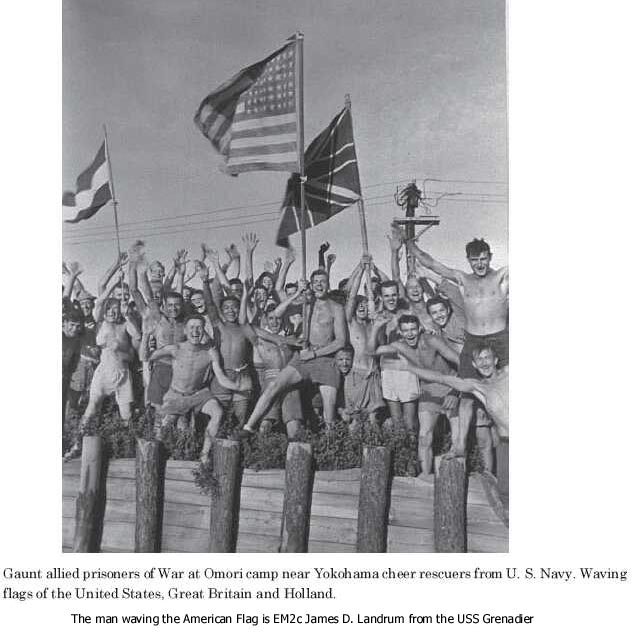
    *Yes, there were Black Americans who were POWs of Japan. The POWs above were from the USS Grenadier the only submarine crew that did not go down with their boat. Thomas James Trigg was a Mess Attendant First Class. We will do a post shortly on the Black American POWs of Japan.