Showing posts with label 192nd Tank Battalion. Show all posts

Sunday, April 21, 2024

History’s Shadow on Japanese Prime Minister’s U.S. Visit

Robinette 2nd from left
This week’s Japan-Philippines-U.S. trilateral summit comes alongside the 82nd anniversary of the Bataan Death March. 

By Patrick Regan and Mindy Kotler Smith

Patrick Regan is a member of the American Defenders of Bataan and Corregidor Memorial Society (ADBC-MS) and the grandson of U.S. Army Air Corps Tech. Sgt. Donald C. Regan, who survived the Bataan Death March and 41 months as a POW of the Japanese, including two years at Hirohata Camp 12-B working for Nippon Steel.

Mindy Kotler Smith is also a member of the ADBC-MS and great niece of U.S. Army Corps of Engineers Construction Engineer Fletcher Wood, who survived the siege of Corregidor but died in a Japanese POW camp in the Philippines. She is the editor of this blog.

The Diplomat, April 09, 2024

Few weeks are as historic in the shared history of Japan, the Philippines, and the United States as this one. The focus this week will be on these countries’ three leaders — Japanese Prime Minister Kishida Fumio, U.S. President Joe Biden, and Philippine President Ferdinand “Bongbong” Marcos, Jr. — and their summit in Washington. But the anniversaries of Imperial Japan’s worst war crimes this week cast a shadow over their meetings.

More than 80 years later, those acts remain largely forgotten even though they underlie one of the key topics Kishida is expected to raise at his summit with Biden: Nippon Steel’s attempt to acquire U.S. Steel.

By acknowledging Japan and Nippon Steel’s role in the mistreatment of prisoners of war (POWs) during World War II, Kishida has an opportunity to not only do the right thing but also connect in a meaningful way with Biden and Marcos, both of whom have direct family ties to those atrocities.

The Bataan Death March

Eighty-two years ago, on April 9, 1942, the fighting on the Philippines’ Bataan Peninsula came to an end. For four months, American and Filipino troops had done what no one in the Pacific could do — halt Imperial Japan’s sweep across Asia. Through persistence and ingenuity, without air or naval support, they mounted an unexpectedly stiff resistance against the invaders.

Resupply and reinforcements were not coming, though, and the troops on Bataan were starving and out of ammunition. Faced with a certain massacre, the U.S. commanding general, Edward P. King, disobeyed orders and surrendered his men. But what followed was worse than combat.

On the first day of the surrender, Japanese troops looted the personal possessions of their prisoners, murdered those found with Japanese money, bayonetted to death the sick, and raped the one American nurse they could find.

The next day, April 10, the men were organized in groups of 100 and force-marched up the peninsula in the sweltering tropical heat. They were denied water, food, and medicine. Japanese officers beheaded men at will. The guards killed laggards and those they believed disrespectful. Japanese military vehicles crushed men into the road beneath them, while their occupants laughed. The prisoners’ agonizing 65-mile trek lasted anywhere from four days to two weeks.

What became known as the infamous Bataan Death March was only part of a 100-mile journey to an improvised POW camp. The next segment was 28 miles by rail where the men were packed, standing, in metal boxcars. Many died from heat exhaustion, dysentery, suffocation, or malaria. Survivors then stumbled the next several miles to the unfinished barracks of Camp O’Donnell. The camp contained only two water spigots for the more 55,000 men. In the first month, thousands died of disease and despair.

Among those surviving the march and the first months of imprisonment was a distant cousin of Biden, John Robinette, a Port Clinton, Ohio, soldier with Company C of the 192nd Provisional Tank Battalion. Months before, he had participated in America’s first winning tank battle of WWII. Robinette died of beriberi that November.

Also surviving the march was Marcos’ father and namesake, Ferdinand Marcos Sr., who was an officer with the Philippine Army. Starting in June 1942, the Japanese, to reduce deaths and to reward collaboration, began to release Filipino prisoners of war. Ferdinand was released in August.

Thus, when Kishida sits down with his American and Filipino counterparts for a trilateral summit on April 11, he will face two leaders with direct ties to the Bataan Death March. It will not be his first time in that setting.

In October 2013, then-Foreign Minister Kishida met with two Bataan Death March survivors and one widow. They were part of a visiting delegation of American former prisoners of war of Japan seeking understanding and reconciliation from their former captors. Kishida expressed deep remorse for their suffering.

Despite this intimate history, it is reported that the Japanese prime minister will not express his country’s remorse over World War II in his speech at the U.S. Congress on April 11. Foreign Ministry officials claim Japan’s position on the war “has been settled to some extent” and Kishida “will not touch on it in the speech.”

Surviving as a Prisoner of Japan

April 11 is remembered in the Philippines as the anniversary of the Pantingan River Massacre. Lost and starving Filipino and American officers of the 91st Philippine Army Division missed the April 9 surrender deadline. The commander of Japan’s 65th Brigade, to whom they eventually surrendered, reprimanded the 400 men for being late. He then ordered his officers to behead the defenseless prisoners and directed his enlisted men to bayonet to death those missed by the swords. The slaughter reportedly took two hours.

Surviving imprisonment and hard labor in the Philippines was just the beginning for those who surrendered on Bataan. Starting in August 1942, the Japanese began shipping American and European prisoners from the Philippines to Japan to be used as slave laborers by national corporations. The prisoners were told if they did not work, they would not eat.

One of those corporations was Nippon Steel.

Nippon Steel

In his visit this week, Kishida will present Nippon Steel as the face of Japan. His message will be that the company, like Japan, should be viewed as a trusted ally that will enhance security cooperation by improving the U.S. industrial base. Nowhere will he mention the company’s unfinished business from the war.

Nippon Steel, like all major Japanese wartime corporations, requisitioned prisoner-of-war labor and maintained prisoner labor camps. The firm was so vital to Japanese war production that one of its steel mills was to be a target of an atomic bomb. At its mines, mills, and railyards, Nippon Steel used 6,000 Allied prisoners of war. At least 2,000 were American, most of whom were survivors of the conquest of the Philippines that began with the fall of Bataan.

At Nippon Steel facilities, the POWs were starved, abused, and denied adequate medical care. Company employees willfully beat the POWs working alongside them. Barracks were unheated, infested with vermin, and overcrowded. Ten percent of the prisoners died.

Nippon Steel still refuses to acknowledge that Americans suffered in forced service to the company during World War II. That history is nowhere to be found on Nippon Steel’s website, which devotes more than 1,000 words to a timeline of the company’s heritage. The timeline, which goes back to 1908, ignores the 1940s entirely.

Nippon Steel’s exploitation of POW labor during the war is also ignored at two of its functioning steel mills that were designated in 2015 as UNESCO World Industrial Heritage sites. Despite a UNESCO reprimand, the Japanese government refuses to provide “the full history” of these sites by explaining how POWs helped maintain wartime production.

Nippon Steel has invested in a slew of Washington, D.C., lobbyists to make the case for the company’s purchase of U.S. Steel. The prime minister is supposed to build on their imagery of Nippon Steel as a responsible, technologically sophisticated corporation sensitive to American interests. Ignored is that the company has long failed at its most basic expression of respect for American workers. It has never acknowledged or apologized for its mistreatment of American “laborers.”

The Opportunity

Kishida declared last year at the U.N. that he wanted to emphasize “human dignity” in international cooperation. Here is his chance. He can suggest that Nippon Steel do something more meaningful with its efforts to gain political support for the deal than to emphasize that it is good business.

There is precedent for such a move. In 2015, Mitsubishi Materials Corporation became the first and only Japanese company to apologize and present an atonement payment for using American slave labor during the war. The admission was hailed at the time as an important step in moving Japanese industry out of the shadow of its wartime atrocities, although no other Japanese companies have done the same.

Nippon Steel now has a rare opportunity to make a statement similar to Mitsubishi’s. In the face of recent government leaders reframing the Japanese purely as victims during World War II and to rewrite history downplaying the plight of those who suffered under Japan’s rampage across the Pacific, this would be a timely trust-building corporate and national move.

In addition to acknowledgement and an apology, Nippon Steel, along with the Japanese government, would ideally devote resources annually to educational efforts both in Japan and the U.S. to make the history of American POWs in Japan more widely known. There should be more than a few plaques at steel plants. Virtual visits to former POW camps, digitization of records, exchange programs for families, and a national memorial would be appropriate. Both Japan and Nippon Steel have to show they are serious.

These efforts are especially important now, nearly 80 years since the end of the war, as the living memory of wartime events slips away.

It’s too late now for the thousands of Americans who slaved away for Nippon Steel to get the apology and recognition they deserve. That includes the father of the famed Smothers Brothers, the grandfather of California Governor Gavin Newsom, and Olympian Louis Zamperini, whose remarkable story of survival was depicted in the book and movie “Unbroken.”

But it’s not too late for Nippon Steel, with Kishida’s encouragement, to face its past directly so it can move on to its future, potentially with U.S. Steel, with some measure of honor and trust.

Sunday, April 10, 2022

Never Forget the Bataan Death March

Eighty Years Ago The horrors of today's war in Ukraine recall some of the atrocities committed by the Japanese empire during World War II.

by Mindy Kotler, proprietor the American POWs of Japan blog

Published April 9, 2022 in the National Interest

Pvt. Lester Tenney of Illinois’ 192nd Tank Battalion felt lucky. The Japanese officer’s sword missed his head and neck. Although he was left with a large gash on his shoulder, medics could quickly sew it up and he was soon back on the dusty road up the Bataan Peninsula. To fall behind or to falter guaranteed death. Like the civilians of Ukraine’s besieged cities, the surrendered soldiers and civilians on the Bataan Death March were defenseless and at the barbarous mercy of the invaders. It began eighty years ago today, on April 9, 1942.

The Bataan Death March is remembered as one of the greatest war crimes of World War II. The Japanese commanders involved were prosecuted for crimes against humanity or for violating the international laws of war and executed. So seminal in American history were these events that Bataan is part of the American lexicon as a metaphor for a tortuous undertaking. It is why National Former Prisoner of War (POW) Recognition Day is held every April 9th. 

It is also one of the few Japanese war crimes for which the Japanese government has made a specific effort to atone. In 2009, the Japanese ambassador to the United States Ichiro Fujisaki, prompted by Tenney, traveled to the last convention of the American POWs of Japan and offered his country’s apology.  The ambassador also arranged a visitation program to Japan for surviving POWs.

“We extend a heartfelt apology for our country having caused tremendous damage and suffering to many people, including prisoners of war, those who have undergone tragic experiences in the Bataan Peninsula, Corregidor Island, in the Philippines, and other places,” he told the men and their families.

This apology, which never appeared on the Japanese Ministry of Foreign Affairs website, was repeated to four visiting delegations of American POWs by three Japanese Foreign Ministers. Japan’s current prime minister, Fumio Kishida, when serving as foreign minister, met with the 2013 POW group. Among them were two Bataan Death March survivors, including a Native American survivor, as well as two widows of Death March survivors. To his credit, he participated in the first principle of reconciliation, which is to hear their story.

The full story is that the Death March came after four months of combat starting when Japan attacked the Philippines within hours of bombing Pearl Harbor on December 7, 1941. A three-month siege of the Bataan Peninsula accompanied by a starvation diet, air and artillery bombardment, and disease had taken their toll. The Allies’ Europe-first policy combined with Japan’s control of the sea and air ensured that neither resupply nor reinforcement of the Philippines would come.

In the early morning hours of April 9, 1942, the newly appointed commanding general of Am-Fil forces on the Bataan Peninsula, Maj. Gen. Edward P. King Jr., realized that his troops faced slaughter if they continued to fight. He decided the rational course was to order the men and women under his command—against Gen. Douglas MacArthur’s orders—to surrender. Thus, 78,000 troops (66,000 Filipinos and 12,000 Americans) were taken captive by Imperial Japan.  Among them there were dozens of European civilians—Czechs, Estonians, Latvians, Norwegians, Germans, Finns, Dutch, and British—who had volunteered to join the fight. In addition, there were at least 10,000 in two field hospitals in Bataan. It is the largest contingent of U.S. soldiers ever to surrender.

Focused on saving his exhausted and ailing troops, King could not imagine the horrors that surrender would hold. On the same day as the surrender, the Japanese put the survivors on what has become known as the Bataan Death March. It is estimated that perhaps 2,000 either swam the three shark-infested, mined miles to the fortress island of Corregidor (No one on Corregidor was on the Death March) or disappeared into the jungle. Those who made it to Corregidor became immediately members of the 4th Marines fighting shore defense. Corregidor and the associated three island fortresses surrendered on May 6th. 

The Bataan Death March was a poorly commanded effort to move the surrendered troops and civilians on the peninsula to a POW camp one hundred miles north. The result was that the Japanese neglected the sick and killed the wounded; denied the POWs food, water, and medical care; and abused, robbed, and tortured them. Many men stamped into the road by tanks or shot trying to drink from a stream remain missing. 

For most, the first leg of the Death March was sixty-five miles from the port of Mariveles at the southern tip of the Bataan Peninsula up the East Road to a train terminal at San Fernando. Others arrived at the East Road at the village of Pilar after a sixteen-mile trek from Bagac on the west side of Bataan. It took an average of five days in the tropical heat for the terrorized, sick, and starving men to reach the station. There they were stuffed standing one hundred at a time into small, unventilated boxcars for a twenty-four-mile ride north to the town of Capas. Many died in these rolling ovens.

The survivors were forced to walk another five miles to Camp O'Donnell, an unfinished Philippine Army training camp. With only two spigots of water and no sanitation, the camp was quickly compared with the Confederacy's Andersonville prison camp. Hundreds died of disease, starvation, dehydration, and despair. Most of the deaths from the Death March happened here or at its successor camp, Cabanatuan. 

Survivors of the Bataan Death March endured three-and-a-half years of death camps, brutal labor, and unimaginable indignities and injury. Many were taken to Japan aboard hellships to be slave laborers for Japanese companies in Formosa, Japan, Manchuria, and Korea.  Again they were denied food, medical care, clothes, and adequate housing. 

Tenney ended up in Mitsui’s Omuta coal mine near Nagasaki. The working conditions were so severe that POWs traded their meager meals to have their arm or leg broken so that they would get a short reprieve from going back underground. Today, the mine is a UNESCO World Industrial Heritage site.

More than half the Americans taken prisoner on Bataan died before war’s end. This was greater than the overall death rate for American POWs of Japan, which was 40 percent. It was more deadly to be a POW than a combat Marine in the Pacific. By comparison, the death rate for Americans taken prisoner by the Nazis was less than two percent.

As horrifying as the Bataan Death March was, it was not an exception in Japan’s war. Other death marches were imposed upon American and Allied POWs throughout the Pacific.Torture and executions were commonplace. Death from overwork and malnutrition were the norm. Abuse was systematic.

How a country treats the defenseless and dependent is a measure of their citizens’ values. How the victims endure the neglect and damage inflicted upon them also reflects values. Like the men and women on Bataan, there is much to admire in the Ukrainians. They persist and endure.

As President Franklin D. Roosevelt said in August 1943, when the outcome of World War II was still uncertain, “The story of the fighting on Bataan and Corregidor—and, indeed, everywhere in the Philippines—will be remembered so long as men continue to respect bravery, and devotion, and determination.” This still holds true eighty years later.

Thursday, December 09, 2021

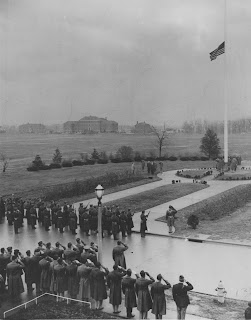
Brooks Field dedicated in 1942 to a heroic
African American tanker


IN RECOGNITION OF PRIVATE ROBERT H. BROOKS AND THE 80TH ANNIVERSARY OF THE ATTACK ON PEARL HARBOR 
 ______ 
 of kentucky 
 in the house of representatives 
 Tuesday, December 7, 2021

 Mr. GUTHRIE. Madam Speaker, today, on the 80th anniversary of the attacks on U.S. naval forces at Pearl Harbor, we remember poignantly the courage and sacrifice of America's Greatest Generation. That legacy of service is rich in Kentucky's Second District, exemplified by the seemingly insurmountable challenges faced by Company D of the 192nd Tank Battalion, which included the Harrodsburg Tankers. 

On December 8th, across the international dateline and just hours after the attack on Pearl Harbor, Japanese bombers descended on Company D and other U.S. forces who were stationed in the Philippines at Clark Field. A young private and Kentuckian by the name of Robert H. Brooks attempted to sprint to his station to fight back against Japanese forces. Sadly, he lost his life during his heroic action. He was the first casualty of the U.S. Armored Forces in World War II. The fighting in the Philippines was relentless for the U.S. service members and Company D. All of the remaining 66 Mercer County natives-- known today as the Harrodsburg Tankers--survived the initial conflict. However, 29 soldiers were lost to the unimaginable conditions during the three years they were held at prisoner-of-war camps. 

 At Fort Knox there is a parade field named after Private Brooks, called Brooks Field, and we will never forget him and those brave soldiers. The bravery of Private Brooks, Company D, and its tankers from Harrodsburg are an indelible reminder of the price of freedom for all that we must never forget.


👉This is the text that was submitted to Congressman Brett Guthrie's (R-KY) office to use. It is interesting to see what history was cut out by the congressman.

Madam Speaker, I rise today to remember the life and sacrifice of Private Robert H. Brooks, an American hero from Kentucky, who gave his life defending liberty on December 7, 1941. He did not perish at Pearl Harbor in Hawaii, but during a same-day attack by Imperial Japan on the American territory of the Philippines. Brooks, 26, was the first American tank battalion member to be killed in World War II and possibly the first African American.

We cannot forget that on December 7, 1941, December 8th across the international dateline, Japan descended upon not only Pearl Harbor but also upon the Philippine Islands, Guam, Wake Island, Howland Island, Midway, Malaya, Singapore, Thailand, Hong Kong, and Shanghai. Whereas the attack on Pearl Harbor was to discourage U.S. action in Asia, the other strikes served as preludes to full-scale invasions and brutal military occupation.

Pvt. Brooks was a member of the 192nd Tank Battalion, Company D, which originated as the 38th Divisional Tank Company of the Kentucky National Guard from Harrodsburg, Kentucky. The 192nd arrived in the Philippines in late November 1941 and was sent immediately to guard Clark Field at Fort Stotsenburg. Soon after Japan’s Pearl Harbor attack, waves of Japanese bombers appeared over the air fields in the Philippines.

Brooks was killed running to his M3 Half-track hoping to man its .50 caliber machine gun. When the news of Pvt. Robert H. Brooks, the first battle casualty of the Armored Force, reached Fort Knox, the Commanding General, Jacob Devers, ordered that the main parade ground at the base from that day on be named after the young tanker.

In inviting Brooks’ parents to the naming ceremony, it was discovered that they were Black tenant farmers from rural Kentucky. At the time, the Army’s Armored Force was segregated.

When this was reported back to General Devers, he said, “It does not matter whether or not Robert was Black, what mattered was that he had given his life for his country.” At the dedication of Brooks Field on December 23, Major General Devers said “In death, there is no grade or rank. And in this greatest democracy the world has ever known, neither riches nor poverty, neither creed nor race, draws a line of demarcation in this hour of national crisis.”

Pvt. Brooks was not alone in his determination and dedication to service. His Company D and 192nd Tank Battalion held out in the Battle of Bataan with dwindling supplies, rampant disease, and little rest until they were surrendered by their commanders on April 9, 1942. Rescue did not come nor was it planned. What followed was the infamous Bataan Death March, capricious abuse, starvation, hellships, and slave labor in Japan. By war’s end, barely half of the men and women surrendered on Bataan had survived. Only 37 or the 66 men from Harrodsburg returned home.

So today, I ask you to remember the bravery of both Pvt. Brooks and General Devers who defied convention to do what was right to advance democracy and equality. I invite you to visit Brooks Field at Fort Knox in my district to pay your respects to them. And I ask you not to forget the brave men of the 192nd Tank Battalion who withstood fascism in battle and in captivity, half of whom did not return home.


From the Congressional Record [Page S8959]

NATIONAL PEARL HARBOR REMEMBRANCE DAY AND 
HONORING THE TANKERS OF MAYWOOD, ILLINOIS

December 7, 2012

Ms. DUCKWORTH. Mr. President, I rise today on Pearl Harbor Day to remind my colleagues that on December 7, 1941, Imperial Japan attacked not only Pearl Harbor but also the Philippine Islands, Guam, Wake Island, Howland Island, Midway, Malaya, Singapore, Hong Kong, Shanghai, and Bangkok.

In the Philippines that day, 89 men from Maywood, IL, who made up Company ``B'' of the 192nd Tank Battalion--federated National Guard units from Illinois, Wisconsin, Kentucky, and Ohio--defended Clark Field from invading Japanese forces. They had arrived in the Philippines less than 3 weeks earlier.

These Illinois tankers watched helplessly as Japan's modern planes flew beyond the reach of their guns and destroyed the airfield. They then fought valiantly on the Bataan Peninsula with antiquated weapons and dwindling supplies. Relief from the United States never came. Though they held out for months, the men, overcome with fatigue, starvation, and disease, were surrendered by their commanders on April 9, 1942.

What followed was the infamous Bataan Death March 100 miles up the peninsula to a makeshift prison camp. Thousands died. Maywood, a hamlet outside of Chicago, had the greatest number of men from any single American town on the Death March. They would not all make it home. Those who survived the initial march endured 3 and a half years of death camps, brutal forced labor, and unimaginable abuse. More than half the Americans taken prisoner on Bataan died before they could see the war's end. Of the 89 Maywood men of Company ``B'' who left the U.S. in 1941, only 43 returned home in 1945.

For 79 years, Maywood has celebrated and remembered its heroes of Bataan with an annual September Memorial. Like many important celebrations in COVID, this was the second year that the memorial had to be postponed. But we do not forget the men of Maywood. From the Bataan-Corregidor Memorial Bridge in Chicago to Maywood's Bataan Memorial Park, my home State of Illinois recalls daily their sacrifice for liberty.

As a retired member of the Illinois National Guard myself, today is a solemn day--a day that will forever live in infamy--when we are reminded of the sacrifices made and the brave lives lost in service to our Nation. I am proud to have served with my Illinois National Guard family and work to continue to bring respect, remembrance, and honor to such a strong legacy.

Therefore, I ask my fellow Senators to join me on this 80th anniversary of Japan's surprise attack on Pearl Harbor and to remember the other Americans who fought and died throughout the Pacific that day. Although the aim of the December 7 surprise attack on Hawaii's Pearl Harbor was to destroy the U.S. Pacific Fleet in its home port and to discourage U.S. action in Asia, the other strikes served as preludes to full-scale invasion and brutal military occupation.

I further ask my colleagues to join me in commending the hard work and dedication of Maywood Bataan Day Organization President Col. Richard A. McMahon, Jr., and his board of directors, as well as Ms. Jan Thompson, president of the Illinois-based American Defenders of Bataan and Corregidor Memorial Society, who are committed to honoring and preserving the history of the men and women of Bataan who gave so much in the fight against tyranny and fascism. They, too, are the part of the story of Pearl Harbor Day and in keeping the memory of the men of Maywood alive to this day.

Friday, September 25, 2020

Gold Star Families Remembrance Week

This week, September 20th – 26th, is Gold Star Families Remembrance Week, which honors the families of fallen service members and recognizes the sacrifices made by the family members of veterans who died in the line of duty.

The first tanker to die in WWII was a son of African American Kentucky sharecroppers. Pvt. Robert Brooks of the 192nd Tank Battalion was killed by a Japanese bomb on December 8, 1941 at Clark Field.

Cleveland Wright (b. 1931, d. 1992), U.S. Air Force,
“We Regret To Inform You,” 1979. Oil on Canvas.
Collection of the National Veterans Art Museum.
All rights reserved.

Friday, September 18, 2020

Remembering the men of Maywood and all the POWs of Japan


IN HONOR OF 
MAYWOOD BATAAN DAY AND NATIONAL POW/MIA 
RECOGNITION DAY


HON. DANNY K. DAVIS 
of Illinois 
in the House of Representatives 
Wednesday, September 16, 2020 

Mr. DANNY K. DAVIS of Illinois. Madam Speaker, today I rise to tell my colleagues during this week that ends with National POW/MIA Recognition Day about my district's 78-year old Maywood Bataan Memorial Day tradition. This service honors the men from the village of Maywood, Illinois who became prisoners of war after fighting from December 7, 1941 to April 9, 1942 against invading Imperial Japanese forces in the Philippines. 

The men of Maywood were members of Company B of the federated Illinois National Guard 33rd Tank Company, 33rd Infantry Division based at the town's Armory.  On November 25, 1940, they became part of the 192nd Tank Battalion of the U.S. Army. In October 1941, 89 men from Company ``B'' left the United States for the Philippine Islands. They arrived in the Philippine Islands on November 20, 1941--Thanksgiving Day. On December 8, the war started and the Japanese attacked. 

These Illinois tankers fought valiantly on the Bataan Peninsula with little food, medicine, fuel, or ammunition. Relief from the United States never came. Malaria, scurvy, and dysentery reached epidemic proportions. On April 9, 1942, Bataan was surrendered. The following day, some 85,000 American and Filipino soldiers, as Japanese captives, all became victims of the greatest atrocity of the Pacific War: the Bataan Death March. A seemingly endless line of sick and starving men began their 85 mile trip up from the tip of Bataan to Camp O'Donnell in central Luzon. More than 12,000 died en route. 

Survivors of the March endured three and a half years of death camps, brutal labor, and untold abuse. Many were taken to Japan aboard hell ships to be slave laborers for Japanese companies. Of the more than 10,000 Americans taken prisoner on Bataan, between 6,000 and 7,000 died. Of the 89 men of Company ``B'' who left the U.S. in 1941, only 43 would return from the war. 

This is the first year that the Memorial, which was scheduled for September 13, has had to be postponed. I ask my fellow representatives to join me in commending the hard work and dedication of Maywood Bataan Day Organization President Col. Richard A. McMahon, Jr. and his Board of Directors. And on this Friday, September 18, National POW/MlA Recognition Day may we all pause to remember the men and women of Bataan who gave so much in the fight against tyranny.

For more information about the tankers on Bataan see The Bataan Project.

Monday, September 04, 2017

Maywood Bataan Day - September 10

Maywood Parade 1942
FOR IMMEDIATE RELEASE


Maywood Veterans – A Century of Service and Sacrifice

MAYWOOD, IL – As it has for three quarters of a century, Maywood will mark Maywood Bataan Day on September 10th, 2017, at Maywood Veterans Memorial Park in Maywood, Il.

It was 75 years ago this fall that the citizens of Maywood were feeling helpless in the face of terrible events on the other side of the earth, that had endangered the lives of nearly 100 of their finest young men – in something we know today as the Death March of Bataan. But they were not passive; they decided to do something about it. They quickly arranged an astounding show of support. On September 11, 1942, an estimated 30,000 people lined 5th Avenue in this suburb to watch hundreds of children march in support of the war effort. Later, a larger parade would step off – this second parade lasted 3 hours and involved literally thousands of participants. Bands, floats, celebrities and politicians all marched to show their support for Maywood – and for all the small towns, that had placed their loved ones in harm’s way to fight for freedom.

From that day to this, Maywood has continued to mark the second Sunday in September with a Memorial Service. Due to changing economics and the loss of many of the veterans of that great war, the parades were discontinued years ago. But the Memorial Service continues. And this year, to mark the 75th Anniversary of that first Maywood Bataan Day, the Village of Maywood and the Maywood Bataan Day Organization have put together a special program, that will not only remember the men of Bataan, but will also include special events, that mark the century since the United States declared war on Germany and entered World War I. Just as they would in World War II, the men of Maywood answered the call and signed up to fight across the ocean. They would join other units of the Illinois National Guard to become part of the vaunted 33rd Division.

A concert of military and other appropriate music will precede the service at 2:30 pm. The music will be provided by the 144th Ceremonial Band of the Illinois National Guard, under the direction of Sgt First Class Robert Reed.

Master of Ceremonies will be MBDO Vice President, Edwin H. Walker IV. Colors will be presented by several area American Legion, VFW, and ROTC Color Guards. In past years color guard units from Maywood, Melrose Park, Berwyn, Hillside, Des Plaines, Chicago, Palatine, Elmhurst, Frankfort, Mokena, River Forest, LaGrange, Northlake, and many other Chicago and suburban cities have participated. A Rifle Squad Gun Salute will be provided by the American Legion Post #974 in Franklin Park, Illinois.

Keynote Speaker will be Major General Richard J. Hayes, Jr., Adjutant General of the State of Illinois. Major General Hayes is a repeat guest and his presence underscores the valued memories, that the men of Co. B, 192nd Tank Battalion continue to hold for members of the Illinois National Guard.

The ceremonies will also include a guest speaker from the Philippine Consulate General in Chicago, and Maywood Mayor Edwenna Perkins. Daniel J. Perkins, Event Coordinator and Consultant, will make a special presentation on the history of Maywood in World War I. Other highlights of the Memorial Service include a dedication of a Veterans Memorial Wall, a new Memorial Plaque for a WWI-era British Cannon, that has been located in the Village of Maywood for nearly a century as a memorial to the men who fought in WWI, and a Wreath Laying Ceremony, featuring members of all branches of our Armed Forces, as well as related community organizations.

Additional special guests scheduled to attend include members of the Village of Maywood Village Board of Trustees and other invited local community leaders.

Col. Richard A. McMahon, Jr., President of the Maywood Bataan Day Organization, extends an invitation to the entire community, saying, “Maywood Bataan Day today is one of the largest and longest continuous World War II memorials still being marked annually. Attendance continues to grow and we are honored to be able to meet our commitment to the men and women who serve our country when we promised in 1942, that we would ‘Remember Bataan’.”

The Maywood Bataan Day Organization is dedicated to preserving the memory of Bataan Day and perpetuating the observance of Maywood’s Bataan Day on the second Sunday of September. Our modern mission includes supporting veterans of all wars and providing educational resources through our archives and our website.

The organization is a non-profit 501(c)(19) organization, that is supported by donations of time and money from the community, as well as relatives and friends of those who have served their country.

Tuesday, February 28, 2017

Lester Tenney In Memoriam

It is with great sadness that I report that Sgt Lester Tenney née Tennenberg of the Maywood, Illinois 192nd Tank Battalion Company B died on Friday morning, February 24th in Carlsbad, California.

Dr. Tenney survived the tank battles on Bataan in the Philippines when Japan invaded in December 1941, the April 9, 1942 surrender and the tortures of the infamous Bataan Death March, the squalid POW death camps on the Philippines, Camp O’Donnell and Camp Cabanatuan, the Hell ship Clyde Maru to Japan, and Mitsui’s Omuta Miike coalmine (now a UNESCO Industrial World Heritage site without mention of POW slave labor) to receive a AM from San Diego State University in Business Education in 1967 and a PhD in Business Administration from the University of Southern California in 1972. He became a professor of accounting and finance at Arizona State University.

click to order
Most important, he was an effective advocate for the American POWs of Japan. In 2009, as the last National Commander of the American Defenders of Bataan and Corregidor, he persuaded the Japanese government to offer an official, Cabinet approved apology to their wartime POWs and to establish in 2010 a reconciliation trip to Japan for American former POWs and their families.

In 2013, the Embassy of Japan awarded him an Ambassador’s commendation and medal for his “distinguished service in contributing to the deepening of mutual understanding and friendship between Japan and the United States of America.” In April 2015, he was again honored by being invited to attend Japanese Prime Minister Shinzo Abe’s address to a joint meeting of Congress as well as join the Prime Minister’s gala dinner that evening. Later that year, he represented the American Defenders of Bataan and Corregidor Memorial Society at President Barack Obama’s Veterans Day breakfast. Since 2015, he has written a series of remembrances for the Wall Street Journal on his POW experience.

In July 2015, he participated in a ceremony at the Museum of Tolerance  in Los Angles to receive an official apology from Mitsubishi Materials Corporation to all its former POW slave laborers who were assigned to four of their copper and coal mines. The Mitsubishi Company, however, did not join in this apology. Nor have any other Japanese companies that used American and Allied POW slave labor.

Dr. Tenney witnessed much progress by Japan in its taking responsibility for Imperial Japan’s war crimes. And he persisted in his quest despite the many obstacles created by his own government. His disappointment was never receiving an apology from Mitsui, the company that enslaved him. He not only dug coal in a dangerous, obsolete mine, he also participated in plays that cheered his fellow prisoners and entertained the mine's owner, Baron Mitsui who enjoyed watching the spectacle.


Dr. Tenney was 96 and is survived by his wife, Betty (their 57th anniversary would have been Tuesday, February 28th); a son, Glenn Tenney (Susan) of San Mateo; two stepsons, Don Levi (Eileen) of Doylestown, PA, and Ed Levi (Jan) of Mountain View, AK; seven grandchildren; and two great-grandchildren.

HERE is an obit that appeared Saturday’s in the San Diego Union Tribune and HERE is the one in The New Times. However, both contain a number of inaccuracies.

Please do not hesitate to contact me if you would like information on sending a condolence card to his widow, Betty.

Please donate to the American Defenders of Bataan and Corregidor Memorial Society in his memory.

Thursday, December 08, 2016

War Carnage in the Philippines

Everyone remembers the attack on Pearl Harbor. What we endured in the Far East was no less tragic, but almost unforgivable.

By LESTER TENNEY

Wall Street Journal Online, December 7, 2016

Dec. 8 was my Pearl Harbor. Barely nine hours after the Japanese destroyed most of the U.S. Pacific Fleet, they began their invasion of the Philippines. My tank battalion, stationed at Fort Stotsenburg in the Philippines, was just as surprised and no more prepared for war than the crews of the battleships sunk earlier that day.

The catastrophe of Pearl Harbor still overshadows the embarrassing defeat inflicted on American forces in the Philippines. Whereas Japan attacked Hawaii for 90 minutes and never returned, the battles in the defense of the Philippines continued for five months, followed by widespread guerrilla warfare and the nightmarish internment of combatants and civilians. This culminated in a ferocious American campaign starting in October 1944 to retake the Islands.

By midmorning on Dec. 8, Imperial Army bombers attacked two U.S. bases on Luzon, Tuguegarao Field and the Baguio headquarters of the U.S. Army Forces in the Far East. Shortly after noon, Japan’s Imperial Navy bombers and fighters attacked Clark Field and Iba Field. My 192nd Tank Battalion was waiting for them at Clark Field.

We sat in our tanks surrounding the airfield and prepared to defend it from a ground attack, which never came. The antiaircraft guns of the 200th Coast Artillery fired too low to be effective. Their 1932 vintage ammunition and corroded fuses made the guns unreliable. Maybe one of every six shells actually exploded.

We watched as the first flights of Japanese bombers blew apart Clark’s hangars, barracks and warehouses. Our planes were on the field, fueled, ammunition loaded, and lined up wingtip-to-wingtip as the pilots and crew had lunch. These were torn apart not just by the waves of bombers but also by low-flying Mitsubishi Zeros. More than 100 planes were lost, and the human casualties amounted to 55 killed and more than 100 wounded.

When combined with the other losses on that one day of war, the U.S. Far East Air Force was eliminated as an effective fighting force. And with it disappeared the ability to conduct a realistic defense of the Philippines.

I was literally fresh off the boat. My tank battalion had left San Francisco on Oct. 27 aboard the USAT Hugh L. Scott. We arrived in Manila on Nov. 20—Thanksgiving Day. I remember my feast of hot dogs, while the officers had turkey at their club.

The 192nd battalion had boarded the troopship with little to no training. We were 588 men, nearly all activated National Guard, from Maywood, Ill., Fort Knox, Ky., Clinton, Ohio, and Janesville, Wis. For a few weeks in September and October, we practiced tank warfare with broomsticks for guns, markers for heavy tanks and a handful of 1930s vintage tanks.

Never once did we practice on the 108 light tanks that were sent with us to the Philippines. Thus during Japan’s raid on Clark Field, our cannons were silent. Amid the chaos, we desperately searched for the shells. We found them as the last Japanese bomb fell that day: They were under the radio operator’s seat, my seat.

Throughout Asia on Dec. 8, American and Allied soldiers, sailors, airmen and Marines all found themselves at the mercy of Imperial Japan. It is forgotten that the Japanese also descended on Guam, Wake Island, Malaya, Singapore and Hong Kong. At the time, few believed that the Japanese would be able to strike so far from home and in so many places.

That day in China, nearly 300 U.S. Marines, sailors, and diplomats became the first American prisoners of war. In the following weeks and months, American soldiers and civilians throughout Japan’s newly occupied territories became POWs. They all endured more than three years of confinement in squalid camps or slave labor at such places as the Thai-Burma death railroad.

For me, my battalion soon met advancing Japanese tanks and infantry as we covered the withdrawal of American and Filipino forces into the Bataan Peninsula. We held on for four months fighting with dwindling food, medicine and materiel. Promised reinforcements from the U.S. never came. Fearing a bloodbath, our commanders surrendered us on April 9, 1942.

What followed was maybe worse: the Bataan Death March. Then prison camps with little food, minimal shelter, rampant disease, and sociopathic guards; “hell ships” to Japan where men suffocated or lost their mind in the noxious dark; and slave labor at POW camps in Japan, Formosa, Korea, and China.

Every day I am asked if I have forgiven the Japanese for their brutal treatment of me as a prisoner. I lost more friends to abuse and starvation as POWs than from combat. More prisoners died on “hell ships” than Marines in the Pacific.

I have forgiven, as at 96 I do not want to live with all the hate. But it is just as hard to forgive the short-sightedness of the commanders who put us in harm’s way on Dec. 7 and 8.

Mr. Tenney was a member of the 192nd Tank Battalion, Company B, that defended the Philippines in World War II. He lives in San Diego.