Showing posts with label Yokohama Trials. Show all posts

Saturday, July 13, 2013

Beheaded on New Guinea, Honored in Rhode Island

purchase model
May 27th, which happens to be Memorial Day in both United States and Japan this year (2013), was the 69th anniversary (1944) of the downing of Army Air Corps 2nd Lt. Robert E. Thorpe's P-47D Thunderbolt by Japanese ground fire near Kairiru Island, New Guinea.

Lt. Thorpe, 20, after ditching his damaged plane, swam ashore to Kairiru. There, he had the misfortune to become a POW to some of Imperial Japan's more sadistic Naval officers.

According to a Yokohama War Crimes Trial summary record (Case 329), Thorpe was first beaten and interrogated by Lt. Commander Kaoru Okuma and and Lt. Isamu Amenomoro. When Thorpe continued to refuse to supply any information other than name, rank and serial number, Okuma invited a group of soldiers to join in on the beating.


Whether Thorpe cooperated or not, the Commander of the 27th Japanese Special Naval Base Force Rear Admiral Shiro Sato had already ordered his execution. He explained to his Chief of Staff that on the Mainland all captured American flyers were executed and that "under the present circumstances...the execution of the prisoner of war cannot be helped."

Lt. Yutaka Odazawa, who had been selected to execute the prisoner, warned his fellow officers who wished to use Thorpe as target practice to shoot the prisoner below the waist otherwise it would difficult to behead him. After a number of gunshot wounds, Thorpe dropped to his knees and was held in this position at the edge of freshly dug grave. The trial records note:
Odazawa said to the flyer, "I am going to behead you under orders";  "I am golng to kill you"; "I Odazawa will now proceed to execute you"; "You wilI first go to Paradise, and I will follow you later on"; "Due to the war, it cannot be helped; I will dispose of you." He then poured water on the prisoners neck and on his samurai sword. With one blow of the sword, he struck the prisoner in the back of the neck. The head was not completely severed, but was hanglng by a small bit of flesh. After the blow the prisoner fell into the grave.
In the trial testimony, it was said that a Medical Petty Officer Waichi Ogawa climbed into the grave and cut out an organ from the deceased flyer. It does not say what was removed, but it is likely to have been the liver. As documented in James Bradley's, Flyboys: A True Story of Courage (2003), it was not unusual for Japanese commanding officers to consume the liver of their enemies.

Rear Admiral Shiro Sato killed himself and his entire family at his Yokosuka home in 1946. Petty Officer Waichi Ogawa was Sugamo Prison's first suicide (August 1947) during the Yokohama Class B and C War Crimes Trials. Lt. Commander Kaoru Okuma, was convicted in 1948 for his war crimes and hanged in 1949. Oddly, according to court records, his own father concurred with the death sentence.


Remembered in Rhode Island
On May 14th, Rhode Island State Representative Peter F. Martin (D-Dist. 75, Newport) introduced a Resolution on the House floor – unanimously supported by the Chamber – honoring Rhode Island native Lt. Robert E. Thorpe. “Lt. Thorpe is a hero in every sense of the word,” said Representative Martin. “He probably could have escaped some of the brutality inflicted upon him if he had been willing to cooperate with his captors. Instead, he went to his death bravely and defiantly.”

State House Resolution H 6114 (2013) "requests the Governor to honor 2nd Lt. Robert E. Thorpe posthumously with the Rhode Island star and the Rhode Island cross for his extraordinary heroism in the service of our nation during WWII; and be it further RESOLVED, That this House hereby urges the Graves Record Administration to re-investigate and bring the remains of 2nd Lt. Robert E. Thorpe home."

2nd Lt. Robert E. Thorpe's unmarked grave was never found and a memorial had never been held. Yet, his family and dedicated others have in the past decade stepped up efforts to locate him. During August 2009, the Joint POW/MIA Accounting Command (JPAC) did excavate a grave site thought to be Thorpe's, but found nothing.

On May 17th, the Rhode Island State House finally honored Lt. Thorpe at a special ceremony [a video worth watching]. Present were Lt. Thorpe’s brother Gill and members of his family as well as Capt. Lewis Lockhart, a WWII fighter pilot who was Lt. Thorpe’s friend. Political leaders present included Governor Lincoln Chaffee and Cranston Mayor Allan Fung, who is the first Asian-American mayor in Rhode Island. Mayor Fung declared May 17th Robert E. Thorpe, Jr. Day in Cranston.

Video of the Ceremony

Unforgotten
A book in the works, Broken Trust by Ken Dooley [to be published August 2015 as Relentless Pursuit], documents Thorpe's life, death, and the quest to bring him home. One journalist who previewed the book said it suggests the question "Were a good many guilty people in Germany and Japan spared the justice they deserved?" He compares the draft with the bestseller Unbroken and observes that they demonstrate "how that spirit of reconciliation has been disturbed in the last decade, as several writers have gone back and combed official records and trial transcripts that paint a Japanese culture far removed from serene gardens, arranged flowers and delicate poetry pondered in the moonlight."

Dooley said at the memorial ‘‘There once lived a man named Robert E. Thorpe, who stood on a lonely beach and who, in the words of one of his tormentors, died magnificently.’’

These memorials, resolutions, books, articles, and videos show that Imperial Japan's victims are not forgotten. A new generation still searches for closure. The Japanese are wrong to believe we will forget.

Saturday, April 27, 2013

Remembering Pfc. Arthur A. Klein, USMC


Our hero passed yesterday evening at 4:10.

Thus read the email announcing Pfc. Arthur A. Klein, Wake Island Detachment, 1st Defense Battalion, U.S. Marine Corp, 91, death on Monday, April 16th in Billings, Montana.

He was indeed a hero. Little in neither his obituary in the Billings Gazette nor the tribute given him by U.S. Senator John Testor (D-MT) in the Congressional Record conveys just how much.


Pfc. Klein was one of 449 Marines who fought in one of the first battles of World War II. Although out-gunned, out-manned, and out-supplied, the Marines, with a handful of civilian contractors who were on Wake to fortify the island and Pan American Airways Chamorro flight attendants, held Wake Island in the Pacific. For over two weeks, December 8 to 22, 1941, these men did the impossible. They stopped an invading Japanese armada.

According to historian Gregory Urwin, author of Victory in Defeat: The Wake Island Defenders in Captivity, the Wake Island Marines exhibited “a heroism that inspired millions of their countrymen, they defended their tiny outpost for sixteen days, beating off seventeen air raids and an amphibious landing attempt.” Their fierce defense of the tiny atoll is said to be the only time in military history that an amphibious assault was successfully repelled.
 
Incredibly, only 46 Marines, three sailors, and 75 civilians died in Wake’s defense. The 1,593 Wake Islanders still alive at the time of the surrender, which included 35 Chamorros and 403 Marines, became prisoners of war of Imperial Japan.  Japanese losses, on the other hand, easily topped 900 dead, plus two destroyers, two patrol boats, one submarine, and 21 aircraft.

In January 1942, the majority of Wake’s POWs (1,187 in all) including Art were herded onto a former Japanese ocean liner, the Nitta Maru, and sailed first to Yokohama and eventually to Shanghai. Others were shipped to Japan later, leaving 98 civilians on Wake to work as slave laborers. The Japanese massacred these men on October 7, 1944.

Nitta Maru
The Nitta Maru was a Hellship. It was like many others, built and operated by NYK Lines (Mitsubishi) and unmarked as carrying POWs. Japanese ship operators bid on and profited from transport contracts with Japan's military. One thousand starving, dehydrated, sick men crammed into her dark, airless hold, which at best was only large enough for 400. Art remembers they “were so crowded that we could not even sit or lie down.” The smell of death and waste hung in the air.

After departing Yokohama, the Japanese took five men topside as retribution for the hundreds of their comrades who had fallen to the defenders of Wake. Art may have listened as five fellow Marines (see Master Technical Sergeant Earl Raymond Hannum and Technical Sergeant Vincent Bailey) were tortured and clumsily beheaded. Their torsos were mutilated with bayonets and thrown overboard. These men are among the 3,000 WWII Marines whose bodies have never been recovered.
  
Tsumori 
In China, Art was taken first to the Shanghai War Prisoners Camp (Kiangwan ).Then he was transferred to Woosung POW Camp also in Shanghai. Although neither camp was humanitarian or comfortable, Art said that it was better than any he had heard about and “it was certainly far better than anythat we had in Japan.” For awhile, the expat community in Shanghai was allowed to provide food and clothing to the POWs. Labor was building a mountain-like firing range that Art called Fujiyama [Mt. Fuji].

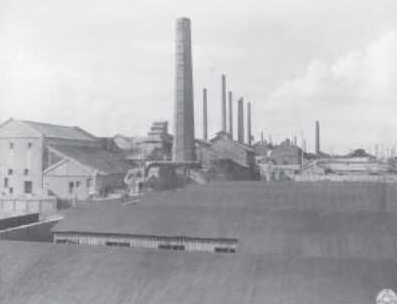
It is unclear when Art was sent to Japan. It is likely that he was among the maybe 400 POWs shipped from Shanghai in August 1943 to Tsumori POW Camp 13-B near Osaka. The camp was operated to provide slave labor for the Fujinagata Shipbuilding &Engineering Co., Ltd. Founded in the 17th Century, Fujinagata was shipyard and railroad car manufacturer in Osaka. Mitsui Engineering and Shipbuilding acquired the company in the 1960s.

The book ConductUnder Fire describes the five barracks at Tsumori as wooden structures 150 to 200 ft long and 30 to 40 ft wide. Three times a day the POWs received rice or a mixture of barley and millet. Greens and root vegetables were added for the evening meal.

Art first slaved as a stevedore hauling rocks and unloading pig iron. He was eventually moved inside to work as a welder. He was grateful for this, as it was warm. The winter of 1943-44 was very cold with temperatures ranging between 32 and 45 degrees. The winter of 1944-45 was the coldest in 50 years. His clothing and bedding was cotton and fuel to heat the barracks was always minimal. That meant only enough to fuel small fires in the barracks for a few hours-if any fuel at all. Body heat was what kept the POWs warm at night as buddies wrapped themselves together in the bedding they had.
 
About Naoestu
American firebombing raids prompted the Japanese to abandon Tsumori on May 15, 1945. The surviving Wake Islanders and other POWs were sent to Tokyo 4-B Naoetsu to serve as slave laborers for ShinetsuChemical and NipponStainless [both companies still exist with their original names]. This POW camp was considered the worst and most notorious in Japan, More guards (15) were tried and executed (8) than any other POW Camp on the mainland.

At this camp, Art witnessed the many beatings and humiliations of Airman and Olympian Louis Zamperini. The horror of the capricious brutality by the Japanese guards is immortalized in the bestselling book Unbroken. Art’s testimony for the Yokohama Class B and C War Crimes Trials, as footnoted in the book, helped indict a number of the more sadistic camp guards. 

Naoetsu was liberated in September 1945 and Art, barely 85 pounds, returned to the U.S. to spend months in a military hospital recovering from the trauma, beatings, illnesses, and malnutrition. He had survived nearly four years of the worst that Imperial Japan could deliver.

As a Marine it is said he had an advantage. U.S. Marines, according Professor Urwin, had the discipline and esprit de corps that helped them survive the merciless POW camps. Eighteen Wake Island Marines died as prisoners, fixing that group's death rate at 4.46 percent, whereas the overall death rate for American POWs of Japan was nearly 40 percent.


Naoetsu Peace Park
In 1995, the citizens of Naoetsu and families of former POWs dediated the Naoetsu Peace Memorial Park & Museum on the site of the former Naoetsu POW camp. It is one of the very few memorials in Japan to acknowledge the suffering of Japan's victims and Japanese responsibility.

After being a Marine and POW of Japan, there were few challenges that Art could not overcome. Staying optimistic is what Art attributed to his longevity. The next challenge is for us, Americans and Japanese, to remember him and understand the important role he played in American history. Rarely does his name appear in camp rosters, histories, or memoirs. Hopefully, this will now change. He helps us fill in many blanks in the American experience with Japan.