Showing posts with label Wake Island Marines. Show all posts

Saturday, April 27, 2013

Remembering Pfc. Arthur A. Klein, USMC


Our hero passed yesterday evening at 4:10.

Thus read the email announcing Pfc. Arthur A. Klein, Wake Island Detachment, 1st Defense Battalion, U.S. Marine Corp, 91, death on Monday, April 16th in Billings, Montana.

He was indeed a hero. Little in neither his obituary in the Billings Gazette nor the tribute given him by U.S. Senator John Testor (D-MT) in the Congressional Record conveys just how much.


Pfc. Klein was one of 449 Marines who fought in one of the first battles of World War II. Although out-gunned, out-manned, and out-supplied, the Marines, with a handful of civilian contractors who were on Wake to fortify the island and Pan American Airways Chamorro flight attendants, held Wake Island in the Pacific. For over two weeks, December 8 to 22, 1941, these men did the impossible. They stopped an invading Japanese armada.

According to historian Gregory Urwin, author of Victory in Defeat: The Wake Island Defenders in Captivity, the Wake Island Marines exhibited “a heroism that inspired millions of their countrymen, they defended their tiny outpost for sixteen days, beating off seventeen air raids and an amphibious landing attempt.” Their fierce defense of the tiny atoll is said to be the only time in military history that an amphibious assault was successfully repelled.
 
Incredibly, only 46 Marines, three sailors, and 75 civilians died in Wake’s defense. The 1,593 Wake Islanders still alive at the time of the surrender, which included 35 Chamorros and 403 Marines, became prisoners of war of Imperial Japan.  Japanese losses, on the other hand, easily topped 900 dead, plus two destroyers, two patrol boats, one submarine, and 21 aircraft.

In January 1942, the majority of Wake’s POWs (1,187 in all) including Art were herded onto a former Japanese ocean liner, the Nitta Maru, and sailed first to Yokohama and eventually to Shanghai. Others were shipped to Japan later, leaving 98 civilians on Wake to work as slave laborers. The Japanese massacred these men on October 7, 1944.

Nitta Maru
The Nitta Maru was a Hellship. It was like many others, built and operated by NYK Lines (Mitsubishi) and unmarked as carrying POWs. Japanese ship operators bid on and profited from transport contracts with Japan's military. One thousand starving, dehydrated, sick men crammed into her dark, airless hold, which at best was only large enough for 400. Art remembers they “were so crowded that we could not even sit or lie down.” The smell of death and waste hung in the air.

After departing Yokohama, the Japanese took five men topside as retribution for the hundreds of their comrades who had fallen to the defenders of Wake. Art may have listened as five fellow Marines (see Master Technical Sergeant Earl Raymond Hannum and Technical Sergeant Vincent Bailey) were tortured and clumsily beheaded. Their torsos were mutilated with bayonets and thrown overboard. These men are among the 3,000 WWII Marines whose bodies have never been recovered.
  
Tsumori 
In China, Art was taken first to the Shanghai War Prisoners Camp (Kiangwan ).Then he was transferred to Woosung POW Camp also in Shanghai. Although neither camp was humanitarian or comfortable, Art said that it was better than any he had heard about and “it was certainly far better than anythat we had in Japan.” For awhile, the expat community in Shanghai was allowed to provide food and clothing to the POWs. Labor was building a mountain-like firing range that Art called Fujiyama [Mt. Fuji].

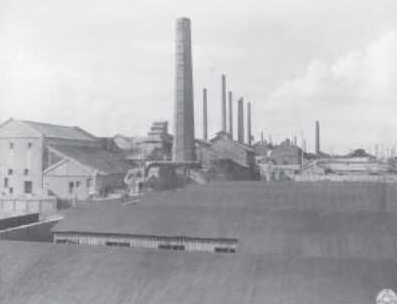
It is unclear when Art was sent to Japan. It is likely that he was among the maybe 400 POWs shipped from Shanghai in August 1943 to Tsumori POW Camp 13-B near Osaka. The camp was operated to provide slave labor for the Fujinagata Shipbuilding &Engineering Co., Ltd. Founded in the 17th Century, Fujinagata was shipyard and railroad car manufacturer in Osaka. Mitsui Engineering and Shipbuilding acquired the company in the 1960s.

The book ConductUnder Fire describes the five barracks at Tsumori as wooden structures 150 to 200 ft long and 30 to 40 ft wide. Three times a day the POWs received rice or a mixture of barley and millet. Greens and root vegetables were added for the evening meal.

Art first slaved as a stevedore hauling rocks and unloading pig iron. He was eventually moved inside to work as a welder. He was grateful for this, as it was warm. The winter of 1943-44 was very cold with temperatures ranging between 32 and 45 degrees. The winter of 1944-45 was the coldest in 50 years. His clothing and bedding was cotton and fuel to heat the barracks was always minimal. That meant only enough to fuel small fires in the barracks for a few hours-if any fuel at all. Body heat was what kept the POWs warm at night as buddies wrapped themselves together in the bedding they had.
 
About Naoestu
American firebombing raids prompted the Japanese to abandon Tsumori on May 15, 1945. The surviving Wake Islanders and other POWs were sent to Tokyo 4-B Naoetsu to serve as slave laborers for ShinetsuChemical and NipponStainless [both companies still exist with their original names]. This POW camp was considered the worst and most notorious in Japan, More guards (15) were tried and executed (8) than any other POW Camp on the mainland.

At this camp, Art witnessed the many beatings and humiliations of Airman and Olympian Louis Zamperini. The horror of the capricious brutality by the Japanese guards is immortalized in the bestselling book Unbroken. Art’s testimony for the Yokohama Class B and C War Crimes Trials, as footnoted in the book, helped indict a number of the more sadistic camp guards. 

Naoetsu was liberated in September 1945 and Art, barely 85 pounds, returned to the U.S. to spend months in a military hospital recovering from the trauma, beatings, illnesses, and malnutrition. He had survived nearly four years of the worst that Imperial Japan could deliver.

As a Marine it is said he had an advantage. U.S. Marines, according Professor Urwin, had the discipline and esprit de corps that helped them survive the merciless POW camps. Eighteen Wake Island Marines died as prisoners, fixing that group's death rate at 4.46 percent, whereas the overall death rate for American POWs of Japan was nearly 40 percent.


Naoetsu Peace Park
In 1995, the citizens of Naoetsu and families of former POWs dediated the Naoetsu Peace Memorial Park & Museum on the site of the former Naoetsu POW camp. It is one of the very few memorials in Japan to acknowledge the suffering of Japan's victims and Japanese responsibility.

After being a Marine and POW of Japan, there were few challenges that Art could not overcome. Staying optimistic is what Art attributed to his longevity. The next challenge is for us, Americans and Japanese, to remember him and understand the important role he played in American history. Rarely does his name appear in camp rosters, histories, or memoirs. Hopefully, this will now change. He helps us fill in many blanks in the American experience with Japan.

Monday, February 20, 2012

Wake Island Lecture

Temple University
March 6, 2012
 7:30 PM

Lincroft Main Campus 

  Warner Student Life Center
765 Newman Springs Road
Lincroft, New Jersey

 $12 General Admission, $5 Students
Brookdale Students Free


Pre-registration for the program is appreciated and may be made by calling (732) 224-2315. The course code is XWWTS 256 PR. More information regarding the content of the program is available from WWII  Center director Professor Paul Zigo at (732) 224-2029 or e-mail.

Dr. Urwin’s lecture will be based on his current book Victory in Defeat: The Wake Island Defenders in Captivity, which relates in vivid detail the story of the defenders of Wake Island following their surrender to the Japanese on December 23, 1941.

A highly regarded military historian, Professor Urwin spent decades researching what happened after the surrender of Wake Island and will offer a revealing look at the U.S. Marines, sailors, soldiers, and civilian contractors in captivity. In addition to exhaustive archival research, he interviewed dozens of POWs and even some of their Japanese captors.

Dr. Urwin also had access to diaries secretly kept by the prisoners. This information has allowed him to provide a nuanced look at the Japanese guards and how the Americans survived three-and-a-half years in captivity

Dr. Urwin is the author of eight books including Facing Fearful Odds: The Siege of Wake Island which won the Gen. Wallace M. Greene Jr. Award from the Marine Corps Heritage Foundation.   He currently is Vice President of the Military History Society (MHS).


Friday, December 23, 2011

Anniversary of the Fall of Wake Island

Wake Island (1942)
Within hours of the attack on Pearl Harbor, Japanese Mitsubishi G3M medium bombers descended upon Wake Island. The “Island” was actually a strategically located group of islets under American administration in the central Pacific. Civil workers were constructing a U.S. Navy and Pam Am managed a hotel and a dock for its trans-Pacific flying boat. The next day a small armada of Japanese ships proceeded to shell the island and a landing was attempted.

For the next 16 days, until December 23, the small Marine garrison with the help of unprepared civilians stationed at Wake held off the Japanese invaders.

Often referred to as the Alamo of the Pacific, the battle is legend among the Marines. It was the only time during the Pacific War that a Japanese amphibious assault was repelled. The Wake Island Marines that December also offered the first sustained resistance to the Japanese juggernaut that had swept through the Pacific after Pearl Harbor. The battle was a rare example of success in the War's early months.

Throughout 1941, the U.S. Navy was constructing a base on Wake Island with civilian contractors from the Boise, Idaho firm of Morrison-Knudsen. Unfortunately, it was incomplete when the Japanese attacked in December. The first permanent military garrison, just under 400 men from the 1st Marine Defense Battalion, had arrived on August 19 commanded by Major James P.S. Devereux. The airfield was ready to take aircraft by December, and on December 4th, 12 Grumman F4F-3 Wildcats from Marine Fighting Squadron VMF-211 arrived on Wake.

Marine Command Post
Naval Commander W.S. Cunningham had 449 Marines (including pilots), 68 U.S. Navy personnel, five Army Air Force Communications experts, 1,221 civilian workers from the Morrison-Knudsen Company, and 45 Chamorro men who worked for Pam Am to resist any Japanese attack. With the exception of the Marines, all were without arms or field equipment. Commander Cunningham had only reported for duty on November 28, 1941 as Officer in Charge, All Naval Activities, Wake Island.

The Japanese invasion force led by Rear Admiral Kajioka Sadamichi consisted of the light cruiser Yubari (flagship), six destroyers--Mutsuki, Kisaragi, Yayoi, Mochizuki, Oite, and Hayate--along with Patrol Boat No. 32 and Patrol Boat No. 33 (two ex-destroyers, each reconfigured in 1941 to launch a landing craft over a stern ramp) and two armed merchantmen, Kongo Maru and Kinryu Maru. To provide additional gunfire support the light cruisers Tatsuta and Tenryu joined the force. 

In the initial attack seven of the 12 Wildcat fighters were destroyed on the ground. However, the stationary naval battery was successful in sinking two Japanese destroyers (Hayate and Kisaragi) and damaging several other ships including the flagship Yubari. The remaining Wildcat fighters and the Marine’s beach defenses drove off the landing attempt.

Although the small U.S. force on the island repulsed the initial landing attempt, they were in serious need of additional supplies and support—which would never come. However, the Japanese would and did. On December 23rd, Rear Admiral Abe Koki's two fleet destroyers (Hiryu and Soryu) supported by heavy cruisers and destroyers (on the way back from Pearl Harbor) attacked. This second assault on Wake was successful.

American casualties numbered 52 military personnel (Navy and Marine) and approximately 70 civilians killed (including 10 Chamorros). Japanese losses exceeded 800 dead, with some estimates ranging as high as 1,000. Wake's defenders sank two Japanese destroyers and one submarine, and shot down 24 Japanese aircraft.

The Japanese took 368 Marine, 60 Navy, 5 Army, and 1,104 civilian personnel (including 35 Chamorros) prisoner after the surrender of Wake. Seventeen of the military prisoners died during their captivity, including 2 Marines and 3 sailors who were beheaded and thrown overboard from the Nitta Maru, en route from Yokohama to the POW camp near Shanghai. In Shanghai, two Chamorros were murdered. One hundred-eighty of the civilian prisoners died during their captivity, including 98 murdered on Wake in October of 1943. [It is difficult to confirm these numbers and I welcome documented corrections.]

Those Wake Island Defenders who were not sent to prisons in China became slave laborers throughout the Empire. Twice during his captivity in China, Commander Cunningham attempted to escape only to be recaptured. Major Devereux ended up in Hokkaido at the Hakodate #4, Nishi-Ashibetsu POW camp where after the war ended he was treated to a farewell dinner by nervous officials of the Mitsui Mining Company at the local Mitsui Company Clubhouse (See Here).

Soto Dam After 2010 Memorial
 Rededication Ceremony
 
Others, including all the Chamorros were at Sendai #11 Kamikita near Misawa. They were slave laborers for Nippon Kogyo (Nippon Mining, today’s JX Nippon Mining & Metals) working in an open pit iron mine. Of the civilian contractors, 265 were sent to build the Soto Dam at Sasebo where 53 died. The U.S. Navy holds an annual memorial to these men as the dam is near the Sasebo Naval Base. Former U.S. Navy journalist Phil Eakins successfully researched the names of the fallen and succeeded in 2010 to have a bronze plaque dedicated to them at the memorial.

Many started their stay in Japan at Tokyo 5D Kawasaki as slave laborers for Nihon Kokan (NKK Steel which is today’s JFE Holdings) stripping boats at a Mitsui dockyard (See POW Merchant Seaman David Wilson's memoir). And many ended up in the infamous Naoetsu in Niigata where Louis Zamperini immortalized by Laura Hillenbrand’s Unbroken was continually and capriciously tortured. POWs were slave laborers for Shinetsu Chemical and Nippon Stainless.

Battle of Wake Island Memorial
Dedication December 7, 2011
Earlier this month, on December 7th, a monument to the Wake Island Defenders was dedicated in Boise, Idaho’s Veterans Memorial Park. It was the inspiration of Eagle Scout candidate Noah Barnes whose great-grandfather was one of the Morrison-Knudsen contractors who died building the Soto Dam. It was not until 1981 that the civilian workers on Wake were granted military veterans status under the U.S. Air Force. The Chamorros were granted military veterans status in 1982 under the U.S. Navy.

A new documentary on the Battle of Wake Island is in the works. The heroism and spirit of Wake will not be forgotten.

Major Devereux returned to home (video of Devereux returning to Washington) and soon ran for Congress where he represented Maryland's Second District for most of the 1950s. The District's current congressman, Dutch Ruppersberger (D-MD) is not yet a co-sponsor of H. Res. 333, which honors the Wake Island defenders who became POWs of Japan.

Boise, Idaho's Congressman Raúl Labrador (R-ID) is also not yet a co-sponsor of H. Res. 333. Veterans are not listed among Mr. Labrador's "Featured Issues" on his congressional website. No effort was made by Congress to honor the 70th anniversary of the Wake Island defense.

Sunday, October 02, 2011

Mitsui's Liberation Dinners

Today, Mitsui family members and corporate officials refuse to meet with the former slave laborers that kept their business profitable during World War II. This was not always the case.

During the War, Mitsui, Japan's oldest and largest trading company, transported and used the greatest number of Allied POWs as slave laborers. Their mines, factories, and docks were considered among the most hellish for non-Japanese. At the postwar war crimes tribunals, former POWs identified many Mitsui employees as sadists, torturers, and murderers.

In the War’s immediate aftermath, hoping to temper these POWs' feelings, Mitsui’s leaders appear to have held a series of "parties" for senior officers from their POW camps. The thoughts of the attendees, unfortunately, are not readily available. Holocaust scholars I have talked with cannot recall any similar farewells between German corporate officials and their recently-released slave laborers.

As this photo in the Australian War Memorial archives shows, Baron Takaharu MITSUI is hosting a party in early September 1945 with Allied officers who had been held in Fukuoka Camp #17, a POW camp at Omuta located at the Mitsui Kozan Miike Kogyo-Sho coal mine and Mitsui Zinc Foundry.

Although the mine is long closed--it was the site in 1960 of Japan's worst and most violent labor dispute--Mitsui facilities  remain at the location and are part of Mitsui's Nippon Coke & Engineering Co. Ltd., one of the successors of Mitsui Mining.  The Japanese government has recently submitted an application to UNESCO to designate this Miike mine as a World  Industrial Heritage Site.

In the photo ABOVE, from left to right are Baron MITSUI; Captain Richard Parker, Australian Army Medical Corps; Padre C. Hamel, Royal Netherlands Army; Lieutenant Theodore Bronk, United States Army Medical Corps; Scotty Howell, Australian Army; and Lieutenant Gerit Bras, Royal Netherlands Army Medical Corps.


In this photo to the LEFT, also from the "party," are: Left To Right: Lieutenant (Lt) Gerit Bras, Royal Netherlands Army Medical Corps; Lt Harold Proff, United States Army Medical Corps; and Captain Ian L. Duncan, Australian Army Medical Corps.

Baron MITSUI, a Dartmouth (1915) graduate, was the owner of the coal mine where these POWs slaved. He took a peculiar interest in their existence at his largest mine. Many former POWs remember seeing the Baron visit both their camp and the mine in his open touring car. He even attended a burlesque show the POWs were allowed to stage in the fall of 1944.

He, thus, knew that the mine was so dangerous that it had been shut down for years and that the injury rate among the POWs was very high. He saw the emaciated POWs and he knew that food, heat, medicine, and clothing were withheld. And he did nothing.

Prior to this "party," up north in Hokkaido, the mine managers of the Mitsui mine at the Hakodate #4, Nishi-Ashibetsu POW camp held their own "celebration." On 20 August 1945, three days after they informed their slave laborers of Japan's surrender, the officials of the Mitsui Mining Company invited POW commander, Colonel William Ashurst and several other officers to a dinner at the local Mitsui Company Club House. The picture BELOW is of some of the attendees. The following POWs, nearly all North China Marines or Wake Island Marines, attended:

Americans: Maj L A Brown, Maj J P S Devereaux, Capt J A White, Capt H C Freuler, Lt W M Kessler, Lt W W Lewis, Lt M L Lewis (All Americans were Marines except for M Lewis who was Army Air Corps).
Australians: Col J J Scanlon, Maj J R P Clark, Maj J Edmonds-Wilson, Capt S G Nottage, Capt R A McDonald, Capt P H Brown, Lt E R Almond, Lt J RBadham.