Showing posts with label US-Japan Alliance. Show all posts

Saturday, March 26, 2022

Reminding Congress of its debt to the POWs of Japan

Rep Mark Takano
On March 8, 2022, the president of the American Defenders of Bataan and Corregidor Memorial Society, Ms. Jan Thompson, testified in person to the joint hearing of the Senate and House Veterans Affairs Committee to learn the legislative concerns of the country's Veteran Service Organization (VSO).

For years, the ADBC was only allowed to submit testimony for the record. This year, for the 80th Anniversary of Bataan Death March and the fall of the Philippines to the invading Japanese Empire, Ms. Thompson was invited to give testimony in person to remind the Committee members of the important American history she protects and how the sacrifice of the American POWs in the Pacific continues to inspire.

After Ms. Thompson's testimony, House Veterans Affair Committee Chairman Mark Takano (D-CA) said: 

Thank you, Ms. Thompson, for your testimony.  I will ask my staff to brief me on the status of the legislation that you have brought up.  

Let me just say that I, too, believe this history is so important.  The sacrifice of our World War II veterans in the Pacific and, specifically, those that served, those that endured the hellships and those that endured the Bataan Death March.  We must remember their sacrifice.  We must face up to history, no matter how terrible it is.  We must encourage our ally Japan, to do that.  We must live up to those ideals for ourselves, as well, to face our own history. So, thank you so much for your testimony and thank you so much for the work that you do.  

HERE IS WHAT PRESIDENT JAN THOMPSON SAID THAT ELICITED THAT RESPONSE:

HER FULL WRITTEN TESTIMONY CAN BE FOUND HERE.

Ms. Thompson.  Chairmen Tester and Takano, Ranking Members Moran and Bost, and members of the Senate and House Veterans Affairs Committee, thank you for inviting me to speak about the American POWs of the Empire of Japan during World War II.  We honor these American men and women as the heroes who deserve recognition by Congress and America, as a whole.  They have largely been forgotten and we must remedy this.  

I represent the American Defenders of Bataan and Corregidor Memorial Society and I am the daughter of one of those POWs.  The ADBC-MS Society represents the men and women who defended American territories and allies in the Pacific, such as Guam, Wake, Midway, Java, the Philippines, and the Marianas.  

Within the first six months of the war, by June 1942, the majority became prisoners of war.  Our mission is to preserve the history of the American POW experience in the Pacific and to teach future generations of the POW's sacrifice, courage, determination, and faith, as this is the essence of the American Spirit.  

Like today's Ukrainians, the Americans in the Pacific were fighting a formidable invader.  The Empire of Japan also had far superior equipment and armed forces.  Although Guam fell within days of Pearl Harbor, the Marines and civilians on Wake Island held out for a legendary two weeks and the American and Filipino defenders in the Philippines repelled the Japanese Army for nearly 5 months.  They fought with outdated weapons, lacking medicine, ammunition, and supplies.  Help did not come from the United States.  

The men on the Bataan Peninsula were surrendered 80 years ago next month.  Those surrendered on Bataan endured what is now known as the Bataan Death March and, as Senator Tester said in his opening remarks, this April 9th, marks the eightieth anniversary of the Bataan Death March.  

Less than one month later, on May 6th, the fortress island of Corregidor was surrendered and the rest of the American and Filipino units scattered throughout the 7,000 islands of the Philippines soon followed.  

Some of you know about the Bataan Death March, but few of you know about the beheadings of Wake Island Marines or the machine gunning of American sailors who survived the sinking of the USS Houston or the deadly imprisonment in Japan of the indigenous people of Attu from Alaska.  

To survive the surrender was just one hurdle, because each day of the POW's captivity, three and a half years, was a constant struggle for survival.  All the POWs, American and Allied, were starved, denied medical care, refused clothing, routinely beaten, and murdered.  Some POWs became human experiments.  Some aviators were executed, followed by a ritualistic eating of their livers.  And others, without reason, such as on Wake and Palawan, were simply massacred.  

As the war progressed, the majority of the POWs were shipped throughout the Empire on what were called "hellships" to be slave laborers for private Japanese companies.  All of these hellships were unmarked.  Many were sunk by American bombers or submarines.  

Thousands of American POWs died by friendly fire.  For those who survived captivity, returning home presented another battle.  Some POWs were forced to sign gag orders about the horrors they experienced.  Many of them could not articulate what had happened to them or what they had witnessed and it took a very long time for the Veterans Administration to recognize they all had returned home with a disability.  

The sacrifice and resilience of the American POWs of Japan, especially in light of today's events, should not be forgotten.  Their courage continues to inspire. 

To this end, in this year of the eightieth anniversaries, I request that Congress immediately approve an accurate and inclusive Congressional Gold Medal for America's early defenders of the Pacific who fell to Japan.  They are the most diverse World War II cohort to be considered for the Congressional Gold Medal.  

The U.S.-Japan alliance is very strong today and we ask Congress to encourage the Japanese in the following:  to institutionalize the reconciliation program that was started in 2010 with the ADBC Memorial Society.  The current POW Japan Friendship Program should be expanded.  Japan's UNESCO industrial heritage sites need to acknowledge POW slave labor and a world-class memorial should be installed at the Port of Moji, where most POWs entered Japan on the hellships.  

The epic battles of Bataan and Corregidor were a symbol of hope and a beacon of our future success.  They should not be forgotten.  It is time to honor these men and women.  

Monday, April 11, 2016

Kerry's Premature Visit to Hiroshima

Saturday, April 9 was the 74th anniversary of the Fall of Bataan and the beginning of the Bataan Death March. The failure of the US Secretary of State to acknowledge all the victims of the Pacific War and why President Harry Truman felt it was necessary to use the destructive power of a new weapon on Japan has prompted many to question the wisdom of the President following with a visit as this former POW writes.

WEEKLY STANDARD, APR 11, 2016 | By LESTER TENNEY

By Lester Tenney, PhD, 95, is a survivor of the Bataan Death March and was a tank commander in the 192nd Tank Battalion on Bataan

John Kerry has become the first U.S. secretary of state to visit the Hiroshima Peace Park, ground zero to the first atomic bomb. He recognized the victims of World War II, saying he was there in part to "revisit the past." As part of that history, a prisoner of war of Imperial Japan, I hope that Secretary Kerry also remembered why there was a Hiroshima and a Nagasaki, which I witnessed.

Secretary Kerry stood in Hiroshima on the anniversary of what was my second day of the Bataan Death March. After four months of brutal tank warfare in the Bataan Peninsula of the Philippines, on April 9, 1942, I had been surrendered by my commanding officers as we had run out of ammunition, food, and medicine.

Nearly 80,000 American, Filipino, and European volunteer troops, exhausted, sick, and hungry, were forced to march in the tropical sun on unpaved roads out of Bataan. Every moment was one of gripping fear. We did not know where we were going or if we would arrive alive. Our guards screamed commands we did not understand. They beat us with rifle butts and sand-filled bamboo sticks until we fell.

The first American I saw killed directly by the Japanese was on the second day of the Death March. He had fallen to the ground and tried to explain that he was too sick to continue. The guards responded by bayoneting and shooting him in the chest. A lieutenant also fell of exhaustion and was shot, but his body was left in the middle of the road for a truck convoy to crush. But the worst that day was watching my first American beheaded—you convulse as you throw up with your stomach muscles tightening so that you think you will never again breathe. And then you shake and shake and shake.

Deniers in Japan have been revising the Bataan history for some time. In December 2005, a popular Japanese magazine, Bungei Shunju, reported that the Bataan Death March route was mischaracterized. A female journalist had walked the 65-mile Bataan Death March trail in October and found the now-paved road undemanding. She had water, a snack, and a hat. She did not have dysentery, malaria, battle wounds, or a bayonet at her neck. She was not denied water, food, or rest. Nor did she witness random deaths. She was not a prisoner of war.

In 2010, another popular magazine, Shukan Shincho, again questioned my memory of the Death March and the abuse I received as a POW. The author suggested that the March never happened and that I made up a "collection of torture scenes from Hollywood movies."

A similar article in 2012, in the conservative monthly, Seiron, accused me of willfully killing civilians in the Philippines and exaggerating the horrors of the Bataan Death March. Both articles referred to my being Jewish as the cause of my indifference and supposed overstatements, as if to say I am not a typical American.

But the bigger problem of misperception is maybe outside Japan, where the POW experience is ignored. Last year, UNESCO designated Mitsui's Miike Coal mine, barely 35 miles from Nagasaki, as a World Industrial Heritage site. This is the dangerous mine where 1,700 POWs and I were slave laborers. Nothing at the site mentions us, and no U.S., European or Australian government official has objected.

While the Bataan Death March is being dismissed in Japan, it is being misremembered in the U.S. If recognized at all, it is believed to have been just another long slog. In an interview with Politico, President Obama compared his first election campaign to the Bataan Death March.

I am a witness. Who will be my witness when I am gone? At 95, I can't have much longer. It is not enough to silently remember the victims of the Pacific War. An active and rigorous campaign of education and reflection is necessary. It is premature to visit Hiroshima's ground zero before first ensuring that the full history of World War II is preserved.

If President Obama follows his Secretary of State with a visit to the Hiroshima Peace Memorial in May, I suggest he also visit the Port of Moji. The "hell ships" carrying the sick and dying survivors of the Bataan Death March and other lost battles unloaded their "cargo" at this port. It would be fitting for the president of the United States and the prime minister of Japan to break ground with a memorial at the port to the American and Allied POWs. And the president should insist that Japan's UNESCO World Industrial Heritage sites, where so many POWs toiled and died after arriving at Moji, have this history included in the pubic descriptions.

The final Japanese offensive on Bataan had started on April 3: Good Friday for the Americans and Filipinos. Behind Japanese lines, it was the anniversary of their first Emperor Jimmu's death. For both sides it was a day of death, but one that might point to a path toward redemption.

Looking back 74 years, I understand that it is what we share that matters most. On the second day of the Bataan Death March, I happened to stare at a tin of fish being eaten by a young Japanese soldier sitting beside the road. We had not yet been allowed food or water. He stared back. Then, without hesitation, he handed me the opened can.

Wednesday, April 29, 2015

Urgent! Help bring a POW to Washington

Lester Tenney
Dear friends,

We are appealing to you and your network to assist Lester Tenney, 94, to travel to Washington this week. 

He was invited just last Monday night to attend Japanese Prime Minister Shinzo Abe’s speech to a joint meeting of Congress and the Japanese Embassy dinner for Mr. Abe. This all takes place on April 29th (Hirohito’s birthday).

Unfortunately, the Japanese Embassy “cannot” find the funds cover his trip to Washington. He lives in San Diego and always travels with his wife. He is partly blind and deaf. It will cost at least $6,000 for last minute air and hotel reservations and related expenses for this elderly couple to travel and stay in DC.

click to order
Dr. Tenney is a survivor of the Battle of Bataan, the Bataan Death March, a Hellship to Japan, and a Mitsui coal mine. He was tortured, sliced by a samurai sword, and had nearly every bone in his body broken. He also successfully negotiated with the Japanese government in 2008 to persuade them to offer the POWs of Japan an apology and to establish a reconciliation program for former POWs to visit Japan. He is a warrior, a hero, a teacher, and a peacemaker. Dr. Tenney is also the author of two books: “My Hitch in Hell” and “The Courage to Remember: PTSD - From Trauma to Triumph”.

You can find more about Dr. Tenney on this blog

Donations are tax-deductible if made to Asia Policy Point or to the American Defenders of Bataan and Corregidor Memorial Society. Any funds raised in excess of the travel funds will go to the ADBC Museum and Library in Wellsburg, West Virginia.

Thank you!

Monday, December 02, 2013

Appeal to Vice President Biden

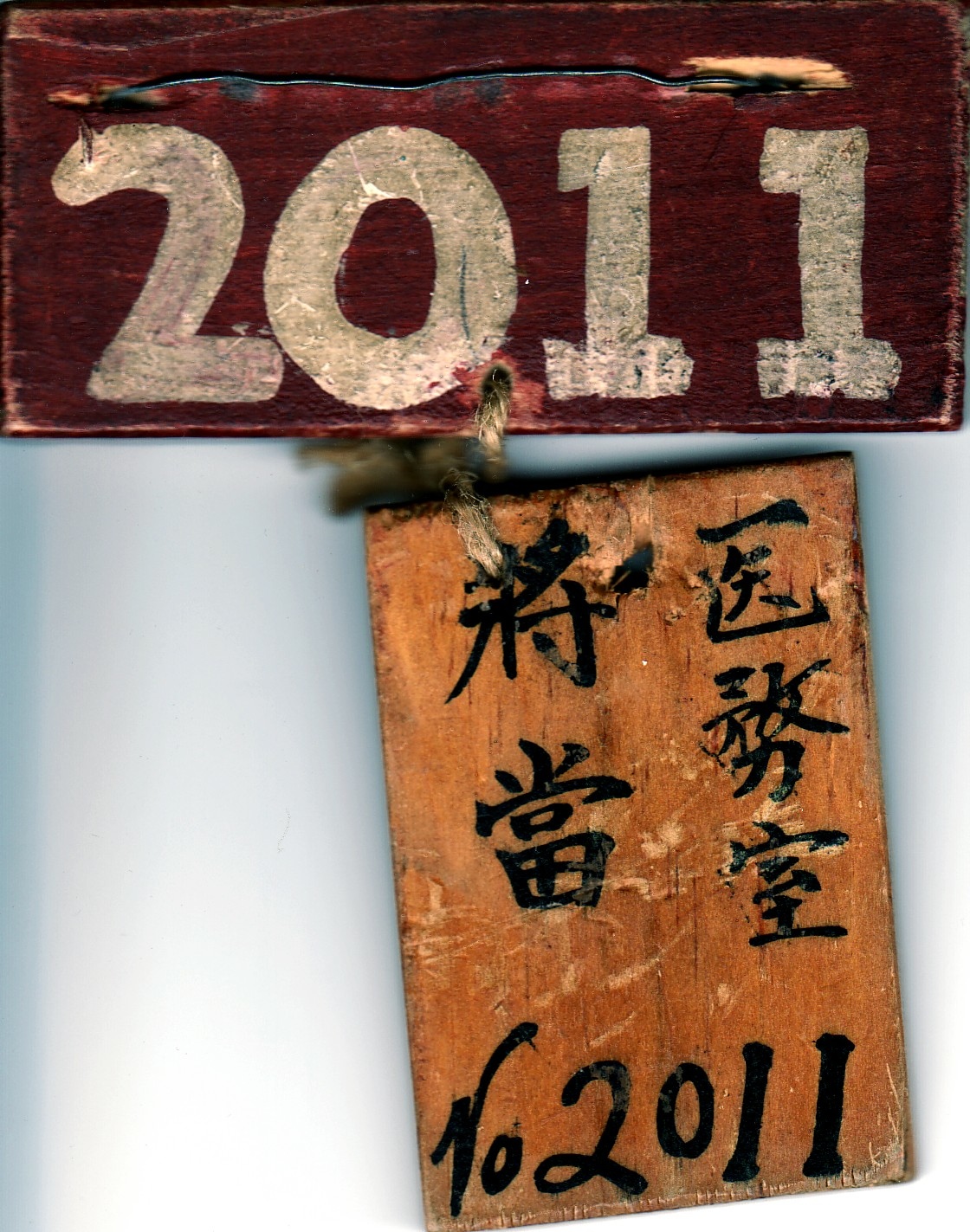
Robert E. Thompson's POW Badge
Below is a letter sent to Vice President Biden last week by the American Defenders of Bataan and Corregidor Memorial Society. It suggests that the path being taken by the American POWs of Japan to achieve justice can be a model for Tokyo to pursue historical reconciliation with its other victims. The Memorial Society asks the Vice President to continue to press the Japanese to achieve full and meaningful contrition toward the POWs and work to preserve their history. The goal is the establishment of a permanent fund for educational and research activities on the POW experience in the Pacific.

November 25, 2013

Dear Mr. Vice President:

As you meet next week with members of Japan’s government to confirm the significance of the U.S.-Japan Alliance, I hope that you will share with them the importance of remembering those American veterans who became prisoners of war of the Imperial Japanese during World War II.

With the help of President Obama’s Administration one aspect of Japan’s reconciliation with American POWs began. In 2009, a Japanese government Cabinet-approved apology was offered and in 2010 a program of understanding and visitation to Japan was initiated for former POWs. This year it was expanded to include widows. The visitation program’s success should encourage Japan to do more: educating future generations in Japan and the U.S. on the POW experience in the Pacific and its lessons for war and peace needs to be the goal.

How Japan addresses its responsibilities toward the American POWs can be a model for Tokyo on how the historical reconciliation process can proceed. The American POWs ask for respect and that history to be not revised, but preserved. They want Japan’s great multi-national corporations to acknowledge their use of POW slave labor. They ask the United States Government to aid and preserve their experiences under Imperial Japan for future generations

We ask that you take a moment in your talks in Tokyo, to speak up for those veterans who defended America in the Philippines, Java, and Wake Island and how, as captives, endured the horrors of the Bataan Death March, the “Hell Ships,” enslavement on the Thai-Burma Railway, and the brutal conditions in slave labor camps in Japan.

We ask that the United States Government express its strong desire for Japan to establish a permanent fund for education, remembrance, and reconciliation. The goal is to: continue the POW visitation program for former POWs, widows and descendants; a program for research, documentation, education, and people-to-people exchanges and national memorials to the POWs who slaved and died on Japanese controlled soil or aboard the “Hell Ships.”

Respectfully yours,

Ms. Jan Thompson
President
American Defenders of Bataan and Corregidor Memorial Society
Daughter of PhM2 Robert E. Thompson USN, USS Canopus, Corregidor, Bilibid & Mukden