Showing posts with label Obama Administration. Show all posts

Saturday, September 05, 2020

Trump has never attended a Veterans Day at Arlington

 Vice President Pence at Arlington November 11, 2019

Nor has he, as past presidents have, hosted a Veterans Day breakfast for all the Veterans Service Organizations and prominent veterans. Former American POWs of Japan attended these during the Obama years.

There have been three Veterans Day ceremonies at Arlington Cemetery thus far under the Trump Administration. President Donald Trump has not attended once. Twice he planned to be out of town and once he did know it was important and he was tired from returning from a trip to France where he noted he had already been to a military cemetery.

This 2019 article from the Military Times describes what Trump as done instead.

Here’s Where President Donald Trump Will Spend Veterans Day

9 Nov 2019 Military.com | By Richard Sisk

President Donald Trump will not be attending the traditional wreath-laying ceremonies at Arlington National Cemetery on Veterans Day. Instead he’ll speak at the start of the Veterans Day parade in New York City, billed as the nation’s largest.

On Wednesday, the United Veterans War Council, which organizes the annual Manhattan parade, announced that Trump would be at the kickoff of the event with other honorees in Madison Square Park, off Fifth Avenue.

The White House later confirmed that Trump would be going to the parade. The New York City tradition began 100 years ago, with a huge ticker-tape parade for returning troops from World War I. Many of the marchers this year will be dressed as doughboys.

Trump is not expected to march in the parade, but Gen. David Berger, the Commandant of the Marine Corps, will lead a contingent of Marines along the 5th Avenue route.

In a statement, Douglas McGowan, chairman of the nonprofit United Veterans War Council, said Trump would be the first president to attend the city’s Veterans Day parade.

“On behalf of all the men and women who have served our nation, and who continue to serve, the United War Veterans Council is honored that our Commander-in- Chief, President Donald J. Trump, has agreed to join our 100th annual tribute,” McGowan said. “This is a day when we put politics aside to focus on honoring our veterans.”

New York City Mayor Bill de Blasio, who has often traded insults with Trump, appeared willing to call a truce for Veterans Day.

He told City Hall reporters that the day “should not be politicized. It should not be a spectacle. If he’s really coming here to truly honor veterans, God bless him.”

Last week, Trump drew a chorus of boos, mixed with some cheers, when he showed up at an Ultimate Championship Fighting event in Madison Square Garden.

In the 2016 presidential election, Hillary Clinton won 79% of the vote in New York City overall, compared to 19% for Trump. However, Trump won on Staten Island, 57%-40%.

Trump, who grew up in Queens and made his reputation in the city’s fiercely competitive real estate business, will be coming back to the city after recently declaring that New York was no longer his hometown. He changed his permanent residence to his Mar-a-Lago Club in Palm Beach, Florida.

In a tweet, Trump said he still loved the city, “but unfortunately, despite the fact that I pay millions of dollars in city, state and local taxes each year, I have been treated very badly by the political leaders of both the city and state. Few have been treated worse.”

Trump also currently is fighting a subpoena from the Manhattan District Attorney for his personal and business tax records.

Presidents have typically attended ceremonies and the traditional wreath-laying at Arlington on Veterans Day, though there are some exceptions. President Barack Obama was at Arlington for six of the eight years he was in office. He was traveling overseas the other two times.


In 2008, President George W. Bush marked Veterans Day at the Intrepid Sea, Air & Space Museum in Manhattan.

In 2017, Trump’s first year in office, he was in Vietnam on Veterans Day and attended a commemorative event there with Vietnam veterans. Vice President Mike Pence represented the administration at Arlington in 2017.

In 2018, Trump arrived back at the White House the night before Veterans Day after attending World War I armistice 100th anniversary ceremonies in France. He stayed at the White House on Veterans Day and Veterans Affairs Secretary Robert Wilkie represented the administration at Arlington.

In a later interview on “Fox News Sunday,” Trump said he probably should have gone to Arlington for Veterans Day in 2018, but appeared to be mistaken on where he was on Veterans Day in 2017.

“In retrospect, I should have done, and I did last year and I will virtually every year,” Trump said. “But we had come in very late at night and I had just left, literally, the American cemetery in Paris and I really probably assumed that was fine.”

“I was extremely busy because of affairs of state, doing other things,” Trump said, “but I would have done it.”

Friday, April 15, 2016

Veterans urge Obama to halt visit to Hiroshima

Ben Steele of Montana at Liberation
U.S. Veterans Ask President

To Halt Hiroshima Visit Planning

Demand a Memorial for POWs in Japan


Makanda, Illinois, April 15, 2016/American Defenders of Bataan and Corregidor Memorial Society/ -- Survivors of wartime Japan’s death camps and slave labor call on President Barack Obama to halt planning a visit to the Hiroshima Peace Memorial until he breaks ground in Japan for a memorial to American and Allied POWs.

The leading American veterans’ organization for former prisoners of war of Imperial Japan, their families, and historians, the American Defenders of Bataan and Corregidor Memorial Society (ADBC-MS), sent a letter to the President on April 14th asking him to forego a trip to Hiroshima until he “can first make an equally poignant memorialization of the Americans who perished in Japan.”

Specifically, they want the President to “break ground for a memorial to the American and Allied POWs at their port of entry and slavery into Japan, the dock at Moji on Kyushu.”

For a President’s visit to Hiroshima to be successful, they advise “it must include the acknowledgement of all the victims of the war in the Asia Pacific. Hiroshima symbolizes not only the destructiveness of mankind, but also what lengths we may need to go to end suffering and tyranny.”

The ADBC-MS is alarmed that “Prime Minister Shinzo Abe and his administration have been working since taking office to replace the established history of Japan’s abuses during the war with a denier’s view.” As a result, they believe the President’s “visit will not merely be unreciprocated; it will sanction the Abe Administration’s anti-historical efforts and abrogate your mission, which is to remind us all what we are capable of both good and bad.”

It is estimated that over 300,000 American and Allied POWs and civilian internees were held in inhumane conditions by Imperial Japan. Nearly half died in squalid POW camps, aboard fetid “hell ships,” or as slave laborers for Japanese corporations. Over 14,000 died on the “hell ships” to Japan. And more than 30, 000 Filipino soldiers with the U.S. Forces in the Far East died as POWs.

The letter concludes “War is about how it is remembered. We hope that you will respect the interests and memory of America’s Pacific War veterans.”

For more details, contact the ADBC-MS President, Ms. Jan Thompson.

Thursday, November 12, 2015

Veterans Day Justice Elusive

On Veterans Day, One World War II POW Is Still Seeking Justice

by Dr. Lester Tenney, past National Commander of the American Defenders of Bataan and Corregidor

first published on Veterans Day, November 11, 2015 on the National Interest

For seventy years I dealt with my PTSD by looking forward, or as I say, “for the next carabao.” This is how I learned to survive the Bataan Death March and over three years of brutal captivity on the Philippines and Japan. It is a lesson I like to share.

After the surrender of Bataan to the Japanese in April 1942, 70,000 American and Filipino troops began a sixty-five-mile forced march up the Bataan Peninsula. We walked in the tropical heat with no food, little water and rare relief. I bear a shoulder wound from a botched beheading.

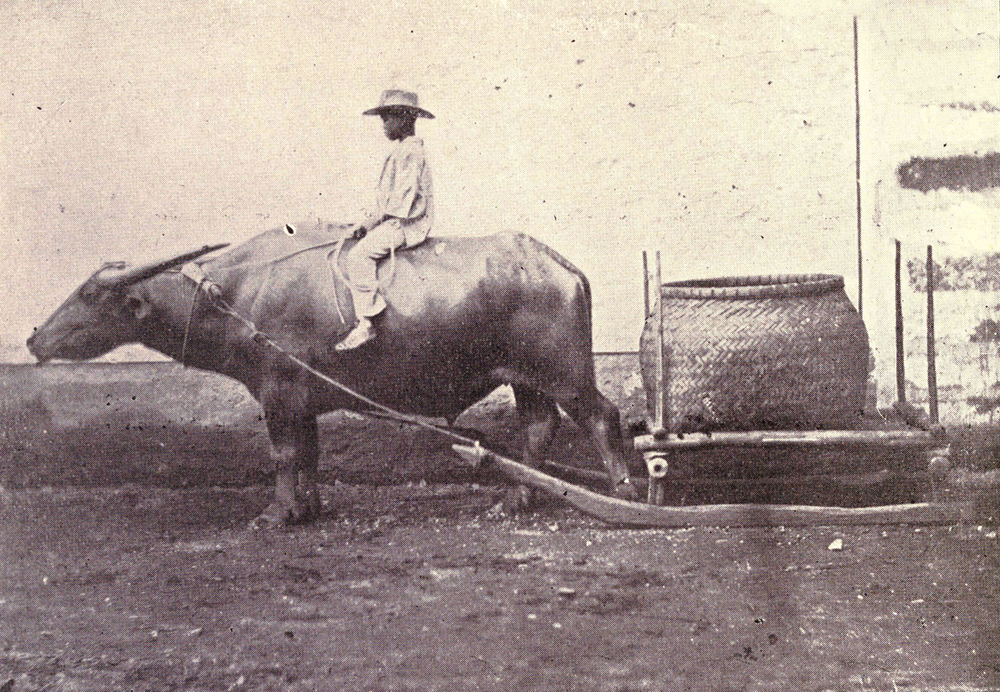
From time to time, we passed carabao, the water buffalo that is the national animal of the Philippines, trying to keep cool in swamps and rice paddies. I knew that once I saw one carabao, there would be another one up the road. If I could just make it to the next carabao and then the next, I would make it to the end.

I made it through the March and through the ordeals of the next three-and-a-half years. But we surviving POWs are still looking for the last carabao.

click to order
Seven years ago, on Veterans Day 2008, I found the next one. I had just completed laying the American Defenders of Bataan and Corregidor’s last memorial wreath at the Tomb of the Unknowns in Arlington National Cemetery. As I started to leave, my cell phone rang. It was Japan’s ambassador to the United States, Ichiro Fujisaki. He asked to see me.

For decades, I had harbored anger and resentment toward both the Japanese who tortured me and the American government that refused me justice. The Army prohibited me from talking about the horrors I endured, and the 1951 San Francisco Peace Treaty barred me from seeking redress for my slave labor. Multimillion-dollar lobbying campaigns by Japan and a White House intent on protecting its Japanese ally stymied all Congressional efforts to help the POWs.


It is hard to explain my excitement at the call. Never before had any Japanese official been willing to meet with a former POW. My wife and I took a taxi directly from the cemetery to the ambassador’s residence.

Ambassador Fujisaki met us at the door. In an extraordinary gesture, Mrs. Fujisaki met us with a bow and extended both her hands. She then led us on a tour of her home. She stayed with her husband to listen. A Washington “Japan hand” told me not to smile. That was advice I ignored.

I was not there to negotiate. I was there to tell my story, to share the pain of the Death March, the Hellship and the Mitsui coal mine; to describe the torture, mistreatment and starvation; and to explain why 40 percent of the nearly 28,000 Americans who were POWs of Japan did not return home. I wanted to know why the Japanese government did not include Americans in their $14 million-plus outreach programs for hundreds of British, Australian and Dutch former POWs and their families.

Ambassador Fujisaki listened. He heard that, even for decades after the war, we American POWs had been denied our dignity and humanity. But Red Cross boxes could not be delivered or medicines administered to the dead. Japan could not undo its lobbying campaign or retrieve the $12 million it had paid to Washington lobbyists. But he wanted to know how we could move beyond this and forward together to reach the next “carabao.”

To me, it was simple: an official government apology for all the POWs. For the survivors, a chance to participate in Japan’s POW visitation program. And for all the POWs who slaved at the mines, docks and factories of over sixty well-known corporations, apologies from those companies to restore a measure of dignity.

For the first time, I had been heard.

The next month, Ambassador Fujisaki wrote me that the Government of Japan offered its apology to “those who have undergone tragic experiences in the Bataan Peninsula and Corregidor Island in the Philippines.” By February 2009, a Cabinet Decision [Japanese] confirmed the statement, saying that the government extended “a heartfelt apology for our country having caused tremendous damage and suffering to many people, including prisoners of wars, those who have undergone tragic experiences in the Bataan Peninsula, Corregidor Island, in the Philippines, and other places.” This inclusive statement for all the POWs of Japan is one of only four official, Cabinet-approved apologies for any of Imperial Japan’s excessives and aggression.

In April 2009, my friend Ambassador Fujisaki accepted my invitation to repeat this apology before my fellow POWs at the American Defenders of Bataan and Corregidor’s last convention in San Antonio, Texas. Not all were ready to let go of their anger, but everyone admired his courage.

That fall, the new Obama administration built on this progress. With the Japanese government, they established a program for former POWs to visit Japan and their former POW camps. I led the first group of seven in September 2010, where we received an apology directly from the foreign minister. The seventh delegation will travel to Japan next month.

My last carabao is elusive. It is an apology from the Mitsui Corporation for forcing me into a dangerous coal mine and allowing their employees to beat me. Baron Mitsui often motored into my camp [Fukuoka #17 Omuta] to examine his Western charges in the primitive, if not primal, confines of his facility. Today, this mine is an UNESCO World Industrial Heritage site. There is no mention of the mine’s history of slave labor.

I hope I can still make it to this last one. On this Veterans Day, my friend Congressman Mike Honda from California has arranged for me to have breakfast at the White House. He wants me to tell the President about my carabao and to not forget World War II vets like me.

Dr. Lester Tenney was a member of the 192nd Tank Battalion on Bataan, The Philippines.The 192nd was deployed to the Philippines on October 27 and arrived on November 20, 1941. Tenney was part of American defensive efforts to hold the islands, but he was taken captive on April 9, 1942. As a Japanese prisoner, he took part in the infamous Bataan Death March. Liberated in September of 1945, Tenney went to the University of Southern California where he received his BA, MA and PhD. He became a professor of finance and insurance at Arizona State University. After he retired as a professor emeritus, Tenney wrote his memoir My Hitch in Hell, about his experiences as a POW under the Japanese.

Thursday, September 03, 2015

Statement by the President on the 70th Anniversary Commemorating the End of World War II in the Pacific

September 2, 2015

President Barack Obama

Today we commemorate the 70th anniversary of the formal end of World War II in the Pacific, a conflict that tragically claimed millions of lives across Asia and Oceania and stretched several months beyond the war’s conclusion in the European theater. We salute the American servicemen and women of the Greatest Generation who answered the call of duty in the Pacific, as well as the allied forces with whom they served. We remember those who endured unimaginable suffering as prisoners of war, and we honor the ultimate sacrifice of more than 100,000 U.S. service members who laid down their lives in the Pacific theater to defend our nation and advance the cause of freedom. To them, and to the 16 million Americans who served in the Second World War -- those who are no longer with us and our proud veterans today -- our debt of gratitude can never be repaid. We live in freedom because of their brave service.

The end of the war marked the beginning of a new era in America’s relationship with Japan. As Prime Minister Abe and I noted during his visit in April, the relationship between our two countries over the last 70 years stands as a model of the power of reconciliation: former adversaries who have become steadfast allies and who work together to advance common interests and universal values in Asia and globally. Seventy years ago this partnership was unimaginable. Today it is a fitting reflection of our shared interests, capabilities, and values, and I am confident that it will continue to deepen in the decades to come.


Statement by Prime Minister Shinzo Abe on 70th anniversary of the end of the war, Friday, August 14, 2015

Excerpt

How much emotional struggle must have existed and what great efforts must have been necessary for the Chinese people who underwent all the sufferings of the war and for the former POWs who experienced unbearable sufferings caused by the Japanese military in order for them to be so tolerant nevertheless?

Saturday, December 06, 2014

Remembering Pearl Harbor

After a long absence from both President Bush's and Obama's Pearl Harbor Day proclamations, "Japan" is back in the text. Now Japan is identified as the nation that attacked Pearl Harbor and other American Pacific territories on December 7, 1941. American forgiveness simply emboldened Japan's deniers. Now we wonder how many, if any, American legislators will too remember this day in infamy.

For Immediate Release
December 05, 2014


Presidential Proclamation -- National Pearl Harbor Remembrance Day, 2014

- - - - - - - 
BY THE PRESIDENT OF THE UNITED STATES OF AMERICA 
A PROCLAMATION 
On the morning of December 7, 1941, Japanese planes thundered over Hawaii, dropping bombs in an unprovoked act of war against the United States.The attack claimed the lives of more than 2,400 Americans.It nearly destroyed our Pacific Fleet, but it could not shake our resolve.While battleships smoldered in the harbor, patriots from across our country enlisted in our Armed Forces, volunteering to take up the fight for freedom and security for which their brothers and sisters made the ultimate sacrifice.On National Pearl Harbor Remembrance Day, we pay tribute to the souls lost 73 years ago, we salute those who responded with strength and courage in service of our Nation, and we renew our dedication to the ideals for which they so valiantly fought.

In the face of great tragedy at Pearl Harbor -- our first battle of the Second World War -- our Union rallied together, driven by the resilient and unyielding American spirit that defines us.The millions of Americans who signed up and shipped out inspired our Nation and put us on the path to victory in the fight against injustice and oppression around the globe.As they stormed the beaches of Normandy and planted our flag in the sands of Iwo Jima, our brave service members rolled back the tide of tyranny in Europe and throughout the Pacific theater.Because of their actions, nations that once knew only the blinders of fear saw the dawn of liberty.

The men and women of the Greatest Generation went to war and braved hardships to make the world safer, freer, and more just.As we reflect on the lives lost at Pearl Harbor, we remember why America gave so much for the survival of liberty in the war that followed that infamous day.Today, with solemn gratitude, we recall the sacrifice of all who served during World War II, especially those who gave their last full measure of devotion and the families they left behind.As proud heirs to the freedom and progress secured by those who came before us, we pledge to uphold their legacy and honor their memory.

The Congress, by Public Law 103-308, as amended, has designated December 7 of each year as "National Pearl Harbor Remembrance Day."

NOW, THEREFORE, I, BARACK OBAMA, President of the United States of America, do hereby proclaim December 7, 2014, as National Pearl Harbor Remembrance Day.I encourage all Americans to observe this solemn day of remembrance and to honor our military, past and present, with appropriate ceremonies and activities.I urge all Federal agencies and interested organizations, groups, and individuals to fly the flag of the United States at half-staff this December 7 in honor of those American patriots who died as a result of their service at Pearl Harbor.

IN WITNESS WHEREOF, I have hereunto set my hand this fifth day of December, in the year of our Lord two thousand fourteen, and of the Independence of the United States of America the two hundred and thirty-ninth. 
BARACK OBAMA

Saturday, October 26, 2013

Review of 4th American POW Trip to Japan

Four former POWs of Japan and three widows were guest of the Japanese government October 13 through 21. Theirs was a trip of healing and understanding. Japan's Foreign Minister Fumio Kishida met with the group and repeated the apology first delivered in 2009 by the Japan's Ambassador to the United States Ichiro Fujisaki. He also noted that he hoped that these trips to Japan will continue.

The POW visitation program and apology were made possible by the direct involvement of the Obama Administration. In the past, the U.S. government had rebuffed the POWs' efforts for acknowledgement and justice.

For an excellent review of the trip, complete with pictures, see Kinue Tokudome's US-Japan Dialogue on POWs.

Here is a video of the presentation the delegation gave October 15th at Temple University, Japan Campus' Institute of Contemporary Japan Studies (ICAS).


Here is a video of the delegation's presentation to Japan's National Press Club on October 15th.

Friday, September 20, 2013

2013 National POW/MIA Recognition Day

For more information Click here

HUG YOUR POW TODAY

NATIONAL POW/MIA RECOGNITION DAY, 2013

- - - - - - -

BY THE PRESIDENT OF THE UNITED STATES OF AMERICA


Our country endures because in every generation, courageous Americans answer the call to serve in our Armed Forces. They represent the very best of the human spirit, stand tall for the values and freedoms we cherish, and uphold peace and security at home and around the globe. Today, we pay tribute to the service members who have not returned from the battlefield, we stand beside their families, and we honor those who are held captive as prisoners of war. We will never forget their sacrifice, nor will we ever abandon our responsibility to do everything in our power to bring them home.

America remains steadfast in our determination to recover our missing patriots. Our work is not finished until our heroes are returned safely to our shores or a full accounting is provided to their loved ones. We must care for the men and women who have served so selflessly in our name, and we must carry forward the legacy of those whose fates are still unknown. Today, and every day, we express our profound appreciation to our service members, our veterans, our military families, and all those who placed themselves in harm's way to sustain the virtues that are the hallmarks of our Union.

On September 20, 2013, the stark black and white banner symbolizing America's Missing in Action and Prisoners of War will be flown over the White House; the United States Capitol; the Departments of State, Defense, and Veterans Affairs; the Selective Service System Headquarters; the World War II Memorial; the Korean War Veterans Memorial; the Vietnam Veterans Memorial; United States post offices; national cemeteries; and other locations across our country. We raise this flag as a solemn reminder of our obligation to always remember the sacrifices made to defend our Nation.

NOW, THEREFORE, I, BARACK OBAMA, President of the United States of America, by virtue of the authority vested in me by the Constitution and the laws of the United States, do hereby proclaim September 20, 2013, as National POW/MIA Recognition Day. I urge all Americans to observe this day of honor and remembrance with appropriate ceremonies and activities.

IN WITNESS WHEREOF, I have hereunto set my hand this nineteenth day of September, in the year of our Lord two thousand thirteen, and of the Independence of the United States of America the two hundred and thirty-eighth.

BARACK OBAMA

Wednesday, February 20, 2013

Appeal to Japanese Prime Minister Abe

The Letter below was sent by the ADBC (American Defenders of Bataan and Corregidor) Memorial Society President Joseph Vater to Mr. Joseph Y. Yun, Acting Assistant Secretary of State, Bureau of East Asian and Pacific Affairs on February 15, 2013 asking the Obama Administration to continue to press on the Government of Japan to honor its apology and commitments the American POWs of Japan and their descendants.

Unless the White House and the State Department hear from members of Congress and the American people, they will allow the Japanese government to end its remarkable program of reconciliation with the American and Allied POWs. It has the potential to be the model for other programs of sincere contrition and confidence building between Japan and its former adversaries.

Japan's new Prime Minister Shinzo Abe is on the record saying that he wants to reconsidered Japan's past apologies and free Japan from its "masochistic" history of false blame. The apology to the American POWs is thus in jeopardy along with all other Japanese apologies.

---------------------

 Dear Mr. Yun:

As representative of the surviving POWs of Japan, their families, and descendants, the ADBC Memorial Society asks you to encourage Japanese Prime Minister Shinzo Abe during his visit next week to continue and expand his government’s visitation program to Japan for American former POWs.

The POW/Japan Friendship Program only initiated in 2010 has brought immeasurable benefit to the former POWs, their families, and to the U.S.-Japan relationship. As you can see from this representative note to our newsgroup, it has brought closure and peace of mind to its participants:

This program has really helped my Dad.  For years, Dad would have nightmares after any talk, show, or sometimes just because of his years as a POW.  Since our visit his nightmares have gone.  I cannot really put in words what that day at the Japanese Factory in Takaoka, Toyama, Japan did.  He has not forgotten or totally forgiven but there is now a peace to his remembrance. If you are able please consider participating in this program.  My Dad's memory is failing on his daily activities but he continues to recall his trip to Japan.  Now when he talks about his POW experience he can now add closure.  The audience is amazed at his story.  I was honored to go with Dad to Japan.  If you are a descendant please talk with your parent about the program.  It truly is a life changer.
                                                Debra Bergbower-Grunwald
                                                Daughter of Harold Bergbower,
            Past National Commander, ADBC

Impressions of former POWs who have participated in the POW/Japan Friendship Program are on the Outreach section of our website at www.dg-adbc.org.  The program is a solid example of a successful acknowledgement by Japan of Imperial Japan’s injustices. The Japanese government offered an official apology and followed it up with a program that confronts the past while preserving the dignities of both Americans and Japanese. 

It concerns us that the Abe Administration wants to limit the program to former POWs and possibly end the program this year.  Widows, children, and other descendants have also been affected by the former POW experience of their relative in Japan and they should be included in future programs.  We are concerned about how little the Japan’s Ministry of Foreign Affairs publicizes the program’s accomplishments.  Most important, we are troubled by the Japanese companies that have refused to allow our nonagenarian POWs to visit the sites of their imprisonment and slave labor.

The success of this visitation program should encourage Japan to do more.  Still we wait for Japan’s great multi-national corporations to acknowledge their use of POW labor.  Still we wait for Japan to create national memorials to the POWs who slaved and died on Japanese soil.  And still we wait for Japan to establish a fund to continue this visitation program and expand it, as it did for other Allied POWs in 1995, to include research, documentation, and people-to-people exchanges.

We are grateful for the State Department’s past efforts to encourage the Japanese government to do the right thing by initiating a process of reconciliation.  This issue is even more poignant today as two Abe Cabinet members have family ties to companies that used POW slave labor during the war.

We ask that the Obama Administration insist that Japan preserve its visitation program for former POWs and expand this remarkable program to include family members and to initiate a plan to preserve their history.

Friday, January 18, 2013

Search for POW remains in the Philippines continues

Painting by Ben Steele
U.S. and Philippine Governments Partner to Investigate Remains of 
American service members in the Philippines from World War II
Manila, January 18, 2013 –This week, personnel from the U.S. and Philippine governments will begin preliminary investigations into possible locations of the remains of American Prisoners of War (POWs) and those Missing in Action (MIAs) in the Philippines.
 The effort is led by the U.S. Joint POW/MIA Accounting Command (JPAC), based in Honolulu, whose humanitarian mission is to conduct global search, recovery, and laboratory operations to identify more than 83,000 unaccounted-for Americans from past conflicts.  Alongside Philippine partners, the JPAC team will be searching for evidence of about 80 Americans who remain unaccounted-for from World War II.  A nine-member investigation team will work with Philippine partners to authenticate leads from eyewitnesses and conduct field research at numerous locations throughout the Philippines to determine whether a return visit for excavation is merited.
 “These investigations have the potential bring long desired closure for the families of American service members who went missing while serving their country in the second World War,” said Brian L. Goldbeck, Charge d’Affaires of the U.S. Embassy.  “We are truly grateful to our Philippine partners for working closely with us to facilitate this project.”
 The joint investigations follow the signing of a Statement of Intent on June 3, 2011 between the United States and the Philippines to collaborate in researching, investigating, recovering, and conducting forensic reviews of American POW and MIA remains.  As part of the agreement, JPAC personnel are required to respect all Philippine national and local laws and regulations, local customs, traditions and courtesies.
 All activities are being closely coordinated with and facilitated by the Government of the Philippines, with involvement from the Philippine Departments of Foreign Affairs, Defense, Health, Interior and Local Government, Environment and Natural Resources; the National Museum of the Philippines; the Bureaus of Customs and Immigration; the Commission on the Visiting Forces Agreement; the National Bureau of Investigation; the National Commission on Indigenous People; the Armed Forces of the Philippines; and the Philippine National Police.  
For press inquiries, please contact the U.S. Embassy Information Office at 301-2363 or email at mnlinfooffice@state.gov.