Showing posts with label Sumitomo. Show all posts

Sunday, January 14, 2024

January 9, 1945 and The Smothers' Brothers

Pacific War historians usually remember January 9th, for General Douglas MacArthur's 1945 return to the main island of the Philippines, Luzon. In October 1944, the liberation of the Japanese-occupied archipelago had begun with the Battle of Leyte. On January 9th, the campaign moved to Luzon's Lingayen Gulf with 60,000 American troops landing to cheering Filipinos.

The last time MacArthur walked on Luzon was January 10, 1942. It was his one and only visit to the front on the Bataan Peninsula from his command center on the island of Corregidor. It is possible that this one day was chosen as the Bataan battlefield would have been relatively safe. Just days before, Japan's experienced 14th Army 48th Division (15,000 men) on Bataan had been transferred to the Dutch East Indies and replaced with the untrained reservists of the IJA's 65th Brigade (6,600 men).

Task Force 38
As MacArthur planned his return, Adm William Halsey's Third Fleet was tasked with disrupting Japanese shipping in the South China Sea, especially the Empire's resupply of the Philippines. Led by Vice Admiral John S McCain (yes, the grandfather of Senator McCain) Task Force 38 attacked Japanese shipping and air fields throughout the region. Historians call the Task Force's January 1945 operations a "rampage" toward Formosa, Luzon, and Indochina. By the time the Task Force exited the shipping lanes of the South China Sea, over 300,000 tons of enemy shipping and dozens of Japanese warships had been sunk. With follow-up air strikes against Japanese harbors and airfields in Formosa and the Ryukyu Islands, the success of the sweep was unprecedented.

This "carrier rampage" had dire consequences for the American POWs. It was on January 9th, that the Enoura Maru, a hell ship carrying 1,070 POWs from the Philippines, was bombed by planes off the USS Hornet (CV-12). The ship carrying mainly the last officers held in the Philippines was docked in Takao Harbor, Formosa and moored next to a tanker. One-third of the POWs onboard were killed or wounded. The survivors were put aboard the Brazil Maru on January 14 and transported north to the port of Moji, Japan. Only 600 or so survived the 16-day trip. MORE ON THE ENOURA MARU

Major Thomas Smothers
One of those survivors in Moji, Japan was Major Thomas Smothers, the father of the Smothers brothers. Major Smothers was CO of the 3rd Battalion of the 45th Infantry Regiment, Philippine Scouts. Major Smothers survived the Battle of Bataan and the Bataan Death March. It is possible he was among a number of 45th Inf. officers to have made the journey to the POW death Camp O'Donnell by truck. He then endured harsh captivity for nearly three years in Cabanatuan, a POW camp in the Philippines.

On 13 December 1944, he was among 1621 prisoners, the majority officers, who were marched from Bilibid Prison to Pier 7, Manila. At dusk, they were herded aboard the Oryoku Maru, divided into three groups, and forced down into three dark holds. What followed was probably the most infamous of the Hell Ship voyages. American bombers off the USS Hornet and USS Cabot sank the Oryoku Maru barely out of Manila near Subic Bay. Nearly 200 POWs died. The survivors were kept for five tortuous days on an abandoned tennis court, exposed to the tropical sun with little water, food or medical care .

On December 27, the men were packed aboard two freighters, the Enoura Maru and Brazil Maru to Formosa. The ship's holds were not cleaned of its previous cargo, horses and other livestock. Men picked through the animal waste looking for oats to eat. Although they arrived in Takao, Formosa on New Year's Day, they were not allowed to disembark, On January 9, planes from the USS Hornet again bombed the hellships. The Enoura Maru with Major Smothers aboard took direct hits. Days passed before the Japanese allowed the dead to be removed or help to the wounded. Four hundred or so who died were buried in shallow graves near the harbor's shore.

Badly wounded and suffering from the cold, starvation, and lack of medical care, Major Smothers was eventually taken to the Fukuoka #22 POW Camp administered by Sumitomo Mining to provide slave labor for one of its coal mines (the company is now part of Nippon Steel). At the Sumitomo camp medical care was poor or nonexistent during the historically cold winter of 1944/5.

On April 25, 1945, he was transported by stretcher from Fukuoka #22 to the Fukuoka City docks (Moji) for transport to Fusan, Korea [today's Busan, South Korea], and then on to Mukden, China. Some speculate that the Japanese were consolidating the American officers at Mukden to use as hostages. Smothers perished that night on the dock.

According to an oral history by British Lt. Geoffrey Pharoah Adams (available online through the Imperial War Museum. See Reel #11 with the key part of the story beginning at about 10 min 40 sec.), on April 25, 1945, he and a group of POWs were put aboard a ferry, but taken off around midnight after an air raid alarm. Adams and some 15 other comparatively healthy officers were tasked with taking off the ferry the American stretcher cases. Adams and his friend, British Lt. John Vincent Bowen, took an American Major (Smothers) off the ship. They and two of their friends from Fukuoka Camp #17 (Mitsui's Omuta coal mine), Americans Lt. Charles P. Christie, and 2nd Lt John Allen, who were also stretcher bearers, decided to stick together. "We carried the man off who was a Major, so emaciated and thin." Since they were the last off the ship the other prisoners were out of sight.

Those carrying the stretcher cases were told to lay down on the concrete beside the walls of a warehouse. It was very cold. The Major on the stretcher had a blanket over him. Because he said he felt so cold, the four men (Adams, Bowen, Christie, and Allen) laid down all around him, one on either side, one on the top, one across the bottom. "During the course of the night he died." "He just expired from hypothermia, from despair...I don't know, but he died anyway."

The next morning there was a bit of a row, because the man had died and upset the roll call figures. "We were ordered to take the dead man with us." "The Japan Japanese had handed us over to the new Japanese and we had to have the right count aboard the ferry. So we carried the poor Major back on board with us." The ship set sail. "Some of these people who had been sunk and who had had these terrible trials were hysterical." (Col. Ben Skardon, Clemson University alumnus and professor, corroborated this detail about the men being hysterical). After the ferry arrived at Pusan, Korea, "We got off the ship. We still had to take our stretcher with the Major off." Shortly, after roll call, they were told to leave him on the dock. Smothers had been assigned the Mukden POW Camp number of 2006 and appeared on the Mukden death roster with that number. There is no record indicating that his body ever left Fusan, Korea.

USS Hornet (CV-12) was awarded a Presidential Unit Citation for the its operations: January 3 – January 22, 1945 — Philippines, Formosa, China Sea, Ryukyu

###

You can read more about the Task Force 38 campaign in the new (February 28, 2023) book, South China Sea 1945: Task Force 38's bold carrier rampage in Formosa, Luzon, and Indochina (Air Campaign, 36) by Mark Lardas (Author), Irene Cano Rodríguez 96 pages.

See HERE for an interesting diary account of the USS Hornet during January 1945. An official Navy history is HERE.

Monday, November 12, 2018

Japan still struggles to escape its wartime past - of Slave Labor


South Korean court revives disputes that should have been settled long ago

By William Pesek, Nikkei Asian Review, November 1, 2018

Memories may fade, but history does not die away so easily, especially when competing versions of the past are at stake.

So, it is hardly a surprise that Japan's controversial Second World War record has once more been thrust into the limelight.

In the latest development, on Oct. 30, the South Korean Supreme Court ordered Nippon Steel & Sumitomo Metal, two Japanese manufacturing companies active in the war, to pay $88,000 each to four Koreans as compensation for unpaid work between 1941 and 1943.

Far from trying to defuse the situation, Japanese Prime Minister Shinzo Abe immediately rejected the ruling, called it "impossible under international law."

When a quiet response might have reaped results -- and won time for reflection -- Abe pledged to hang tough, saying Tokyo "will handle this situation with firmness."

Japan argues that a 1965 Tokyo-Seoul treaty covers all manner of past sins. It normalized bilateral relations tainted by 35 years of colonial rule in Korea from 1910 to 1945. From Tokyo's standpoint, all issues concerning wartime labor were resolved 53 years ago and it is time Asia moved on.

Fair or not, that narrative is not traveling or aging well. If a court ruling involving four people (three of whom are dead) makes Abe and other Japanese nationalists squirm, imagine what lies in store if more Korean claimants pile in. Or if Chinese victims of Japanese rule again make their voices heard with Beijing egging them on.

Nor, unfortunately for Tokyo, is concern about Japan's wartime past limited to Northeast Asia. In the U.S., for example, Korean-Americans, are becoming quite skilled at hitting a particularly sensitive target: wartime "comfort women." Last month, Osaka ended its sister city relationship with San Francisco over a monument to wartime sex slaves -- a description not accepted by Japan.

With Tokyo still unable to reconcile its historical narrative with those of countries that it once occupied, the arguments will continue to cast an awkward shadow over present-day Japan, and Abe's efforts to reassert Japan's international influence.

Abe may technically be correct to argue that the 1965 treaty was final, but the law often does not have the last word in these painful historical disputes. Public pressure forced German companies to pay compensation to wartime forced laborers in the 1990s, long after the German government signed similar government-to-government agreements.

Moreover, Japan will be under particular international scrutiny over the next two years as it stages two global events important for its soft power -- the 2019 Rugby World Cup and 2020 Summer Olympics.

If Abe's team handles the Seoul court setback badly, it could create a fresh opening for international debate over World War II questions Tokyo would prefer see closed.

Bashing the neighbors for domestic gain is a tried-and-true North Asian strategy. It could reemerge given how both South Korean president Moon and Chinese leader Xi Jinping find themselves in precarious situations at home.

Moon faces a slowing economy and growing anger over his preoccupation with North Korean detente. While an important endeavor, Moon was elected in May 2017 to rein in the excesses of family-owned conglomerates and pivot to a "trickle-up" economic model. Moon's neglect of major reforms is depressing support for his administration. What better way than rally enthusiasm than bashing Japan?

Moon's left-leaning government earlier upended the 2015 comfort women deal Abe forged with his predecessor Park Geun-hye. Moon claimed a vast majority of Koreans "cannot emotionally accept" a deal many felt lacked sincerity -- or teeth, given the paltry 1 billion yen ($8.8 million) provided for a victims' fund.

We will see how Moon's party plays the issue going forward. One potential flashpoint: next year's 100th anniversary of the so-called March First Movement. Moon has set up a task force to plan the commemoration of a historic uprising against Japan's annexation.

But it is high time Japan raised its diplomatic game. For starters, Tokyo should accept the Korean Supreme Court ruling rather than lashing out as if an international body can intervene and overturn the judgment. Japan needs to realize, as Germany has long done, that below the legal element, these controversies have huge emotional and political depths.

My point here is not to compare Imperial Japan's leaders with Adolf Hitler's Nazis. But the historic tensions are getting in the way of the future. Something has been terribly lost in translation. Japan's government feels it clearly and adequately atoned for the 1930s and 1940s. Yet the outside world has never quite warmed to that position.

The problem, says Jeff Kingston, director of Asian studies at Temple University Japan, is Tokyo's "been there, done that" approach.

Abe hardly seems ideal for finding new ways to reconciliation. His obsession with a "beautiful Japan" has long been freighted with nationalism -- from more patriotic school curricula to revising the pacifist postwar constitution so Tokyo can field a conventional military.

But this hawkish leader rightly seeks to open Japan. He has signed free-trade deals, eased curbs on immigration, highlighted the need for more women in the workforce and, yes, worked to mend fences with neighbors. The urgency for such steps is increasing with President Donald Trump's trade war.

To "escape the shackles of the past," Kingston says, Tokyo "needs to be humble about history. The future depends on managing the shared past."

For Japan, this must start at home. Tokyo's principal museum recording the Second World War is located at the Yasukuni Shrine where millions of dead soldiers are enshrined, including convicted war criminals headed by Gen. Hideki Tojo, the wartime prime minister. The museum's view is nationalist, to put it mildly, with only limited references to Japanese atrocities. It is time to prepare a more balanced public record.

One unavoidable discussion: reparations, which Tokyo has long dreaded. It has preferred to keep its head down, lavish overseas development assistance around Asia and hope things blow over.

The Seoul ruling is a reminder that they are not going away. Some 70 Japanese companies, including Mitsubishi Heavy Industries, face unpalatable judgments in 15 similar cases.

As the strongest Japanese leader in decades, Abe has the power to act boldly. No one really expects him to follow Willy Brandt and fall to his knees in remorse as did the German statesman in Warsaw in 1970.

But moving beyond Japan's wartime legacy requires serious action. Otherwise, Abe will struggle to burnish his stature as a world leader -- and Tokyo will be hit by new damaging court rulings.

William Pesek is an award-winning Tokyo-based journalist and author of "Japanization: What the World Can Learn from Japan's Lost Decades." He was given the 2018 prize for excellence in opinion writing by the Society of Publishers in Asia, for his work for the Nikkei Asian Review.

Wednesday, July 01, 2015

UNESCO and Japan's campaign to forget

Mitsui Miike Mine Omuta POW camp barracks
nominated World Heritage site
During the July 4th weekend, UNESCO World Heritage Committee members will meet in Bonn, Germany to approve the Government of Japan's nomination of 23 sites for designation as bearing "universal value" as world industrial heritage sites.

As the letter below shows, most of these sites have long histories of slave and forced labor combined with dangerous working conditions, labor strife, and seminal accidents. For the American POWs of Japan, a shocking number of the sites are at or are near POW camps that used Allied POW slave labor.

Unfortunately, the US government no longer has a seat at UNESCO. But possibly, Washington can speak to its Japanese ally to remind them of the debt they owe to American veterans for defending their freedom. 

American Defenders of Bataan and Corregidor Memorial Society

June 22, 2015*


Mr. Kishore Rao
Director
World Heritage Centre
7, place de fontenoy
75352 Paris
France

Dear Mr. Rao:

I am writing in regard to the Government of Japan’s nomination of the “Sites of Japan’s Meiji Industrial Revolution: Kyushu-Yamaguchi and Related Areas” for the UNESCO World Heritage List. As president of the American Defenders of Bataan and Corregidor Memorial Society (ADBC-MS), which represents surviving POWs of Japan, their families, descendants, and researchers, I have serious reservations about whether the application meets the UNESCO criteria of “universal value” and meaning.

The goal of the ADBC-MS is to preserve and to teach the history of the American POWs held captive by Imperial Japan during World War II. Japan’s use of Allied POW slave labor in its corporate metal and mineral mines is an essential part of POW history, and a central and long-term feature of the history of the nominated sites. From late Meiji onward, Japan used forced convict labor in its extractive industries and created “industrial prisons” to supply workers to factories and mills at private companies.

The Japanese World Heritage nomination focuses on the history of Japan’s mining and steel industries, but completely omits the history of POW labor. As such, it violates UNESCO’s mandate of ensuring that World Heritage sites have “Outstanding Universal Value.” The story of the thousands of foreign workers who maintained these Japanese industries remains untold.

We do not object to Japan highlighting its modern history, but the story is incomplete without a full and complete history of the use of slave labor. Forced and conscripted labor was as much a convention in Meiji Japan as it was during World War II.

Japan’s nomination features eight industrial “areas.” Five of these held 26 POW camps to provide slave labor to Japan’s industrial giants, such as Mitsui, Mitsubishi, Sumitomo, Aso Group, Ube Industries, Tokai Carbon, Nippon Coke & Engineering, Nippon Steel & Sumitomo Metal Corporation, Furukawa Company Group, and Denka.

The nomination does not mention the OVER 13,000 POW slave laborers who worked at or near the nominated sites. The POWs included 4,385 Dutch, 3357 British, 3,023 Americans, 1,207 Australians, 358 Canadians, 133 Indians, 5 New Zealanders, 22 Chinese, 9 Portuguese, 6 Norwegians, 2 Czechs, 2 South African, 2 Arabians, and 2 Malays.

Over all, at war’s end, there were close to 200 sites for POW internment throughout all of Japan—163 facilities to incarcerate POWs and about 33 facilities for civilian internees. There were 27 on the island of Kyushu where the majority of Japan’s nominated sites are located.

In addition, the key ports at Kitakyushu, then called Moji, and Nagasaki —both nominated sites—were the entry points for nearly 35,000 Allied POWs, of which approximately 11,000 were American. Over 7,000 American and Allied POWs perished traveling to Japan aboard the aptly called “Hell ships”, and 3,500 more perished in Japan, 25 percent within the first 30 days of arrival.

As shown at the UNESCO World Heritage site of Liverpool-Maritime Merchant City, there is a benefit to including a country’s darker history. The telling of the port’s role in the triangular transatlantic slave trade has helped the city attract a wider group of tourists while stimulating learning and international connections. For example, since establishment of its World Heritage status in 2004, Liverpool opened in 2007 the International Slavery Museum on the dock and in 2006 a Centre for the Study of International Slavery (CSIS) at the University of Liverpool. Identical memorials to the victims of slavery stand on the docks of Liverpool, Richmond, Virginia, and Cotonou, Benin, linking the shared memory among them.

In 2011, a Repatriation Memorial was unveiled at Liverpool’s Pier Head as a remembrance for the former POWs and civilian internees who returned from captivity in the Far East. My members would welcome appropriate memorials at the POW arrival ports of Moji and Nagasaki in Japan as well as Kaohsiung, Taiwan and Busan, South Korea.

Nationals from six of the 21 nations represented on today’s UNESCO World Heritage committee were POWs held on mainland Japan. These nations are: India, Malaysia, Jamaica, Finland, Poland, and Portugal. There were also thousands of Koreans who were used as conscripted labor during the war.

It is our hope that Japan can be persuaded to amend its application to tell the full history of their industrialization by including its history of POW labor. We believe this request is reasonable. It enriches the nomination by conveying the totality of the story, helping it transcend national boundaries, and highlighting its universal importance.

After all, the many visitors to the nominated World Heritage sites who will arrive at Fukuoka International Airport will land on runways originally leveled and constructed by British, American, and Dutch Prisoners of War.

Thank you for your time and attention. Please do not hesitate to contact me with any questions.

Sincerely yours,

Ms. Jan Thompson
President
Daughter of PhM2c Robert E. Thompson USN, Bilibid, Fukuoka 3B, & Mukden, POW# 2011

*This letter was amended June 29, 2015 to reflect a better calculation of the POW camps strengths and numbers at liberation, August 1945. With existing records, it is difficult to be exact.

Monday, April 27, 2015

In memory Major Thomas Smothers, Jr. - POW of Japan

Wall of the Missing American Cemetery Manila

April 26th is the 70th anniversary of the death Major Thomas Bolyn Smothers, Jr. He was a West Point Graduate and a member of the 45th Infantry Regiment, Philippine Scouts.

He was the father of the Smothers Brothers comedy team.

Major Smothers survived Battle of Bataan and the Bataan Death March. He endured harsh captivity for nearly three years in Cabanatuan, a POW camp on the Philippines. It is the trip to become a hostage, slave laborer for Japan that he did not survive.

On 13 December 1944, he was among 1621 prisoners, the majority officers, who were marched from Bilibid Prison to Pier 7, Manila. At dusk, they were marched aboard the Oryoku Maru, divided into three groups, and forced down into three dark holds.

What followed was probably the most infamous of the Hell Ship voyages. American bombers sunk the Oryoku Maru barely out of port. POW survivors were kept for five tortuous days on an abandoned tennis court, exposed to the tropical sun with little water or food.

On December 27. the men were again packed aboard a freighter, the Enoura Maru to Formosa. This ship's holds were not cleaned of its previous cargo, horses. They arrived in Takao, Formosa on New Year's Day only to be left on board for over a week, where they were again bombed by American planes. The Japanese took days to remove the dead and did little to help the wounded.

Finally on January 13, 1945, the survivors were packed on the Brazil Maru to Moji Japan arriving January 31st. Smothers was judged as one of those in the worst shape and sent along with 109 others to "Moji Hospital" more properly known as Kokura Army Hospital.

After a month he and most of the few survivors of Kokura Army hospital were brought to Fukuoka #22 camp that provided POW slave labor to Sumitomo steel.

Smothers was never well enough to perform any labor at the camp. He was taken from Fukuoka #22 to the Fukuoka city docks (Moji) on April 25th. Either on the dock or at sea on the steamer to Fusan, Korea, Major Smothers died. Some report he was buried at sea, others say his body was carried on to Korea and cremated.

Only 36 of the 110 men brought to Kokura Army hospital survived the war, with Smothers being the last to die. Only 404 of men from the Oryoku Maru--374 Americans, 19 British, and 11 Dutch--survived through to liberation in late August 1945.

Later: Thanks to James Erickson, America's leading expert on Japan's Hellships, for his helpful corrections to this post.

Friday, October 18, 2013

For the Record

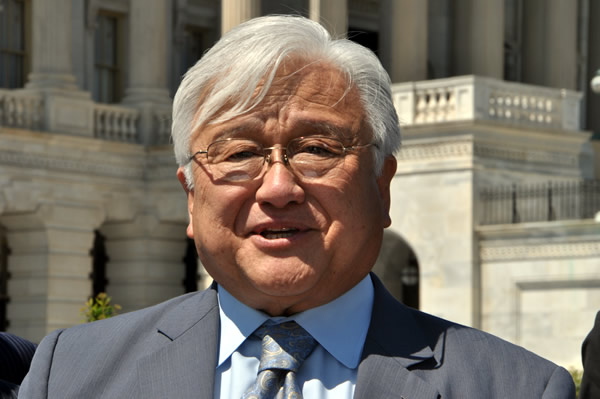
On October 15th, Congressman Mike Honda (D-CA) entered into the Congressional Record the names of the seven participants of the 4th American POW Delegation to Japan. He introduced the former POWs and the widows of former POWs with the following "extension of remarks":


  • Mr. HONDA. Mr. Speaker, I rise today to honor veterans from America's greatest generation and thank the Government of Japan for recognizing the sacrifices of these men. On Sunday, October 13, seven former members or widows of former members of the U.S. Army, U.S. Army Air Corps, and U.S. Marines who fought in the Pacific Theater of World War II--and who were once prisoners of war of Imperial Japan--will travel to Japan as guests of the Japanese government. Marking an act of historic reconciliation and remembrance, this is the fourth delegation of U.S. POWs to visit Japan through this program.

  • Their first trip to Japan was on aging freighters called ``Hellships,'' where the men were loaded into suffocating holds with little space, water, food, or sanitation. The conditions in which they were held are unimaginable. At the POW camps in the Philippines, Japan and China, they suffered unmerciful abuse aggravated by the lack of food, medical care, clothing, and appropriate housing. Each POW also became a slave laborer at the mines, factories, and docks of some of Japan's largest companies. In the end, nearly 40 percent of the American POWs held by Japan perished; compared to two percent of those in Nazi Germany's POW camps. The POWs of this delegation slaved for Mitsubishi, Nippon Express, Sumitomo, Nisshin Flour, Hitachi, Dowa Holdings, and JFE Holdings.

  • In September 2010, the Japanese government delivered to the first American POW delegation an official, Cabinet-approved apology for the damage and suffering these men endured. Although the Japanese government had hosted POWs from the wartime Allies of the United States since the late 1990s, the 2010 trip was the first trip to Japan for American POWs. It was also the first official apology to any prisoners of war held by Japan.

  • I know that the American POWs fought hard for this recognition. Dr. Lester Tenney of California, a former POW who mined coal for Mitsui, was instrumental in persuading the Government of Japan to offer the apology and initiate the trips of reconciliation. He says he is ``honored to have had the opportunity of assisting the U.S. State Department and the Japanese Embassy in arranging this year's POW Visitation Program. Like the years past, the visit will no doubt yield many memories while at the same time erase many bad experiences that left its mark on the POWs. This year, for the first time, Japan's Minister of Foreign Affairs has allowed three widows of former POWs to participate in the program and visit the sites of their husbands' Japanese prison camps located in various cities in Japan.''

  • I thank the POWs for their persistent pursuit of justice, and commend the U.S. State Department for helping them. I also appreciate the willingness of the Japanese government to pursue an historic and meaningful apology. It is my hope that the POW Visitation Program continues to expand, and that it will be a healing mechanism for the POWs, their families and communities.

  • Now, it is time for the many Japanese companies that used POWs for slave labor during World War II to follow the example of their government by offering an apology and supporting programs for lasting remembrance and reconciliation.

  • Mr. Speaker, I wish these men a fulfilling trip to Japan, and I hope that their trip contributes to securing the historic peace between the U.S. and our important ally Japan. 

  • [Biographies of participants follow in text.]

    Monday, October 14, 2013

    4th American POW Delegation in Japan this week

    From October 13 to 21, seven former members or widows of former members of the U.S. Army, U.S. Army Air Corps, and U.S. Marines who fought in the Pacific Theater of World War II and were taken prisoner by Imperial Japanese Forces will be guests of the Government of Japan. This is the fourth American POW delegation to visit Japan. Temple University in Tokyo will host a public event.

    Mukaishima POW Camp


    Tuesday, October 15, 2013
    7:00pm

    Institute of Contemporary Asian Studies (ICAS)
    5F
    Tokyo, Japan

    The trip includes visits to sites of the former prison camps where the POWs were slave laborers. Many of the camps/mines/docks are in the regions that Japan would like UNESCO to designate as World Modern Industrial Heritage sites. Mitsui, Mitsubishi, Hitachi, Sumitomo, and Nippon Steel all originated in these regions. All used POW slave labor and forced labor from Japanese colonies. And today all also want to bid for American high speed rail projects.

    Japan’s historic official apology--one of only four that have been cabinet approved and the only one victim-specific--and continued support for the POW Visitation Program has improved our relations with Japan, established a viable path for reconciliation with other victims of Imperial Japan, and, most important, has had a positive effect on the former POWs and their families.

    It is in everyone’s interest that the POW Visitation Program continues. I hope that you will help the Abe Administration understand this as it is a program they want to end.

    The program needs to evolve by including children and other descendants of the American POWs of Japan as well as to expand to support research into the POW experience under Imperial Japan. These are worthy goals of our broadening alliance with Japan. As we know today, the legacy of torture and abuse affects generations of a family and society.

    Below is the list of participants, which include 3 Death March survivors, a Marine on Guam, and a Native American.

    4th Delegation of American Former POWs of Japan
    October 13-21 2013 

    Phillip W. COON, 94, is a full blood Muscogee Creek who grew up in Oklahoma. After graduating from the Haskell Institute (today’s Haskell Indian Nations University) in Lawrence, Kansas, he enlisted in the U.S. Army on September 29, 1941. He was assigned to the 31st Infantry Regiment and sent immediately to the Philippines Islands aboard the USAT Willard A. Holbrook arriving on October 23, 1941. At Fort McKinley he trained as a .30 caliber machine gunner (M1919 Browning). He fought on Bataan Peninsula against the invading Japanese forces and was surrendered on April 9th. Forced on the infamous 65-mile Bataan Death March, he was subjected to capricious cruelty and abuse, denied water, food, rest and protection from the sun. Nearly all on the March had surrendered sick and malnourished causing thousands to die before they reached their destination of Camp O’Donnell. Coon credits his survival to God, or as he said, “We ran out of food, ammunition and men, but we didn't run out of prayer.” His first POW Camp was Camp O’Donnell where he worked burial detail. For the next two years, he was held at Cabanatuan, Camp Lipa-Batangas, Camp Murphy-Rizal, and Bilibid. On October 1, 1944, he was shipped via Hong Kong on the Hellship Hokusen Maru to Taiwan where he was held briefly at the Inrin Temporary POW Camp. From Taiwan he was sent to Moji, Japan via the Hellship Melbourne Maru arriving January 23, 1945. He was then shipped north to Sendai and became a slave laborer mining cooper for Fujita Gumi Kosaka Kozan (today’s Dowa Holdings Co. Ltd) at the Sendai-#8B Kosaka POW Camp. After his liberation in September 1945, he returned to the U.S. and was discharged from service as a Corporal on June 24, 1946. He returned home to work as Union Painter doing high-scaffold work. Helen, his wife of 67 years, died this spring. Mr. Coon lives with his son, Michael, a Vietnam vet who works with DAV Creek County Chapter #9 as a Service Officer helping veterans with their disability claims. Six members of the Muscogee Creek Nation became prisoners of Japan on the Philippines: five from Corregidor and Mr. Coon who was on Bataan.
    POW# UNKNOWN

    Lora CUMMINS, 87, is the widow of Ferron E. CUMMINS (1917-1990). She lives in San Antonio, Texas. Mr. Cummins grew up in New Mexico where he graduated in 1938 from Tyler Commercial College in Texas and went to work as a bookkeeper for the First National Bank in Hagerman, New Mexico (today’s First American Bank). In November 1940, he enlisted in the U.S. Army Air Corps and had his Basic Training at Brooks and Kelly Fields near San Antonio, Texas. He was assigned to the V Interceptor Command, 24th Pursuit Group, 34th Pursuit Squadron at Hamilton Field, California. In November 1941, Cummins was transferred to the Philippines Islands aboard the USS Coolidge. He arrived on November 20th and was assigned to Nichols Field. When the Japanese invaded the Philippines on December 8th, he was sent to Aglaloma Point, Bataan to fight with the 71st Infantry joining men from all branches of the Armed Services. He was surrendered on April 9, 1942 and forced on the infamous 65-mile Bataan Death March on April 10, 1942 from Mariveles to Camp O'Donnell arriving on April 21, 1942. From Camp O’Donnell, he was moved to Cabanatuan, then Bilibid. At these camps he survived sunstroke, dysentery, malaria, denuge fever, wet and dry beriberi, yellow jaundice, and blindness. In August 1944, he was shipped to Moji, Japan aboard the Hellship Noto Maru. He was taken to Hiroshima and became a slave stevedore for Hitachi Shipyard (today’s Hitachi Zosen Corporation) at Mukaijima [Mukaishima] Hiroshima Sub-camp #4. A Japanese elementary school in Mukaishima today honors the memory of the men of this camp. On August 6, 1945, he felt the air warm and watched a three-mile high mushroom cloud rise above Hiroshima from the atomic bomb. He was officially liberated September 14, 1945. He returned to Lake Arthur, New Mexico where he remained in the Air Force and married the girl down the street, Lora Mae Lane. Upon retirement, he owned a laundry and vending machine business. In 1967, the family moved to San Antonio, Texas and where he worked for SEARS. He and Lora had one child, Glenda, and were married 43 years. Lora was a civilian employee of the Air Force. He passed away on March 26, 1990 of a heart attack just days after returning from his second trip to the Philippines with his wife, daughter, son-in-law, and grandson, Ferron. Mr. Cummins is buried at Fort Sam Houston National Cemetery in San Antonio, Texas.
    Autobiography
    POW# 115


    Robert B. HEER, 92, lives in Sequim, Washington. He grew up in Iowa and joined the U.S. Army Air Corps in June 1940 becoming a carpenter with the 30th Bombardment Squadron, 19th Bomb Group (Heavy), V Bomber Command stationed at March Field, California. He was stationed at Kirtland Field in Albuquerque, New Mexico before being ordered to the Philippine Islands in October 1941 He arrived on October 23, 1941 aboard USAT Willard A. Holbrook and was sent to Clark Field. On December 29, 1941, the 30th Bombardment Squadron was evacuated to Mindanao and he was sent to the Del Monte Airfield. He was surrendered on May 10th and sent to Camp Casisang, about five kilometers southwest of Malaybalay, Mindanao. On September 6, 1942 the Generals and Colonels were removed from Camp Casisang and sent to Formosa (Taiwan). Heer served as an orderly to Brig, General Joseph P. Vachon, the former C.O. of the Philippine Army’s 101st Division on Mindanao, with whom Bob Heer was sent to Karenko POW Camp via the freighter Suzuya Maru. At Karenko he wrote a message to his family that the Japanese broadcast to the U.S. over shortwave radio. In May 1943, he was shipped to Heito POW Camp to clear and work in sugar cane fields. He remained there nearly a year before being moved to Taihoku POW Camp #6 where he slaved at building a memorial park for Japanese soldiers and a man-made lake for the irrigation of rice fields. In early 1945, he was shipped to Japan, first to the port of Moji on Kyushu and then north to Hokkaido. There he was first a slave stevedore for the Hakodate Port Transportation Company at Hakodate 2-D POW. In late May 1945, he was moved north to become a slave laborer mining coal for Sumitomo Mining (today’s Sumitomo Metal Mining Co. Ltd) at Hakodate #2 Akihira POW Camp. He was liberated in early September 1945, when American Army records clerks arrived and told them the war was over. After liberation, Heer remembers eating well and gaining 40 pounds in Japan, making friends with post-war civilians there. “I was giving food to the Japanese,” he said, even eating dinner with one family who invited him in after he gave them matches and soap, which was in short supply. On April 20, 1946, Heer was honorably discharged from the Air Corps at Camp Beale (Beale A.F.B.) in California. He used the GI Bill to earn a degree in photography from the Fred Archer School of Photography in Los Angeles, California. Missing friends and the military life, he returned to active duty with the Air Force in 1950, retiring in 1966 as a Technical Sergeant. In retirement he has worked as an amateur historian of American POWs of Japan and embarked on a “third career” as a house husband. He has been married to Karen Harper since 1989, and has four children from two previous marriages.
    Oral History
    Biography
    POW# 330


    Esther JENNINGS, 90, is the widow of Clinton S. JENNINGS (1919-2004). She lives in San Francisco, California. Mr. Jennings, a California native, served in the Civilian Conservation Corps before enlisting in the U.S. Army in 1941. He was sent to the Philippine Islands the same year aboard the USS Republic (AP-33). On Corregidor, he joined Battery “K” 59th Coast Artillery Regiment where he helped man fixed 60" Searchlights No. 1 through 8, plus a number of 60" and 30" mobile seacoast searchlights. Surrendered on May 6, 1942, he was sent to a series of POW camps on the Philippines: Bongabong, Cabanatuan, Lipa- Batanga, and Bilibid. In July 1944, he was herded along with 1,600 other American POWs aboard the Hellship Nissyo Maru to be shipped to Japan. The nightmarish two-week voyage to Moji, Japan included an attack by an American submarine wolfpack on the unmarked transport. Jennings was first held in Fukuoka-23-Keisen as slave laborer mining coal for Meiji Mining [Meiji Kogyo] Hirayama Mine (The company was dissolved in 1969, but its exploration and research division became independent as Meiji Consultant Co., Ltd. in 1965, and still exists). He was then transferred to Fukuoka #9B, located near the town of Miyata (now the city of Miyawaka), again to be a slave laborer mining coal, but for Kaijima Coal Mining Onoura Mine (the company no longer exists). After the war, he spent 25 years in the Army working in finance. He retired in 1965 and worked in public finance at the Bank of America retiring again in 1985. Jennings was a dedicated volunteer: he spent 27 years at KQED; 24 years at the Fine Arts Museums of San Francisco; and 20 years for the San Francisco Opera Guild where he enjoyed being a supernumerary. He was a member of American Defenders of Bataan & Corregidor; American Ex-Prisoners of War; Philippine Scouts Heritage Society; American Legion; San Francisco History Association; VFW; Military Order of the Purple Heart; Past President of Golden Gate Chapter #18 of National Sojourners; Native Sons of the Golden West, Guadalupe Parlor; The Great War Society; Past Master of Masonic Lodge San Francisco #120; Scottish Rite, Shriners; President of the National Assn. of Civilian Conservation Corps Alumni; The Retired Officers Association and the Reserve Officers Association. He was married to Esther Bloom for 34 years and had three children from a prior marriage. He succumbed to cancer on October 28, 2004. Mr. Jennings is buried at Hills of Eternity, Colma, California.
    POW# UNKNOWN

    Erwin R. JOHNSON, 91, divides his time between Wynantskill, New York outside of Albany and Lacombe, Louisiana. He grew up in New Orleans, Louisiana and enlisted in the U.S. Army Air Corps in September 1940. He was assigned to the 48th Materiel Squadron, 27th Bombardment Group (Light), V Bomber Command where he was trained as a mechanic for A-20 fighter planes. He was transferred to the Philippines Islands aboard the USS President Coolidge in November 1941, arriving on November 20th and was deployed to Fort McKinley south of Manila. When Japanese forces attacked the Philippine Islands in December 1941, though not trained as an infantryman, Johnson was issued a rifle and ordered to defend against the Japanese advance. He and all American and Filipino troops on the Bataan Peninsula were surrendered on April 9, 1942. Immediately, he was forced on the infamous 65-mile Bataan Death March to Camp O'Donnell. He recalls many horrific events during the March; maybe the worst was a Japanese guard bayoneting to death a Filipino mother and her baby for trying to pass food to the starving, sick POWs. At Camp O’Donnell he volunteered for work duty building bridges and other projects. Later that year, he was transferred to Cabanatuan where he volunteered for work details outside of the Camp. He was among 500 other American POWs shipped from the tropical Philippines to the freezing Mukden, China (today’s Shenyang) in October 1942 aboard Mitsubishi’s Hellship Tottori Maru via Formosa and Korea to Manchukuo (Manchuria). None of the men had winter clothing. Johnson was housed at the Hoten POW Camp and became was a slave laborer at MKK (Manshu Kosaku Kikai or Manchouko Kibitsu Kaishi, which some researchers believe was owned by Mitsubishi and known as Manchuria Mitsubishi Machine Tool Company, Ltd.). The camp was liberated in August 1945 by Russian and OSS forces. Discharged in June 1946, he used his GI bill to obtain a mechanical engineering degree from Tulane University. He worked for a number of technology manufacturing companies in Southern California including North American Aviation (today’s Boeing) and eventually returned to Louisiana, retiring from the Port of New Orleans in 1993. In retirement, he and his wife Margaret traveled throughout the United States and were active in a number of veterans and POW organization. Margaret, his wife of 53 years passed away in 2010. Together they raised five boys. In 2011, he married Ann Wilbur Lampins whose brother, Staff Sgt Charles S. Wilbur, was also a member of the U.S. Army Air Corps. He was with the 28th Materiel Squadron, 20th Air Base Group, Far East Air Force on the Philippines. He too became of prisoner of Imperial Japan and was also shipped to Mukden. He died of pneumonia soon after arrival on December 28, 1942. The Johnsons are active members of the Mukden POW Survivors group and other veterans’ organizations.
    Memoir By the Grace of God can be found at the Veteran's History Project of the US Library of Congress.
    POW # 277

    Marjean McGREW, 87, is the widow of Alfred Curtis McGREW (1922-2008). She lives in San Diego, California. Mr. McGrew grew up in Columbus, Ohio. After high school and briefly working with the Civilian Conservation Corps, he enlisted in the U.S. Army at Fort Hayes. In January 1941, his unit sailed to the Philippine Islands aboard the USS Republic (AP-33). He took Basic Training at the 92nd Garage on Corregidor and was assigned to Battery “D” (Denver) 60th Coast Artillery (A.A.). He was transferred to Battery “H” (Hartford), 60th, Coast Artillery (A.A.) at Herring Field, Middleside and was taken prisoner there on May 6, 1942 with the surrender of Corregidor and the Philippines. He was held in the following POW camps: 92nd Garage, Bilibid, Cabanatuan 2 and 1; Camp O'Donnell, Nichols Field. In August 1944, he was shipped to Moji, Japan aboard the Hellship Noto Maru. In Japan, McGrew became a slave stevedore for Nippon Express (same name, sam company today) at Omori Tokyo Base Camp; then a slave stevedore for Nisshin Flour Milling Dispatched Camp (Tokyo 24-D) (today’s Nisshin Seifun Group); and finally at Suwa Branch Camp (Tokyo 6-B) he was a slave laborer for Nippon Steel Tube & Mining Company (today’s JFE Holdings). He was liberated in Yokohama on September 6, 1945. He later became an Honorary Member and friend of the U.S. Army 503rd Parachute Regiment Combat Team (RCT) who liberated Corregidor from the Japanese in 1945, and the 4th Marine Regiment who had defended it. After returning to Columbus, he met and married Marjean Herres of Bellefontaine, Ohio (the love of his life for 59 years). They moved to San Diego to be nearer the ocean and raise their two children, Vicki and Steve. He retired from Control Data Corporation after 27 years when the manufacturing division left San Diego. In retirement, McGrew traveled back to Corregidor many times to collect photos, documents, and data from those who served on Corregidor. During his many trips back, he sat in the ruins of Corregidor thinking of the great times and the bad times as well as the many young friends he lost. As a long-time amateur historian, he assisted many family and friends in their search for information on their loved ones serving and/or captured on Corregidor. McGrew’s approach to life was to use humor as a base for survival and survive he did several times in his life. For fun, he enjoyed scuba diving, golfing, table tennis, camping, and traveling with his wife around the U.S. in their R.V. Mrs. McGrew was a nurse and an avid folk dancer. He succumbed to cancer on January 27, 2008 surrounded by his loving children and his wife. Mr. McGrew is buried at Fort Rosecrans National Cemetery, Point Loma, California.
    Oral History
    POW# UNKNOWN


    Marvin A. ROSLANSKY, 91, lives with his wife Josephine in Mesa, Arizona. Mr. Roslansky grew up in Minnesota and enlisted in the Marine Corps in the spring of 1941. He was sent to Guam in September 1941. He was one of 153 Marines assigned to defend Guam, a U.S. territory administered by the U.S. Navy in the Pacific. As a member of the Insular Patrol Unit he fought in the brief defense of the island (December 8-9, 1941) and was captured by invading Japanese forces. On January 10, 1942, the American prisoners of the Guam garrison including five nurses and a civilian mother and child were shipped to prison camps in Japan aboard the MS Argentina Maru, what was Mitsui’s OSK Line’s fastest ship. Arriving in Japan on January 16, 1942, he was taken to Shikoku and imprisoned at the Zentsuji POW Camp (Zentsuji was originally built to house German prisoners of the Japanese in World War I). The camp was on an island about 400 miles west of Tokyo. He spent the rest of the war there as a slave stevedore for Nippon Express (still in operation under the same name) working 12-hour days at the Sakaide Rail Yards and the Port of Takamatsu. He was liberated September 27, 1945. After the war, he lived in Racine, Wisconsin where he owned an auto parts business. Retired in 1981, he volunteered at the Clement J. Zablocki VA Medical Center in Milwaukee as well as doing veterans service work for the DAV, the American Defenders of Bataan and Corregidor, and the Milwaukee Barb Wire, East Valley, and Prairieland Minnesota Chapters of AXPOW. With his first wife, Iva they raised four daughters and three sons. He married Josephine Plourde in 2010.
    Interview by Concordia University, St Paul
    POW# none

    Thursday, February 02, 2012

    Japanese Corporate Use of U.S. POWs as Slave Labor

    American POWs at Yawata Steel Mill
     part of  Nippon Steel in Fukuoka
    *
    On 15 December 2011, Representative Russ Carnahan (D-MO) submitted a Statement for the Record to the House Transportation and Infrastructure Committee Hearing on California's High-Speed Rail Plan on behalf of Mr. Joseph A. Vater, Jr. who is President of the Descendants Group, an Auxiliary of the American Defenders of Bataan and Corregidor.

    Congressman Carnahan visited Corregidor last year and learned first hand of the historic battle of the Philippines and how its American defenders ended up as POWs facing over three years of unimaginable hell. Earl Szwabo, a survivor of the battle of Corregidor and member of the first POW trip to Japan, is one of Mr. Carnahan's constituents.

    Below is Mr. Vater's testimony where he outlines how most of the Japanese companies that plan to bid on California's and other American high-speed rail projects were major users of American POW slave labor. He suggests that it is time for these companies to offer their apologies and make amends for this gross violation of human rights and the Geneva Convention.

    Japanese Corporate Use of U.S. POWs as Slave Labor

    Mr. Chairman, I am President of the Descendants Group, an Auxiliary of the American Defenders of Bataan and Corregidor, Inc. (ADBC). The American Defenders of Bataan and Corregidor was founded in 1946 and represented the surviving prisoners of war of Japan and their families. I would like to call your and the Committee’s attention to the fact that many of the Japanese companies that intend to bid on California’s High-Speed Rail contracts profited from the use of American and Allied (POW) slave labor in the most brutal of conditions during World War II.

    These companies, unlike those in Germany, Austria, and France, have never acknowledged nor apologized for this gross violation of human rights and breach of the Third Geneva Convention on the treatment of POWs. It is a concern to me and other members of the Descendants Group that taxpayer dollars may go to Japanese corporations that still do not respect the American veterans they once enslaved.

    My father, Joseph A. Vater, was one of these men.

    After fighting in and surviving the Battle for the Philippines he was taken prisoner by Japan in May 1942 on Corregidor. He was held months in a fetid POW camp where thousands died. He was then shipped to Mukden, China (today's Shenyang) in October 1942 on Mitsubishi's Tottori Maru via Formosa and Korea. My father became a slave laborer at MKK factory (Manshu Kosaku Kikai, possibly Manchuria Mitsubishi Machine Tool Company, Ltd.), working as a machinist. He still carries many scars and continues to have frightening nightmares that remind him on a daily basis of his forced labor.

    There was a broad government program in which over 60 private Japanese corporations requested, paid for, and effectively enslaved POWs in order to maintain wartime industrial production. Tens of thousands of Allied POWs endured abuses at the hands of the employees of these companies that were comparable to, and sometimes worse than, that inflicted upon them by the Japanese military. As a result, more than a 1,000 American POWs (over 3,500 Allied POWs) died on the main islands of Japan alone. Those who survived found themselves with permanent physical or mental damage.

    The POW slave laborers of Japan were subjected to starvation rations, minimal medical treatment, constant physical abuse, summary punishment, murder, and other degradations. The death rate of Americans captured by the Japanese and who died as prisoners of war was nearly 40 percent, as compared to a little over one percent held in German stalags.

    Nearly all of the Japanese companies that want to bring High-Speed Rail to California used POW slave labor. Many of these corporations boast over 100 years of continuous operation spanning three centuries. Many utilized labor from multiple POW camps for their mines, factories, foundries, and docks. Some of the camps were in Japan’s occupied territories. Current research finds the number of camps associated with some of the Japanese companies bidding on California contracts as follows: Mitsui-9; Mitsubishi-5, Hitachi-7, Kawasaki-2, Sumitomo-5, and Nippon Sharyo-2.

    None of these companies has acknowledged their involvement in POW forced labor and maltreatment, much less apologized for it. That is in stark contrast to German and French bidders for the High-Speed Rail projects, both of which have not only apologized for their war crimes during WWII, but also committed themselves to supporting projects of remembrance and reconciliation.

    Last year, for the first time, the Government of Japan offered its apology and established a visitation program (modeled on a longstanding Japanese program for POWs of other allied nations) for American former prisoners of war of Imperial Japan.

    It is time for Japan’s private companies to follow their government’s lead and offer their own apologies. Further, commitment to this apology can be demonstrated through the establishment of a foundation for the remembrance of the POW experience in the Pacific.

    To date, the two consortia headed by Japan’s leading passenger rail firms, JR East and JR Central, which are planning to bid on American High-Speed Rail projects, have been silent. As rail operators both companies’ forbearers were complicit in POW abuses; both have roots deep in Japan’s wartime government Railway Ministry.

    JR East’s antecedent transported prisoners to 46 POW camps including the infamous Ofuna Interrogation Center where American Naval officers were routinely tortured to death. JR Central’s predecessor transported prisoners to 12 POW camps, including the ones supplying workers to Nippon Sharyo. Now owned by JR Central, Nippon Sharyo made the engines used on the Thai-Burma Death Railway (one of which sits at the entrance of the museum at the Yasukuni Shrine).

    That the transportation of POWs to “death-by-work” camps and widespread forced labor constitute war crimes is self-evident. Yet, the Japanese companies involved have refused to publicly acknowledge this history. Their counterparts in the European Axis countries, by contrast, have apologized and atoned for similar wrongdoing.

    In 2000, the German government and industrial sector established and funded in equal measure the “Remembrance, Responsibility and the Future” Foundation. Among the fund’s continuing objectives are “anchoring the history of forced labour” in European memory, “fostering commitment to democracy and human rights through history learning,” and “engendering respect for the life histories of those persecuted.”

    Over the past three years, the former commander of the American Defenders of Bataan and Corregidor has written three times to Japan’s premier business organization, Keidanren, to which most companies that enslaved American POWs belong, asking that it apologize on behalf of its members to the American POWs. Keidanren’s corporate responsibility charter states a commitment to “respect human rights” and to “conduct business in a socially responsible manner.” Keidanren has never replied. Further, it refused to meet in with any of the visiting POWs who were guests of the Japanese government in the fall of 2010 and 2011.

    For both business and moral reasons, JR East, JR Central and the other Japanese companies that profited from the forced labor of POWs and others now have a chance—and incentives—to right past wrongs. The American POWs do not seek compensation. Justice for my father and his fellow prisoners is a public apology and a meaningful program of visitation, dialogue, memory, and research on the American POW experience in Imperial Japan.

    I and other members of the Descendants Group sincerely hope that the State of California will advise these Japanese companies to promptly acknowledge their involvement in wartime forced labor and offer an apology to the American POWs.

    These veterans of America’s greatest generation should not be forgotten and Japan’s corporations should no longer be allowed to forget.

    Mostly, we ask them to respect these veterans’ dignity and to acknowledge their sacrifices for peace in Asia.

    After doing so, these Japanese companies can join in the bidding on California’s High-Speed Rail contracts as honorable, socially responsible companies.

    *Yes, there were Black Americans who were POWs of Japan. The POWs above were from the USS Grenadier the only submarine crew that did not go down with their boat. Thomas James Trigg was a Mess Attendant First Class. We will do a post shortly on the Black American POWs of Japan. 

    Monday, October 17, 2011

    2nd US POW Delegation to Japan, October 15-23, 2011

    On Saturday, October 15, 2011, the second delegation of American former POWs of Japan left the United States to visit Japan. They are guests of the Japanese government. It is unclear when the Japan's Foreign Ministry will announce the trip.

    To honor these men, Representative Mike Honda (D-CA) took to the floor of the House on October 13th:

    Mr. HONDA. Mr. Speaker, I rise today to honor veterans from America's greatest generation and thank the Government of Japan for recognizing the sacrifices of these men. On Saturday, October 15, seven former members of the U.S. Army and Army Air Corps, who fought in the Battle for the Philippines at the start of World War II, from December 1941 to May 1942, will travel to Tokyo as guests of the Japanese government. These brave soldiers and airmen were all prisoners of war of Imperial Japan.

    The conditions in which they were held are unimaginable. Their first trip to Japan was on aging freighters called "Hellships,'' where the men were loaded into suffocating holds with little space, water, food, or sanitation. At the POW camps in the Philippines, Japan and China, they suffered unmerciful abuse aggravated by the lack of food, medical care, clothing, and appropriate housing.

    Each POW also became a slave laborer at the mines, factories, smelters, and docks of Japan's largest companies, including Mitsui, Nippon Steel, Showa Denko, Mitsubishi, and Japan Metals & Chemicals Company. In the end, nearly 40% of the American POWs of Japan perished; compared to the two percent of those in Nazi Germany's POW camps.
     
    The men traveling to Japan this weekend include five residents of California, one from Arizona and one from Missouri. There are two survivors of the infamous Bataan Death March and four who were captured during the surrender of Corregidor. Furthermore, two of the veterans believe that they were subject to medical experimentation.

    In September 2010, the Japanese government delivered to the first American POW delegation an official apology for the damage and suffering these men endured. Although the Japanese government had hosted POWs from U.S. wartime Allies, this was the first trip to Japan for American POWs. It was also the first official apology to any prisoners of war held by Japan.

    I know that the American POWs fought hard for this recognition. I appreciate the courage of the Japanese government for their historic and meaningful apology. I thank the POWs for their persistent pursuit of justice, and commend the U.S. State Department for helping them. Now, it is time for the many Japanese companies that used POWs for slave labor during World War II to follow the example of their government by offering an apology and supporting programs for lasting remembrance and reconciliation. Furthermore, I invite my colleagues on both sides of the aisle to join me in a making a small, but significant, gesture to show these men that Congress has not forgotten their experience and sacrifice by cosponsoring House Resolution 333, which I introduced earlier this year.

    I wish these men a fulfilling trip to Japan, and I hope that their trip contributes to securing the historic peace between the U.S. and our important ally Japan. Second U.S. POW Delegation to Japan, October 15-23, 2011

    Harold A. Bergbower, 91, lives in Peoria, Arizona. He joined the U.S. Army Air Corps in 1939 and was part of V Bomber Command, 19th Bomb Group, 28th Bombardment Squadron, Far East Air Force. He was at Clarke Field when Japan attacked on December 8, 1941. He was knocked out in the bombardment and when he awoke he found himself in the morgue at Fort Stotsenburg. Bergbower crawled out and went back to his squadron to fight in the Battle of Bataan. By escaping to Mindanao after surrender, he avoided the Bataan Death March and was captured in May. On the Philippines, he was imprisoned at Malaybalay on Mindanao and the Davao Penal Colony. In August 1944, he survived the sinking of several Hellships only to end up on Mitsubishi's Noto Marti; a trip he has completely blocked out. He was a slave laborer scooping iron ore into an open hearth furnace at the Nagoya-6B-Nomachi (Takaoka) camp for the Hokkai Denka Company which was involved in ferro-alloy smelting. Today, the site remains in ferro-alloy business as Takaoka Works. It is, as was Hokkai Denka, still part of Japan Metals & Chemicals Co., Ltd (JMC, Nihon Jukagaku Kogyo). Bergbower stayed in the U.S. Air Force and returned to Japan (1954-1957) to train Japan's Air Self-Defense Force. He and his family lived near air bases in Hamamatsu, Shizuoka Prefecture and in Fukuoka (Itazuke), Fukuoka Prefecture. After retiring in 1969, he became a golf pro for Dell Webb's Sun City, Arizona. He is a past Commander of the American Defenders (2005-6) and helped to establish its Descendant's Group.
    POW#89
    Trent Franks (R-AZ) 

    James C. Collier, 88, lives in Salinas, California. He enlisted in the U.S. Army in 1940 at the age of 16. As a member of U.S. Army 59th Coast Artillery, Battery D ``Cheney'' he was captured on Corregidor. Before being shipped from the Philippines to Japan on Mitsubishi's Noto Maru in August 1944, he was held in Cabanatuan and Clark Field. Collier was a slave laborer feeding iron ore into the open hearth furnace at the Nagoya-6B-Nomachi (Takaoka) camp for the Hokkai Denka Company, which was involved in ferro-alloy smelting. Today, the site remains in ferroalloy business as Takaoka Works. It is, as was Hokkai Denka, still part of Japan Metals & Chemicals Co., Ltd (JMC, Nihon Jukagaku Kogyo). After WWII, he earned two master's degrees: one in the Teaching of English from San Jose State and another in School Counseling from the University of Oregon, Eugene. He taught English and Psychology and worked as a guidance counselor in a high school and community college for 31 years.
    POW#130
    Sam Farr (D-CA) 

    Harry Corre, 88, lives in Los Angeles, California. He joined the U.S. Army in 1941 and was sent to the Philippines as part of the 59th Coast Artillery Regiment, Battery C "Wheeler.'' He was captured by the Japanese with the surrender of Bataan on April 9, 1942 and began the infamous Bataan Death March. He escaped by swimming, with the assistance of a hastily improvised floatation device, the three-and-a-half miles to Corregidor, where he rejoined his unit. Corre was surrendered on Corregidor and imprisoned at Cabanatuan #1 and #3. He was shipped to Japan in July 1943 on Mitsubishi's Clyde Maru to mine coal at Omuta Fukuoka #17 Branch POW Camp for Mitsui Mining (now Mitsui's Nippon Coke & Engineering Company Co., Ltd., NB: Mitsui-aflliated companies now have a minority stake in this company, of which Nippon Steel and Sumitomo hold the majority of shares. See FY2010 Annual Report, page 27, in Japanese only.). After the war he worked odd jobs for several years and then moved to California to work in the aerospace industry. He returned to school in 1971 and graduated from Western Electronic Institute in Los Angeles as an electronics engineer. He worked in the aerospace industry for 40 years with his last position at TRW. Corre presently works at the Los Angeles, California Veterans Administration Hospital as a Patient Advocate and as a Veterans Service Officer for the American Ex-Prisoners of War as well as a POW Coordinator for the Veterans Administration Hospital & West Los Angeles Veterans Administration Regional Office.
    POW# 283
    Karen Bass (D-CA) 

    Roy Edward Friese, 88, lives in Calimesa, California. He joined the U.S. Army in 1941 and became a member of the 60th Coast Artillery Regiment Battery E ``Erie.'' He arrived in the Philippines in April 1941 for basic training. He was assigned to a searchlight battery on the tip of Bataan and then evacuated to Corregidor when Bataan fell April 9, 1942. He was imprisoned on the Philippines in Bilibid and Cabanatuan. Friese was shipped to Japan in July 1943 on Mitsubishi's Clyde Maru to mine coal at Omuta Fukuoka #17 Branch POW Camp for Mitsui Mining (now Mitsui's Nippon Coke & Engineering Company, NB: Mitsui-aflliated companies now have a minority stake in this company, of which Nippon Steel and Sumitomo hold the majority of shares. See FY2010 Annual Report, page 27, in Japanese only.).  After WWII, he reenlisted in the U.S. Army and in 1947 transferred to the U.S. Air Force. He retired after 20 years of service. In civilian life he was employed doing various types of electronics work. In 1975, Friese established his own company installing & repairing micrographic equipment. In retirement he pursues hobbies of travel, photography, woodworking, and collecting antique clocks.
    POW#173

    Ralph E. Griffith, 88, lives in Hannibal, Missouri. He enlisted in the army in 1941 at the age of 17 and received his basic training on Corregidor, the Philippines. He was captured on Corregidor in May 1942 with his unit, the U.S. Army 60th Coast Artillery Regiment Battery F ``Flint.'' On the Philippines he was a POW in Bilibid and Cabanatuan. He was shipped to Mukden, China (today's Shenyang) in October 1942 on Mitsubishi's Tottori Maru via Korea to Manchuria. Griffith was a slave laborer at MKK (Manshu Kosaku Kikai, which some researchers believe was owned by Mitsubishi and known as Manchuria Mitsubishi Machine Tool Company, Ltd.) factory working as a planer operator. He believes that the multiple shots and blood tests that he received while at Mukden were part of human medical experiments conducted by the Imperial Army's 731st Biological Warfare Unit. At liberation, he walked out the main gate of the POW camp and was immediately taken by the hand by a little Chinese girl. She brought him to her home where her family had prepared a meal for him. This family fed and cared for him until he was repatriated. Ever since, whenever he sees a Chinese family dining at a restaurant he quietly pays their bill. After the war, he went to work for railways both in Missouri and Alaska. Not liking the cold weather, he went to work for the Elgin, Joliet & Eastern Railway in northern Indiana. After 37 years, he retired from the Railway and returned to his hometown of Hannibal, Missouri where he was born and raised.
    POW#552
    Sam Graves (R-MO)

    Oscar L. Leonard, 92, lives in Paradise, California. He joined the Idaho National Guard 116th Cavalry in 1939 and the U.S. Army Air Corps in 1940. He was sent to the Philippines to be an airplane mechanic with 28th Heavy Bomb Squadron at Clark Field. He was surrendered on Mindanao in May 1942 and held as a POW in Malaybalay and Bilibid. Leonard was then shipped to Japan on Mitsubishi's Tottori Maru in October 1942. In Japan, he was held in a prison in Kawasaki and at Tokyo-2B-Kawasaki POW Camp (Mitsui Wharf Co., Ltd. known as "Mitsui Madhouse'') to be used as stevedore and steel mill slave labor for the Mitsui Corporation as well as mixing chemicals for ammunition for Showa Denko. He was then held at Tokyo-5D-Kawasaki POW Camp where he was forced to work at a steel mill for Nihon Kokan (Japan Steel Pipe, now part of JFE Holdings). He was sent finally to Tokyo-7B-Hitachi POW Camp to refine copper ore for Nippon Mining (today, JX Holdings Ltd., Inc.). He weighed only 85 pounds at liberation. After World War II, Leonard felt he was too old to return to medical school and decided to become a pharmacist. He attended Marin College and graduated from Idaho State College School of Pharmacy Pocatello in 1954. He still works relief at local pharmacies, sometimes helps his youngest daughter plant trees on her ten acres of land, cuts and chops his own firewood, and enjoys world travel.
    POW#247

    Robert J. Vogler, Jr., 90, lives in Rancho Bernardo, San Diego, California. He joined the U.S. Army Air Corps in January 1940 at the age of 19. Stationed in Manila as part of the 24th Pursuit Group 17th Pursuit Squadron, he completed aircraft instrument training and attended the University of Philippines to study engineering. He serviced aircraft and then fought as an infantry soldier during the Battle of Bataan. As a POW, he survived the Bataan Death March, Camp O'Donnell, and Cabanatuan in the Philippines. He was shipped to Mukden, China (today's Shenyang) in October 1942 on Mitsubishi's Tottori Maru via Korea to Manchuria. Vogler was a slave laborer at MKK factory (Manshu Kosaku Kikai, which some researchers believe was owned by Mitsubishi and known as Manchuria Mitsubishi Machine Tool Company, Ltd.), working as a grinding specialist. He believes that the multiple shots and rectal probes that he received while at Mukden were human medical experiments conducted by the Imperial Army's 731st Biological Warfare Unit. In May 1944, he and 150 American POWs were transferred to Nagoya-1B-Kamioka, Japan as punishment for bad behavior to be slave laborers for Mitsui Mining (now Kamioka Kogyo, a 100% subsidiary of Mitsui Mining & Smelting Co., Ltd.) mining lead and zinc. Mitsui now operates a recycling center at the former POW camp site. The mine was also the source of one of Japan's four major cases of mass industrial poisoning in the 1960s. After the war, he remained in the U.S. Air Force, retiring in 1960. He was then employed by General Dynamics as a manufacturing and development engineer, but was forced to retire in 1976 due to health issues caused by his POW experience. In 2000, Mr. Volger and his wife returned to Kamioka to a warm welcome from mine representatives, town officials, citizens, and school children. He said that the visit brought him to tears and helped rest the many demons that haunted him from his maltreatment in Japan's POW camps.
    POW#138 and #0336
    Darrell Issa (R-CA) 

    None of these veteran's Representatives have become co-sponsors of H. Res. 333. (November 1, 2011)