|
| Karel Aster |
For nearly four years, Karel Aster was forced into slave labor. He was a prisoner of war in a series of Japanese POW camps on the Philippines and Japan. His last six months were in a Mitsui-owned coal mine in Omuta, Japan. Without mention of Aster's ordeal, this mine became a UNESCO World Heritage site on July 5, 2015.
Aster suffered countless beatings, starvation and illness, and witnessed hundreds of killings. All because he volunteered to fight for the freedom of his homeland. He knew he had to fight somewhere against fascism, and if not in Europe, it was the Philippines.
Aster, 95, is the last survivor of 14 Czech nationals who volunteered for the U.S. Army in the Philippines when Japan invaded the Philippines Islands in December 1941* He was presented with an award from the Central European nation for his work to benefit society, for the promotion of friendship among nations and for the promotion of the Czech Republic around the world, documents from the Czech Republic say. In short, it was for bravery and valor.
“The conditions were so terrible it is hard for me to describe them. We no longer behaved as human beings and the only thing that helped us survive was one’s instinct for self-preservation. ” said Florida resident Karel Aster.
The Czech ambassador to the U.S., Petr Gandalovic, presented him with the
Gratias Agit award on April 23, 2015 in Captiva, Florida.
 |
| Aster at 20 |
The Czech government held an award presentation last year in Prague where it "rolled out the red carpet for three days," said Michael Murray, whose wife Jenny is Aster's granddaughter. Aster was unable to make the trip, so Gandalovic vowed to travel to Captiva, Florida to hand-deliver the award, Murray said.
But, frankly, Aster said he doesn't know what makes him special.
"I'm surprised there's all this fuss after 70 years," he said. "It's an honor, but I don't know why he chose to come here and honor me with his visit."
 |
| Aster with the Ambassador |
Like millions of people who came back from World War II, Aster grappled with memories of his departed friends and struggled with reoccurring nightmares of the horrors he experienced.
And like thousands of other POWs in Imperial Japan's POW camps, he was pushed into backbreaking labor and forced into some of the most inhumane conditions people can imagine.
However, Aster is very different in his own way.
He was not a trained soldier, nor was he persecuted for faith or ideals. He was just a 21-year-old in the wrong place at the wrong time.
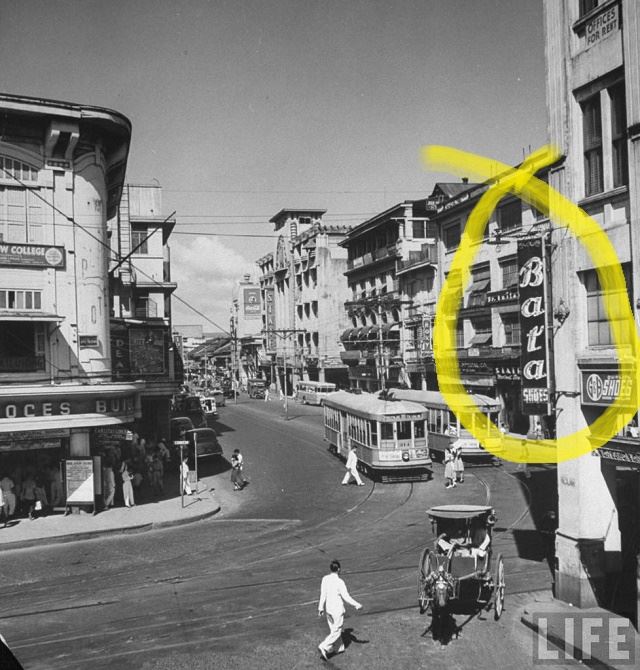
Aster was sent to the Philippines in 1941 to establish local retail stores and a shoe factory on behalf of the European-based Bata Shoe Company. Meanwhile, the Axis powers continued to gain strength as the war grew. Yet, Aster had faith in the company's leadership and was confident the war wouldn't affect him, he said.
But on December 7, 1941, the Japanese attacked Pearl Harbor and invaded the Philippines the following day. As Aster explained to his parents in a letter, four years latter while recuperating in the United States: "The Japanese were now our enemies, as much as the Germans, and we fully understood that if we wanted to regain our liberty for our fatherland, we would have to do whatever we could to contribute to their defeat."
Within weeks, Aster was one of 14 Czech* nationals who volunteered as civilian employees of the U.S. Department of War.
But while Aster has no regrets about his decision to volunteer, he said he's fortunate that he didn't know what was ahead of him.
"If I knew in advance what was waiting for me, I would've committed suicide," Aster said stone-faced. "Death would've been a wonderful escape."
Dodging bullets
Aster's first duty as a volunteer was to patrol the roads on the Bataan Peninsula and salvage as many vehicles or parts as possible.
But even as a volunteer in the Philippines, Aster said he managed to walk away from scary situations and avoid certain death multiple times.
Whether it was a 7-foot python sliding across his legs while he slept, a bad case of dysentery that hospitalized him for weeks, or bombs destroying buildings that he had just left, Aster had his fair share of close calls.
The most dangerous bullet that he dodged, though, came when he managed to escape from the Bataan Death March, where about 75,000 Filipino and American troops on Bataan were forced to make a grueling 65-mile march to Camp O'Donnell.
After U.S. forces surrendered to the Japanese on the Bataan Peninsula on April 9, 1942, everyone was ordered to head south to Marviles begin the march.
But when Aster and his friend Joseph Varak traveled south along the coastline, they happened upon a man and his disabled boat.
Varak quickly repaired the boat, and the man led them through the mine-laden waters to escape the Japanese to Corregidor, an island fortress about five miles off the coast.
More than 60 years later, Aster met Varak's daughter, Hanna Witherspoon, and one of the first things he said to her was, "Your father saved my life."
Aster believes had Varak not been able to repair the boat, he would have died during the march, like so many others.
"It's an awesome thing," said Witherspoon, who now lives in Tennessee, of her meeting Aster and what he said to her. "But it's also a sad thing because my dad didn't make it. I never saw him and he never saw me.
"I was so thankful that there was someone who knew my father and could tell me about him."
Varak died January 1945 on the Hell ship
Enoura Maru from American bombing enroute to a prison camp in Japan.
 |
| Hokusen Maru |
Hokusen Maru Hell ship
On October 1, 1944, without warning, Aster and thousands of other prisoners were loaded onto ships to go to Japan.
Along with fellow Czechs Leo Hermann and Otto Hirsh, he was put on the
Hokusen Maru (aka
Benjo Maru or
Haro Maru).
One by one, hundreds of prisoners climbed down the narrow hatch and into the cargo hold of the ship to begin their trip to Japan. Aster calls it his "decent into hell."
More than 700 prisoners were crammed into the cargo hold with little room to move – more closely resembling a giant pile of twisted bodies.
During the daytime, a single ray of light managed to pierce the darkness through a hole from above. Otherwise, it was pitch black.
Guards lowered two buckets from the hole: one filled with boiled rice and the other for human waste. Aster said the rice bucket never had enough to go around, and the bucket for waste was never big enough to service everyone.
And while everyone was starving, nothing compared to suffering from thirst, Aster said. With a tongue of sandpaper and lips of small, cracked twigs, many prisoners resorted to drinking their own urine or the blood of the dead.
Aster said he watched men go crazy.
Prisoners would fight for position or comfort, sometimes to the death, and those who lost were thrown into the pile of dead bodies, which grew by the day.
"The conditions were so terrible it is hard for me to describe them," he wrote in the letter to his parents. "We no longer behaved as human beings and the only thing that helped us survive was one's instinct for self-preservation. It shows the human can endure more than most animals."
Aster gains his freedom
After a stop in Hong Kong, the ship arrived in Formosa in early November. The Japanese, realizing that none of the survivors were healthy enough to continue the trip to Japan, imprisoned the men for two months on Formosa at
Takao. But, in early February 1945, Aster and others were herded back onto another Hell ship, the
Melbourne Maru (possibly
the
Enoshima Maru) and transported to Japan. He arrived at the
port of Moji like thousands of other POWs.
He and his two fellow Czechs were assigned to
Fukuoka #17, Omuta in Kyushu, Japan. One of Japan's oldest and largest coal mines, it was and remains owned by Mitsui. It was closed in 1997. On July 5, 2015, it was designated a
UNESCO World Heritage site "as providing a valuable picture not only of the outward appearance but also of the inner workings of an early industrial system critical to the development of modern Japan."
Aster, the shoe salesman, became a slave coal miner for Mitsui at their Miike Mine. Barely 30 miles from Nagasaki, he and many of the POWs held at camp, saw the red atomic cloud rise over the city on August 9, 1945.
Leo Hermann died not long after they arrived in the Camp. Otto Hirsh and Aster survived. At his release from Fukuoka #17, the 6-foot tall Aster weighed 90 pounds, had lost his teeth, and was blind in his left eye. Malnutrition, disease, beatings, and slave labor all took their toll. Harsh memories, lost comrades, and nightmares haunted him for decades.
After the war, Aster emigrated to Chicago, became an American citizen, and continued his career in the shoe industry. He retired to Florida in the 1990s.
NB: The above essay borrows heavily from and corrects this News-Press article.
In memoriam
At
Camp O’Donnell is a memorial plaque to the seven Czech War Volunteers who died on in captivity as POWs of Imperial Japan. The Camp was an American military facility that the Japanese turned into a concentration camp. Nearly 30,000 Filipino and American soldiers died from sickness, brutal treatment, deprivation and hardships of war between 1942 and 1945. It is now the Capas National Shrine.
 |
| Memorial to Czech Heroes at Camp O'Donnell |
One Czech died in Camp O´Donnell, five others perished in 1945 on Hell ships bound for Japan, and one succumbed to illnesses and malnutrition shortly before the end of the war in Japan at Mitsui's Miike Mine POW Camp Fukuoka #17.
Most of these men worked for the Bata Shoe Company. Others were businessmen, diplomats, and refugees from occupied Czechoslovakia.
The following is a list of Czech defenders of Bataan. It is a work in progress. We will be refining it as we our research expands.
 |
US Medal of
Freedom |
ASTER Karel (sometimes as Astor, Karl or Charles) -
Bata Shoe Company. Upon the surrender of Bataan, escaped by boat to Corregidor to continue with the USAFFE. Later forced onto the Japanese Victory March through Manila, he was imprisoned in
Cabanatuan POW Camp and Las Pinas but on October 1, 1944 moved to
Hokusen Maru Hell Ship at Manila. Transported to Japan via Hong Kong and Formosa, he was sent to Mitsui's Miike Mine serviced by POW Fukuoka Camp #17 near Nagasaki. Awarded the Philippine Medal of Victory and Philippine Defense Medal as well as on 25 April 2015 the Czech
Gratias Agit Award.
BŽOCH Jan (engineer John or Jan V. Bzoch) - Businessman, Trade Official at the Czechoslovak Consulate in Manila and representative of the Czechoslovak Foreign Institute. Survived the infamous Bataan Death March. Imprisoned at Cabanatuan Camp 3. On December 13, 1944 he was put aboard the
Oryoku Maru Hell ship to Japan. He survived the American bombing of the ship near Subic Bay, but was killed in the bombing of the
Enoura Maru on January 9, 1945 in Takao, Formosa. Received US Medal of Freedom in 1945 and Philippine Defense Medal and Medal of Liberation in 2004.
DANČÁK Karel - Bata Shoe Company. Upon the surrender of Bataan, he escaped by boat to Corregidor to continue the fight with the American. Forced onto the Japanese Victory March through Manila with those surrendered on Corregidor. On February 4, 1945, he was rescued at Bilibid Prison, Manila by American Forces. Received the US Medal of Freedom in 1945 and Philippine Defense Medal and Medal of Liberation in 2004;
Dr. FUCHS Pavel (Paul Fuchs) - Survived Bataan Death March but died shortly after in Camp O'Donnell on 25 May 1942 alongside thousands of other Filipino and American soldiers. Received US Army Medal of Freedom in 1945 and Philippine Defense Medal and Medal of Liberation in 2004.
HERMANN Leo - Upon the surrender of Bataan, escaped by boat to Corregidor to continue with the USAFFE. Later forced into the Japanese Victory March through Manila. Imprisoned in Las Pinas Camp, On October 1, 1944 moved to
Hokusen Maru Hell ship as #202, arriving in Formosa in early November 1944. Transported to Japan in January 1945, he died April 2, 1945 of beri-beri in Fukuoka Camp #17 near Nagasaki, Japan, now a World Heritage site. Received US Medal of Freedom in 1945 and Philippine Defense Medal and Medal of Liberation in 2004.
HERMAN Bedřich (Fred P. Hermann) - Bata Shoe Company. Survived Bataan Death March and was liberated at Bilibid Prison in Manila. Bedřich then emigrated to the United States where he died in an accident. Received the US Medal of Freedom in 1945.
HIRSCH Otto - Upon the surrender of Bataan, escaped by boat to Corregidor to continue with the USAFFE. Later forced into the Japanese Victory March through Manila. Imprisoned in Las Pinas prison. On 10/1/1944 transported on the Hell ship
Hokusen Maru as #203 to Japan to be a slave laborer at Mitsui's coal mine Fukuoka Camp #17 near Nagasaki. He survived and moved to California. He died October 4, 1987. Received the US Medal of Freedom in 1945.
HRDINA Jaroslav - Director of Bata Shoe in Manila. Upon the surrender of Bataan, escaped by boat to Corregidor to continue with the USAFFE. Later forced into the Japanese Victory March through Manila. Imprisoned in Cabanatuan Camp 3. On December 13, 1944 moved to
Oryoku Maru Hell ship. Survived its bombing by American forces, but killed during the bombing of the
Enoura Maru Hell ship January 9, 1945. Received Philippine Defense Medal and Medal of Liberation in 2004.
LENK Hans - a Jewish refugee from
Dachau Concentration camp with his brother Fred. Survived Bataan Death March. Rescued at Bilibid Prison, Manila by American Forces on February 2, 1945 with a serious case of tuberculosis, his immigration to the US had to be resolved by a
specific Act of Congress.
LENK Fred - a Jewish refugee from
Dachau Concentration camp. Survived Bataan Death March. Imprisoned in Cabanatuan POW Camp. On December 13, 1944 transported to
Oryoku Maru in Manila for shipment to Japan. Died during the American bombing of this Hell ship
as it left the harbor. Received the US Medal of Freedom in 1945 and Philippine Defense Medal and Medal of Liberation in 2004.
MORÁVEK Arnošt (Ernest Moravek) - businessman and Czech community leader in Manila. Upon the surrender of Bataan, escaped by boat to Corregidor to continue with the USAFFE. Later forced onto the Japanese Victory March through Manila. Imprisoned in Bilibid prison, Received the US Medal of Freedom in 1945. Returned to Czechoslovakia.
 SCHMELKES Norbert
 - deputy Consul of Czechoslovakia in Manila, businessman, after almost dying from malaria fled from Bataan Death March to Manila where he joined the resistance. He acquired a contraband shortwave radio, printed and distributed flyers. Wanted by the Japanese, he escaped to Mindanao in 1944 where he worked with the American guerrilla fighters and even though a foreigner, became US Lt. Col. After the war received US citizenship and became National Vice Commander of the American Legion. He is mentioned at length in the book
Code Name: High Pockets about wartime resistance activities in Manila.
 |
| click to order |
VAŘÁK Josef - Bata Shoe technician. Skillful technician helped a group of Czechs to flee the Japanese after the US surrender on Bataan. After repairing a boat engine he transported them to Corregidor Island to continue with the US Army there. Imprisoned in Cabanatuan prison from where he was transported on December 1, 1945 to
Oryoku Maru Hell ship. Survived its bombing by American forces, but died during the bombing of the
Enoura Maru en route to Taiwan on January 9, 1945. Received Philippine Defense Medal and Medal of Liberation.
VOLNÝ Antonín - (Anthony G., or Tony Volny or Volney) - Czech diplomat, Fluent speaker of Japanese who had worked nine years at the Czechoslovak Embassy in Tokyo. Worked for the Bata Shoe Co. in Manila before Japan's invasion. Helped US intelligence during the battle for Bataan in Mariaveles. Captured and survived the Bataan Death March. Imprisoned in Cabanatuan POW Camp from where he was transported on December 13, 1944 to the
Oryoku Maru Hell ship. Survived its bombing by American forces. Known to actively help the US prisoners and was shot by a Japanese soldier while seeking permission for the other prisoners to evacuate the ship. Died during the bombing of the
Enoura Maru en route to Taiwan on January 9, 1945 on his 41st birthday.
GERBEC Ludvík, CEO of the
Manila branch of Bata Shoe Co, should also be honored even though as a hemophiliac he was not able to volunteer. Gerbec was imprisoned by the Japanese for financing the resistance in Manila. Imprisoned in Fort Santiago prison, which was used for torture and punishment and then to Bilibid Prison where POWs were sent to die. He barely survived. He died January 2, 1960 in the United States and is
buried in Abingdon, Maryland.


 Liverpool has acknowledged its substantial role in a deplorable (and what would today be a criminal) business. Liverpool opened in 2007 the International Slavery Museum on the dock and, in 2006, a Centre for the Study of International Slavery at the University of Liverpool. Identical memorials to the victims of slavery stand on the docks of Liverpool, Richmond, Virginia, and Cotonou, Benin, linking this shared memory among them. These resources have drawn scholars and others and have in fact bolstered Liverpool’s reputation has a place where history – both good and bad – can be studied and understood.
 The U.S. does not have a vote in UNESCO. But Washington can speak to its Japanese ally to remind them of the debt they owe American veterans for defending their freedom.