Showing posts with label Oryoku Maru. Show all posts

Sunday, January 14, 2024

January 9, 1945 and The Smothers' Brothers

Pacific War historians usually remember January 9th, for General Douglas MacArthur's 1945 return to the main island of the Philippines, Luzon. In October 1944, the liberation of the Japanese-occupied archipelago had begun with the Battle of Leyte. On January 9th, the campaign moved to Luzon's Lingayen Gulf with 60,000 American troops landing to cheering Filipinos.

The last time MacArthur walked on Luzon was January 10, 1942. It was his one and only visit to the front on the Bataan Peninsula from his command center on the island of Corregidor. It is possible that this one day was chosen as the Bataan battlefield would have been relatively safe. Just days before, Japan's experienced 14th Army 48th Division (15,000 men) on Bataan had been transferred to the Dutch East Indies and replaced with the untrained reservists of the IJA's 65th Brigade (6,600 men).

Task Force 38
As MacArthur planned his return, Adm William Halsey's Third Fleet was tasked with disrupting Japanese shipping in the South China Sea, especially the Empire's resupply of the Philippines. Led by Vice Admiral John S McCain (yes, the grandfather of Senator McCain) Task Force 38 attacked Japanese shipping and air fields throughout the region. Historians call the Task Force's January 1945 operations a "rampage" toward Formosa, Luzon, and Indochina. By the time the Task Force exited the shipping lanes of the South China Sea, over 300,000 tons of enemy shipping and dozens of Japanese warships had been sunk. With follow-up air strikes against Japanese harbors and airfields in Formosa and the Ryukyu Islands, the success of the sweep was unprecedented.

This "carrier rampage" had dire consequences for the American POWs. It was on January 9th, that the Enoura Maru, a hell ship carrying 1,070 POWs from the Philippines, was bombed by planes off the USS Hornet (CV-12). The ship carrying mainly the last officers held in the Philippines was docked in Takao Harbor, Formosa and moored next to a tanker. One-third of the POWs onboard were killed or wounded. The survivors were put aboard the Brazil Maru on January 14 and transported north to the port of Moji, Japan. Only 600 or so survived the 16-day trip. MORE ON THE ENOURA MARU

Major Thomas Smothers
One of those survivors in Moji, Japan was Major Thomas Smothers, the father of the Smothers brothers. Major Smothers was CO of the 3rd Battalion of the 45th Infantry Regiment, Philippine Scouts. Major Smothers survived the Battle of Bataan and the Bataan Death March. It is possible he was among a number of 45th Inf. officers to have made the journey to the POW death Camp O'Donnell by truck. He then endured harsh captivity for nearly three years in Cabanatuan, a POW camp in the Philippines.

On 13 December 1944, he was among 1621 prisoners, the majority officers, who were marched from Bilibid Prison to Pier 7, Manila. At dusk, they were herded aboard the Oryoku Maru, divided into three groups, and forced down into three dark holds. What followed was probably the most infamous of the Hell Ship voyages. American bombers off the USS Hornet and USS Cabot sank the Oryoku Maru barely out of Manila near Subic Bay. Nearly 200 POWs died. The survivors were kept for five tortuous days on an abandoned tennis court, exposed to the tropical sun with little water, food or medical care .

On December 27, the men were packed aboard two freighters, the Enoura Maru and Brazil Maru to Formosa. The ship's holds were not cleaned of its previous cargo, horses and other livestock. Men picked through the animal waste looking for oats to eat. Although they arrived in Takao, Formosa on New Year's Day, they were not allowed to disembark, On January 9, planes from the USS Hornet again bombed the hellships. The Enoura Maru with Major Smothers aboard took direct hits. Days passed before the Japanese allowed the dead to be removed or help to the wounded. Four hundred or so who died were buried in shallow graves near the harbor's shore.

Badly wounded and suffering from the cold, starvation, and lack of medical care, Major Smothers was eventually taken to the Fukuoka #22 POW Camp administered by Sumitomo Mining to provide slave labor for one of its coal mines (the company is now part of Nippon Steel). At the Sumitomo camp medical care was poor or nonexistent during the historically cold winter of 1944/5.

On April 25, 1945, he was transported by stretcher from Fukuoka #22 to the Fukuoka City docks (Moji) for transport to Fusan, Korea [today's Busan, South Korea], and then on to Mukden, China. Some speculate that the Japanese were consolidating the American officers at Mukden to use as hostages. Smothers perished that night on the dock.

According to an oral history by British Lt. Geoffrey Pharoah Adams (available online through the Imperial War Museum. See Reel #11 with the key part of the story beginning at about 10 min 40 sec.), on April 25, 1945, he and a group of POWs were put aboard a ferry, but taken off around midnight after an air raid alarm. Adams and some 15 other comparatively healthy officers were tasked with taking off the ferry the American stretcher cases. Adams and his friend, British Lt. John Vincent Bowen, took an American Major (Smothers) off the ship. They and two of their friends from Fukuoka Camp #17 (Mitsui's Omuta coal mine), Americans Lt. Charles P. Christie, and 2nd Lt John Allen, who were also stretcher bearers, decided to stick together. "We carried the man off who was a Major, so emaciated and thin." Since they were the last off the ship the other prisoners were out of sight.

Those carrying the stretcher cases were told to lay down on the concrete beside the walls of a warehouse. It was very cold. The Major on the stretcher had a blanket over him. Because he said he felt so cold, the four men (Adams, Bowen, Christie, and Allen) laid down all around him, one on either side, one on the top, one across the bottom. "During the course of the night he died." "He just expired from hypothermia, from despair...I don't know, but he died anyway."

The next morning there was a bit of a row, because the man had died and upset the roll call figures. "We were ordered to take the dead man with us." "The Japan Japanese had handed us over to the new Japanese and we had to have the right count aboard the ferry. So we carried the poor Major back on board with us." The ship set sail. "Some of these people who had been sunk and who had had these terrible trials were hysterical." (Col. Ben Skardon, Clemson University alumnus and professor, corroborated this detail about the men being hysterical). After the ferry arrived at Pusan, Korea, "We got off the ship. We still had to take our stretcher with the Major off." Shortly, after roll call, they were told to leave him on the dock. Smothers had been assigned the Mukden POW Camp number of 2006 and appeared on the Mukden death roster with that number. There is no record indicating that his body ever left Fusan, Korea.

USS Hornet (CV-12) was awarded a Presidential Unit Citation for the its operations: January 3 – January 22, 1945 — Philippines, Formosa, China Sea, Ryukyu

###

You can read more about the Task Force 38 campaign in the new (February 28, 2023) book, South China Sea 1945: Task Force 38's bold carrier rampage in Formosa, Luzon, and Indochina (Air Campaign, 36) by Mark Lardas (Author), Irene Cano Rodríguez 96 pages.

See HERE for an interesting diary account of the USS Hornet during January 1945. An official Navy history is HERE.

Sunday, April 25, 2021

Ambassador Mondale's Cousin Jimmy

Mondale loved cigars
The passing of Walter Mondale (1928-2021) this week highlights another POW story. His first cousin James “Jimmy” Cowan died in the Philippines as a prisoner of Imperial Japan. Despite this family connection, the former U.S. Ambassador to Japan (1993-1996), Vice President (1977-81), and U.S. Senator from Minnesota (1964-1916) did very little to assist or defend the American POWs of Japan.

By all accounts, even from the Vice President, Jimmy had a tough life with little help from his aunts and uncles. He lost both parents at an early age. His mother, Claribel Hope Mondale, a sister of Mondale's father died in childbirth when Jimmy was nine. After that he never lived in any one place for long, bouncing from relatives' homes or working as a farm hand.

At 21 in January 1941, Jimmy joined the Army. He was soon on his way to the Philippines, part of the rush to build up troops. He was assigned to the U.S. Army 60th Coast Artillery Corps helping man anti-aircraft guns on Corregidor with Battery F “Flint.”  His commanding officer was Major Robert Douglass Glassburn, West Point ’32, who survived the sinking of Oryoku Maru and Enoura Maru, only to die upon arrival in Japan via the Brazil Maru on January 30, 1945 from malnutrition, exposure, and an infected leg wound.

Jimmy became a prisoner of Japan when the fortress Island fell on May 6, 1942. It can be assumed that he was herded with the 12,000 other POWs to the open-air, rocky beach of the 92nd Garage Area. For two weeks, exposed to the sun with limited water and provisions, he was held at this filthy, sinking few acres. It is possible he was given clean up duties or other tasks assigned by his capturers. 

On May 25, the survivors were ferried to Manila, made to wade ashore, and forced on the “March of Shame” five miles down Dewey Boulevard to Bilibid Prison. Over the next few days the men were loaded into train stock cars for transport to the Cabanatuan POW camp north of Manila. There they joined the survivors of Camp O’Donnell, many of whom endured the Bataan Death March. It is also unknown what assignments or illnesses he had during this period of his captivity.

In mid-December 1944, the Japanese rounded up all ambulatory POWs in the Philippines for transport to Japan. Some researchers believe that this was in preparation to locate all the POWs together in Japan or China to use as hostages in peace negotiations. More than 1,600 men were loaded in the hold of the passenger ship the Oryoku Maru in Manila on December 13, 1945.

By the time the ship got underway and made the 60-some miles up to Subic Bay at least 50 POWs died packed shoulder to shoulder in the dark, sweltering containers. On December 14 and 15, American planes from the USS Hornet and USS Cabot attacked and sank the ship. The first bombs destroyed the forward hold killing 200 men. Among them was Pvt Cowan.

Jimmy’s body rests with the sea. His name is inscribed on the Tablets of the Missing at the American Cemetery in Manila. If he had survived the attack, he would have had to endure a week on a barren, sun exposed tennis court before being put aboard the Enoura Maru or Brazil Maru to Formosa (Taiwan). If he was aboard the Enoura Maru, the same group of planes from the USS Hornet would have bombed the ship while in port. Four hundred men died from that attack. 

The survivors were consolidated on board the Brazil Maru for the trip north to Japan’s frigid port of Moji. Of the 1,619 POWs who had boarded the Oryoku Maru in Manila, the Philippines, less than 600 survived to arrive in Moji, Japan on January 30, 1945. Of those, nearly 200 died in Japanese POW camps in Japan, Korea, and China, with most dying in the first few days at Moji. Only 403 men of the original 1,619 survived to be liberated in August 1945.

I became involved in Pvt Cowan’s story upon reading about the discovery on Corregidor, and subsequent return, of his dogtags to his sister in 2013. The story noted that their mother was former Ambassador Mondale’s aunt. This connection to a soldier on Corregidor was something no one had ever mentioned.

This was of personal interest, because in the spring of 1974, I was one of the first two female Exeter-Andover Washington interns (I was among the first classes of girls to attend Exeter). I was assigned to Mondale’s Senate office. Subsequently, I interned or worked for him while he was vice president and at his pre-presidential campaign law/consulting firm. 

Thus, at a meeting in Washington, I approached him and asked him about his cousin. At first startled that someone knew this connection, he said yes that Jimmy was his cousin who he believed had died on the Death March. Most people think if someone fought in the Philippines they were on the Death March, which is generally not true. 

I said Jimmy was not on the March and offered to put together some basic facts about his cousin. He was a bit hesitant, but agreed. Mr. Mondale, I discovered, had a very fraught relationship with his family. The Depression took a toll on family ties and he was estranged from his brothers. 

In 2018, the American Defenders of Bataan and Corregidor Memorial Society was planning a memorial ceremony and booklet for the placement of a memorial stone in the National Memorial Cemetery of the Pacific in Hawaii to the men who perished on the Enoura Maru. It occurred to me that Mondale might see the booklet as a way to finally and properly remember his cousin.

Thus, I approached him again asking if he wanted a memorial page to Jimmy and offered to write it for his approval. It was not an easy yes for Mondale. He never asked if he could make a donation and hesitated to even review the draft. Nonetheless, he approved the draft shortly before the booklet was to go to press. It is significant that he did.

As Ambassador to Japan and afterward, Mr. Mondale was a keen and well-rewarded advocate for Japan. At two critical junctures he failed his cousin and undermined progress toward justice for the POWs of Japan. In 1995, when the Japanese government under Prime Minister Tomiichi Murayama was putting together the Peace Friendship and Exchange Initiative, the U.S. State Department and Embassy in Tokyo, under his watch,  did nothing to advocate for American POWs to be included in this extensive, multi-million dollar outreach program for Allied POWs. Thus, they were noticeably excluded.

The American POWs were not offered any program until they, themselves, advocated with the Japanese Embassy and the Obama Administration. Trips to Japan for former POWs did not begin until 2010. The result was that only a handful of POWs who survived to their 90s could benefit from Japan’s conciliatory effort. Some of the good feeling generated by the trips was undone by Abe’s April 29, 2015 [Hirohito’s birthday] speech to a joint meeting of Congress where he thanked the POWs for their “tolerance.”

In 2001, a group of American POWs of Japan were suing in the courts and advocating in Congress for a right to sue the 60-some Japanese corporations that benefited from their slave labor. Mondale worked closely with the Bush Administration and the Japanese Embassy to tell legislators and opinion leaders that allowing compensation for the POWs would abrogate the 1951 San Francisco Peace Treaty and undermine the entire U.S. treaty system. 

Although the Dutch and others had long abrogated the treaty with their own side deals; and the issue of corporate compensation could easily be argued, especially after the 2000 Berlin Accords establishing payments to those who were slave laborers for German companies, the White House and the Japanese prevailed. On September 25, 2001, Mondale and former ambassadors to Japan Thomas S. Foley and Michael H. Armacost issued an op ed in the Washington Post, “Pacific Deal” mirroring a letter circulating in Congress by former Secretary of State George Shultz opposing legislation that would permit POW suits against Japan. The essay repeated Shultz, “I have always supported the best of treatment for our veterans, especially those who were involved in combat. If they are not being adequately taken care of, we should always be ready to do more -- but let us not unravel confidence in the commitment of the United States to a treaty properly negotiated and solemnly ratified with the advice and consent of the U.S. Senate.” 

The campaign against the POWs was successful. Senator Daniel Inouye and his friend Senator Ted Stevens engineered killing in a November 8, 2001, 4:00 am conference meeting an amendment to the Departments of Commerce, Justice, and State, the Judiciary, and related agencies Appropriations Act, 2002, that would have prevented the Departments of State and the Justice from opposing POW lawsuits. And the Bush State Department filed an amicus brief with the U.S. Supreme Court. Douglas Hallward-Driemeier, the young lawyer and Rhodes Scholar who composed the brief, was even awarded the Department of State’s “Superior Honor Award” in recognition of successful representation of the United States in numerous appeals involving World War II-era claims (2003). 

One of the first things I learned in Senator Mondale’s office was when I was tasked to escort the Senator to a meeting. I was panicked as he seemed to refuse to gather himself to get to the meeting on time. When I worried he was going to be late, he put down his cigar and told the teenage me flatly, that “the important people are always late.”

Yes, Mondale was late to remember his cousin who died in service to his country. But, in the end, he did. Whereas the Japanese have escaped responsibility, he eventually embraced it.

Thursday, December 12, 2019

75th Anniversary of the Palawan Massacre and Oryoku Maru Sinking


This coming Saturday marks the 75th Anniversaries of the Palawan Massacre and the sinking of the hellship Oryoku Maru off Subic Bay.

At noon on December 14, 1944, 150 POWs on Palawan Island in the Philippines were herded into their recently constructed air raid trenches. Most had been on the island since the summer of 1942 to build by hand an airfield for the Imperial Japanese Army. Quickly, the Japanese troops doused them with buckets of airplane fuel and set them afire with flaming torches, followed by hand grenades and machine gun fire. Miraculously, eleven men escaped to the sea and were rescued by Filipino guerrillas.

The airfield that the POWs built is used today as the Antonio Bautista Air Base, an important anchor of the U.S.-Philippines alliance. In a letter to Assistant Secretary of State David R. Stillwell, I suggested that the U.S. use this anniversary to memorialize the POWs with our Filipino allies to highlight our deep and historic military ties. I have not heard back.

On the same day, 600 miles north of Palawan, off Subic Bay, US Navy aircraft from the USS Hornet attacked the hellship Oryoku Maru. The day before, December 13, 1944, the ship had left Manila with 1,619 POWs in its cargo holds. Two hundred POWs died in the attack. Survivors swam ashore dodging bullets and sharks to endure a week on an abandoned tennis court in the tropical sun with limited food and water. The ordeal of the surviving POWs continued through a hellship voyage on the Enoura Maru and Brazil Maru from Luzon to Takao Harbor, Formosa (Taiwan). The Enoura Maru upon arriving at Takao on January 9, 1945 was sunk by aircraft again from the USS Hornet

Survivors were eventually consolidated on the Brazil Maru for the voyage from Takao to Moji, Japan. About 600 POWs reached Japan, but many of those died soon after arrival. Most of the remaining POWs were shipped to China via Korea and liberated at Mukden. One of the men who died en route to Korea in April 1945 was the father of the Smothers Brothers, US Army Major Thomas Bolyn Smothers, Jr. He was a West Point Graduate and a member of the 45th Infantry Regiment, Philippine Scouts. In the end, barely 400 POW made it to liberation.

Thus, today we remember these brave souls who suffered and perished so far from home. The airfield they built is one of the sites of our Enhanced Defense Cooperation Agreement with the Philippines that helps bind our historic alliance with the Philippines. Most of the POWs murdered at Palawan are buried in Jefferson Barracks National Cemetery, Missouri. In Hawaii, there is a memorial stone to the Enoura Maru dead at the National Memorial Cemetery of the Pacific and a memorial to all who endured the hellships stands at Subic Bay in the Philippines. Never Forgotten

Put a virtual flower at the graves of some of the men massacred on Palawan HERE.

Put a virtual flower at the graves of some of the men who died during the Orokyu Maru's multiple ship voyage to Japan HERE.

Sunday, October 07, 2018

POW Descendants undertake trip of reconciliation and healing

Hellship Hokusen Maru
On October 7, 2018, seven descendants of American POWs of Japan who were surrendered on the Philippines in April and May 1942, left for a week in Japan as guests of the Japanese government. Below is the ADBC-MS press release and a link to full biographies of the POWs represented. We wish them well.

Seven children and descendants of POWs are visiting Japan this week as guests of the Japanese government. They are the 10th delegation of the U.S.-Japan POW Friendship Program to promote reconciliation and remembrance between the two countries. This program began in 2010.

The families represent five American POWs of Japan who were members of the U.S. Army, U.S. Coast Artillery Corps, and U.S. Army Air Corps. Japan attacked the Philippines and other American Pacific territories hours after their surprise air raid on Pearl Harbor, December 7, 1941. All the men fought to defend the Philippines against invading Japanese forces and all endured years of brutal captivity. Four survived the Bataan Death March, four were slave laborers for Japanese companies, and one perished in the bombing of the “hellship” Enoura Maru in Takao Harbor, Formosa.

The delegation is composed of:

LINDA, 70, and DAVE ANDERSON, 70, of El Paso, Texas are the daughter and son-in-law of the late Clarence Delbert Neighbors, a Private with the U.S. Army Air Corps, 20th Air Base Group, 28th Materiel Squadron at Nichols Field. He survived the Bataan Death March, work details on the Philippines, a hellship to Manchuria, slave labor for Mitsubishi at Mukden, and slave labor for Mitsui at their lead mine in Kamioka.

CAROLYN BUNCH DIAZ, 82, of Santa Ana, California and CATHY MATZEK, 55, are the daughter and granddaughter of the late Wilbur J. Bunch, who was a Master Sergeant with the U.S. Army, 54th Signal Maintenance Company (Aviation) stationed at Ft. Stotsenburg. He survived the Bataan Death March, work details at the Cabanatuan POW Camp, and the sinking of the hellship Oryoku Maru. He died January 9, 1945 from the bombing of the hellship Enoura Maru in Takao Harbor, Formosa.

ANNA KEEVER LYON, 69, of Greensboro North Carolina is the daughter of the late Joe W. Keever, a Staff Sergeant with 60th Coast Artillery Corps of the U.S. Army stationed on Corregidor. He survived imprisonment on Corregidor and at Cabanatuan as well as a hellship to Manchuria to be a slave laborer for Mitsubishi at Mukden.

DAVID A. TOPPING, JR, 65, of Chestertown, Maryland, is the son of the late David A. Topping, a Private with the 27th Bomb Group (Light), 91st Bomb Squadron. He survived the Bataan Death March, work details on the Philippines, hellships to Japan, and slave labor for Kawasaki Steel in Maibara.

JAMES WRIGHT, 82, of Madison, Alabama is the son of the late William R. Wright, a Tech Sergeant with the 24th Pursuit Group, 17th Pursuit Squadron. He survived the Bataan Death March, work details on the Philippines, a hellship to Japan and slave labor for Meiji Mining in Keisen.

Full profiles of the POWs can be found HERE

They will visit the sites of their loved ones’ imprisonment and rescue as well as a number of Japanese cultural properties.

This is the 10th trip of this much appreciated Japanese government-funded program of remembrance and reconciliation. Jan Thompson, president of the American Defenders of Bataan and Corregidor Memorial Society that works with the U.S. State Department to identify participants, applauded the inclusion of POW children and grandchildren in the program.

Ms. Thompson said, “It confirms Japan’s commitment to overcoming its dark history and shows their modern understanding that the traumas of past atrocities and war crimes are intergenerational and enduring. The goodwill and healing resulting from these trips are a model for more Japanese efforts to acknowledge and console Imperial Japan’s wartime victims. The result strengthens the personal ties that undergird the U.S.-Japan Alliance.”

Saturday, July 07, 2018

Finally, a funeral for the Rabbi of Cabanatuan

On Friday, June 29, 2018 at Arlington National Cemetery the Kaddish--the Jewish prayer to remember the dead--was finally and officially chanted for Army Corps of Engineers Master Sgt. Aaron Kliatchko, the Rabbi of Cabanatuan.  Although there was no body to occupy his grave, a tombstone now stands to honor him. After the formal military funeral, which included a Rabbi, a Priest, and the Joint Force Headquarters-National Capital Region U.S. Army Military District of Washington Command Chaplain Col. Terry Austin, a reception was held at the National Museum of Jewish Military History in Washington, DC,


Aaron Kliatchko
died on December 31, 1944 aboard the Japanese hellship Brazil Maru as it arrived in Takao Harbor, Formosa from the Philippines bringing the last of the Allied POWs from the Philippines to Japan. His remains have never been accounted for.

Kliatchko was born in 1887 to an Orthodox Jewish family in Minsk, the capital of today’s Belarus. As a teenager he was forced to serve in the Russian Imperial Army during the Russo-Japanese War (1904-05). He was only 17 when he became a prisoner of war of Imperial Japan.

After the war, he studied to become a Cantor, a singer of Jewish liturgical music. Instead, in 1907, he emigrated to the United States. Finding work in the lower East Side of Manhattan must have been a challenge. Thus, in February 1910, he enlisted in the U.S. Army at the Fort Slocum, New York recruiting depot. He was assigned to the Coastal Artillery Corps and stationed in New London, Connecticut and at Fort Terry, New York

During his enlistment and after his discharge in February 1913, Kliatchko studied for and completed an engineering correspondence course. This distinction allowed him to reenlist in the U.S. Army in December 1914 with Army Corps of Engineers. He had become a U.S. citizen in July 1913.

Kliatchko’s records show that he was assigned to the First Battalion, Company C at Washington Barracks, Washington, DC where he became a Corporal in May 1915. The First Battalion became the First Engineers with the U.S. entry into World War I.

It is unclear where he was stationed when the U.S. entered World War I in April 1917. He spoke of being sent to France in June 1917 with the first engineers to join the American Expeditionary Forces. While teaching math to young neighbors on the Philippines, Kliatchko retold many stories of battles in France, including the Battle of Argonne Forest, the final Allied offensive of the War, which ended November 11, 1918. His accounts were so vivid that many may have thought he was there.

There is a record, however, that he was aboard the troop transport USAT Thomas in November 1915 to the Philippine Islands. On December 7, 1917, he was promoted in the Philippines to Sergeant First Class of Company A, 3rd Engineers. This regiment was stationed there to help modernize the fortress island of Corregidor in Manila Bay and the infrastructure of the Philippine Islands, a territory of the United States since 1898.

On October 15, 1918, shortly before the end of WWI, he was promoted to Master Engineer, Junior Grade. Discharged in August 1919, Kliatchko remained in the Philippines where he worked with the then-American construction and engineering company Atlantic Gulf & Pacific Co (today’s AG&P). He was the project engineer for the Angat Dam that supplies water to Metro Manila and irrigation in Bulacan.

Kliatchko retired in the early 1930s to become a gentleman farmer. He married and raised a family of ten. When the Japanese invaded the Philippines in December 1941, the former solider, now 55, reportedly volunteered as an American intelligence agent under the codename “K.V.” In March 1942, he left his family and joined American troops fighting the invading Japanese on the Bataan peninsula. There he re-enlisted with the U.S. Army and was designated the rank of Master Sergeant with the Army Corps of Engineers. Some records simply note he was a “surveyor,” to protect his identity.

He was on Bataan when U.S. forces were surrendered on April 9, 1942 and, at 55, for the second time he became a prisoner of Imperial Japan. Kliatchko then survived one of the most infamous war crimes of WWII, the Bataan Death March. He also survived the squalid, makeshift POW Camp O’Donnell where men died at the rate of 300 per day.

In June 1942, after the Japanese released the captured Filipino soldiers, the surviving American POWs were moved to the Cabanatuan Prison Camp. Conditions were better than at O’Donnell, but not by much. Food, clothing, water, and medicine remained scarce. There he remained until December 1944.

According to records, as of June 1943, Cabanatuan had 121 Jewish prisoners. Kliatchko, who had been trained as a Cantor, found a calling to help lead Jewish services and funerals. With his long white beard and impressive bass voice, he soon became known as the “Rabbi of Cabanatuan.” His singing of the Jewish prayers comforted Jew and Gentile alike.

At the camp, the Japanese assigned him to shepherd carabaos (water buffalo) that transported supplies from the town to the POW camp. The task gave him the opportunity to smuggle notes, money, and medicines for his fellow prisoners. Unfortunately, his Japanese captors eventually discovered his courier service and subjected him to months of solitary confinement with reduced rations.

On December 13, 1944, Kliatchko was among more than 1,600 prisoners, mostly officers and medical personnel, who were boarded in the holds of the hellship Oryoku Maru, destined for slave labor in Japan. It was the last hellship from the Philippines to Japan. Barely a day out of Manila, near Subic Bay, American bombers off the carrier USS Hornet sunk the ship. Dodging bullets from Japanese soldiers, the survivors made it to shore. There they were kept a week on an abandoned tennis court exposed to the tropical sun with little water and no food.

Finally moved inland and then to a new dock north of Subic Bay, the men were put aboard two other hellships to continue the voyage north. Kliatchko died from his wounds on December 31, 1944 aboard the Brazil Maru as it arrived in Takeo Harbor, Formosa. 

It is unknown where his body rests. Ordinarily, the Japanese, with no ceremony, would throw the dead into the sea. It is possible, however, his remains are among those buried on shore in Formosa after the American bombing of the Enoura Maru.

These men were disinterred after the war and reburied in graves marked “Unknowns” in the National Memorial Cemetery of the Pacific in Hawaii. 

Less than 600 of the original shipment prisoners from the Oyroku Maru survived to voyage’s destination of Moji, Japan on January 30, 1945. Many died of wounds and exposure as the days became increasingly cold. At least 100 died the first few days on Japanese soil. Those remaining were soon put on new hellships to Korea and then taken by train to a POW camp at Mukden in northern China. 

Barely 400 of these men survived the war. Some believe the Americans were taken to China not to be slave laborers, but to be hostages. All the senior military officials from surrendered Allied forces were moved to or near Mukden by 1945. There is no extant documentation, however, of this theory.

In 1948, Master Sgt. Kliatchko was posthumously awarded the Medal of Freedom, the highest honor the U.S. can give a civilian. 

Wednesday, January 31, 2018

Remembering the Oryoku Maru

Oryoku Maru sinking off Subic Bay
Congressional Record Volume 164, Number 20 (Tuesday, January 30, 2018)] [
Extensions of Remarks] [Page E120]

REMEMBERING THE VOYAGE OF THE ORYOKU MARU
HON. MIKE BOST (R-IL)
  
Mr. BOST. Mr. Speaker, I ask my colleagues to pause to remember the American POWs who arrived in Japan 73 years ago today. These heroes were survivors of the infamous "death cruise" of the Oryoku Maru. The men were prisoners since the American territory fell to the Japanese in the spring of 1942. Of the over 1,600 soldiers, sailors, airmen, Marines, and civilians who left Manila on December 13, 1944, barely 400 arrived at the port of Moji, Japan on January 30, 1945. "Hell Ship"' is simply the only way to describe the vessels and conditions the POWs endured. These men were packed in dark holds of freighters, usually with coal or animal waste. They were given little water, food, or fresh air. Sanitation was non-existent. Men driven insane were quickly and brutally quieted. I became familiar with this story by assisting my constituent, Ms. Jan Thompson, who is the daughter of a survivor of the Oryoku Maru journey and is the President of American Defenders of Bataan and Corregidor Memorial Society. Her father, Robert E. Thompson, was a Navy Pharmacist's Mate who had been assigned to a submarine tender in Manila Bay, the USS Canopus. He was surrendered on Corregidor. It has been my honor to help preserve the memory of the American POWs of Japan and of their experience aboard the Hell Ships to Japan. The 400-plus men who died during the stop at Takao Harbor, Formosa are currently buried in 20 graves marked simply as "Unknowns" at Hawaii's National Memorial Cemetery of the Pacific. Soon there will be a memorial plaque on the Memorial Walk at this Cemetery to these men who died aboard the Enoura Maru in Formosa on January 9, 1945, which was one of the Hell Ships that took part in the Oryoku Maru journey.

Wednesday, December 14, 2016

POW Families speak in Japan


On December 7, 2016, the Institute for Contemporary Asian Studies at Temple University's Japan Campus in Japan hosted its 6th dialogue with former POWs. This time, no POWs were able to participate. Instead, widows and children traveled to Japan to see where their loved ones were slave laborers.

There is an assumption that reconciliation has been achieved and that it is a distinct end point. None of this is true. Reconciliation is a process and a journey. The trip, decades too late and hard fought for, is merely a beginning. Speaking in public of their painful family history was very difficult for these women.

The introduction of the panel members was abysmal. Here you can find a link to fuller, researched profiles of the POWs discussed.

Thursday, December 08, 2016

Eighth POW delegation to Japan this week

Widows and Children of POWs of Japan
 Undertake trip of reconciliation
Pearl Harbor Week

Nine widows and children of American former prisoners of war of Imperial Japan are visiting Japan this week as guests of the Japanese government. They are the 8th delegation of the U.S.-Japan POW Friendship Program to promote reconciliation between the two countries. This successful program began in 2010.

The families represent five American POWs of Japan who were members of the U.S. Army Coast Artillery Corps, U.S. Army Quartermasters Corps, 4th Marines, and U.S. Army Air Corps. Japan attacked the Philippines and other American Pacific outposts hours after their surprise air raid on Pearl Harbor. All the men fought on Corregidor in the Philippines to defend the then-American colony against invading Japanese forces. They were surrendered in May 1942 after a five-month battle and all endured over three years of brutal captivity.

The delegation is composed of:

ROSE HENDERSON BRIDGES, 87, of Spartanburg, South Carolina and her daughter Mona Woodring. Mrs. Bridges is the widow of Talmadge Scott Bridges who served on Fort Hughes and Corregidor in the Philippines with the U.S. Army 59th Coast Artillery Corps (CAC). His last POW camp, Osaka #5-B Tsuruga POW Camp, was near the Tsuruga Port on the Sea of Japan were he was a stevedore for Tsuruga Transportation Company (today’s Tsuruga Kairiku Unyu K.K.).

KRISTIN DAHLSTROM, 78, of Des Plains, Illinois. She is the daughter of William Jesse Ellis, Jr. a civilian volunteer to the U.S. Army. Quartermaster Corps. He survived the infamous December 1944 “Hell ship” Oryoku Maru voyage to Japan only to die February 1945 in Japan at Fukuoka #3 Yahata/Tobata/Kokura POW Camp (Nippon Steel, today’s Nippon Steel and Sumitomo Metal).

DORIS ELLIS DeVIVO, 90, of Council Bluffs, Iowa, and her granddaughter, Mackenzie Schnitker. Mrs. DeVivo is the widow of Frank DeVivo who served on Corregidor in the Philippines with the U.S. Army 59th Coast Artillery Corps (CAC). He was liberated in northern Japan at Sendai #8B Kosaka POW Camp associated with copper mine and smelter owned by Fujita-gumi Construction Company (today’s Dowa Holdings Co., Ltd.).

RUTH NICHOLS WILBER SHEAVES, 89, of Colorado Springs, Colorado and her daughter, Linda Van Skike. Mrs. Sheaves is the widow of Charles “Ted” Owen Wilber who served with the U.S. Army Air Corps 19th Bomb Group at Clark Field on the Philippines. Mr. Wilber was liberated from the Tokyo 2B Kawasaki aka Mitsui Camp #2 POW camp know as the “Mitsui Madhouse.”

PATRICIA THOMPSON, 84, of Colorado Springs, Colorado and her daughter, Maureen Cole. Mrs. Thompson is the widow of Clarence A. Thompson who fought on Corregidor with the 4th Marines, the China Marines. He was liberated from Fukuoka-7B-Futase POW camp in southern Japan where he mined coal for Nittetsu-Futase Tanko Kaisha (today’s Nittetsu Mining Co., Ltd.).

Full profiles of the POWs represented can be found HERE.

They will visit the sites of their loved ones’ imprisonment and rescue as well as several Japanese cultural properties.

This is the 8th trip of this much appreciated Japanese government-funded program of remembrance and reconciliation. Jan Thompson, president of the American Defenders of Bataan and Corregidor Memorial Society that works with the U.S. State Department to identify participants, welcomes the inclusion of POW widows and children in the program.

Ms. Thompson said, “It confirms, as does Prime Minister’s Shinzo’s Abe’s upcoming visit to the Pearl Harbor memorial, Japan’s commitment to overcoming its dark history and shows a modern understanding that the traumas of past atrocities and war crimes are intergenerational. The goodwill and healing resulting from these trips is a model for more Japanese efforts to acknowledge and console its victims. The result strengthens the personal ties that undergird the U.S.-Japan Alliance.”
  
###

Thursday, July 09, 2015

Annals of Mitsui's Miike Mine: Karel Aster


Karel Aster
For nearly four years, Karel Aster was forced into slave labor. He was a prisoner of war in a series of Japanese POW camps on the Philippines and Japan. His last six months were in a Mitsui-owned coal mine in Omuta, Japan. Without mention of Aster's ordeal, this mine became a UNESCO World Heritage site on July 5, 2015.

Aster suffered countless beatings, starvation and illness, and witnessed hundreds of killings. All because he volunteered to fight for the freedom of his homeland. He knew he had to fight somewhere against fascism, and if not in Europe, it was the Philippines.

Aster, 95, is the last survivor of 14 Czech nationals who volunteered for the U.S. Army in the Philippines when Japan invaded the Philippines Islands in December 1941* He was presented with an award from the Central European nation for his work to benefit society, for the promotion of friendship among nations and for the promotion of the Czech Republic around the world, documents from the Czech Republic say. In short, it was for bravery and valor.

“The conditions were so terrible it is hard for me to describe them. We no longer behaved as human beings and the only thing that helped us survive was one’s instinct for self-preservation. ” said Florida resident Karel Aster.

The Czech ambassador to the U.S., Petr Gandalovic, presented him with the Gratias Agit award on April 23, 2015 in Captiva, Florida.

Aster at 20
The Czech government held an award presentation last year in Prague where it "rolled out the red carpet for three days," said Michael Murray, whose wife Jenny is Aster's granddaughter. Aster was unable to make the trip, so Gandalovic vowed to travel to Captiva, Florida to hand-deliver the award, Murray said.

But, frankly, Aster said he doesn't know what makes him special.

"I'm surprised there's all this fuss after 70 years," he said. "It's an honor, but I don't know why he chose to come here and honor me with his visit."

Aster with the Ambassador
Like millions of people who came back from World War II, Aster grappled with memories of his departed friends and struggled with reoccurring nightmares of the horrors he experienced.

And like thousands of other POWs in Imperial Japan's POW camps, he was pushed into backbreaking labor and forced into some of the most inhumane conditions people can imagine.

However, Aster is very different in his own way.

He was not a trained soldier, nor was he persecuted for faith or ideals. He was just a 21-year-old in the wrong place at the wrong time.

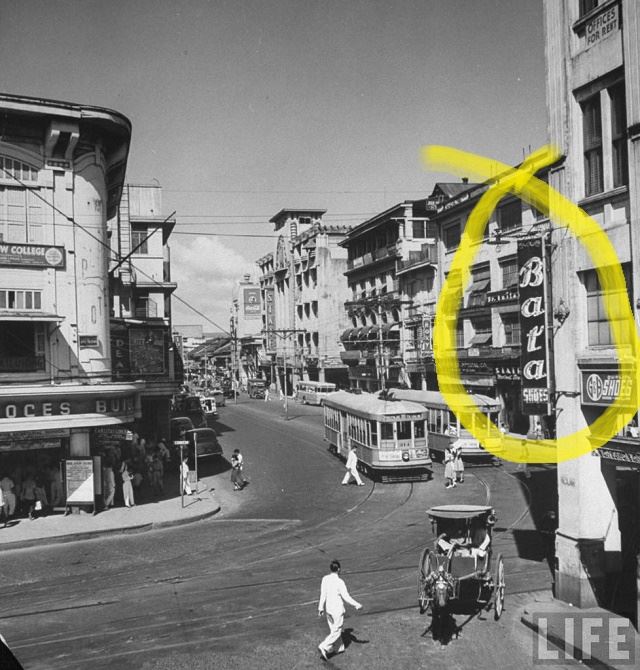
Aster was sent to the Philippines in 1941 to establish local retail stores and a shoe factory on behalf of the European-based Bata Shoe Company. Meanwhile, the Axis powers continued to gain strength as the war grew. Yet, Aster had faith in the company's leadership and was confident the war wouldn't affect him, he said.

But on December 7, 1941, the Japanese attacked Pearl Harbor and invaded the Philippines the following day. As Aster explained to his parents in a letter, four years latter while recuperating in the United States: "The Japanese were now our enemies, as much as the Germans, and we fully understood that if we wanted to regain our liberty for our fatherland, we would have to do whatever we could to contribute to their defeat."

Within weeks, Aster was one of 14 Czech* nationals who volunteered as civilian employees of the U.S. Department of War.

But while Aster has no regrets about his decision to volunteer, he said he's fortunate that he didn't know what was ahead of him.

"If I knew in advance what was waiting for me, I would've committed suicide," Aster said stone-faced. "Death would've been a wonderful escape."

Dodging bullets
Aster's first duty as a volunteer was to patrol the roads on the Bataan Peninsula and salvage as many vehicles or parts as possible.

But even as a volunteer in the Philippines, Aster said he managed to walk away from scary situations and avoid certain death multiple times.

Whether it was a 7-foot python sliding across his legs while he slept, a bad case of dysentery that hospitalized him for weeks, or bombs destroying buildings that he had just left, Aster had his fair share of close calls.

The most dangerous bullet that he dodged, though, came when he managed to escape from the Bataan Death March, where about 75,000 Filipino and American troops on Bataan were forced to make a grueling 65-mile march to Camp O'Donnell.

After U.S. forces surrendered to the Japanese on the Bataan Peninsula on April 9, 1942, everyone was ordered to head south to Marviles begin the march.

But when Aster and his friend Joseph Varak traveled south along the coastline, they happened upon a man and his disabled boat.

Varak quickly repaired the boat, and the man led them through the mine-laden waters to escape the Japanese to Corregidor, an island fortress about five miles off the coast.

More than 60 years later, Aster met Varak's daughter, Hanna Witherspoon, and one of the first things he said to her was, "Your father saved my life."

Aster believes had Varak not been able to repair the boat, he would have died during the march, like so many others.

"It's an awesome thing," said Witherspoon, who now lives in Tennessee, of her meeting Aster and what he said to her. "But it's also a sad thing because my dad didn't make it. I never saw him and he never saw me.

"I was so thankful that there was someone who knew my father and could tell me about him."

Varak died January 1945 on the Hell ship Enoura Maru from American bombing enroute to a prison camp in Japan.

Hokusen Maru
Hokusen Maru Hell ship
On October 1, 1944, without warning, Aster and thousands of other prisoners were loaded onto ships to go to Japan.

Along with fellow Czechs Leo Hermann and Otto Hirsh, he was put on the Hokusen Maru  (aka Benjo Maru or Haro Maru).

One by one, hundreds of prisoners climbed down the narrow hatch and into the cargo hold of the ship to begin their trip to Japan. Aster calls it his "decent into hell."

More than 700 prisoners were crammed into the cargo hold with little room to move – more closely resembling a giant pile of twisted bodies.

During the daytime, a single ray of light managed to pierce the darkness through a hole from above. Otherwise, it was pitch black.

Guards lowered two buckets from the hole: one filled with boiled rice and the other for human waste. Aster said the rice bucket never had enough to go around, and the bucket for waste was never big enough to service everyone.

And while everyone was starving, nothing compared to suffering from thirst, Aster said. With a tongue of sandpaper and lips of small, cracked twigs, many prisoners resorted to drinking their own urine or the blood of the dead.

Aster said he watched men go crazy.

Prisoners would fight for position or comfort, sometimes to the death, and those who lost were thrown into the pile of dead bodies, which grew by the day.

"The conditions were so terrible it is hard for me to describe them," he wrote in the letter to his parents. "We no longer behaved as human beings and the only thing that helped us survive was one's instinct for self-preservation. It shows the human can endure more than most animals."

Aster gains his freedom
After a stop in Hong Kong, the ship arrived in Formosa in early November. The Japanese, realizing that none of the survivors were healthy enough to continue the trip to Japan, imprisoned the men for two months on Formosa at Takao. But, in early February 1945, Aster and others were herded back onto another Hell ship, the Melbourne Maru (possibly  the Enoshima Maru) and transported to Japan. He arrived at the port of Moji like thousands of other POWs.

He and his two fellow Czechs were assigned to Fukuoka #17, Omuta in Kyushu, Japan. One of Japan's oldest and largest coal mines, it was and remains owned by Mitsui. It was closed in 1997. On July 5, 2015, it was designated a UNESCO World Heritage site "as providing a valuable picture not only of the outward appearance but also of the inner workings of an early industrial system critical to the development of modern Japan."

Aster, the shoe salesman, became a slave coal miner for Mitsui at their Miike Mine. Barely 30 miles from Nagasaki, he and many of the POWs held at camp, saw the red atomic cloud rise over the city on August 9, 1945.

Leo Hermann died not long after they arrived in the Camp. Otto Hirsh and Aster survived. At his release from Fukuoka #17, the 6-foot tall Aster weighed 90 pounds, had lost his teeth, and was blind in his left eye. Malnutrition, disease, beatings, and slave labor all took their toll. Harsh memories, lost comrades, and nightmares haunted him for decades.

After the war, Aster emigrated to Chicago, became an American citizen, and continued his career in the shoe industry. He retired to Florida in the 1990s.

NB: The above essay borrows heavily from and corrects this News-Press article.

In memoriam
At Camp O’Donnell is a memorial plaque to the seven Czech War Volunteers who died on in captivity as POWs of Imperial Japan. The Camp was an American military facility that the Japanese turned into a concentration camp. Nearly 30,000 Filipino and American soldiers died from sickness, brutal treatment, deprivation and hardships of war between 1942 and 1945. It is now the Capas National Shrine.

Memorial to Czech Heroes at Camp O'Donnell
One Czech died in Camp O´Donnell, five others perished in 1945 on Hell ships bound for Japan, and one succumbed to illnesses and malnutrition shortly before the end of the war in Japan at Mitsui's Miike Mine POW Camp Fukuoka #17.

Most of these men worked for the Bata Shoe Company. Others were businessmen, diplomats, and refugees from occupied Czechoslovakia.

The following is a list of Czech defenders of Bataan. It is a work in progress. We will be refining it as we our research expands.

US Medal of
Freedom
ASTER Karel (sometimes as Astor, Karl or Charles) - Bata Shoe Company. Upon the surrender of Bataan, escaped by boat to Corregidor to continue with the USAFFE. Later forced onto the Japanese Victory March through Manila, he was imprisoned in Cabanatuan POW Camp and Las Pinas but on October 1, 1944 moved to Hokusen Maru Hell Ship at Manila. Transported to Japan via Hong Kong and Formosa, he was sent to Mitsui's Miike Mine serviced by POW Fukuoka Camp #17 near Nagasaki. Awarded the Philippine Medal of Victory and Philippine Defense Medal as well as on 25 April 2015 the Czech Gratias Agit Award.

BŽOCH Jan (engineer John or Jan V. Bzoch) - Businessman, Trade Official at the Czechoslovak Consulate in Manila and representative of the Czechoslovak Foreign Institute. Survived the infamous Bataan Death March. Imprisoned at Cabanatuan Camp 3. On December 13, 1944 he was put aboard the Oryoku Maru Hell ship to Japan. He survived the American bombing of the ship near Subic Bay, but was killed in the bombing of the Enoura Maru on January 9, 1945 in Takao, Formosa. Received US Medal of Freedom in 1945 and Philippine Defense Medal and Medal of Liberation in 2004.

DANČÁK Karel - Bata Shoe Company. Upon the surrender of Bataan, he escaped by boat to Corregidor to continue the fight with the American. Forced onto the Japanese Victory March through Manila with those surrendered on Corregidor. On February 4, 1945, he was rescued at Bilibid Prison, Manila by American Forces. Received the US Medal of Freedom in 1945 and Philippine Defense Medal and Medal of Liberation in 2004;

Dr. FUCHS Pavel (Paul Fuchs) - Survived Bataan Death March but died shortly after in Camp O'Donnell on 25 May 1942 alongside thousands of other Filipino and American soldiers. Received US Army Medal of Freedom in 1945 and Philippine Defense Medal and Medal of Liberation in 2004.

HERMANN Leo - Upon the surrender of Bataan, escaped by boat to Corregidor to continue with the USAFFE. Later forced into the Japanese Victory March through Manila. Imprisoned in Las Pinas Camp, On October 1, 1944 moved to Hokusen Maru Hell ship as #202, arriving in Formosa in early November 1944. Transported to Japan in January 1945, he died April 2, 1945 of beri-beri in Fukuoka Camp #17 near Nagasaki, Japan, now a World Heritage site. Received US Medal of Freedom in 1945 and Philippine Defense Medal and Medal of Liberation in 2004.

HERMAN Bedřich (Fred P. Hermann) - Bata Shoe Company. Survived Bataan Death March and was liberated at Bilibid Prison in Manila. Bedřich then emigrated to the United States where he died in an accident. Received the US Medal of Freedom in 1945.

HIRSCH Otto - Upon the surrender of Bataan, escaped by boat to Corregidor to continue with the USAFFE. Later forced into the Japanese Victory March through Manila. Imprisoned in Las Pinas prison. On 10/1/1944 transported on the Hell ship Hokusen Maru as #203 to Japan to be a slave laborer at Mitsui's coal mine Fukuoka Camp #17 near Nagasaki. He survived and moved to California. He died October 4, 1987. Received the US Medal of Freedom in 1945.

HRDINA Jaroslav - Director of Bata Shoe in Manila. Upon the surrender of Bataan, escaped by boat to Corregidor to continue with the USAFFE. Later forced into the Japanese Victory March through Manila. Imprisoned in Cabanatuan Camp 3. On December 13, 1944 moved to Oryoku Maru Hell ship. Survived its bombing by American forces, but killed during the bombing of the  Enoura Maru Hell ship January 9, 1945. Received Philippine Defense Medal and Medal of Liberation in 2004.

LENK Hans - a Jewish refugee from Dachau Concentration camp with his brother Fred. Survived Bataan Death March. Rescued at Bilibid Prison, Manila by American Forces on February 2, 1945 with a serious case of tuberculosis, his immigration to the US had to be resolved by a specific Act of Congress.

LENK Fred - a Jewish refugee from Dachau Concentration camp. Survived Bataan Death March. Imprisoned in Cabanatuan POW Camp. On December 13, 1944 transported to Oryoku Maru in Manila for shipment to Japan. Died during the American bombing of this Hell ship as it left the harbor. Received the US Medal of Freedom in 1945 and Philippine Defense Medal and Medal of Liberation in 2004.

MORÁVEK Arnošt (Ernest Moravek) - businessman and Czech community leader in Manila. Upon the surrender of Bataan, escaped by boat to Corregidor to continue with the USAFFE. Later forced onto the Japanese Victory March through Manila. Imprisoned in Bilibid prison, Received the US Medal of Freedom in 1945. Returned to Czechoslovakia.

SCHMELKES Norbert - deputy Consul of Czechoslovakia in Manila, businessman, after almost dying from malaria fled from Bataan Death March to Manila where he joined the resistance. He acquired a contraband shortwave radio, printed and distributed flyers. Wanted by the Japanese, he escaped to Mindanao in 1944 where he worked with the American guerrilla fighters and even though a foreigner, became US Lt. Col. After the war received US citizenship and became National Vice Commander of the American Legion. He is mentioned at length in the book Code Name: High Pockets about wartime resistance activities in Manila.

click to order
VAŘÁK Josef - Bata Shoe technician. Skillful technician helped a group of Czechs to flee the Japanese after the US surrender on Bataan. After repairing a boat engine he transported them to Corregidor Island to continue with the US Army there. Imprisoned in Cabanatuan prison from where he was transported on December 1, 1945 to Oryoku Maru Hell ship. Survived its bombing by American forces, but died during the bombing of the Enoura Maru en route to Taiwan on January 9, 1945.  Received Philippine Defense Medal and Medal of Liberation.

VOLNÝ Antonín - (Anthony G., or Tony Volny or Volney) - Czech diplomat, Fluent speaker of Japanese who had worked nine years at the Czechoslovak Embassy in Tokyo. Worked for the Bata Shoe Co. in Manila before Japan's invasion. Helped US intelligence during the battle for Bataan in Mariaveles. Captured and survived the Bataan Death March. Imprisoned in Cabanatuan POW Camp from where he was transported on December 13, 1944 to the Oryoku Maru Hell ship. Survived its bombing by American forces. Known to actively help the US prisoners and was shot by a Japanese soldier while seeking permission for the other prisoners to evacuate the ship. Died during the bombing of the Enoura Maru en route to Taiwan on January 9, 1945 on his 41st birthday.

GERBEC Ludvík, CEO of the Manila branch of Bata Shoe Co, should also be honored even though as a hemophiliac he was not able to volunteer. Gerbec was imprisoned by the Japanese for financing the resistance in Manila. Imprisoned in Fort Santiago prison, which was used for torture and punishment and then to Bilibid Prison where POWs were sent to die. He barely survived. He died January 2, 1960 in the United States and is buried in Abingdon, Maryland.

Monday, April 27, 2015

In memory Major Thomas Smothers, Jr. - POW of Japan

Wall of the Missing American Cemetery Manila

April 26th is the 70th anniversary of the death Major Thomas Bolyn Smothers, Jr. He was a West Point Graduate and a member of the 45th Infantry Regiment, Philippine Scouts.

He was the father of the Smothers Brothers comedy team.

Major Smothers survived Battle of Bataan and the Bataan Death March. He endured harsh captivity for nearly three years in Cabanatuan, a POW camp on the Philippines. It is the trip to become a hostage, slave laborer for Japan that he did not survive.

On 13 December 1944, he was among 1621 prisoners, the majority officers, who were marched from Bilibid Prison to Pier 7, Manila. At dusk, they were marched aboard the Oryoku Maru, divided into three groups, and forced down into three dark holds.

What followed was probably the most infamous of the Hell Ship voyages. American bombers sunk the Oryoku Maru barely out of port. POW survivors were kept for five tortuous days on an abandoned tennis court, exposed to the tropical sun with little water or food.

On December 27. the men were again packed aboard a freighter, the Enoura Maru to Formosa. This ship's holds were not cleaned of its previous cargo, horses. They arrived in Takao, Formosa on New Year's Day only to be left on board for over a week, where they were again bombed by American planes. The Japanese took days to remove the dead and did little to help the wounded.

Finally on January 13, 1945, the survivors were packed on the Brazil Maru to Moji Japan arriving January 31st. Smothers was judged as one of those in the worst shape and sent along with 109 others to "Moji Hospital" more properly known as Kokura Army Hospital.

After a month he and most of the few survivors of Kokura Army hospital were brought to Fukuoka #22 camp that provided POW slave labor to Sumitomo steel.

Smothers was never well enough to perform any labor at the camp. He was taken from Fukuoka #22 to the Fukuoka city docks (Moji) on April 25th. Either on the dock or at sea on the steamer to Fusan, Korea, Major Smothers died. Some report he was buried at sea, others say his body was carried on to Korea and cremated.

Only 36 of the 110 men brought to Kokura Army hospital survived the war, with Smothers being the last to die. Only 404 of men from the Oryoku Maru--374 Americans, 19 British, and 11 Dutch--survived through to liberation in late August 1945.

Later: Thanks to James Erickson, America's leading expert on Japan's Hellships, for his helpful corrections to this post.

Tuesday, December 16, 2014

In Memoriam - Oryoku Maru - December 15, 1944


Two hundred POWs were killed when US planes sunk the Oryoku Maru on December 15, 1944. They were part of a group that was herded onto the ship's dark holds on December 12th who had already endured two years of brutal captivity under the Japanese. Of the approximately 1,619 POWs who had boarded the Oryoku Maru in Manila, the Philippines, 450 survived the voyage to Japan; of those 450 survivors, 161 died in Japanese slave labor camps. Only 271 men of the original 1,619 survived to be liberated in August 1945.

Wednesday, September 14, 2011

Book Talk on POWs of Japan

Guerilla Daughter 
Virginia (Ginger) Hansen Holmes, author

and

Father Found
Judith Heisinger, wife of author, the late Duane Heisinger


September 16, 2011
Noon-1:00 PM
United States Navy Memorial 
Naval Heritage Center
701 Pennsylvania Avenue, NW 
Washington, DC
Free and open to the public 


Guerrilla Daughter recounts the experiences of an American family struggling to survive the Japanese occupation of Mindanao during World War II. Father Found tells the story of a father in the California National Guard taken prisoner by the Japanese in WWII seen through the eyes of his son. 

The Navy Memorial will then hold its official POW/MIA Recognition Day wreathlaying ceremony with the U.S. Navy Band and Ceremonial Guard at 1:00pm on the plaza. 

About the Authors

Using original documents, vivid recollections and the memories of her siblings, Ginger Hansen Holmes presents a compelling account of extraordinary survival. When the war ended, Ginger graduated from the Colegio de Jesus-Maria in the Philippines and came to the United States in 1954. After marrying Kent Holmes in 1958, several of his foreign assignments with the U.S. government took them back to the Philippines. They now live in Virginia.

Duane Heisinger explores the war years from the viewpoints of both POWs and their families at home, weaving together his story using first hand reports, diaries, journals, letters to his family from his father’s surviving friends and interviews with men who endured similar conditions. Duane entered the U.S. Naval Academy graduating an Ensign in 1956 and retiring a Navy Captain after 30 years. Before passing away of lung cancer in May 2006, he was able to lead a tour to the Philippines and dedicate the Hellships Memorial in Subic Bay in January 2006 as a last tribute to this father.