Showing posts with label Naoetsu. Show all posts

Sunday, April 05, 2015

And what of the fate of the torturers


Award-winning newsman Bob Simon died this past National Foundation Day, Japan's holiday to remember its Empire and the establishment of the Imperial family. One of his most inspiring stories for 60 Minutes was on Louis Zamperini. It won an Emmy.

For the segment, Simon went to Japan to track down Mitsuhiro WATANABE the torturer of Zamperini and hundreds of others who passed through the Omori and Naoetsu POW camps where Watanabe was a psychotic guard.

Simon found him. The interview is above. Zamperini had wanted to meet Watanabe and Simon want to film the encounter. Watanabe, an unrepentant former Imperial Army captain and now insurance salesman, refused.

Watanabe had escaped arrest by going into hiding during the American Occupation of Japan. He escaped prosecution when Washington suspended the arrest warrants of suspected war criminals after the San Francisco Peace Treaty went into effect on April 1, 1952.  With this, Watanabe was free to emerge from hiding and become a typical Japanese salaryman--an insurance salesman to be exact.

click to order
Watanabe severely beat and psychologically tortured Zamperini and was reviled among the other POWs, American and Allied. Yet, frankly and sadly, Watanabe was not the exception. Imperial Japan's fascist state had forged beasts from simple peasants and school boys.

Legendary war historian Max Hastings wrote in Retribution: The Battle for Japan, 1944-45 about the shocking Japanese treatment of POWs that has horrified and “fascinated” Westerners ever since. He noted that the POW’s “liberators were stunned by the stories they heard: of starvation and rampant disease; of men worked to death in their thousands, tortured or beheaded for small infractions of discipline.” He said that “It seemed incomprehensible that a nation with pretensions to civilisation could have defied every principle of humanity and the supposed rules of war.”

Saturday, July 12, 2014

Olympian, Airman, POW, Inspiration

On July 3rd, Louis Zamperini died. He had faced death many times as a young man. And defied the "odds" many more. As a POW of Japan he was beaten, starved, degraded, experimented upon, and dehumanized. It was with God's grace that he survived to be 97.

On this coming Christmas Day, the triumph and inspiration of his life will be released as a movie that is based on the still-best seller Unbroken. See below for the just released "unofficial" trailer.

It is hoped that the movie will inspire today's Japanese corporations that used and abused the POWs they requested from Imperial Japan's Army Ministry to finally acknowledge how they treated POWs and to offer an apology. Zamperini, as noted in the essay honoring him below, was tormented by Japanese corporate employees as much as by soldiers.

All the companies that allowed their employees to abuse Zamperini, such as the infamous Bird, to abuse their POW slave laborers still exist: Nippon Express, ShinEtsu Chemical, and Nippon Steel and Sumikin Stainless Corp. (NSSC, formerly Nippon Stainless). Although Bird was a military POW guard, his job was to ensure discipline for the company that used the camp's slave labor. It is likely that he was, like many guards and camp employees, paid by the company. As it was, the companies had already paid the War Ministry for the "white slaves" as they were called.


Farewell to America’s ‘Unbroken’ Hero
The Weekly Standard, July 9, 2014
by Dennis P. Halpin (A former Peace Corps volunteer in Korea and a former adviser on Asian affairs to the House Foreign Affairs Committee. He is a visiting scholar at the U.S.-Korea Institute at SAIS (Johns Hopkins) and a consultant to the Poblete Analysis Group)

America, just before its Fourth of July birthday, lost one of the greatest of the generation that guided it through the Great Depression, World War II, and the Cold War. Louis Zamperini was 97, so this was not entirely surprising. Zamperini, the American who couldn’t be broken by Nazis in Berlin or sadistic guards in POW camps in Japan, had been designated to be the grand marshal of the 2015 Tournament of Roses parade. My grandfather, a World War I veteran, used to say “give me my roses while I’m alive.” Unfortunately, the Rose Parade organizing committee waited too long. (Zamperini will still be honored posthumously as grand marshal next New Year’s Day.)

“Lucky Louie,” as he called himself, was a rambunctious kid from an immigrant family, who learned to use his fists after being picked on in school for speaking the broken English he learned from his Italian father. He referred to himself in his memoirs as “a rebel with a chip on his shoulder,” sort of like one of those Hollywood “Little Rascals” for which his prewar generation was famous. After several run-ins with the Torrance, Calif., police and the local parish priest, Louie’s older brother Pete introduced him to athletic running as a means of focusing his energy. Louie began competing in track in what he referred to in his book Devil at My Heels as “the first wise decision of my life.”

The rest is history. The track record of “the Torrance Tornado” took him all the way to the 1936 Berlin Olympics and a handshake with Hitler himself. Louie did not medal—he said he was saving that for the anticipated 1940 Tokyo Olympics. (Zamperini, of course, made it to Japan, but only as a POW slave laborer.)

But Zamperini had run an astonishing 56 seconds in the final quarter mile of the 5,000 meter event in Berlin so the Fuehrer wanted to meet him. Goebbels brought Zamperini to Hitler who observed, “you’re the boy with the fast finish.” Louie said the American athletes in 1936 considered Hitler “only as a dangerous clown.”

Louie still had some of his rambunctious qualities because, on a tour of Berlin with a teammate, he decided that he wanted a swastika souvenir when they stopped in front of the Reich Chancellery to take photos. As they stood there Hitler again appeared with a contingent of armed guards and went inside. After the building’s guards had goose-stepped past, Louis made a run for the building, climbed a flag pole and grabbed a Nazi banner. The guards saw Zamperini as he attempted to make his escape, shouted “halt” and started firing. Louie wisely stopped and was handcuffed. However, upon seeing his Olympic uniform and hearing that he had wanted the swastika as a souvenir, the German commandant of the building let “Lucky Louie” keep the banner.

It was in the Pacific Theater where Louis Zamperini made his name as a war hero. Anticipating America’s entry into the war, he enlisted in the army in September 1941. He went to Officers Candidate and bombardier school in Midland, Texas. In October 1942 he was assigned as an Army Air Corps second lieutenant to Hickam Field in Honolulu with the B24 bombing unit of the Forty-second Squadron. His first raid took place on Christmas Eve, 1942, the target was Japanese-occupied Wake Island.

On May 26, 1943, in an aircraft dubbed the Green Hornet, which Zamperini noted “couldn’t fly straight,” he and his fellow crew members crash landed in the Pacific. His harrowing 47 days on the high seas, including near starvation (his weight dropped to 67 pounds), thirst, encounters with sharks, killing and eating raw sea birds, and the death at sea of a fellow crew member, are graphically recorded in Laura Hillenbrand’s best-selling Unbroken: A World War II Story of Survival, Resilience and Redemption. That story will also be retold in a movie directed by Angelina Jolie which is to be released in December.

Zamperini and another crewmember, Second Lieutenant Russell Phillips, were captured by the Japanese and taken first to the island of Kwajalein and then to mainland Japan as POWs. His parents received a letter from President Franklin Roosevelt informing them that their son had “died in the service of his country” and that “he stands in the unbroken line of patriots who have dared to die that freedom might live.” His mother, however, never gave up hope that he was alive.

Louis Zamperini’s treatment as a brutalized prisoner of war continues to have relevance today because of the ongoing debate in Asia over Japan’s war crimes. Article 2 of the 1929 Geneva Convention Relative to the Treatment of Prisoners of War reads: “They must at all times be humanly treated and protected, particularly against acts of violence, insults and public curiosity. Measures of reprisal against them are prohibited.” The death rates of American POWs held by Nazi Germany and Japan during the Second World War provide a stark contrast. Statistics indicate that only 1,121 of 93,941 U.S. POWs died in Nazi internment camps (a rate of about 1.1 percent) while 13,851 of 36,260 POWs died while in Imperial Japanese custody (a rate of 38.2 percent.) This is evidence not only of abuse and brutality but of clear violations of the Geneva Convention by Imperial Japanese authorities.

Zamperini became aware of these violations from his first days of captivity on Kwajalein. A native islander, who worked for the Japanese, approached him in his cell because of his Olympic notoriety. This person informed him that the nine U.S. Marines who had left messages scrawled in Zamperini’s cell had been summarily executed, “decapitated with a samurai sword.” Zamperini described how his guards taunted him and his crewmate: “they jabbed us with sticks, spit on us, tossed hot tea in our faces. Sometimes they made us sing and dance—as if we could—for their amusement.” He also observed Comfort Women, the current focus of so much historic controversy, while imprisoned on Kwajalein. In his memoirs, he recorded: “on the way I passed two somber young girls, very out of place in a combat zone. They shuffled and stared at the ground.”

Later, on the prison ship transporting him to mainland Japan, guards examined Zamperini’s wallet. There they discovered a Stars and Stripes newspaper clipping regarding his Olympic background and his participation in the Wake Island raid. They were so angered that they broke his nose. He was transferred to a series of POW camps where he spent the next two years as a slave laborer. “Brutal beatings, with fist or club, were the daily rule,” he recorded.

Zamperini made a mental note of guards and officials who were especially brutal and sadistic in their treatment of the POWs. At Camp Ofuna, in the foothills near Yokohama [Kamakura], there was a medic named Kitamura, nicknamed “the Quack,” who sadistically beat POW Marine Bill Harris almost to death for concealing a map of Allied military advances. There was James Sasaki, who had attended USC with Louis Zamperini, undercover as a Japanese spy, and then returned to Japan to become the head interrogator for the prison camp system. Above all, there was Sergeant Matsuhiro Watanabe, who was assigned to Camp Omori, where Louis was transferred, and was nicknamed “the Bird.” Zamperini described him as “deranged, brutal beyond belief.” He took a personal dislike to “Lucky Louie” and tormented him both verbally and with great physical brutality.

“The Bird” disappeared near the war’s end and hid in the mountains of Japan for seven or eight years, until a general amnesty, to escape trial as a war criminal (Watanabe had been classified as a class-A war criminal, number 23 of the top 40 most wanted men, for his crimes against humanity.) When Louis returned to Japan in1998 to carry the torch for the Winter Olympics in Nagano, near the site of his final internment camp, he asked to meet with Watanabe, who had been located by journalists. Louis wanted closure and reconciliation but “the Bird,” in a final act of degradation, refused to meet with him. (Decades earlier, after hearing Reverend Billy Graham preach, Louie had met some of his other captors in Japan and had forgiven them all.)

At that last internment facility, Camp 4-B [Naoestu], near Nagano, where Louis Zamperini would return over a half century later, Louis and his fellow POWs were forced to engage in slave labor for Japanese corporations: “every day, gangs marched to the nearby steel mill, train yard and port. Although we had shoes, most of us walked the two miles to work barefoot in the March snow and ice, our feet wrapped in rags, because the Bird had a rule: whoever had dirty shoes got beaten and had to lick them clean.”

Two of the companies for which Louie and his fellow prisoners were forced to labor, Shinetsu Chemical and Nippon Stainless [NSSC], continue to exist today. A number of these corporations which used slave labor also continue to do business in the United States. As former POW Edward Jackfert pointed out in a recent article in the National Interest, Sumitomo, Kawasaki, and Mitsui, all of which used POW slave labor in their wartime factories, have sold rail cars which run on Virginia’s VRE rail line. Yet, unlike German corporations, which used slave labor, these corporations have never offered an apology to our old soldiers who are slowly fading away.

In 2000, then British Prime Minister Tony Blair agreed to a “multi-million pound compensation package” for former British prisoners of war in Japan in recognition of their “appalling” experiences—ex gratia payments from the UK government. As a result of Blair’s example, legislation was introduced in Congress which instead sought direct compensation for America’s POWs from Japanese corporations rather than from the U.S. taxpayer—the “Justice for the U.S. POWs Act of 2001”—with bipartisan sponsorship from two legislators from Louis Zamperini’s home state of California, Dana Rohrabacher and Mike Honda.

The bill was designed “to preserve certain actions in Federal court brought by members of the United States Armed Forces held as prisoners of war by Japan during World War II against Japanese nationals seeking compensation for mistreatment or failure to pay wages in connection with labor performed in Japan to the benefit of the Japanese nationals.” The legal bureau of the State Department, however, supported the Japanese government’s position that all such claims were settled by the 1951 Treaty of San Francisco, so the proposed legislation got nowhere. There has thus been no formal U.S. recognition of the debt owed our POW slave laborers.

Former Ambassador of Japan to the United States, Ichiro Fujisaki, did take an important step in offering his government’s first official apology in 2009 to survivors of the Bataan Death March at their organization’s final national convention in San Antonio, Texas. Ambassador Fujisaki stated, according to the Las Cruces Sun-News, "As former prime ministers of Japan have repeatedly stated: The Japanese people should bear in mind that we must look into the past to learn from the lessons of history. We extend a heartfelt apology for our country having caused tremendous damage and suffering to many people, including prisoners of war, those who have undergone tragic experiences in the Bataan Peninsula, in Corregidor Island in the Philippines and other places.” [NB: No official  text of this speech has ever been issued. The exact apology words used in Japanese are unknown.]

Perhaps the passing of the “Unbroken” Louis Zamperini will be an occasion for Japanese corporations involved in slave labor to join in extending their apologies to the dwindling number of America’s World War II POW veterans. Is saying sorry so hard? “Lucky Louie” certainly wouldn’t think so.

Saturday, April 27, 2013

Remembering Pfc. Arthur A. Klein, USMC


Our hero passed yesterday evening at 4:10.

Thus read the email announcing Pfc. Arthur A. Klein, Wake Island Detachment, 1st Defense Battalion, U.S. Marine Corp, 91, death on Monday, April 16th in Billings, Montana.

He was indeed a hero. Little in neither his obituary in the Billings Gazette nor the tribute given him by U.S. Senator John Testor (D-MT) in the Congressional Record conveys just how much.


Pfc. Klein was one of 449 Marines who fought in one of the first battles of World War II. Although out-gunned, out-manned, and out-supplied, the Marines, with a handful of civilian contractors who were on Wake to fortify the island and Pan American Airways Chamorro flight attendants, held Wake Island in the Pacific. For over two weeks, December 8 to 22, 1941, these men did the impossible. They stopped an invading Japanese armada.

According to historian Gregory Urwin, author of Victory in Defeat: The Wake Island Defenders in Captivity, the Wake Island Marines exhibited “a heroism that inspired millions of their countrymen, they defended their tiny outpost for sixteen days, beating off seventeen air raids and an amphibious landing attempt.” Their fierce defense of the tiny atoll is said to be the only time in military history that an amphibious assault was successfully repelled.
 
Incredibly, only 46 Marines, three sailors, and 75 civilians died in Wake’s defense. The 1,593 Wake Islanders still alive at the time of the surrender, which included 35 Chamorros and 403 Marines, became prisoners of war of Imperial Japan.  Japanese losses, on the other hand, easily topped 900 dead, plus two destroyers, two patrol boats, one submarine, and 21 aircraft.

In January 1942, the majority of Wake’s POWs (1,187 in all) including Art were herded onto a former Japanese ocean liner, the Nitta Maru, and sailed first to Yokohama and eventually to Shanghai. Others were shipped to Japan later, leaving 98 civilians on Wake to work as slave laborers. The Japanese massacred these men on October 7, 1944.

Nitta Maru
The Nitta Maru was a Hellship. It was like many others, built and operated by NYK Lines (Mitsubishi) and unmarked as carrying POWs. Japanese ship operators bid on and profited from transport contracts with Japan's military. One thousand starving, dehydrated, sick men crammed into her dark, airless hold, which at best was only large enough for 400. Art remembers they “were so crowded that we could not even sit or lie down.” The smell of death and waste hung in the air.

After departing Yokohama, the Japanese took five men topside as retribution for the hundreds of their comrades who had fallen to the defenders of Wake. Art may have listened as five fellow Marines (see Master Technical Sergeant Earl Raymond Hannum and Technical Sergeant Vincent Bailey) were tortured and clumsily beheaded. Their torsos were mutilated with bayonets and thrown overboard. These men are among the 3,000 WWII Marines whose bodies have never been recovered.
  
Tsumori 
In China, Art was taken first to the Shanghai War Prisoners Camp (Kiangwan ).Then he was transferred to Woosung POW Camp also in Shanghai. Although neither camp was humanitarian or comfortable, Art said that it was better than any he had heard about and “it was certainly far better than anythat we had in Japan.” For awhile, the expat community in Shanghai was allowed to provide food and clothing to the POWs. Labor was building a mountain-like firing range that Art called Fujiyama [Mt. Fuji].

It is unclear when Art was sent to Japan. It is likely that he was among the maybe 400 POWs shipped from Shanghai in August 1943 to Tsumori POW Camp 13-B near Osaka. The camp was operated to provide slave labor for the Fujinagata Shipbuilding &Engineering Co., Ltd. Founded in the 17th Century, Fujinagata was shipyard and railroad car manufacturer in Osaka. Mitsui Engineering and Shipbuilding acquired the company in the 1960s.

The book ConductUnder Fire describes the five barracks at Tsumori as wooden structures 150 to 200 ft long and 30 to 40 ft wide. Three times a day the POWs received rice or a mixture of barley and millet. Greens and root vegetables were added for the evening meal.

Art first slaved as a stevedore hauling rocks and unloading pig iron. He was eventually moved inside to work as a welder. He was grateful for this, as it was warm. The winter of 1943-44 was very cold with temperatures ranging between 32 and 45 degrees. The winter of 1944-45 was the coldest in 50 years. His clothing and bedding was cotton and fuel to heat the barracks was always minimal. That meant only enough to fuel small fires in the barracks for a few hours-if any fuel at all. Body heat was what kept the POWs warm at night as buddies wrapped themselves together in the bedding they had.
 
About Naoestu
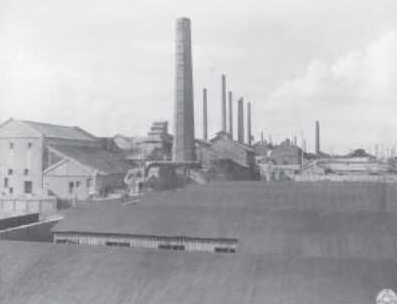
American firebombing raids prompted the Japanese to abandon Tsumori on May 15, 1945. The surviving Wake Islanders and other POWs were sent to Tokyo 4-B Naoetsu to serve as slave laborers for ShinetsuChemical and NipponStainless [both companies still exist with their original names]. This POW camp was considered the worst and most notorious in Japan, More guards (15) were tried and executed (8) than any other POW Camp on the mainland.

At this camp, Art witnessed the many beatings and humiliations of Airman and Olympian Louis Zamperini. The horror of the capricious brutality by the Japanese guards is immortalized in the bestselling book Unbroken. Art’s testimony for the Yokohama Class B and C War Crimes Trials, as footnoted in the book, helped indict a number of the more sadistic camp guards. 

Naoetsu was liberated in September 1945 and Art, barely 85 pounds, returned to the U.S. to spend months in a military hospital recovering from the trauma, beatings, illnesses, and malnutrition. He had survived nearly four years of the worst that Imperial Japan could deliver.

As a Marine it is said he had an advantage. U.S. Marines, according Professor Urwin, had the discipline and esprit de corps that helped them survive the merciless POW camps. Eighteen Wake Island Marines died as prisoners, fixing that group's death rate at 4.46 percent, whereas the overall death rate for American POWs of Japan was nearly 40 percent.


Naoetsu Peace Park
In 1995, the citizens of Naoetsu and families of former POWs dediated the Naoetsu Peace Memorial Park & Museum on the site of the former Naoetsu POW camp. It is one of the very few memorials in Japan to acknowledge the suffering of Japan's victims and Japanese responsibility.

After being a Marine and POW of Japan, there were few challenges that Art could not overcome. Staying optimistic is what Art attributed to his longevity. The next challenge is for us, Americans and Japanese, to remember him and understand the important role he played in American history. Rarely does his name appear in camp rosters, histories, or memoirs. Hopefully, this will now change. He helps us fill in many blanks in the American experience with Japan.

Friday, June 08, 2012

Louis Zamperini on the Tonight Show

Sadly, NBC took down its links to Mr. Zamperini's appearance on the Tonight Show and blocked others from displaying the now-historic interview. [Update 7/13/14]

However, here see a better, longer piece by CBS Sunday Morning (produced by a high school classmate of mine) May 27, 2012.


 Louis Zamperini, the subject of the best-selling book Unbroken, was interviewed by Jay Leno on the Tonight Show Thursday, June 7, 2012. Zamperini talks about how he was tortured and experimented upon by the Japanese on a Pacific island after he was captured having survived 47 days on a life raft. He was eventually shipped to Japan for further torture and ended up as a slave laborer for Japanese corporations. He survived the infamous Ofuna Naval Interogation Center in Kamakura and was then shipped to two of Japan's most horrific prison camps near Tokyo: Omori where he slaved for Nippon Express and then Naoetsu where he labored for Shin-Etsu Chemical and Nippon Stainless (NSSC). These multi-national companies still exist with their same names.

Unbroken will be translated into 23 languages worldwide. Japanese is not one of the languages as no publisher in Japan has shown an interest in this bestseller.

Unbroken will be released as a movie sometime in 2013 by Universal and directed by Francis Lawrence.

Later: Here Mr. Zamperini is interviewed back stage at the Tonight Show and adds a bit more about his 1936 Olympics roommate, Jesse Owens.

Friday, December 23, 2011

Anniversary of the Fall of Wake Island

Wake Island (1942)
Within hours of the attack on Pearl Harbor, Japanese Mitsubishi G3M medium bombers descended upon Wake Island. The “Island” was actually a strategically located group of islets under American administration in the central Pacific. Civil workers were constructing a U.S. Navy and Pam Am managed a hotel and a dock for its trans-Pacific flying boat. The next day a small armada of Japanese ships proceeded to shell the island and a landing was attempted.

For the next 16 days, until December 23, the small Marine garrison with the help of unprepared civilians stationed at Wake held off the Japanese invaders.

Often referred to as the Alamo of the Pacific, the battle is legend among the Marines. It was the only time during the Pacific War that a Japanese amphibious assault was repelled. The Wake Island Marines that December also offered the first sustained resistance to the Japanese juggernaut that had swept through the Pacific after Pearl Harbor. The battle was a rare example of success in the War's early months.

Throughout 1941, the U.S. Navy was constructing a base on Wake Island with civilian contractors from the Boise, Idaho firm of Morrison-Knudsen. Unfortunately, it was incomplete when the Japanese attacked in December. The first permanent military garrison, just under 400 men from the 1st Marine Defense Battalion, had arrived on August 19 commanded by Major James P.S. Devereux. The airfield was ready to take aircraft by December, and on December 4th, 12 Grumman F4F-3 Wildcats from Marine Fighting Squadron VMF-211 arrived on Wake.

Marine Command Post
Naval Commander W.S. Cunningham had 449 Marines (including pilots), 68 U.S. Navy personnel, five Army Air Force Communications experts, 1,221 civilian workers from the Morrison-Knudsen Company, and 45 Chamorro men who worked for Pam Am to resist any Japanese attack. With the exception of the Marines, all were without arms or field equipment. Commander Cunningham had only reported for duty on November 28, 1941 as Officer in Charge, All Naval Activities, Wake Island.

The Japanese invasion force led by Rear Admiral Kajioka Sadamichi consisted of the light cruiser Yubari (flagship), six destroyers--Mutsuki, Kisaragi, Yayoi, Mochizuki, Oite, and Hayate--along with Patrol Boat No. 32 and Patrol Boat No. 33 (two ex-destroyers, each reconfigured in 1941 to launch a landing craft over a stern ramp) and two armed merchantmen, Kongo Maru and Kinryu Maru. To provide additional gunfire support the light cruisers Tatsuta and Tenryu joined the force. 

In the initial attack seven of the 12 Wildcat fighters were destroyed on the ground. However, the stationary naval battery was successful in sinking two Japanese destroyers (Hayate and Kisaragi) and damaging several other ships including the flagship Yubari. The remaining Wildcat fighters and the Marine’s beach defenses drove off the landing attempt.

Although the small U.S. force on the island repulsed the initial landing attempt, they were in serious need of additional supplies and support—which would never come. However, the Japanese would and did. On December 23rd, Rear Admiral Abe Koki's two fleet destroyers (Hiryu and Soryu) supported by heavy cruisers and destroyers (on the way back from Pearl Harbor) attacked. This second assault on Wake was successful.

American casualties numbered 52 military personnel (Navy and Marine) and approximately 70 civilians killed (including 10 Chamorros). Japanese losses exceeded 800 dead, with some estimates ranging as high as 1,000. Wake's defenders sank two Japanese destroyers and one submarine, and shot down 24 Japanese aircraft.

The Japanese took 368 Marine, 60 Navy, 5 Army, and 1,104 civilian personnel (including 35 Chamorros) prisoner after the surrender of Wake. Seventeen of the military prisoners died during their captivity, including 2 Marines and 3 sailors who were beheaded and thrown overboard from the Nitta Maru, en route from Yokohama to the POW camp near Shanghai. In Shanghai, two Chamorros were murdered. One hundred-eighty of the civilian prisoners died during their captivity, including 98 murdered on Wake in October of 1943. [It is difficult to confirm these numbers and I welcome documented corrections.]

Those Wake Island Defenders who were not sent to prisons in China became slave laborers throughout the Empire. Twice during his captivity in China, Commander Cunningham attempted to escape only to be recaptured. Major Devereux ended up in Hokkaido at the Hakodate #4, Nishi-Ashibetsu POW camp where after the war ended he was treated to a farewell dinner by nervous officials of the Mitsui Mining Company at the local Mitsui Company Clubhouse (See Here).

Soto Dam After 2010 Memorial
 Rededication Ceremony
 
Others, including all the Chamorros were at Sendai #11 Kamikita near Misawa. They were slave laborers for Nippon Kogyo (Nippon Mining, today’s JX Nippon Mining & Metals) working in an open pit iron mine. Of the civilian contractors, 265 were sent to build the Soto Dam at Sasebo where 53 died. The U.S. Navy holds an annual memorial to these men as the dam is near the Sasebo Naval Base. Former U.S. Navy journalist Phil Eakins successfully researched the names of the fallen and succeeded in 2010 to have a bronze plaque dedicated to them at the memorial.

Many started their stay in Japan at Tokyo 5D Kawasaki as slave laborers for Nihon Kokan (NKK Steel which is today’s JFE Holdings) stripping boats at a Mitsui dockyard (See POW Merchant Seaman David Wilson's memoir). And many ended up in the infamous Naoetsu in Niigata where Louis Zamperini immortalized by Laura Hillenbrand’s Unbroken was continually and capriciously tortured. POWs were slave laborers for Shinetsu Chemical and Nippon Stainless.

Battle of Wake Island Memorial
Dedication December 7, 2011
Earlier this month, on December 7th, a monument to the Wake Island Defenders was dedicated in Boise, Idaho’s Veterans Memorial Park. It was the inspiration of Eagle Scout candidate Noah Barnes whose great-grandfather was one of the Morrison-Knudsen contractors who died building the Soto Dam. It was not until 1981 that the civilian workers on Wake were granted military veterans status under the U.S. Air Force. The Chamorros were granted military veterans status in 1982 under the U.S. Navy.

A new documentary on the Battle of Wake Island is in the works. The heroism and spirit of Wake will not be forgotten.

Major Devereux returned to home (video of Devereux returning to Washington) and soon ran for Congress where he represented Maryland's Second District for most of the 1950s. The District's current congressman, Dutch Ruppersberger (D-MD) is not yet a co-sponsor of H. Res. 333, which honors the Wake Island defenders who became POWs of Japan.

Boise, Idaho's Congressman Raúl Labrador (R-ID) is also not yet a co-sponsor of H. Res. 333. Veterans are not listed among Mr. Labrador's "Featured Issues" on his congressional website. No effort was made by Congress to honor the 70th anniversary of the Wake Island defense.

Saturday, September 10, 2011

Best Seller Still

Other photos of the Omori rescue and Ofuna rescue HERE 
As reported in USA TODAY, last week Laura Hillenbrand's Unbroken passed the one-million-copy milestone in hardcover sales. Currently there are no plans to issue the book in paperback.

Hillenbrand's story of Louis Zamperini, a World War II bombardier who crashed in the Pacific, was marooned on a raft for 47 days and survived brutal internment in Japanese POW camps, was first published in November 2010.

 Zamperini endured sadistic torture and abuse at the infamous Ofuna Naval Interrogation station (he was water-boarded) in Kamakura and was then sold to Japanese companies to be a slave laborer in Japan's two most horrific prison camps: Omori where he slaved for Nippon Express and then Naoetsu where he labored for Shinetsu Chemical and Nippon Stainless. These companies still exist and have retained their original names.

The book has spent 41 weeks on USA TODAY's Best-Selling Books list. It was the best-selling hardcover nonfiction title of the first half of 2011, according to Bookscan. E-book sales to date: approximately 650,000 copies.

Friday, July 15, 2011

Best Seller: Unbroken


Since the day it was published in November 2010, Laura Hillenbrand's Unbroken: A World War II Story of Survival, Resilience, and Redemption has been a bestseller. This memoir of an American POW of Japan has remained among the top ten on the New York Times, Wall Street Journal, Barnes & Noble, and Amazon lists.

Californian, Olympian, airman, Louis Zamperini experienced the worst of Imperial Japan's POW camps. He was tortured, experimented upon, interrogated, beaten, whipped, starved, humiliated, and forced to give a radio broadcast. He survived torture at the infamous Ofuna Naval Interogation station in Kamakura and was then shipped to to work in Japan's two most horrific prison camps: Omori where he slaved for Nippon Express and then Naoetsu where he labored for Shinetsu Chemical and Nippon Stainless. These companies still exist.

As Hillenbrand writes: 
Virtually nothing about Japan's use of POWs was in keeping with the Geneva Convention. To be an enlisted prisoner of war under the Japanese was to be a slave. The Japanese government made contracts with private entities to send enlisted POWs to factories, mines, docks, and railways, where men were forced into exceptionally arduous war-production or war-transport labor. The labor, performed under club-wielding foremen, was so dangerous and exhausting that thousands of POWs died on the job. In the extremely rare instances in which the Japanese compensated the POWs for their work, payment amounted to almost nothing, equivalent to a few pennies a week. (p. 234)