Showing posts with label Tester John. Show all posts

Sunday, March 17, 2024

POW Group Testifies to Congress

STATEMENT FOR THE RECORD

to the

Senate Veterans' Affairs Committee and House Veterans' Affairs Committee


Joint Hearing


To Receive Legislative Presentations of Veterans Service Organizations


By

Jan Thompson

President

American Defenders of Bataan and Corregidor Memorial Society


13 March 2024


AMERICAN DEFENDERS OF THE PACIFIC

TIME FOR A CONGRESSIONAL GOLD MEDAL

&

MEMORIALS IN JAPAN


Chairmen Tester and Bost, Ranking Members Moran and Takano, and Members of the Senate and House Veterans Affairs Committees, thank you for allowing us to describe how Congress can meet the concerns of veterans of World War II in the Pacific.


The American Defenders of Bataan and Corregidor (ADBC) was founded in January 1946 at the Fort Devens, Massachusetts hospital by former POWs of Imperial Japan. The ADBC represented the men and women of the U.S. Armed Forces in the Pacific who participated in the early resistance to, and defensive battles against, the armed forces of Imperial Japan from December 8, 1941 to June 9, 1942. Nearly all the survivors endured four years of merciless imprisonment by Imperial Japan throughout the Empire.


Our Memorial Society now represents their families and descendants, as well as scholars, researchers, and archivists. Our goal is to preserve the history of the American POW experience in the Pacific and to teach future generations of the POWs’ sacrifice, courage, determination, and faith—the essence of the American spirit.


Background


The common perception of an American POW of Imperial Japan is as a casualty of the infamous Bataan Death March 82 years ago next month. The fall of the Bataan Peninsula in the Philippines and the start of the March, April 9, 1942, is National Former POW Recognition Day and is recognized with a Presidential Proclamation.


In fact, Americans—Marines, sailors, and merchant marines in China and Japan—became POWs of Imperial Japan starting with the first day of the War on December 8, 1941. Over the following months, Americans unprepared for war in outposts throughout the Pacific were surrendered en masse often after furious, unaided battles—Wake Island, Guam, Java, Sunda Strait, Luzon, Corregidor, Mindanao, Kiska, Attu—against the invading Japanese.


As POWs, the Americans were subject to torture, abuse, starvation, and neglect. Significantly, they were used as slave laborers for Japan’s military and private industry. The men toiled on the Thai-Burma Death Railway; built airfields with their bare hands—such as at what is now the Antonio Bautista Air Base on Palawan, Philippines; died constructing military projects such as the Soto Dam in Nagasaki Prefecture; and slaved in Japanese corporate mines, mills, and factories. For example, Nippon Steel, which is now attempting to purchase U.S. Steel, used more than 6,000 American and Allied POWs as forced labor with ten percent dying in the process.


I testify today to encourage a greater effort to remember and to advocate for these American men and women who gave their all under desperate conditions and who demonstrated determination and resourcefulness against a ruthless enemy. And all this against the backdrop of a long-decided U.S. and British policy to prioritize the war in Europe. The result was that thousands of these soldiers, sailors, Marines, and airmen became POWs of Japan and suffered some of the War’s worst consequences. One-third did not return home.


Our asks

To ensure that the sacrifices and unique history of our fighting men and women in the Pacific during 1941 and 1942 are not forgotten I ask Congress to:


1. Award the Congressional Gold Medal collectively to the American defenders of Bataan and Corregidor, as defined in U.S. Senator Martin Heinrich’s and Representative Teresa Leger Fernandez’s forthcoming bill. This group represents every U.S. state, territory, tribe, and military service. It is the most diverse World War II Congressional Gold Medal cohort.


2. Call on Nippon Steel and other Japanese companies to acknowledge their history of using American and Allied POWs as slave laborers and to establish an educational foundation to support research and learning about the POW experience in Imperial Japan. Respect for the sacrifices of American veterans should be fundamental to Nippon Steel’s acquisition of a U.S. company. It is the only way that trust can be established.


3. Ask the Government of Japan, to create two central government-funded memorials in Japan, as none exist, to the Allied POWs of WWII. One would be in Tokyo and the other at the Port of Moji on Kyushu, Japan where most of the “hellships”–floating dungeons where POWs were denied air, space, light, sanitation, water, and food–first arrived in Japan to unload their sick and dying human cargo. Currently, the only monuments at Moji are to Japanese war horses, Japanese soldiers, and bananas.


4. Instruct the U.S. Department of State to prepare a report for Congress on the history and funding of the 2010-2023 “Japan/POW Friendship Program.” The report should include (i) how other Allied POW reconciliation programs initiated by the Government of Japan in 1995 compare both in funding and programming with the one for the Americans; (ii) how the U.S. program compares with its “kakehashi” people exchange programs in the United States funded by the Government of Japan starting in 2015; and (iii) a breakdown of the budgets of these various exchange programs and the types and ages of participants.


5. Ask the Government of Japan to reestablish and institutionalize the “Japan/POW Friendship Program.” Inaugurated in 2010 as a reconciliation visit to Japan for former U.S. POWs and family members, it was modeled after ones initiated in 1995 for British, Dutch, and Australian POWs. Japan ended the visitation program for Americans in 2023. Instead of stopping reconciliation efforts, Japan should transform the American POW program into a permanent educational, remembrance, and exchange initiative that encompasses history, justice, and democratic resilience.


6. Ask the Government of Japan to publish in Japanese, English and other Allied languages on the website of the Foreign Ministry of Japan the 2009 Cabinet Decision making a formal apology to all the prisoners of war of Japan and the text of Ambassador Ichiro Fujisaki’s May 30, 2009 speech to the final convention of the ADBC offering an apology to the POWs.


7. Ask the Government of Japan to honor its 2015 written promise to include the “full history” of Japan’s UNESCO World Industrial Heritage properties of the Meiji Industrial Revolution: Iron and Steel, Shipbuilding and Coal Mining. Despite the government’s written commitments to UNESCO, the history of POW slave labor at many of the Heritage sites is not included at those locations or at the Tokyo Information Center. Two of these locations are owned by Nippon Steel.


High price of freedom

By June 1942, most of the estimated 27,000 Americans ultimately held as military POWs of Imperial Japan had been surrendered. By the War’s end, roughly 12,000 Americans POWs had died in Japan’s squalid POW camps, in the fetid holds of “hellships,” or in slave labor camps owned by Japanese companies. This was a death rate of 40 percent. In contrast, 1.5 percent of Americans in Nazi POW camps died putting the mortality rate for POWs of Japan as 20 times greater.


Eighty-three years after the start of the War in the Pacific, it is time to recognize the Americans who fought the impossible and endured the unimaginable in the war against tyranny and fascism in Asia. The American men and women in the early months of the war in the Pacific fought with limited and outdated weapons and no hope of reinforcement or resupply.


Current and future generations can be inspired by their “victory from within.” As President Franklin D. Roosevelt said in August 1943, when the outcome of WWII was still uncertain, “The story of the fighting on Bataan and Corregidor—and, indeed, everywhere in the Philippines–will be remembered so long as men continue to respect bravery, and devotion, and determination.”


In return for their sacrifices and service, they ask that their government keep its moral obligation to them. They do not want their history ignored or exploited. What they want most is to have their government stand by them to ensure that they will be remembered, that our Japanese allies respect them, and that their American history is preserved accurately.


Ms. Jan Thompson

President, American Defenders of Bataan & Corregidor Memorial Society

Daughter of PhM2c Robert E. Thompson USN, USS Canopus (AS-9)

Survivor of the hellships Oryoku MaruEnoura Maru, and the Brazil Maru

Survivor of the POW Camps Bilibid (Philippines), Fukuoka 3B (Japan), & Mukden (China)


See previous testimony to the Veterans’ Affairs Committees for a fuller background

on the history and efforts of the ADBC-MS.

https://www.adbcmemorialsociety.org/

Saturday, April 08, 2023

Is Congress listening?

On March 8, 2023, the Veterans Affairs Committees of the House and Senate held their annual joint hearing for To Receive Legislative Presentations of Veterans Service Organizations. Last year, Ms. Jan Thompson, president of the American Defenders of Bataan and Corregidor Memorial Society, testified in person. This year, as in all past years she submitted a STATEMENT FOR THE RECORD (see below).

Unlike all previous years, both the House and Senate Committees refused to post that the ADBC-MS was to give testimony for the record and, most important, refused to post the text of the testimony. Inexplicably, the rules changed, although no one could give your editor a coherent reason why. Sheepishly, staff told us that the testimony would appear in the Committee print--a printed record of the hearing. If true, this will happen months from the hearing date.

Interestingly, the House Veterans Affairs Committee did list on its Committee Repository website for the hearing, another organization's Statement for the Record: Laura Lehigh as Independent Citizen Advocate for DIC Surviving Spouses Rank-Based Dependency and Indemnity Recipients Group.

UPDATE (4/12/2023) - The Clerk of the House Veterans Affairs Committee admitted that it was an oversight not to post the ADBC-MS testimony on the hearing website repository page. It appear the House committee did not change its posting policy. The clerk for the Senate Veterans Affairs Committee apparently neglected to share the testimony with his counterpart at the House committee. You can find the testimony HERE

Why the Senate Veterans Affairs Committee would block our testimony in this passive aggressive manner we do know. Soon after the hearing, the Committee staff took another unusual position, that of objecting to and blocking a proposed gold medal bill for the men and women who fought in the early defensive battles of WWII in the Pacific. They were vague as to why other than they had problems with the "findings" or statements of fact and noted that they cannot block a bill. But the reality is that their objections did stop the bill from being introduced. The "findings" were written by a committee of world class, American historians of the Pacific War.

I guess the Senate Veterans Affairs Committee got tired of the ADBC-MS asking for the same things every year.  Or maybe they did not again want to hear that there are veterans they were leaving behind and forgetting. Or maybe it is too unbelievable that Japan was once our enemy and considered more brutal than the Nazis. Or maybe Japan's history disinformation campaigns, which are now being directed at POWs, are successful.

AMERICAN DEFENDERS OF THE PACIFIC
THE YEAR FOR A CONGRESSIONAL GOLD MEDAL

Chairmen Tester and Bost, Ranking Members Moran and Takano, and Members of the Senate and House Veterans Affairs Committees, thank you for allowing us to describe how Congress can meet the concerns of veterans of World War II in the Pacific.

The American Defenders of Bataan and Corregidor (ADBC) was founded in January 1946 at the Fort Devens, Massachusetts hospital by former POWs of Imperial Japan. The ADBC represented the men and women of the U.S. Armed Forces in the Pacific who participated in the early resistance to, and defensive battles against, the armed forces of Imperial Japan from December 8, 1941, to June 9, 1942. Nearly all the survivors endured nearly four years of merciless imprisonment by Imperial Japan.

Our subsequent Memorial Society now represents their families and descendants, as well as scholars, researchers, and archivists. Our goal is to preserve the history of the American POW experience in the Pacific and to teach future generations of the POWs’ sacrifice, courage, determination, and faith—the essence of the American spirit.

Background
Eighty-one years ago today marks the fall of the Dutch East Indies (today’s Indonesia) to Japan and the capture on Java of a West Texas National Guard Battalion as well as two American aviators and one sailor too seriously wounded to be moved. Barely a week before, the heavy cruiser USS Houston (CA-30) went down in the Battle of Sunda Strait marking the decimation of the United States Asiatic Fleet that had commanded the United States Navy and Marines in the region since 1902. American forces on Wake Island and Guam had surrendered in December 1941.

In April, after 99 days of constant warfare and no hope of resupply, the Bataan Peninsula in the Philippines was surrendered and the infamous Bataan Death March began. Less than one month later, on May 6th, the Fortress Island of Corregidor and its associated commands defending Manila were surrendered. The rest of American and Filipino units throughout the Philippines were surrendered on June 9th. And on June 7th, Japan invaded Alaska’s Kiska and Attu islands in the Aleutians, imprisoning 42 Native Americans, 8 Navy weathermen, one female school teacher, and killing three men.

I testify today to encourage your efforts to remember these American men and women who gave their all under desperate conditions to demonstrate determination and resourcefulness against a ruthless enemy and a long-decided U.S. and British policy of prioritizing the war in Europe. The result was that most of these soldiers became POWs of Japan who suffered some of the War’s worst consequences. One-third did not return home.

For all, the homefront was their third battle--after surviving warfare in the Pacific and enduring atrocities as a POW. Forced to sign gag orders about the horrors they witnessed and unable to explain the after-effects of torture, abuse, starvation, and trauma, the POWs of Japan first focused, as do today’s veterans, on obtaining healthcare, disability benefits, survivor benefits, caregiver support, mental health access, and education.

The fourth and final battle for the American POWs of Japan is for them not to be forgotten: both by their country and the Japanese. Current and future generations can be inspired by their “victory from within.” As President Franklin D. Roosevelt said in August 1943, when the outcome of WWII was still uncertain, “The story of the fighting on Bataan and Corregidor—and, indeed, everywhere in the Philippines–will be remembered so long as men continue to respect bravery, and devotion, and determination.”

Our asks
To ensure that the sacrifices and unique history of our fighting men and women in the Pacific during 1941 and 1942 are not forgotten I ask Congress to:

1. Award, collectively to the American defenders of Bataan and Corregidor, as defined in U.S. Senator Martin Heinrich’s and Representative Teresa Leger Fernandez’s forthcoming Congressional Gold Medal bill. This group represents every U.S. state, territory, tribe, and military service. It is the most diverse World War II Congressional Gold Medal cohort.

2
. Ask the Government of Japan, to create a central government-funded memorial in Japan, as none exist, for the Allied POWs of WWII at the Port of Moji on Kyushu, Japan where most of the “hellships”–floating dungeons where POWs were denied air, space, light, sanitation, and food–first arrived in Japan to unload their sick and dying human cargo. This memorial should be selected from a world competition. Currently, the only monuments at Moji are to Japanese war horses, Japanese soldiers, and bananas.

3. Instruct the U.S. Department of State to prepare a report for Congress on the history and funding of the “Japan/POW Friendship Program.” This visitation program began in 2010. The report should include (i) how other Allied POW reconciliation programs initiated by the Government of Japan in 1995 compare both in funding and programming and (ii) how the U.S. program compares with other “Kakehashi” people exchange programs in the United States funded by the Government of Japan starting in 2015.

4. Ask the Government of Japan to continue and institutionalize the “Japan/POW Friendship Program” established in 2010. Initially established as a reconciliation visit to Japan for former POWs modeled after ones established in 1995 for British, Dutch, and Australian POWs, the program has included widows and the elderly children of POWs. The program needs to transform into a permanent educational, remembrance, and exchange initiative encompassing history, justice, and democracy. It needs to be permanent, not merely a yearly, diplomatic “deliverable” subject to Japan’s budget whims.

Thus far, there have been 12 trips, one each in the fall of 2010 through 2019. In 2015, there were two trips. In 2016, 2018, and 2019, due to the advanced age of surviving POWs, only widows and children participated in the program. No trips were held in 2020, 2021, or 2022. A four-day trip for 7 children of POWs was held in February this year. In all, 46 former POWs, all in their late 80s or 90s, as well as nine widows and 25 children in their 60s and 70s have made the trip to Japan. A number of the caregiver companions were wives, children, and grandchildren.

5. Ask the Government of Japan to publish in Japanese, English and other languages on the website of the Foreign Ministry of Japan the 2009 Cabinet Decision offering a formal apology to all the prisoners of war of Japan and the text of Ambassador Ichiro Fujisaki’s May 30, 2009 speech to the convention of the ADBC offering an apology to the POWs:

I would like to convey to you the position of the government of Japan on this issue. As former Prime Ministers of Japan have repeatedly stated, the Japanese people should bear in mind that we must look into the past and to learn from the lessons of history. We extend a heartfelt apology for our country having caused tremendous damage and suffering to many people, including prisoners of wars, those who have undergone tragic experiences in the Bataan Peninsula, Corregidor Island, in the Philippines, and other places.

6. Ask the Government of Japan to honor its 2015 written promise to include the “full history” of Japan’s UNESCO World Industrial Heritage properties of the Meiji Industrial Revolution: Iron and Steel, Shipbuilding and Coal Mining. The history of POW slave labor at many of the Heritage sites is not included at those locations or at the Tokyo Information Center.

7. Amend title 36, United States Code to include National Former POW Recognition Day among the days the POW/MIA flag is required to be displayed. This is April 9th, which is the anniversary of the Bataan Death March. The President is already required to issue a proclamation for this remembrance day.

High price of freedom

By June 1942, most of the estimated 27,000 Americans ultimately held as military POWs of Imperial Japan had been surrendered–they did not surrender. By the War’s end, roughly one-third or more than 12,000 Americans had died in squalid POW camps, in the fetid holds of “hellships,” or in slave labor camps owned by Japanese companies. Almost one-third (or 4,000) died from friendly fire in unmarked hellships sunk by American planes and submarines.

Surviving as a POW of Japan and returning home was the beginning of new battles: finding acceptance in society and living with serious mental and physical ailments. In the first six years after the war, deaths of American POWs of Japan were more than twice those of the comparably aged white male population. These deaths were disproportionately due to tuberculosis, suicides, accidents, and cirrhosis. In contrast, 1.5 percent of Americans in Nazi POW camps died (the mortality rate for POWs of Japan was 20 times greater). In the first six years after liberation, the mortality rate of those who survived the Japanese POW camps was three times the rate of the Nazi POW camp survivors.

Eighty-two years after the start of the War in the Pacific, it is time to recognize the Americans who fought the impossible and endured the unimaginable in the war against tyranny in the Asia. The American men and women in the early months of the war in the Pacific fought with limited and outdated weapons and no hope of reinforcement or resupply.

In return for their sacrifices and service, they ask that their government keep its moral obligation to them. They do not want their history ignored or exploited. What they want most is to have their government stand by them to ensure they will be remembered, that our allies respect them, and that their American history is preserved accurately for future generations.

Ms. Jan Thompson
President, American Defenders of Bataan & Corregidor Memorial Society
Daughter of PhM2c Robert E. Thompson USN, USS Canopus (AS-9)
Survivor of the hellships Oryoku Maru, Enoura Maru, and the Brazil Maru
Survivor of the POW Camps Bilibid (Philippines), Fukuoka 3B (Japan), & Mukden (China)
https://www.adbcmemorialsociety.org/

Saturday, April 27, 2013

Remembering Pfc. Arthur A. Klein, USMC


Our hero passed yesterday evening at 4:10.

Thus read the email announcing Pfc. Arthur A. Klein, Wake Island Detachment, 1st Defense Battalion, U.S. Marine Corp, 91, death on Monday, April 16th in Billings, Montana.

He was indeed a hero. Little in neither his obituary in the Billings Gazette nor the tribute given him by U.S. Senator John Testor (D-MT) in the Congressional Record conveys just how much.


Pfc. Klein was one of 449 Marines who fought in one of the first battles of World War II. Although out-gunned, out-manned, and out-supplied, the Marines, with a handful of civilian contractors who were on Wake to fortify the island and Pan American Airways Chamorro flight attendants, held Wake Island in the Pacific. For over two weeks, December 8 to 22, 1941, these men did the impossible. They stopped an invading Japanese armada.

According to historian Gregory Urwin, author of Victory in Defeat: The Wake Island Defenders in Captivity, the Wake Island Marines exhibited “a heroism that inspired millions of their countrymen, they defended their tiny outpost for sixteen days, beating off seventeen air raids and an amphibious landing attempt.” Their fierce defense of the tiny atoll is said to be the only time in military history that an amphibious assault was successfully repelled.
 
Incredibly, only 46 Marines, three sailors, and 75 civilians died in Wake’s defense. The 1,593 Wake Islanders still alive at the time of the surrender, which included 35 Chamorros and 403 Marines, became prisoners of war of Imperial Japan.  Japanese losses, on the other hand, easily topped 900 dead, plus two destroyers, two patrol boats, one submarine, and 21 aircraft.

In January 1942, the majority of Wake’s POWs (1,187 in all) including Art were herded onto a former Japanese ocean liner, the Nitta Maru, and sailed first to Yokohama and eventually to Shanghai. Others were shipped to Japan later, leaving 98 civilians on Wake to work as slave laborers. The Japanese massacred these men on October 7, 1944.

Nitta Maru
The Nitta Maru was a Hellship. It was like many others, built and operated by NYK Lines (Mitsubishi) and unmarked as carrying POWs. Japanese ship operators bid on and profited from transport contracts with Japan's military. One thousand starving, dehydrated, sick men crammed into her dark, airless hold, which at best was only large enough for 400. Art remembers they “were so crowded that we could not even sit or lie down.” The smell of death and waste hung in the air.

After departing Yokohama, the Japanese took five men topside as retribution for the hundreds of their comrades who had fallen to the defenders of Wake. Art may have listened as five fellow Marines (see Master Technical Sergeant Earl Raymond Hannum and Technical Sergeant Vincent Bailey) were tortured and clumsily beheaded. Their torsos were mutilated with bayonets and thrown overboard. These men are among the 3,000 WWII Marines whose bodies have never been recovered.
  
Tsumori 
In China, Art was taken first to the Shanghai War Prisoners Camp (Kiangwan ).Then he was transferred to Woosung POW Camp also in Shanghai. Although neither camp was humanitarian or comfortable, Art said that it was better than any he had heard about and “it was certainly far better than anythat we had in Japan.” For awhile, the expat community in Shanghai was allowed to provide food and clothing to the POWs. Labor was building a mountain-like firing range that Art called Fujiyama [Mt. Fuji].

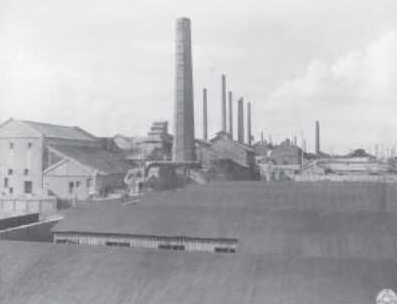
It is unclear when Art was sent to Japan. It is likely that he was among the maybe 400 POWs shipped from Shanghai in August 1943 to Tsumori POW Camp 13-B near Osaka. The camp was operated to provide slave labor for the Fujinagata Shipbuilding &Engineering Co., Ltd. Founded in the 17th Century, Fujinagata was shipyard and railroad car manufacturer in Osaka. Mitsui Engineering and Shipbuilding acquired the company in the 1960s.

The book ConductUnder Fire describes the five barracks at Tsumori as wooden structures 150 to 200 ft long and 30 to 40 ft wide. Three times a day the POWs received rice or a mixture of barley and millet. Greens and root vegetables were added for the evening meal.

Art first slaved as a stevedore hauling rocks and unloading pig iron. He was eventually moved inside to work as a welder. He was grateful for this, as it was warm. The winter of 1943-44 was very cold with temperatures ranging between 32 and 45 degrees. The winter of 1944-45 was the coldest in 50 years. His clothing and bedding was cotton and fuel to heat the barracks was always minimal. That meant only enough to fuel small fires in the barracks for a few hours-if any fuel at all. Body heat was what kept the POWs warm at night as buddies wrapped themselves together in the bedding they had.
 
About Naoestu
American firebombing raids prompted the Japanese to abandon Tsumori on May 15, 1945. The surviving Wake Islanders and other POWs were sent to Tokyo 4-B Naoetsu to serve as slave laborers for ShinetsuChemical and NipponStainless [both companies still exist with their original names]. This POW camp was considered the worst and most notorious in Japan, More guards (15) were tried and executed (8) than any other POW Camp on the mainland.

At this camp, Art witnessed the many beatings and humiliations of Airman and Olympian Louis Zamperini. The horror of the capricious brutality by the Japanese guards is immortalized in the bestselling book Unbroken. Art’s testimony for the Yokohama Class B and C War Crimes Trials, as footnoted in the book, helped indict a number of the more sadistic camp guards. 

Naoetsu was liberated in September 1945 and Art, barely 85 pounds, returned to the U.S. to spend months in a military hospital recovering from the trauma, beatings, illnesses, and malnutrition. He had survived nearly four years of the worst that Imperial Japan could deliver.

As a Marine it is said he had an advantage. U.S. Marines, according Professor Urwin, had the discipline and esprit de corps that helped them survive the merciless POW camps. Eighteen Wake Island Marines died as prisoners, fixing that group's death rate at 4.46 percent, whereas the overall death rate for American POWs of Japan was nearly 40 percent.


Naoetsu Peace Park
In 1995, the citizens of Naoetsu and families of former POWs dediated the Naoetsu Peace Memorial Park & Museum on the site of the former Naoetsu POW camp. It is one of the very few memorials in Japan to acknowledge the suffering of Japan's victims and Japanese responsibility.

After being a Marine and POW of Japan, there were few challenges that Art could not overcome. Staying optimistic is what Art attributed to his longevity. The next challenge is for us, Americans and Japanese, to remember him and understand the important role he played in American history. Rarely does his name appear in camp rosters, histories, or memoirs. Hopefully, this will now change. He helps us fill in many blanks in the American experience with Japan.