Showing posts with label Szwabo Earl. Show all posts

Saturday, August 22, 2015

Earl Szwabo - In Memoriam


Earl Martin Szwabo, a veteran of the Battle of Corregidor, passed peacefully on Saturday, August 15, 2015 at the age of 90. His wife of 69 years, Mary Elizabeth, died in June.

Szwabo joined the U.S. Army at Jefferson Barracks, Missouri in September 1941. He was sent immediately to the Philippines aboard the USAT Willard Holbrook arriving in late October. His basic training took place directly on the fortress island of Corregidor in Manila Bay with the 59th Coast Artillery Regiment, 1st Battalion C Battery (Wheeler).

12" DC Gun
His unit manned two 12" Disappearing Carriage (DC) guns at Ft. Mills on Corregidor under the command of Capt. Harry W. Schenk, a 1933 West Point graduate. Schenk died February 1945 in Japan at the Fukuoka #3 POW camp that provided slave labor to the Yawata steel mills. This site was given UNESCO World Heritage status in 2015.

From the start of the Japanese invasion of the Philippines on December 8, 1941 to Corregidor's surrender on May 6, 1942, Szwabo fought nonstop to defend the island. After surrender, most of the 12,000 Americans on Corregidor were crowded into a small open beach area, the 92nd Garage  to wait in the tropical sun for nearly three weeks before going by boat to Manila. 

They were then made to wade ashore before being paraded through the streets on a Victory March" display of POWs to Bilibid Prison. After a short stay at Bilibid, he was packed into a freight car and sent to Cabanatuan where 30-50 men a day died from disease, starvation, and torture. On August 1, 1942, he and 346 men were sent to the island of Palawan, over 300 miles southwest of Manila on the edge of the Sulu Sea.

Through all this, Private First Class Earl M Szwabo was only 17.


Palawan Massacre Grave
The POWs were tasked with building an airfield. In face of the arduous labor, they were starved, denied medical care, and routinely and capriciously beaten. Prisoners who attempted to escape were tortured and executed while their fellow POWs were forced to watch.

Sometime in the early summer of 1944, Szwabo was returned to Manila. He was among a lucky 150 who were not present for the infamous December 14th Palawan Massacre. Fearing an American invasion, the Kempeitai-led Japanese troops on that day herded the remaining Americans into "air raid shelters," drenched them with gasoline, and tossed in matches. Grenades and machine gun fire followed. Somehow 11 men were able to escape and to preserve this history.

Tears always came to Mr. Szwabo when he remembered his friends who died that day.
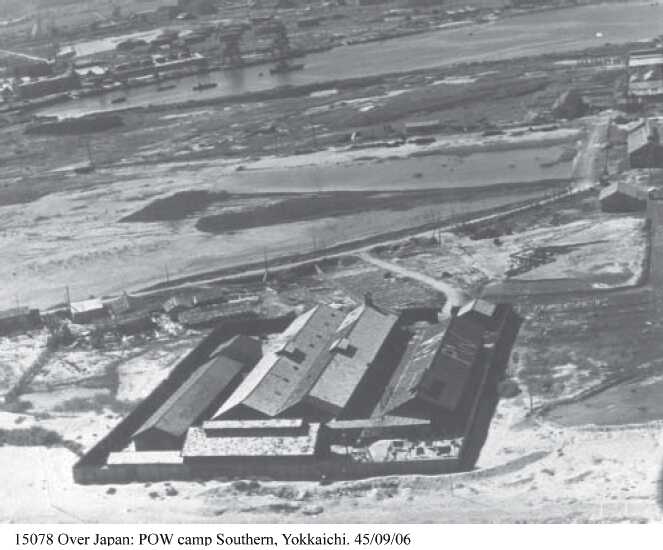
Nagoya #5-B
Szwabo had been sent to Nagoya, Japan the summer before the massacre. On July 4, 1944, he and over 1,000 POWs began a harrowing two month journey that took them to Formosa and Okinawa aboard the Sekiho Maru, better known as the SS Canadian Inventor or Mati Mati Maru [Wait Wait Ship].

The ship ended its journey on September 1, 1944 as so many other POW Hellships in Moji.  On September 4, Pvt Szwabo turned 20 at Nagoya #5-B Yokkaichi a POW camp supplying labor to a copper foundry and sulphuric acid factory owned by Ishihara Sangyo Kaisha in Nagoya, a port city south of Tokyo. He remembers melting down church and temple bells Japanese troops had looted from all over Asia.

Book on Nagoya #5-B
click to order
According to a diary by a Dutch POW, the first few months that the Americans were at the camp, were marked by earthquakes and tsunamis. American planes begin to bomb the facility and Nagoya on June 17, 1945. In the afternoon of August 15, 1945 the POWs were released from work and told the war was over. On August 29th, the air drops of food and medicine began. Excess was shared with the Korean laborers in an associated camp.

On the afternoon of September 4th, the men were put aboard a train in Nagoya to Hamamatsu. They were then taken by landing craft to the U.S.S. “The Rescue” (a hospital ship). From there Szwabo was flown to recuperate in Manila and soon returned to the United States for recovery and treatment. He remained hospitalized for several months as doctors helped him regain his health after 42 months of near starvation, deplorable living conditions, and abuse in Japan.

Szwabo, knowing his need for continued medical care,  decided to stay in the Army and advanced in rank to become a chief warrant officer. He retired November 1, 1960. For the next 41 years, he served as director of personnel and purchasing for the city of Florissant, Missouri. He volunteered for many years at the USO in Lambert Airport.

In September 2010, 65 years after his liberation from Japanese captivity, Earl Szwabo was one six POWs who participated in the first American POW trip to Japan to receive the Japanese government's apology for their abuse and use as slave laborers.

The Yokkaichi facility where Mr. Szwabo slaved still exists and Ishihara Sangyo Kaisha (ISK) has prospered worldwide. The company did allow him to visit. He and his wife traveled to the Yokkaichi facility in Nagoya and met with plant officials who expressed their regret for his mistreatment, but emphasized that they were not part of the same company. They refused to speak on the record or offer a corporate apology. He also visited a memorial that company had built to the souls of all those who died laboring for the company at this site. However, as you can see, memorial mentions nothing about POWs or slave labor.

Yokkaichi Memorial
Mr. Szwabo accepted and appreciated the understanding he received from ISK's Yokkaichi plant managers. The hope is that someday, ISK's Chairman will deliver an apology and support efforts to remember the POW experience in Japan. On July 19, 2015, Mitsubishi Materials Corporation became the first Japanese company to offer an apology to the Americans who slaved for them during the War.

Szwabo said his trip to Japan gave him peace.

"I figure I was lucky," he said. "A lot of POWs didn't make it back."

Accepting an apology, however, doesn't mean that the horrors should be forgotten, as Mr. Szwabo told the St. Louis Beacon:
A POW will never forget. I dream still of different things, and think about it," he said. "I lost my outfit on Palawan when they burned 150 alive there. I was lucky that I got shipped out. I guess God was on my side. And I know why I was picked; I was in better shape than the older guys, and the Japanese took the ones who looked the best physically, so they could work us to death. The bad part is you can't forget it.
Memorial donations may be sent to Descendants Group-American Defenders of Bataan and Corregidor in care of Ms. Judy Pruitt, 23 Elwell, Jamaica Plain, MA 02130.

Sunday, March 25, 2012

April 25 - Heroes of Bataan & Corregidor in Washington

Painting of the Bataan Death March by Ben Steele
COMMEMORATING THE HEROES 
OF BATAAN & CORREGIDOR

Including the American Defense Forces of the Philippine Archipelago, 
The Asiatic Fleet, Wake Island, China, Marianna Islands, 
Midway Island and the Dutch East Indies

Veterans of the Battle of Bataan, the Bataan Death March, and the capture of Corregidor will be in Washington, DC from April 24 to April 26 to commemorate the 70th anniversary of the Battle of the Philippines. All became POWs of Imperial Japan. The history of these survivors of jungle warfare, torture, abuse, starvation, and slave labor and of their success in reconciling with the Japanese is a timeless inspiration.

Congress did not commemorate the 70th anniversaries of Pearl Harbor, Wake Island, the USS Houston, or Texas’ Lost Battalion. These were all among the first battles of American involvement in World War II. To make up for this oversight, a series of commemorative events is being planned with the veterans of the Philippines defense to provide a venue to remember these early months of World War II and their unique contribution to American history.

The 70th Anniversary of the Bataan Death March is April 9th and the surrender of Corregidor is May 6th. The valor of the Filipino and American soldiers is celebrated annually on April 9th in the Philippines as Valor Day or Araw ng Kagitingan.

The veterans coming to Washington include past national commanders of the now-disbanded American Defenders of Bataan and Corregidor (ADBC) who traveled to Japan in 2010 and 2011 to receive an official apology from the Government of Japan for their maltreatment and to visit their former POW camps. The death rate and incidence of post-traumatic stress for American POWs of Japan was the greatest of any American conflict. One invitee, Dr. Lester Tenney, the last national commander of the ADBC was instrumental in persuading the Government of Japan to offer American former POWs an apology and to begin a program for them to visit Japan. He also founded Care Packages from Home for soldiers in Iraq and Afghanistan.

Another invitee, Mr. Ralph Levenberg who was on the Death March, was until recently an advocate for veterans benefits as a member of the Advisory Committee on Former Prisoners of War, U.S. Department of Veterans Affairs. Mr. Ben Steele of Montana, another Death March survivor, has chronicled the Death March and Japan’s POW camps through his award-winning paintings and drawings. Mr. Ed Jackfert of West Virginia has championed and helped establish the ADBC Museum and Archive to preserve the memory of the American POWs of Japan and their lessons for war and peace.

Program
  • Reception on Capitol Hill the evening of April 25 hosted by Senator Dianne Feinstein (D-CA) and others
  • Roundtable discussion hosted by members of the House of Representatives on the Bataan Death March and the success of the two POW visitation programs to Japan
  • Wreath laying at the WWII memorial Bataan/Corregidor site
  • Lunch program with contemporary veterans for all to share their experience with PTSD (not recognized until the mid-70s), other war-related disabilities, and reintegration into society
  • Dinner with Commemoration donors and the American and Japanese officials who encouraged the Government of Japan to establish a program of reconciliation for American POWs
Veterans

The final list of veterans who will attend will be made closer to the event taking into consideration the health of each participant. Each veteran will be accompanied by a caregiver. The veterans have also requested that Ms. Kinue Tokudome, who has spent years working to help them communicate their story to Japan, be included.
  • Dr. Lester Tenney, 92, San Diego, CA. Bataan Death March, Illinois National Guard, B Company, 192nd Tank Battalion from Maywood, Illinois
  • Mr. Harold Bergbower, 92, Peoria, AZ. Bombing of Clark Air Field, Army Air Corps, , 28th Bombardment Squadron, 19th Bomb Group,V Bomber Command
  • Mr. Edward Jackfert, 90, Wellsburg, WVA. Bombing of Clark Air Field, Army Air Corps 28th Bombardment Squadron, 19th Bomb Group, V Bomber Command
  • Mr. Joseph Alexander, 85, San Antonio, TX. Bombing of Clark Field, Army Air Corps 440th Ordnance Aviation Bombardment Squadron
  • Mr. Ralph Levenberg, 92, Reno, NV. Bataan Death March, Army Air Corps, 17th Pursuit Squadron
  • Mr. Earl Szwabo, 91, Florissant, MO. Corregidor, US Army, Battery C, 59th Coast Artillery
  • Mr. Ben Steele, 94, Billings, MT, Bataan Death March, Army Air Corps, 7th Material Squadron, 19th Bomb Group (his painting is above)
  • Special Guest: Ms. Kinue Tokudome, Kagoshima, Japan. Founder of the US-Japan Dialogue on POWs, who accompanied the POWs on their return to their POW camps.
Funding

Funding is needed for all the expenses of this program. Your help is requested to make these veterans of our greatest generation comfortable in their trip to Washington and to cover the program costs.

Donations can be made to one of two nonprofit, 501(c) (3) organizations: 

Asia Policy Point, 1730 Rhode Island Avenue, NW, Suite 414, Washington, DC 20036, (202) 822-6040. APP is organizing this program in Washington.

Brooke County Public Library Foundation, 945 Mail Street, Wellsburg, West Virginia 26070, (304) 737-1551. The Library houses the ADBC museum and archive.

For more information contact APP. Donate by clicking the DONATE button on the left side bar.

Thursday, February 02, 2012

Japanese Corporate Use of U.S. POWs as Slave Labor

American POWs at Yawata Steel Mill
 part of  Nippon Steel in Fukuoka
*
On 15 December 2011, Representative Russ Carnahan (D-MO) submitted a Statement for the Record to the House Transportation and Infrastructure Committee Hearing on California's High-Speed Rail Plan on behalf of Mr. Joseph A. Vater, Jr. who is President of the Descendants Group, an Auxiliary of the American Defenders of Bataan and Corregidor.

Congressman Carnahan visited Corregidor last year and learned first hand of the historic battle of the Philippines and how its American defenders ended up as POWs facing over three years of unimaginable hell. Earl Szwabo, a survivor of the battle of Corregidor and member of the first POW trip to Japan, is one of Mr. Carnahan's constituents.

Below is Mr. Vater's testimony where he outlines how most of the Japanese companies that plan to bid on California's and other American high-speed rail projects were major users of American POW slave labor. He suggests that it is time for these companies to offer their apologies and make amends for this gross violation of human rights and the Geneva Convention.

Japanese Corporate Use of U.S. POWs as Slave Labor

Mr. Chairman, I am President of the Descendants Group, an Auxiliary of the American Defenders of Bataan and Corregidor, Inc. (ADBC). The American Defenders of Bataan and Corregidor was founded in 1946 and represented the surviving prisoners of war of Japan and their families. I would like to call your and the Committee’s attention to the fact that many of the Japanese companies that intend to bid on California’s High-Speed Rail contracts profited from the use of American and Allied (POW) slave labor in the most brutal of conditions during World War II.

These companies, unlike those in Germany, Austria, and France, have never acknowledged nor apologized for this gross violation of human rights and breach of the Third Geneva Convention on the treatment of POWs. It is a concern to me and other members of the Descendants Group that taxpayer dollars may go to Japanese corporations that still do not respect the American veterans they once enslaved.

My father, Joseph A. Vater, was one of these men.

After fighting in and surviving the Battle for the Philippines he was taken prisoner by Japan in May 1942 on Corregidor. He was held months in a fetid POW camp where thousands died. He was then shipped to Mukden, China (today's Shenyang) in October 1942 on Mitsubishi's Tottori Maru via Formosa and Korea. My father became a slave laborer at MKK factory (Manshu Kosaku Kikai, possibly Manchuria Mitsubishi Machine Tool Company, Ltd.), working as a machinist. He still carries many scars and continues to have frightening nightmares that remind him on a daily basis of his forced labor.

There was a broad government program in which over 60 private Japanese corporations requested, paid for, and effectively enslaved POWs in order to maintain wartime industrial production. Tens of thousands of Allied POWs endured abuses at the hands of the employees of these companies that were comparable to, and sometimes worse than, that inflicted upon them by the Japanese military. As a result, more than a 1,000 American POWs (over 3,500 Allied POWs) died on the main islands of Japan alone. Those who survived found themselves with permanent physical or mental damage.

The POW slave laborers of Japan were subjected to starvation rations, minimal medical treatment, constant physical abuse, summary punishment, murder, and other degradations. The death rate of Americans captured by the Japanese and who died as prisoners of war was nearly 40 percent, as compared to a little over one percent held in German stalags.

Nearly all of the Japanese companies that want to bring High-Speed Rail to California used POW slave labor. Many of these corporations boast over 100 years of continuous operation spanning three centuries. Many utilized labor from multiple POW camps for their mines, factories, foundries, and docks. Some of the camps were in Japan’s occupied territories. Current research finds the number of camps associated with some of the Japanese companies bidding on California contracts as follows: Mitsui-9; Mitsubishi-5, Hitachi-7, Kawasaki-2, Sumitomo-5, and Nippon Sharyo-2.

None of these companies has acknowledged their involvement in POW forced labor and maltreatment, much less apologized for it. That is in stark contrast to German and French bidders for the High-Speed Rail projects, both of which have not only apologized for their war crimes during WWII, but also committed themselves to supporting projects of remembrance and reconciliation.

Last year, for the first time, the Government of Japan offered its apology and established a visitation program (modeled on a longstanding Japanese program for POWs of other allied nations) for American former prisoners of war of Imperial Japan.

It is time for Japan’s private companies to follow their government’s lead and offer their own apologies. Further, commitment to this apology can be demonstrated through the establishment of a foundation for the remembrance of the POW experience in the Pacific.

To date, the two consortia headed by Japan’s leading passenger rail firms, JR East and JR Central, which are planning to bid on American High-Speed Rail projects, have been silent. As rail operators both companies’ forbearers were complicit in POW abuses; both have roots deep in Japan’s wartime government Railway Ministry.

JR East’s antecedent transported prisoners to 46 POW camps including the infamous Ofuna Interrogation Center where American Naval officers were routinely tortured to death. JR Central’s predecessor transported prisoners to 12 POW camps, including the ones supplying workers to Nippon Sharyo. Now owned by JR Central, Nippon Sharyo made the engines used on the Thai-Burma Death Railway (one of which sits at the entrance of the museum at the Yasukuni Shrine).

That the transportation of POWs to “death-by-work” camps and widespread forced labor constitute war crimes is self-evident. Yet, the Japanese companies involved have refused to publicly acknowledge this history. Their counterparts in the European Axis countries, by contrast, have apologized and atoned for similar wrongdoing.

In 2000, the German government and industrial sector established and funded in equal measure the “Remembrance, Responsibility and the Future” Foundation. Among the fund’s continuing objectives are “anchoring the history of forced labour” in European memory, “fostering commitment to democracy and human rights through history learning,” and “engendering respect for the life histories of those persecuted.”

Over the past three years, the former commander of the American Defenders of Bataan and Corregidor has written three times to Japan’s premier business organization, Keidanren, to which most companies that enslaved American POWs belong, asking that it apologize on behalf of its members to the American POWs. Keidanren’s corporate responsibility charter states a commitment to “respect human rights” and to “conduct business in a socially responsible manner.” Keidanren has never replied. Further, it refused to meet in with any of the visiting POWs who were guests of the Japanese government in the fall of 2010 and 2011.

For both business and moral reasons, JR East, JR Central and the other Japanese companies that profited from the forced labor of POWs and others now have a chance—and incentives—to right past wrongs. The American POWs do not seek compensation. Justice for my father and his fellow prisoners is a public apology and a meaningful program of visitation, dialogue, memory, and research on the American POW experience in Imperial Japan.

I and other members of the Descendants Group sincerely hope that the State of California will advise these Japanese companies to promptly acknowledge their involvement in wartime forced labor and offer an apology to the American POWs.

These veterans of America’s greatest generation should not be forgotten and Japan’s corporations should no longer be allowed to forget.

Mostly, we ask them to respect these veterans’ dignity and to acknowledge their sacrifices for peace in Asia.

After doing so, these Japanese companies can join in the bidding on California’s High-Speed Rail contracts as honorable, socially responsible companies.

*Yes, there were Black Americans who were POWs of Japan. The POWs above were from the USS Grenadier the only submarine crew that did not go down with their boat. Thomas James Trigg was a Mess Attendant First Class. We will do a post shortly on the Black American POWs of Japan. 

Friday, August 26, 2011

Corregidor

In June, five members of congress visited "The Rock" as Corregidor Island in the Philippines is known. The Congressmen were there as part of a recess study tour of the Philippines as well as of Turkey and Iraq. They agreed that they were surprised at how much they learned. The congressional delegation was composed of Russ Carnanhan (D-MO), Jim Costa (D-CA), Jeff Duncan (R-SC), Louie Gohmert (R-TX), and Judge Ted Poe (R-TX).

Watch this 1943 movie here
Thus far, only Congressman Russ Carnahan (D-MO) was inspired to become a co-sponsor of H. Res 333, which honors those veterans who fought on Corregior as well as throughout the Pacific. We hope readers will remind these members of congress of their trip to this historic landmark.

Their tour was led by Steve Kwiecinski, the son of one of Corregidor's defenders, Staff Sgt. Walter Kwiecinski, who manned the last 12 inch mortar firing on Battery Way (60th U.S. Coast Artillery).

The elder Kwiecinski, a Minnesota native, was a POW slave laborer with Lester Tenney mining coal for Mitusi at Omuta in Fukuoka. Mitusi has never responded to requests for a dialogue or an apology from the American POWs of Japan.

The Defense of Corregidor will be forever known as the last heoric stand of the battle for the Philippines in 1942, the worst military defeat experienced by the U.S. On December 25, 1941, General Douglas MacArthur, commander of U.S. Army Forces in the Far East (USAFFE), was forced to move his headquarters from Manila to the island fortress of Corregidor in Manila Bay. A series of air raids by the Japanese destroyed all the exposed structures on the island and USAFFE headquarters was dug in to the Malinta Tunnel on the island.

Japanese bombing and shelling was relentless. The Americans and Filipinos--soldiers, sailors, Marines, and civilians--were running out of ammunition, food, medicine, and people. Early in the battle, on March 12th, was evacuated to Australia leaving Lt. General Jonanthan Wainwright in charge. Armed with World War I-era weapons that were barely useful against the massive Japanese assault, they held out.

In a radio message to President Franklin Roosevet, Wainwright wrote, "There is a limit of human endurance, and that point has long been passed." Gen. Jonathan Wainwright finally surrendered the Corregidor garrison at about 1:30 p.m. on May 6, 1942. See HERE for a comprehensive resource on the battles to defend and retake the Philippines.

Earl Szwabo, a constituent of Congressman Russ Carnahan (D-MO), manned a coastal defense artillery emplacement on Corregidor (59th U.S. Coast Artillery) when the Japanese assault began hours after the attack on Pearl Harbor on Dec. 7, 1941. He survived the battle only to be shipped to Japan on a Hell Ship. He became a slave laborer at a copper foundry owned by Ishihara Sangyo Kaisha in Nagoya, at a port city south of Tokyo. Much of the work involved melting down bells seized from churches. Other Allied POW slave laborers at this POW camp mined coal or manufactured sulfuric acid for the company.

Szwabo was one of the six POWs who participated in the first American POW trip to Japan in September 2010 to receive the Japanese government's apology for their abuse and starvation. The Yokkaichi facility where Mr. Szwabo slaved still exists and Ishihara Sangyo Kaisha (ISK) has prospered.

In September, he and his wife did visit the Yokkaichi facility and met with plant officials who expressed their regret for his mistreatment, but said they were not part of the same company. They, however, would not speak on the record, nor offer an apology. He also visited a memorial that company had built to the souls of all those who died laboring for the company at this site.

The company's American subsidiary, Ishihara Corporation (USA) is located in San Francisco and its President is Marvin Hosokawa.

Mr. Szwabo accepted and appreciated the understanding he received from ISK's Yokkaichi plant managers. The hope is that someday, ISK's Chairman will deliver an apology and support efforts to remember the POW experience in Japan. And the greater hope is that companies larger than ISK such as Mitsui, Mitsubishi, and Sumitomo will also move forward with meetings and apologies.

Accepting an apology, however, doesn't mean that the horrors should be forgotten, as Mr. Szwabo told the St. Louis Beacon:
A POW will never forget. I dream still of different things, and think about it," he said. "I lost my outfit on Palawan when they burned 150 alive there. I was lucky that I got shipped out. I guess God was on my side. And I know why I was picked; I was in better shape than the older guys, and the Japanese took the ones who looked the best physically, so they could work us to death. The bad part is you can't forget it.