Showing posts with label Fukuoka 17-B. Show all posts

Sunday, July 25, 2021

UNESCO and Japan’s Rewriting of History

At UNESCO, Japan lays bare the difficulties of achieving shared values within the Quad.


By Mindy L. Kotler

Originally published in The Diplomat, July 23, 2021
This version is slightly revised for clarity

On July 22nd, the Quadrilateral Security Dialogue or Quad, comprising the United States, India, Japan, and Australia, faced its first test. Unexpectedly, it came at the UNESCO World Heritage Committee. The focus was on Japan, not China, and the result reveals how fragile the idea of shared, universal values is for this multilateral coalition. As things stand, Japan is a willful outlier.

At the World Heritage Committee’s 44th virtual session, there was a review of several previously designated Japanese World Industrial Heritage sites that were the scene of war crimes in World War II. Americans, Australians, and Indians were among the thousands of Allied prisoners of war (POWs) brought to Japan during the war. They became slave laborers in various private mines, chemical factories, and steel mills, and on docks critical to support Imperial Japan’s war effort.

These very mines, foundries, and wharves were selected by Japan to represent its “Meiji Industrial Revolution: Iron and Steel, Shipbuilding and Coal Mining.” The Japanese, however, left out any mention of this forced labor and abuse, which was the substance of the hundreds of war crimes trials throughout the postwar Pacific.

UNESCO approved the designations in 2015 but conditioned the designations on a promise to provide a “full history” of these sites. Yet, six years later, Japan has not fulfilled this promise. Japan’s forced colonial workers from Korea are given slight mention, although Japan refuses to admit they were unwilling or unhappy. The POWs, which included soldiers, civilians, and mariners from Ireland, Egypt, Norway, Argentina, Jamaica, Portugal, Italy, and Arabia are unmentioned in any official publications, whether at the particular sites or at the Tokyo Industrial Heritage Information Center, which was opened in March 2020.

On July 12, 2021, a UNESCO draft decision noted that Japan still had to improve its interpretive strategy. The reprimand of Japan’s unwillingness to tell the “full history” of these properties was approved July 22. The Committee believes measures are still necessary to “allow an understanding of a large number of Koreans and others” who were forced or slave laborers. 

Unfortunately, UNESCO identifies POWs only as “others. This euphemism affirms Japan’s effort to censor its war crimes and rewrite the history of World War II. UNESCO members Australia, the United Kingdom, India, Norway, and the Netherlands need to insist that “others” means their veterans.

To satisfy UNESCO’s directive to include “others,” it is implied that Japan must acknowledge that five of the UNESCO industrial heritage sites — Hagi, Kamaishi, Miike, Nagasaki, and Yawata — held 26 POW camps during the war and provided more than 13,000 POW slave laborers from over 16 countries to Japan’s industrial giants, including Mitsui, Mitsubishi, Sumitomo, and Nippon Steel.

The Miike Coal Mine (Fukuoka #17) warrants particular attention. The mine, owned by the Mitsui conglomerate, was Japan’s largest. Nearly 2,000 Allied POWs suffered capricious brutality and starvation in deadly and primitive conditions. Hundreds died. American POWs were so desperate for a respite from the coal pits that they traded their meager rice bowls for someone to break their arms or legs.

Kamaishi’s industrial area (Sendai #4B and Sendai #5B) is also illustrative of missing war history. The site was the first to be bombed by U.S. Navy warships off Japan’s unguarded coastline. The iron works at this site, still owned by Nippon Steel, were among Japan’s largest. On July 14, 1945, more than 40 American, Dutch, New Zealand, and British POWs as well as hundreds of Japanese were killed in the bombardment.

Nippon Steel’s Yawata’s steel works (Fukuoka #3) was Japan’s most important armament manufacturer. The workforce was primarily composed of POWs who endured intense manual labor shoveling iron ore and tending the furnaces. Yawata was the primary target for the second atomic bomb. Cloud cover from aerial bombing on August 8, 1945, shifted the mission to Nagasaki, close to the Miike Coal Mine.

Japan’s unstated history of Allied slave labor at its UNESCO sites is part of a larger trend of the government’s rewriting history. The narratives presented at Japan’s industrial heritage sites also diminish the use of Korean forced labor and Chinese slave labor. This all dovetails with the ruling Liberal Democratic Party’s quest to retell Japan’s story in an uncritical, more glorious manner. So important was the UNESCO heritage designation to the former Abe administration that one cabinet adviser had the sole job of shepherding the application through UNESCO.

Highlighting the effort to annul history was last August’s 75th anniversary memorial address for the end of World War II. Prime Minister Abe Shinzo, unlike his predecessors, did not mention, “learning from history” or having “remorse.” Instead, he said “we will never forget that the peace and prosperity we enjoy today was built atop the precious sacrifices of the war dead.”

This ahistorical take on Japan’s disastrous war is not a reassurance to UNESCO that Japan will correct the histories of its industrial heritage sites. Nor does it comfort the Quad allies that their shared history will not be recognized and reflected upon. Upholding historical facts is a value of democracy now being undermined by Japan as rapidly as in authoritarian China or Hungary. Japan’s defiance of UNESCO’s recommendations to explain the “full history” of its cultural properties shows how fragile the Quad’s so-called unifying principles are.

Mindy L. Kotler
is director and founder of Asia Policy Point, a Washington think tank focused on Northeast Asia. She is also an adviser to the American Defenders of Bataan and Corregidor Memorial Society that represents the American POWs of Japan and their families.

Monday, July 13, 2015

Annals of Mitsui's Miike Mine: Charles Kamendat

Kamendat at 20
Note: Mr. Kamedat passed away August 9, 2015

In 1940, when 19-year-old Charlie Kamendat enlisted in the Army and left Port Huron, he was lean and well-muscled from a year of manual labor with the Civilian Conservation Corps. He weighed maybe 150 pounds.

Five years later, when he emerged from Japanese prison camp at Mitsui's Miike coal mine in Kyushu at the close of the Second World War, he weighed 60 pounds. He had been brutalized by Japanese soldiers and civilians alike. He survived battle, disease, starvation, maddening confinement, and senseless beatings.

He was a skeleton with a pulse, a survivor of Corregidor and Palawan and Nagasaki, someone who had endured 39 months of slave labor.

"I was a healthy young man when I went into the service," Kamendat said. "I came back a broken man."

KAMENDAT, 94, among the last of his generation. He lives at a nursing home in Fort Gratiot, Michigan and recently was widowed. His wife, of 66 years, Maxine died June 9, 2015.

Here's his story, taken in large part from a newspaper column written in December 2014.

Kamendat 79 in 2000
Kamendat was born in Detroit on July 17, 1921, but he grew up in Port Huron, Michigan during the Depression.

He quit school after 10th grade and worked for a year with the Civilian Conservation Corps in Wisconsin. Afterward, he returned to Port Huron and took a factory job, but didn't much like it.

"I joined the Army in 1940," he recalled. "I went to the recruiting sergeant and said, 'How far can I get from Port Huron?'

"He said, 'How about Manila in the Philippines? It's 12,000 miles.'" He became part of the US Army's Coast Artillery Corps, 59th Coast Artillery Regiment, 3rd Battalion, K Battery. His job was harbor defenses of Manila And Subic Bay

HE ARRIVED at Corregidor, an island-fortress in Manila Bay, in May 1941. When Imperial Japan attacked Pearl Harbor on December 7th, the 59th was at battle stations. He was assigned the searchlight battery at Ft. Mills, helping man fixed 60" Searchlights Nos, 1 thru 8, plus a number of 60" and 30" mobile seacoast searchlights.

Saturation bombing and artillery fire was started against Corregidor on December 29, 1941, and by the middle of January 1942, no spot on the island was more than 25 yards from a shell or bomb crater. During this period, the 59th fired the first rounds that any U.S. Artillery unit had fired in a coast artillery role since the Civil War.

For five months, against overwhelming odds, American and Filipino defenders held out on Bataan Peninsular and at Corregidor, the "Gibraltar of the East." [Siege of Corregidor]

"After you run out of everything, what can you do?" Kamendat asked. "We exhausted everything we had."

On April 9, 1942, Bataan was surrendered. On May 6, 1942, the besieged defenders of Corregidor surrendered.

Three Presidential Unit Citations, embroidered Bataan, Manila and Subic Bay, and Defense of the Philippines, were awarded to the 59th regiment along with the Philippine Presidential Unit Citation streamer, for the defense of the Philippines from 7 December 1941 to 6 May 1942, The Campaign Streamer embroidered Philippine Islands is carried on the unit colors.

As a POW, Kamendat felt the racism and anger of the Japanese victors. He witnessed the contempt Japanese soldiers felt for their prisoners.

"They really liked to embarrass people," he recalled. "When Corregidor fell, the first thing they did was tell us to take our clothes off. When there was a pile of clothes 10 feet high, they said, 'OK, now everybody has five minutes to get dressed.'"

The prisoners were taken first to Bilibid, an old Spanish prison in Manila, then to Cabanatuan Camp No. 1 for a month or so. The next stop for Kamendat was Palawan, an island on the Sulu Sea in the southern Philippines.

Palawan is one of the most remote places on Earth. "It's also one of the most beautiful," Kamendat said.

After building a military airstrip, most of the prisoners were shipped back to Bilibid Prison. It was a brief stay.

The Hell Ship
"After a day or two, they lined up 500 Americans and put us on what we called a Hell ship," he said. "We were packed like sardines in the holds of the ship. There was no room to move. You used the bathroom where you sat."

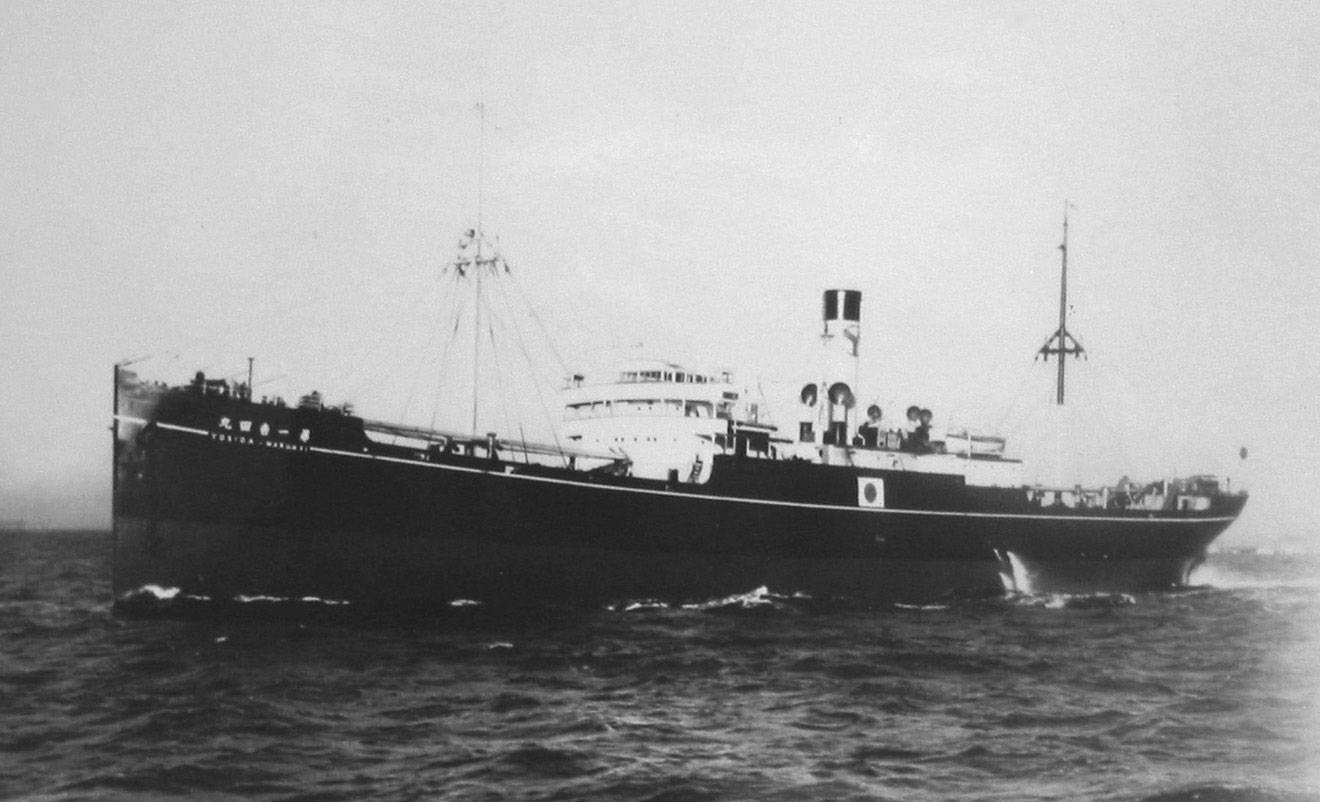
It was July 23, 1943. The Hell ship Clyde Maru arrived in Moji, Japan on August 9th. 1943. The men were transported by train from Moji station to camp Fukuoka 17 at Omuta, Kyushu, arriving on 10 Aug 1943.

In hindsight, a voyage to Japan aboard a Hell ship was preferable to Palawan. On December 14, 1944 the Japanese went forward with a "kill all" order and massacred the remaining 150 American prisoners rather than let them be rescued as Allied forces retook the island later that month. Eleven Americans escaped to tell the tragedy of the Palawan Massacre.

Survivor of Palawan Massacre
click to order
As one survivor recalled, a group of Americans who escaped the initial effort to burn them alive was trapped at the base of a cliff. He saw them run up to the Japanese soldiers and ask to be shot in the head. The soldiers laughed and instead shot or bayoneted them in the stomach. When the men cried out for another bullet to end their misery, the Japanese continued to make merry of it all and left them there to suffer. Twelve men were killed in this fashion.


LUCKY KAMENDAT BECAME #348, a slave laborer at Miike Coal Mine near Omuta, located across a bay from Nagasaki on Kyushu Island in southern Japan. He was among the first POWs at Mitsui's POW camp.

The mine had been abandoned years earlier by Mitsui Mining Co., but pillars of coal remained to support the roof. To remove those pillars was to challenge death. It was the job given to POWs.

On July 5, 2015, UNESCO's World Heritage Committee voted to allow the mine to be a World Heritage site celebrating Japan's industrial development. It remains to be seen if there will be mention of the nearly 2,000 Allied POWs who were slave laborers at the mine.

"We worked with 90-pound jackhammers. The jackhammers weighed more than I did," Kamendat said. "We'd drill holes and pack them with dynamite, then go around the corner and wait for the blast. We'd shovel coal and go on to the next pillar."

It's what he did 12 hours a day, seven days a week, month after dreary month.

"We got a box of rice to eat every day," Kamendat said, using his hands to describe a box about the size of a paperback.

THE PRISON CAMP, known as Fukuoka No. 17, at one point held 1,859 prisoners, nearly half of them Americans but also large numbers of Australian, British and Dutch captives.

Of those, 138 men died, mostly from disease — pneumonia, colitis, scurvy, beriberi, tuberculosis, malaria — aggravated by malnutrition and exhaustion.

Others were murdered. One unfortunate Marine, James Pavlokos, was locked up and starved as punishment for stealing food. It took him 62 days to die.

"I have so many little stories," Kamendat told me, gazing out the window.

Cruelty was the common thread.

At the mine, soldiers guarded the prisoners outside, but civilians ran things inside. As many POWs at the Miike Mine remember, Mitsui's civilian workers were as cruel as the military guards.  One of Mitsui's superintendents, Kamendat recalled, "was exceptionally cruel. He liked having his sport with us. One day he told me to go into a hole and dig out the coal. I knew if I did, I was dead.

"He said, 'If you don't do it, I'll kill you.' I didn't do it, and he didn't kill me."

Kamendat shrugged. He did not smile.

"If you didn't look right, they'd kick you, knock you down. Or they might kill you for no reason at all. They had a thing for redheads; they didn't like redheads at all. I never found out why, but redheads didn't have a chance."

Another of his little stories: "One morning a sergeant woke up with a hangover and decided to take it out on a few of us. He broke my nose, then my collarbone.

"Here's a funny thing. The Japanese never hit you with their hands. They'd hit you with whatever was handy, but never with their hands."

ILLNESS WAS a fact of life. Kamendat contracted malaria, scurvy, pellagra and intestinal worms. Worst of all was beriberi, caused by a lack of vitamin B1.

"Man cannot live on rice alone," he observed.

The "wet" form of beriberi caused his legs to swell to elephantine enormity. He would have lost his legs except for a physician and fellow prisoner, Capt. Thomas Hewlett. Equipped with a razor and scissors, he operated on Kamendat's legs, draining off the fluid.

"It felt so good, I almost passed out," Kamendat said.

Hewlett later published an account of the ordeal at Fukuoka No. 17. It is full of macabre and angry anecdotes, such as: "One prisoner was executed for attempting to learn to read Japanese. He was utilized as the target for a bayonet drill by the guard detail. His body when examined showed over 75 stab wounds."

The doctor, writing in 1978, also lamented the Department of Veterans Affairs' long reluctance to recognize psychological wounds.

"The philosophy of the prisoner of war is a strange one, individually developed to make survival possible in the most hostile environment," Hewlett observed. "He first learned to laugh at the tragedies that comprised the everyday life. He completely obliterated the pangs of hunger. The starving man would willingly trade his meager ration for a few cigarettes."

KAMENDAT STILL WEARS a scar from a head wound suffered when a slab fell from the mine roof.

He was lucky. The rock also struck Sgt. Hez Sallee, of Harrodsburg, Kentucky. "It cut him in half," Kamendat said.

For all his suffering, the young private from Port Huron never lost his will to live.

"One of the fellows told me, 'You've got the right stock in you. You're going to make it.' And I told him, 'Well, my Mama wants to see me, not you.' I always knew I'd survive."

For many years, he spoke at local schools, carrying a message of perseverance: "I tell them, 'Nothing's so bad you can't overcome it.'"

ON AUGUST 9, 1945, the second American atomic bomb fell on Nagasaki. In a heartbeat, 40,000 lives were lost. Coupled with the bomb at Hiroshima, which killed as many as 80,000 people in the initial blast, it broke the Japanese will to continue the war.

Across the bay, 35 miles from Nagasaki, August 9 was just another day of digging coal.

"We were in the mine when they dropped the bomb," Kamendat said. "We were down four levels, which is deep. I didn't feel anything, didn't hear anything, which isn't surprising. It's noisy in a mine."

What does surprise Kamendat is that so many people know about Hiroshima and Nagasaki, and so few know of Nanking, the Chinese city where as many as 300,000 civilians were massacred by the Japanese with horrific efficiency: babies bayoneted, pregnant women gutted, soldiers wielding machetes until they could no longer raise their arms.

He is unsure why most people know the Nazis killed 6 million Jews, but almost no one in the United States realizes the Japanese killed as many as 20 million Chinese civilians.

"People will tell you it was wrong to drop the atomic bomb," he said, "and when you talk to them, you find out they've never even heard of the Rape of Nanking."

He shook his head and again gazed out the window.

WITH THE WAR at an end, the POWs had one thought: getting home.

"Rather than wait for someone to come and free us, we took it upon ourselves," Kamendat said.

He and a few other POWs found their way to an airfield where a B-29 Superfortress sat on the runway.

"The pilot was a good guy," Kamendat recalled. "He said, 'Where do you fellows want to go?'

"We said, 'Well, where are you going?'

"He said, 'Manila.'

"We said, 'Let's go.'"

In Manila, they were put aboard a Coast Guard ship for the voyage to San Francisco where Kamendat — 60 pounds soaking wet — was hospitalized for malnutrition and a heart disorder, likely caused by beriberi.

ON HIS RETURN to Port Huron, he took a job at Mueller Brass, where he would retire after a long career.

Despite lingering heart-related problems, he stayed trim and fit, bearing himself in the way of old soldiers, erect and vigilant.

This man who gave so much of himself — and who lost so much — holds no grudge against the Japanese people.

"Have I forgiven them?" he said, repeating the question. "Sure. People today in Japan don't know any more about it than the young people here do."

Not least of all, he has forgiven himself.

"After the war, we were ashamed of our situation, and we were quiet about it. I still remember feeling embarrassed about being a prisoner of war," he said. "I'm not ashamed any more. I'm not angry either."

Thursday, July 09, 2015

Annals of Mitsui's Miike Mine: Karel Aster


Karel Aster
For nearly four years, Karel Aster was forced into slave labor. He was a prisoner of war in a series of Japanese POW camps on the Philippines and Japan. His last six months were in a Mitsui-owned coal mine in Omuta, Japan. Without mention of Aster's ordeal, this mine became a UNESCO World Heritage site on July 5, 2015.

Aster suffered countless beatings, starvation and illness, and witnessed hundreds of killings. All because he volunteered to fight for the freedom of his homeland. He knew he had to fight somewhere against fascism, and if not in Europe, it was the Philippines.

Aster, 95, is the last survivor of 14 Czech nationals who volunteered for the U.S. Army in the Philippines when Japan invaded the Philippines Islands in December 1941* He was presented with an award from the Central European nation for his work to benefit society, for the promotion of friendship among nations and for the promotion of the Czech Republic around the world, documents from the Czech Republic say. In short, it was for bravery and valor.

“The conditions were so terrible it is hard for me to describe them. We no longer behaved as human beings and the only thing that helped us survive was one’s instinct for self-preservation. ” said Florida resident Karel Aster.

The Czech ambassador to the U.S., Petr Gandalovic, presented him with the Gratias Agit award on April 23, 2015 in Captiva, Florida.

Aster at 20
The Czech government held an award presentation last year in Prague where it "rolled out the red carpet for three days," said Michael Murray, whose wife Jenny is Aster's granddaughter. Aster was unable to make the trip, so Gandalovic vowed to travel to Captiva, Florida to hand-deliver the award, Murray said.

But, frankly, Aster said he doesn't know what makes him special.

"I'm surprised there's all this fuss after 70 years," he said. "It's an honor, but I don't know why he chose to come here and honor me with his visit."

Aster with the Ambassador
Like millions of people who came back from World War II, Aster grappled with memories of his departed friends and struggled with reoccurring nightmares of the horrors he experienced.

And like thousands of other POWs in Imperial Japan's POW camps, he was pushed into backbreaking labor and forced into some of the most inhumane conditions people can imagine.

However, Aster is very different in his own way.

He was not a trained soldier, nor was he persecuted for faith or ideals. He was just a 21-year-old in the wrong place at the wrong time.

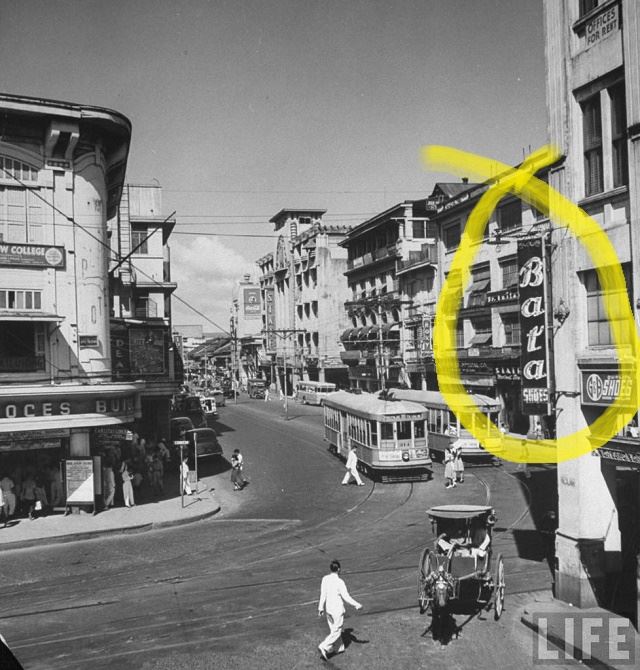
Aster was sent to the Philippines in 1941 to establish local retail stores and a shoe factory on behalf of the European-based Bata Shoe Company. Meanwhile, the Axis powers continued to gain strength as the war grew. Yet, Aster had faith in the company's leadership and was confident the war wouldn't affect him, he said.

But on December 7, 1941, the Japanese attacked Pearl Harbor and invaded the Philippines the following day. As Aster explained to his parents in a letter, four years latter while recuperating in the United States: "The Japanese were now our enemies, as much as the Germans, and we fully understood that if we wanted to regain our liberty for our fatherland, we would have to do whatever we could to contribute to their defeat."

Within weeks, Aster was one of 14 Czech* nationals who volunteered as civilian employees of the U.S. Department of War.

But while Aster has no regrets about his decision to volunteer, he said he's fortunate that he didn't know what was ahead of him.

"If I knew in advance what was waiting for me, I would've committed suicide," Aster said stone-faced. "Death would've been a wonderful escape."

Dodging bullets
Aster's first duty as a volunteer was to patrol the roads on the Bataan Peninsula and salvage as many vehicles or parts as possible.

But even as a volunteer in the Philippines, Aster said he managed to walk away from scary situations and avoid certain death multiple times.

Whether it was a 7-foot python sliding across his legs while he slept, a bad case of dysentery that hospitalized him for weeks, or bombs destroying buildings that he had just left, Aster had his fair share of close calls.

The most dangerous bullet that he dodged, though, came when he managed to escape from the Bataan Death March, where about 75,000 Filipino and American troops on Bataan were forced to make a grueling 65-mile march to Camp O'Donnell.

After U.S. forces surrendered to the Japanese on the Bataan Peninsula on April 9, 1942, everyone was ordered to head south to Marviles begin the march.

But when Aster and his friend Joseph Varak traveled south along the coastline, they happened upon a man and his disabled boat.

Varak quickly repaired the boat, and the man led them through the mine-laden waters to escape the Japanese to Corregidor, an island fortress about five miles off the coast.

More than 60 years later, Aster met Varak's daughter, Hanna Witherspoon, and one of the first things he said to her was, "Your father saved my life."

Aster believes had Varak not been able to repair the boat, he would have died during the march, like so many others.

"It's an awesome thing," said Witherspoon, who now lives in Tennessee, of her meeting Aster and what he said to her. "But it's also a sad thing because my dad didn't make it. I never saw him and he never saw me.

"I was so thankful that there was someone who knew my father and could tell me about him."

Varak died January 1945 on the Hell ship Enoura Maru from American bombing enroute to a prison camp in Japan.

Hokusen Maru
Hokusen Maru Hell ship
On October 1, 1944, without warning, Aster and thousands of other prisoners were loaded onto ships to go to Japan.

Along with fellow Czechs Leo Hermann and Otto Hirsh, he was put on the Hokusen Maru  (aka Benjo Maru or Haro Maru).

One by one, hundreds of prisoners climbed down the narrow hatch and into the cargo hold of the ship to begin their trip to Japan. Aster calls it his "decent into hell."

More than 700 prisoners were crammed into the cargo hold with little room to move – more closely resembling a giant pile of twisted bodies.

During the daytime, a single ray of light managed to pierce the darkness through a hole from above. Otherwise, it was pitch black.

Guards lowered two buckets from the hole: one filled with boiled rice and the other for human waste. Aster said the rice bucket never had enough to go around, and the bucket for waste was never big enough to service everyone.

And while everyone was starving, nothing compared to suffering from thirst, Aster said. With a tongue of sandpaper and lips of small, cracked twigs, many prisoners resorted to drinking their own urine or the blood of the dead.

Aster said he watched men go crazy.

Prisoners would fight for position or comfort, sometimes to the death, and those who lost were thrown into the pile of dead bodies, which grew by the day.

"The conditions were so terrible it is hard for me to describe them," he wrote in the letter to his parents. "We no longer behaved as human beings and the only thing that helped us survive was one's instinct for self-preservation. It shows the human can endure more than most animals."

Aster gains his freedom
After a stop in Hong Kong, the ship arrived in Formosa in early November. The Japanese, realizing that none of the survivors were healthy enough to continue the trip to Japan, imprisoned the men for two months on Formosa at Takao. But, in early February 1945, Aster and others were herded back onto another Hell ship, the Melbourne Maru (possibly  the Enoshima Maru) and transported to Japan. He arrived at the port of Moji like thousands of other POWs.

He and his two fellow Czechs were assigned to Fukuoka #17, Omuta in Kyushu, Japan. One of Japan's oldest and largest coal mines, it was and remains owned by Mitsui. It was closed in 1997. On July 5, 2015, it was designated a UNESCO World Heritage site "as providing a valuable picture not only of the outward appearance but also of the inner workings of an early industrial system critical to the development of modern Japan."

Aster, the shoe salesman, became a slave coal miner for Mitsui at their Miike Mine. Barely 30 miles from Nagasaki, he and many of the POWs held at camp, saw the red atomic cloud rise over the city on August 9, 1945.

Leo Hermann died not long after they arrived in the Camp. Otto Hirsh and Aster survived. At his release from Fukuoka #17, the 6-foot tall Aster weighed 90 pounds, had lost his teeth, and was blind in his left eye. Malnutrition, disease, beatings, and slave labor all took their toll. Harsh memories, lost comrades, and nightmares haunted him for decades.

After the war, Aster emigrated to Chicago, became an American citizen, and continued his career in the shoe industry. He retired to Florida in the 1990s.

NB: The above essay borrows heavily from and corrects this News-Press article.

In memoriam
At Camp O’Donnell is a memorial plaque to the seven Czech War Volunteers who died on in captivity as POWs of Imperial Japan. The Camp was an American military facility that the Japanese turned into a concentration camp. Nearly 30,000 Filipino and American soldiers died from sickness, brutal treatment, deprivation and hardships of war between 1942 and 1945. It is now the Capas National Shrine.

Memorial to Czech Heroes at Camp O'Donnell
One Czech died in Camp O´Donnell, five others perished in 1945 on Hell ships bound for Japan, and one succumbed to illnesses and malnutrition shortly before the end of the war in Japan at Mitsui's Miike Mine POW Camp Fukuoka #17.

Most of these men worked for the Bata Shoe Company. Others were businessmen, diplomats, and refugees from occupied Czechoslovakia.

The following is a list of Czech defenders of Bataan. It is a work in progress. We will be refining it as we our research expands.

US Medal of
Freedom
ASTER Karel (sometimes as Astor, Karl or Charles) - Bata Shoe Company. Upon the surrender of Bataan, escaped by boat to Corregidor to continue with the USAFFE. Later forced onto the Japanese Victory March through Manila, he was imprisoned in Cabanatuan POW Camp and Las Pinas but on October 1, 1944 moved to Hokusen Maru Hell Ship at Manila. Transported to Japan via Hong Kong and Formosa, he was sent to Mitsui's Miike Mine serviced by POW Fukuoka Camp #17 near Nagasaki. Awarded the Philippine Medal of Victory and Philippine Defense Medal as well as on 25 April 2015 the Czech Gratias Agit Award.

BŽOCH Jan (engineer John or Jan V. Bzoch) - Businessman, Trade Official at the Czechoslovak Consulate in Manila and representative of the Czechoslovak Foreign Institute. Survived the infamous Bataan Death March. Imprisoned at Cabanatuan Camp 3. On December 13, 1944 he was put aboard the Oryoku Maru Hell ship to Japan. He survived the American bombing of the ship near Subic Bay, but was killed in the bombing of the Enoura Maru on January 9, 1945 in Takao, Formosa. Received US Medal of Freedom in 1945 and Philippine Defense Medal and Medal of Liberation in 2004.

DANČÁK Karel - Bata Shoe Company. Upon the surrender of Bataan, he escaped by boat to Corregidor to continue the fight with the American. Forced onto the Japanese Victory March through Manila with those surrendered on Corregidor. On February 4, 1945, he was rescued at Bilibid Prison, Manila by American Forces. Received the US Medal of Freedom in 1945 and Philippine Defense Medal and Medal of Liberation in 2004;

Dr. FUCHS Pavel (Paul Fuchs) - Survived Bataan Death March but died shortly after in Camp O'Donnell on 25 May 1942 alongside thousands of other Filipino and American soldiers. Received US Army Medal of Freedom in 1945 and Philippine Defense Medal and Medal of Liberation in 2004.

HERMANN Leo - Upon the surrender of Bataan, escaped by boat to Corregidor to continue with the USAFFE. Later forced into the Japanese Victory March through Manila. Imprisoned in Las Pinas Camp, On October 1, 1944 moved to Hokusen Maru Hell ship as #202, arriving in Formosa in early November 1944. Transported to Japan in January 1945, he died April 2, 1945 of beri-beri in Fukuoka Camp #17 near Nagasaki, Japan, now a World Heritage site. Received US Medal of Freedom in 1945 and Philippine Defense Medal and Medal of Liberation in 2004.

HERMAN Bedřich (Fred P. Hermann) - Bata Shoe Company. Survived Bataan Death March and was liberated at Bilibid Prison in Manila. Bedřich then emigrated to the United States where he died in an accident. Received the US Medal of Freedom in 1945.

HIRSCH Otto - Upon the surrender of Bataan, escaped by boat to Corregidor to continue with the USAFFE. Later forced into the Japanese Victory March through Manila. Imprisoned in Las Pinas prison. On 10/1/1944 transported on the Hell ship Hokusen Maru as #203 to Japan to be a slave laborer at Mitsui's coal mine Fukuoka Camp #17 near Nagasaki. He survived and moved to California. He died October 4, 1987. Received the US Medal of Freedom in 1945.

HRDINA Jaroslav - Director of Bata Shoe in Manila. Upon the surrender of Bataan, escaped by boat to Corregidor to continue with the USAFFE. Later forced into the Japanese Victory March through Manila. Imprisoned in Cabanatuan Camp 3. On December 13, 1944 moved to Oryoku Maru Hell ship. Survived its bombing by American forces, but killed during the bombing of the  Enoura Maru Hell ship January 9, 1945. Received Philippine Defense Medal and Medal of Liberation in 2004.

LENK Hans - a Jewish refugee from Dachau Concentration camp with his brother Fred. Survived Bataan Death March. Rescued at Bilibid Prison, Manila by American Forces on February 2, 1945 with a serious case of tuberculosis, his immigration to the US had to be resolved by a specific Act of Congress.

LENK Fred - a Jewish refugee from Dachau Concentration camp. Survived Bataan Death March. Imprisoned in Cabanatuan POW Camp. On December 13, 1944 transported to Oryoku Maru in Manila for shipment to Japan. Died during the American bombing of this Hell ship as it left the harbor. Received the US Medal of Freedom in 1945 and Philippine Defense Medal and Medal of Liberation in 2004.

MORÁVEK Arnošt (Ernest Moravek) - businessman and Czech community leader in Manila. Upon the surrender of Bataan, escaped by boat to Corregidor to continue with the USAFFE. Later forced onto the Japanese Victory March through Manila. Imprisoned in Bilibid prison, Received the US Medal of Freedom in 1945. Returned to Czechoslovakia.

SCHMELKES Norbert - deputy Consul of Czechoslovakia in Manila, businessman, after almost dying from malaria fled from Bataan Death March to Manila where he joined the resistance. He acquired a contraband shortwave radio, printed and distributed flyers. Wanted by the Japanese, he escaped to Mindanao in 1944 where he worked with the American guerrilla fighters and even though a foreigner, became US Lt. Col. After the war received US citizenship and became National Vice Commander of the American Legion. He is mentioned at length in the book Code Name: High Pockets about wartime resistance activities in Manila.

click to order
VAŘÁK Josef - Bata Shoe technician. Skillful technician helped a group of Czechs to flee the Japanese after the US surrender on Bataan. After repairing a boat engine he transported them to Corregidor Island to continue with the US Army there. Imprisoned in Cabanatuan prison from where he was transported on December 1, 1945 to Oryoku Maru Hell ship. Survived its bombing by American forces, but died during the bombing of the Enoura Maru en route to Taiwan on January 9, 1945.  Received Philippine Defense Medal and Medal of Liberation.

VOLNÝ Antonín - (Anthony G., or Tony Volny or Volney) - Czech diplomat, Fluent speaker of Japanese who had worked nine years at the Czechoslovak Embassy in Tokyo. Worked for the Bata Shoe Co. in Manila before Japan's invasion. Helped US intelligence during the battle for Bataan in Mariaveles. Captured and survived the Bataan Death March. Imprisoned in Cabanatuan POW Camp from where he was transported on December 13, 1944 to the Oryoku Maru Hell ship. Survived its bombing by American forces. Known to actively help the US prisoners and was shot by a Japanese soldier while seeking permission for the other prisoners to evacuate the ship. Died during the bombing of the Enoura Maru en route to Taiwan on January 9, 1945 on his 41st birthday.

GERBEC Ludvík, CEO of the Manila branch of Bata Shoe Co, should also be honored even though as a hemophiliac he was not able to volunteer. Gerbec was imprisoned by the Japanese for financing the resistance in Manila. Imprisoned in Fort Santiago prison, which was used for torture and punishment and then to Bilibid Prison where POWs were sent to die. He barely survived. He died January 2, 1960 in the United States and is buried in Abingdon, Maryland.

Saturday, July 04, 2015

UNESCO and Japan’s Act of Forgetting

Front gate Fukuoka #17 Mitsui Omuta POW Camp
Designation of Japan’s Meiji-era sites overlooks some important history.

By Mindy Kotler
The Diplomat, July 3, 2015

This is Karel Aster’s year. In April, the Czech Republic granted the 95-year-old Florida resident the nation’s highest honor, the Gratias Agit, for his valor and bravery during World War II. Aster had volunteered to fight with the Americans in 1941 to defend the Philippines against the Japanese invasion. He survived the battle, the Bataan Death March*, a hell ship to Japan, and years as a slave laborer at a Mitsui coal mine at Omuta, Kyushu Island.

Also at the Mitsui site were American Lester Tenney and Australian Tom Uren. Tenney, another survivor of the Bataan Death March, persuaded the Japanese government in 2009 to apologize to the American POWs of Japan. Uren, who died last January, was a leading Labor Party politician who secured supplementary payment to Australia’s 900 surviving prisoners from World War II and the Korean War.

Account of being a Scottish POW
at Mitsui's Miike Mine Omuta
click to order
This coming weekend, UNESCO will designate the Mitsui Miike coal mine at Omuta as a World Heritage site of Japan’s early modernization. The Japanese nomination, however, makes no mention of the history of any WWII POWs or of the thousands of Asian slave laborers at this site.


UNESCO is expected to approve 23 similar Japanese-nominated sites. Absent will be any accounting of the dark histories associated with these mines, foundries, and shipyards. Silence about the full history of these would-be global landmarks undermines UNESCO’s international goals and the U.S.-Japan alliance.

Currently there are 1,007 sites on the UNESCO World Heritage List. They are to serve as “instruments of international understanding and international cooperation.” The World Heritage accolade brings prestige and international attention to unique cultural accomplishments.

World Heritage sites often become tourist attractions and many nations view the designation as a path to reviving fading regions and cities. That is one motive behind Japan’s nomination of its sites. But the selective telling of their history is part of the Abe administration’s broader policy of restoring Japanese pride in their past.
Under the Samurai Sword
by CM Graham, best account
of Miike Mine slave labor
click to order

The regions of Japan’s UNESCO nominations are in search of tourist dollars as they are among the hardest hit by the country’s economic downturn. Tourism is a growth industry in Japan with visitors from China nearly doubling and Korea not far behind. Many of the nominated sites are also located in the home districts of Prime Minister Shinzo Abe, Deputy Prime Minister and Finance Minister Taro Aso, and Agriculture Minister Yoshimasa Hayashi.

The family companies of Aso and Hayashi, The Aso Group and Ube Industries respectively, used Allied POW slave labor at company sites included among the nominations. Of the eight industrial areas nominated, five held 26 POW camps with nearly 13,000 Allied POWs providing slave labor to Japan’s industrial giants, including Mitsui, Mitsubishi, Sumitomo, Aso Group, Ube Industries, Tokai Carbon, Nippon Coke & Engineering, Nippon Steel & Sumitomo Metal Corporation, Furukawa Company Group, and Denka. The POWs came from the United States, Canada, the United Kingdom, Australia, India, New Zealand, Norway, Jamaica, Portugal, South Africa, Malaya, Arabia, and Czechoslovakia.

In addition, the nominated ports at Kitakyushu, then called Moji, and Nagasaki, were the entry points for nearly 35,000 Allied POWs, of which approximately 11,000 were American. Over 7,000 American and Allied POWs died traveling to Japan aboard the aptly called “hell ships,” and 3,500 more perished in Japan, 25 percent within the first 30 days of arrival.

Slave labor in Japan did not begin with World War II. Forced and conscripted labor was a critical part of the mining and manufacturing industries in nineteenth-century Meiji Japan. From late Meiji (1868-1912) onward, Japan used “industrial prisons” to supply labor to factories and mills at private companies. Up until the 1930s, the majority of the miners were convicts with the rest being peasants made landless by Meiji land reforms and “outcastes.” One-third were women. Cheap Chinese and Korean labor became important in Japan’s mines and factories, and on the docks.

Lester Tenney's account of
Mitsui's Miike Mine
click to order
Tokyo’s World Heritage nominations fail to address the full historical significance of these sites. Japan’s industrialization included Japanese and foreigners, nobles and outcasts, POW slaves and conscripted Koreans, as well as women and children. Without taking these into account, the story Japan wants to tell fails to meet UNESCO criteria of “universal value and meaning.”

Japan and UNESCO should look to the perhaps surprisingly positive experience of other World Heritage sites that do acknowledge their darker histories. The Liverpool-Maritime Merchant City site is a striking case in point. The Liverpool port served a key role in the triangular transatlantic slave trade of the eighteenth and early nineteenth centuries.

Liverpool has acknowledged its substantial role in a deplorable (and what would today be a criminal) business. Liverpool opened in 2007 the International Slavery Museum on the dock and, in 2006, a Centre for the Study of International Slavery at the University of Liverpool. Identical memorials to the victims of slavery stand on the docks of Liverpool, Richmond, Virginia, and Cotonou, Benin, linking this shared memory among them. These resources have drawn scholars and others and have in fact bolstered Liverpool’s reputation has a place where history – both good and bad – can be studied and understood.

An Australian's account of
slave labor at Mitsui's
Miike coal mine
Of the 21 nations represented on today’s UNESCO World Heritage committee, nationals from six were World War II POWs held on mainland Japan. These are: India, Malaysia, Jamaica, Finland, Poland, and Portugal. A seventh, South Korea, had hundreds of thousands of its men and women conscripted to work in near slavery conditions.

The U.S. does not have a vote in UNESCO. But Washington can speak to its Japanese ally to remind them of the debt they owe American veterans for defending their freedom.

On the morning of August 9, 1945, all the POWs in Omuta saw the red cloud rise from Nagasaki across the bay. Although a very modern weapon ended their ordeal at the Miike mine, they had experienced labor in Japan that had changed little since Meiji times. They would not want such forced labor to be repeated and certainly none would want it forgotten.

As it stands, Japan’s nomination of Meiji industrial sites is an act of forgetting. It omits the full history of Japan’s industrialization. For UNESCO to accept this is a disservice to its charter and to the memory of the thousands that slaved for Imperial Japan.

*Correction: Mr. Aster avoided the Bataan Death March by escaping to Corregidor. He was forced to participate in a "Victory March" of POWs six miles down Manila's Dewey Boulevard to Bilibid Prison. Where the Corregidor POWs stayed until they were packed on freight trains for the 90-mile trip to Cabanatuan Prison Camp. Mr. Aster was a POW in the Philippines until October 1944 and did not arrive in Japan until March 1945. Thus, he was less than six months at the Miike Coal mine, unlike Dr. Tenney who was there nearly three years. Czech government biographies, from which this article drew, are incorrect.

Grammatical corrections made July 7, 2015.

Tuesday, January 27, 2015

Tom Uren an Australian hero: In Memoriam

Tom Uren, a man of letters: POW, MP, AC

January 27, 2015

''I'VE been hit with open hands, closed fists, pieces of wood, iron bars and bamboo about two inches in diameter,'' Tom Uren says.


He was hardly more than a boy then- a prisoner-of-war and slave of the Japanese in his early 20s on the Burma-Thai railway.

But Tom Uren would take many more hits as his long, often controversial life wore on, and he rolled with them all and refused to lie down.

Today, aged 91, with most of his opponents fallen away - and a lot of them forgiven by him, including the Japanese - he will receive the highest honour his nation can bestow on a civilian: Companion in the General Division of the Order of Australia.

Others to be so honoured today include former Howard government foreign affairs minister Alexander Downer, astrophysicist and joint Nobel prize winner Professor Brian Schmidt of the Australian National University's Mount Stromlo Observatory, and the director of the Australian Centre for Christianity and Culture in Canberra, the Reverend Professor James Mitchell Haire.
Australia mourns the passing of the Honourable Tom Uren AC. He was a prisoner of war, a parliamentarian, a minister, a deputy leader of his party and served our country throughout his adult life.He was an aspiring boxer and outstanding athlete who joined the army at the age of 20 and deployed to Timor.He spent his 21st birthday – and the following three – as a prisoner of war. He suffered the brutality of the Burma-Thai Railway and he witnessed from afar the atomic bomb on Nagasaki.Despite these experiences, he rejected hatred. -- Prime Minister Tony Abbott
Mr Uren's award states it is for ''eminent service to the community, particularly through contributions to the welfare of veterans, improved medical education in Vietnam and the preservation of sites of heritage and environmental significance".

All true, but it's an inadequate summation of the life of the Balmain-born man who, impoverished, left school at 13 years and seven months.

He fought for the heavyweight boxing championship of Australia at 19 (and lost), marched into the hell of the Burma-Thai railway at 21, served the Labor Party as member for the Sydney electorate of Reid for 32 years, became his party's deputy leader and a cabinet minister in the Whitlam government and later found himself consigned to the junior ministry for four years in the Hawke government.

As a whip-thin prisoner shipped from Thailand to Japan to labour in a copper smelter, he watched the sky discolour when the Fat Man atomic bomb was dropped on Nagasaki. [He was at Omuta, Fukuoka 17 as a slave laborer for Mitsui Mining.]

It stopped the war and freed him, but he became one of Australia's leading anti-nuclear campaigners. The Japanese, he insists, were as much victims of militarism and fascism as anyone else.

Long a man of the Left, Mr Uren's early excursions into the peace movement were so passionate that ASIO believed he was taking his instructions from the Soviets. When newspapers published the libel, he sued and eventually won enough for two holiday homes, which he took delight in calling the ''Fairfax Retreat '' in the bush and the ''Packer Lodge'' on the New South Wales south coast.

His insistence in marching against the Vietnam War earned him several stretches in jails, including Sydney's Long Bay and Brisbane's Boggo Road. Mr Uren was appalled by the dehumanising effect of the old jails, and used his influence to get at least one of his fellow prisoners a job in Canberra.

''So many people are crook on their fellows, but I just look for the love in people,'' he says.

Often Mr Uren found himself talking, he says ''to two-and-a-half dogs". He was one of the early proponents of self-determination for the East Timorese, but no one seemed interested. He simply kept at it until it became mainstream.

The defining period of his life was the Burma-Thai railway. Taken prisoner on Timor aged 20, he marched into his first prison camp on the railway aged 21.

Always a big, strong man, he became known for his willingness to put his body between furious Japanese guards and his comrades, figuring he could take the beating that might kill a mate weakened by hunger, disease and slaving.

It was the influence of the camp commander, Lieutenant-Colonel Edward ''Weary'' Dunlop, that stayed with him. Colonel Dunlop, a surgeon, taxed fellow officers to build a small bank to buy medical supplies and food, saving the lives of many hundreds of men, and he ensured that the strong looked after the weak, the young looked after the old and the relatively healthy cared for the sick.

It was, Mr Uren says, collectivism - a principle he adopted for life and which during the Cold War found him branded a communist, though he never was.

He never forgot his fellow POW survivors, and fought a battle over 23 years to grant them extra benefits, arguing that they died younger and suffered greater illness than other returned servicemen. In 2011, Prime Minister Julia Gillard announced that all remaining POWs would receive an extra $500 a fortnight.

Of the 22,000 Australian prisoners of the Japanese, only some 400 are alive now, but Mr Uren said Ms Gillard's action displayed compassion and justice, which he valued above all else.

And his elevation to Companion of the Order of Australia?


''I just want to thank my fellow Australians for their support, their warmth and their love in my evergreen years,'' he says.

Reprinted from The Sydney Morning Herald by Tony Wright

Thursday, January 15, 2015

A POW views Unbroken

Fukuoka #17 Omuta
Lester Tenney, Past National Commander of the American Defenders of Bataan and Corregidor (ADBC) has both read the book and seen the movie Unbroken. He is a survivor of the Bataan Death March, a Hellship, and Fukuoka #17 Omuta where he was a slave coal miner for Mitsui. Below is his reaction.

The movie Unbroken will be seen in Japan only when the Japanese in authority decides not to rewrite history.  Forgetting about one's past is like a narcotic: it dulls the senses and relieves the pain of knowing you’ve committed a wrong.

The book, and ultimately the movie Unbroken, once again verifies that society cannot escape history. The reality of what happened remains with us in the present and follows us into the future. History, despite its wrenching pain, cannot be un-lived, but when faced with courage, the past need not be lived that way again.

I have often been asked about the apology given to us by the Japanese government in 2009. I reply that apologies are very important. That is, if they are honest and sincere. A meaningless apology, so often expressed, is like a second insult. I do believe the apology given by Japan's Ambassador to the United States Ichiro Fujisaki and the one given to the POW’s in 2010 by the Minister of Foreign Affairs was sincere and I appreciated the words and the desire to be recorded.

We POWs, however, have been hurt not just by Imperial Japanese soldiers, but also by employees of those Japanese businesses that used and abused us as POWs. We were slave laborers for the likes of Mitsui, Mitsubishi, Kawasaki, Hitachi, Sumitomo, and Nippon Sharyo. And we want to be healed. And that can be done only with a sincere apology.

The movie Unbroken is bringing forward our story of survival and search for justice and truth.  The abuse and enslavement of American and Allied POWs did happen. If honor is important to today's Japanese, then the full and truthful story must be brought to a public forum. It can no longer be hidden.

NHK, Japan's National Broadcasting Company (similar to our PBS) called me and wanted to take me to see the movie. A producer, cameraman, and writer came to my home on December 27th and took my wife and me to a screening of Unbroken. They interviewed me right outside the theater, within minutes after we left the show. 

To be sure, I watched the movie with different reasons than most other movie-goers. My objective was to see whether the movie honestly portrayed being a POW of Japan. I told the NHK journalists that I expected a lot from the film. Thus, my first impressions, on a scale of 1 to 10, I gave the overall picture a 4; the screenwriting a 6, the acting an 8; and the directing a 3.

I found it strange that of all the POWs only one was picked out regularly to be beaten or tortured and that there was only one abusive guard (the Bird). That was not the way it was in the camp that I was in. Arbitrary and excessive punishments to all were the rule. Guards were mean, petty, capricious, and psychotic. And the war crimes records for the camps in which Mr. Zamperini was held also noted the widespread abuse. I also found odd the absence of bugs, vermin, and the deathly ill. And never was it clear how little the POWs were fed, clothed, housed, or given medical care.

When the NHK team said goodbye, I said to them that I was surprised by the interest in the movie  and book as I had not found many people curious about the history of the POWs. I wondered how many viewers understood the enormity of a near 40% death rate among the Americans held in Japanese POW camps. The movie did not capture the degradation of spirit and body that took place. Everyday was a desperate effort to survive for every prisoner, not just one.

In parting, I told the Japanese
Maybe now you can see why we POWs say 'dying is easy; it's the living that’s hard'. We survivors cannot give you any hard facts as to why we survived and others died. We keep asking ourselves, 'why me God, why me Why did I survive?' And it is this burden that has proved worse than all the abuse and torture inflicted upon us by the countless "Birds" that populated the camps. The Bird was not unusual, however, surviving was and our goal, despite all The Birds was survival.
Although the movie was not all that I wanted or expected, it does succeed in ensuring that the struggle for survival endured by all American POWs of Japan is unforgotten.

Saturday, December 17, 2011

Salinas California's National Guard

M3 Stuart Tank Captured in 1942
December 13th was the 375th anniversary of the National Guard. The Massachusetts Bay Company in 1636 established militias of citizen-soldiers that could and would be called upon to fight when needed. These community units evolved into today's National Guard.

Three federalized National Guard units were the first to see action in World War II. They participated in the heroic defense of Bataan in the Philippines before finally surrendering to the Japanese in April 1942.

The 40th Tank Company (later Company C, 194th Tank Battalion) of Salinas, California was one of these National Guard units. Approximately 105 Salinas men (rosters vary) were sent to the Philippines in September 1941 as part of two U.S. Army light tank battalions to reinforce General Douglas MacArthur's forces defending the Philippine Islands. The men from Salinas, armed with antiquated weapons and under-trained, had the distinction of being the first U.S. Armored Force deployed overseas in what was soon to become the Pacific front in World War II.

When the war broke out on December 7, 1941 (December 8th in the Philippines), the company fought on Luzon. It was the last U.S. element to pull back to the Bataan Peninsula. Although outnumbered and without effective anti-personnel and anti-tank ammunition, Company C and other former National Guard Companies slowed the rate of the Japanese advance and delayed the ultimate loss of the Philippines. Their official After-Action Report is available by clicking here.

When American and Filipino forces surrendered on April 9, 1941, the survivors of the Battle for Bataan were forced to participate in the infamous Bataan Death March. Conservative estimates believe that 6,000-10,000 Filipino and 600-1000 U.S. soldiers died on the 65-mile forced march.  Three Presidential unit citations were awarded to the 40th Tank Company for outstanding performance in combat operations.

Burton Anderson in his illustrated history of the Salinas National Guard (1995) reports that of the 105 men he notes in his research as belonging to Company C only 47 returned home alive. Fifty-eight men died: most of whom died in their first months of captivity at Camp O'Donnell (4) and Cabanatuan (33). These men died of all manner of tropical diseases, abuse, and malnutrition.

Among the deaths, one man died on the Bataan Death March and two escaped to become guerrillas. They were, however, later captured and executed. Ten men died on Hellships to Japan (Arisan-maru: 6, Oryoku-maru: 1, Enoura-maru: 2, Brazil-maru: 1). (N.B.: We researched only the names that Mr. Anderson attached to his research. There are other lists, but it would take a professional military historian many months to untangle the inconsistencies.)

POW Memorial at Kinkaseki Dedicated November 2011
Eight men were taken to POW camps in Mukden, China (today's Shenyang) where one perished. Two where shipped to Formosa where one was a slave laborer in heavy construction at the Taihoku POW Camp and the other mined copper at the notorious Kinkaseki Mine Camp. Only 10 American POWs are documented as to having slaved been assigned to do slave labor in this mine, reportedly only toward the end of the war and at the closing of the mine. Researchers believe that more than 1,100 POWs were held at the Kinkaseki camp between 1942 and 1945.

Cave-ins, injury, disease, malnutrition, and executions made Kinkaseki one of the worst of Japan's POW camps. Fewer than 100 of the Allied prisoners held at Kinkaseki are believed to have survived to war's end. The mine was owned by Nippon Mining Company, today's JX Nippon Mining & Metals Corp. of JX Holdings. You can access the Hong Kong War Crimes trial documents of military officers responsible for the atrocities at Kinkaseki HERE.

Thirty-eight men were shipped to Japan on Hellships to become slave laborers at 13 different companies at 18 camps on Japan's main islands. Two men died in the POW camps. Below we identify the best we can, with the resources available, the camps and companies where the men of Salinas were held in Japan.

Sendai 6-B: Hanawa (Osarizawa)
POWs: 3 survived
Labor: Copper mining
Company: Mitsubishi Goushi Company [三菱合資会社]
Company Today: Mitsubishi Materials (Mitsubishi Material Kabushiki Kaisha, 三菱マテリアル株式会社)

Sendai 7-B: Hanaoka
POWs: 2 survived
Labor: Copper mining
Company: Fujita-gumi Construction Company
Company Today: Dowa Holdings Co., Ltd. (DOWA Holdings Kabushiki Kaisha, DOWA ホールディングス株式会社)

Tokyo 1-B: Kawasaki
POWs: 1 survived
Labor: Slave labor in Kawasaki shipyard
Company: Nippon Tsuun
Company Today: Nippon Express Company, Limited (Nippon Tsuun Kabushikigaisha, 日本通運株式会社)

Tokyo 5-B: Niigata
POWs: 1 survived 
Labor: Stevedore, foodstuffs and coal, labor at a foundry
Company: Niigata Kairiku Unso
Company Today: Rinko Corporation (Kabushikigaisha Rinko Corporation, 株式会社リンコーコーポレーション) *Niigata Kairiku Unso Merged to Rinko Corporation in 1960

Tokyo 16-B: Kanose
POWs: 2 survived 
Labor: Slave labor in a carbide mill, manufacture of carbon rods
Company: Showa Denko
Company Today: Showa Denko K.K. (Showa Denko Kabushikigaisha, 昭和電工株式会社)

CONTINUED ON THE NEXT PAGE

Thursday, October 20, 2011

POW Trip to Japan

Stars and Stripes reporter Charlie Reed writes on October 20, 2011

Note that prisoners of war are not "interned" or "internees." They are military prisoners of war who are imprisoned. Civilians are internees.

Former American POWs return to Japan to visit site of internment

YOKOTA AIR BASE, Japan – Time doesn’t heal all wounds.

If it did, 88-year-old Harry Corre wouldn’t be in Japan right now.

Corre and six other men held as prisoners of war by Japan during World War II arrived in Tokyo Sunday for a weeklong “reconciliation tour” sponsored by the Japanese government.

Some 27,000 U.S. troops were captured by Japan during the war and forced into slave labor. The POWs suffered in hellacious conditions at the hands of their Japanese captors; torture, starvation, disease, exposure and the constant deaths of their brothers in arms.

Japan organized the trip to help the men gain a sense of closure to the horrific ordeal. For while they recovered from their injuries and renourished their bodies, many say the pain from their psychological wounds has not dulled with time.

“It doesn’t go away,” said Corre, who works for the Department of Veterans Affairs in Los Angeles. “And it never will.”


Many of the Americans captured by Japan — including Corre and the others in his group — were sent to work directly for Japanese companies fueling the war effort at more than 100 camps throughout Japan. Several of the some 60 companies are still in business today, though only one [Japan Metals & Minerals Co. Ltd.] agreed to participate in the tour.

Those not sent to the companies worked directly for the Japanese military in the Philippines, China and elsewhere in the Pacific.

Tens of thousands of other Allied troops and Chinese, Koreans and Filipinos were also captured by Japan during WWII and the preceding Sino-Japanese War and worked alongside the Americans at the corporate and military work camps.

Corre attributes his own survival at a work camp in Omuta [coal mining for Mitsui Mining, now Nippon Coke & Engineering]  in southwestern Japan to the demise of his fellow soldiers, some of whom would trade their meager daily mush rations for his cigarettes.

“I’m sure there’s a lot of guys I starved to death,” he said during a lecture Monday night at Temple University in Tokyo.

“I’m not proud of it, but I survived,” Corre said. “When you are a POW, the only thing you think about is how to live, not the next guy.”

The guilt and horror still consume his thoughts, even his dreams.

“The best thing you can do is talk about your experience,” Corre said, echoing advice he said he doles out to other veterans at the VA hospital in Los Angeles. “But there’s no way you forget it.”

Following their release after Japan’s surrender in August 1945, the POWs said they tried to forget. Most failed.

“The government said go home, forget about the war and don’t tell anyone about the atrocities,” Harold Bergbower, 91, said Monday at the Temple lecture. “It was terrible.”

Bergbower, who now lives in Peoria, Ariz., returned to Japan with his family in the mid-1950s while still in the Air Force to help train the Japanese military. The Japan Self-Defense Forces were established under the auspices of the U.S. during its occupation of Japan following WWII.

Bergbower spent three years in Japan following the war, but until Tuesday had never gone back to the site of the chemical plant where he worked after being shipped to Japan from the Philippines after his capture.

He was joined by 88-year-old James Collier, also held captive at the chemical plant.

“We wanted to participate in the program in hopes that their visit to our company will help to mitigate the pains that they had to go through and the feelings they have harbored for many years,” said company spokesman Takao Hamada. “I understand that it was a hard decision for them to make to come back here.”

But hard doesn’t come close to the emotions that played into Collier’s decision to return to Japan.

“I was torn,” said Collier, a retired teacher and guidance counselor from Salinas, Calif., who spoke to Stars and Stripes via telephone after touring the Takaoka factory [Japan Metals & Chemicals, JMC] Tuesday. “The company officials were so gracious and well-prepared.”

But all the pleasantries essentially distracted him, he said, and the site had totally changed after decades of development.

“I didn’t slay any demons today,” Collier said. “It was a very nice distraction. ... But those feelings are always right there lurking under the surface, like a volcano.”

Correction
An earlier version of this story incorrectly characterized the number of U.S. POWs who died or were killed after being captured by Japan during WWII. Of the approximately 27,000 POWs, roughly 40 percent perished, 1,115 of them after being sent to Japan to work as forced laborers.

The POWs who came to Japan were dispersed among more than 100 camps run by approximately 60 companies.

Sunday, October 02, 2011

Mitsui's Liberation Dinners

Today, Mitsui family members and corporate officials refuse to meet with the former slave laborers that kept their business profitable during World War II. This was not always the case.

During the War, Mitsui, Japan's oldest and largest trading company, transported and used the greatest number of Allied POWs as slave laborers. Their mines, factories, and docks were considered among the most hellish for non-Japanese. At the postwar war crimes tribunals, former POWs identified many Mitsui employees as sadists, torturers, and murderers.

In the War’s immediate aftermath, hoping to temper these POWs' feelings, Mitsui’s leaders appear to have held a series of "parties" for senior officers from their POW camps. The thoughts of the attendees, unfortunately, are not readily available. Holocaust scholars I have talked with cannot recall any similar farewells between German corporate officials and their recently-released slave laborers.

As this photo in the Australian War Memorial archives shows, Baron Takaharu MITSUI is hosting a party in early September 1945 with Allied officers who had been held in Fukuoka Camp #17, a POW camp at Omuta located at the Mitsui Kozan Miike Kogyo-Sho coal mine and Mitsui Zinc Foundry.

Although the mine is long closed--it was the site in 1960 of Japan's worst and most violent labor dispute--Mitsui facilities  remain at the location and are part of Mitsui's Nippon Coke & Engineering Co. Ltd., one of the successors of Mitsui Mining.  The Japanese government has recently submitted an application to UNESCO to designate this Miike mine as a World  Industrial Heritage Site.

In the photo ABOVE, from left to right are Baron MITSUI; Captain Richard Parker, Australian Army Medical Corps; Padre C. Hamel, Royal Netherlands Army; Lieutenant Theodore Bronk, United States Army Medical Corps; Scotty Howell, Australian Army; and Lieutenant Gerit Bras, Royal Netherlands Army Medical Corps.


In this photo to the LEFT, also from the "party," are: Left To Right: Lieutenant (Lt) Gerit Bras, Royal Netherlands Army Medical Corps; Lt Harold Proff, United States Army Medical Corps; and Captain Ian L. Duncan, Australian Army Medical Corps.

Baron MITSUI, a Dartmouth (1915) graduate, was the owner of the coal mine where these POWs slaved. He took a peculiar interest in their existence at his largest mine. Many former POWs remember seeing the Baron visit both their camp and the mine in his open touring car. He even attended a burlesque show the POWs were allowed to stage in the fall of 1944.

He, thus, knew that the mine was so dangerous that it had been shut down for years and that the injury rate among the POWs was very high. He saw the emaciated POWs and he knew that food, heat, medicine, and clothing were withheld. And he did nothing.

Prior to this "party," up north in Hokkaido, the mine managers of the Mitsui mine at the Hakodate #4, Nishi-Ashibetsu POW camp held their own "celebration." On 20 August 1945, three days after they informed their slave laborers of Japan's surrender, the officials of the Mitsui Mining Company invited POW commander, Colonel William Ashurst and several other officers to a dinner at the local Mitsui Company Club House. The picture BELOW is of some of the attendees. The following POWs, nearly all North China Marines or Wake Island Marines, attended:

Americans: Maj L A Brown, Maj J P S Devereaux, Capt J A White, Capt H C Freuler, Lt W M Kessler, Lt W W Lewis, Lt M L Lewis (All Americans were Marines except for M Lewis who was Army Air Corps).
Australians: Col J J Scanlon, Maj J R P Clark, Maj J Edmonds-Wilson, Capt S G Nottage, Capt R A McDonald, Capt P H Brown, Lt E R Almond, Lt J RBadham.