Showing posts with label Biden Joe. Show all posts

Wednesday, April 08, 2026

NATIONAL POW/MIA RECOGNITION DAY, 2025

A PROCLAMATION

[ANNOTATED]

September 19, 2025

BY THE PRESIDENT OF THE UNITED STATES OF AMERICA

From the battlefields of the Revolutionary War to the trenches of World War II to the sprawling jungles of Vietnam, thousands of our patriotic service members have been horrifically captured by the enemy and forced to endure excruciating torture, agony, and distress in the service of our Nation.  On this National Prisoner of War/Missing in Action (POW/MIA) Recognition Day, we remember our valiant American Soldiers, Sailors, Marines, Airmen, and Coast Guardsmen who were captured while fighting on foreign soil and our missing in action who have not yet returned home.  We honor their courage, we salute their patriotism, and we vow full accountability for the more than 80,000 heroes still missing from the wars and conflicts of the past. [Aside from the atrocious grammar and writing unfit for a White House statement, the facts are incorrect. Not all American POW/MIAs were captured or killed on foreign soil. There were POW/MIAs in the Revolutionary War (note the contradiction in the first sentence), the War of 1812, and the Civil War to name a few. During WWII, Americans were made POWs in American territories such as Wake Island, Guam, and Attu as well as captured on American merchant vessels. Not all military POWs were members of the military. During WWII in the Pacific, for example, the civilian contractors on Wake Island were eventually given veterans status, although none were formally enlisted members of the U.S. Armed Services. Some historians believe that more American Revolutionary War soldiers died as POWs of the British than in battle.]

Every American POW has answered the call of duty to fight not only for our country, but for the futures of our families, fellow soldiers, and our beloved Nation.  Imprisoned by enemy forces, American POWs endured years of deprivation, brutality, and anguish, sustained only by uncommon resilience and grit.  Their families lived in their own prison of fear and perpetual heartache, hoping and praying for a safe return.  For the loved ones of the missing, the unfathomable grief endures.

During my first Administration, I signed the National POW/MIA Flag Act directing the POW/MIA flag to be [visibly] flown with the American flag [on prominent federal buildings]. The black and white banner represents the noble sacrifices made in defense of our freedom and serves as an enduring and powerful symbol of our unwavering commitment to leaving no one behind. [Inexplicably, eight months after President Trump signed S. 693, the “National POW/MIA Flag Act, in November 2019 he had the POW/MIA flag removed from atop the White House. It had flown there under the American flag since 1998, the Clinton Administration. The POW/MIA flag was illegally missing until President Joe Biden returned it atop the White House on April 9, 2021, the anniversary of the fall of the Bataan Penisular in the Philippines and the beginning of the infamous Bataan Death March. It remains there as of April 2026.]

As Commander in Chief, I remain committed to pursuing full accountability for those captured and missing in action.  During my first term, I secured the repatriation of remains from North Korea, believed to be at least 250 individuals who paid the ultimate sacrifice during the Korean War.  In March of this year, our Nation identified the 100th service member from the remains — ending decades of uncertainty for the families of the fallen.  This sacred mission will continue until every American is returned home. [North Korea returned 55 cases of possible remains in the summer of 2018. None hve been returned since. The North Koreans suspended the program in March 2019. Of the 250 possible people among the 501 bones returned, a number are South Korean. The identification process is ongoing.]

Today, the First Lady joins me in honoring America’s POW/MIAs and their families.  The debt of gratitude for their unimaginable sacrifices in defense of our sovereignty can never be repaid, and must never be forgotten. [Notably, in 2017, Trump called these men and women "suckers and losers."]

NOW, THEREFORE, I, DONALD J. TRUMP, President of the United States of America, by virtue of the authority vested in me by the Constitution and the laws of the United States, do hereby proclaim September 19, 2025, as National POW/MIA Recognition Day.  I salute all American POWs who, in the presence of great dangers and uncertainties, honored their duty to this great country.  Let this day also serve as a reminder for our Nation to strengthen our resolve to account for those who are still missing and provide their families long-sought answers.  I call upon Federal, State, tribal, and local government officials and private organizations to observe this day with appropriate ceremonies and activities.

IN WITNESS WHEREOF, I have hereunto set my hand this nineteenth day of September, in the year of our Lord two thousand twenty-five, and of the Independence of the United States of America the two hundred and fiftieth.

                               DONALD J. TRUMP


Sunday, April 21, 2024

History’s Shadow on Japanese Prime Minister’s U.S. Visit

Robinette 2nd from left
This week’s Japan-Philippines-U.S. trilateral summit comes alongside the 82nd anniversary of the Bataan Death March. 

By Patrick Regan and Mindy Kotler Smith

Patrick Regan is a member of the American Defenders of Bataan and Corregidor Memorial Society (ADBC-MS) and the grandson of U.S. Army Air Corps Tech. Sgt. Donald C. Regan, who survived the Bataan Death March and 41 months as a POW of the Japanese, including two years at Hirohata Camp 12-B working for Nippon Steel.

Mindy Kotler Smith is also a member of the ADBC-MS and great niece of U.S. Army Corps of Engineers Construction Engineer Fletcher Wood, who survived the siege of Corregidor but died in a Japanese POW camp in the Philippines. She is the editor of this blog.

The Diplomat, April 09, 2024

Few weeks are as historic in the shared history of Japan, the Philippines, and the United States as this one. The focus this week will be on these countries’ three leaders — Japanese Prime Minister Kishida Fumio, U.S. President Joe Biden, and Philippine President Ferdinand “Bongbong” Marcos, Jr. — and their summit in Washington. But the anniversaries of Imperial Japan’s worst war crimes this week cast a shadow over their meetings.

More than 80 years later, those acts remain largely forgotten even though they underlie one of the key topics Kishida is expected to raise at his summit with Biden: Nippon Steel’s attempt to acquire U.S. Steel.

By acknowledging Japan and Nippon Steel’s role in the mistreatment of prisoners of war (POWs) during World War II, Kishida has an opportunity to not only do the right thing but also connect in a meaningful way with Biden and Marcos, both of whom have direct family ties to those atrocities.

The Bataan Death March

Eighty-two years ago, on April 9, 1942, the fighting on the Philippines’ Bataan Peninsula came to an end. For four months, American and Filipino troops had done what no one in the Pacific could do — halt Imperial Japan’s sweep across Asia. Through persistence and ingenuity, without air or naval support, they mounted an unexpectedly stiff resistance against the invaders.

Resupply and reinforcements were not coming, though, and the troops on Bataan were starving and out of ammunition. Faced with a certain massacre, the U.S. commanding general, Edward P. King, disobeyed orders and surrendered his men. But what followed was worse than combat.

On the first day of the surrender, Japanese troops looted the personal possessions of their prisoners, murdered those found with Japanese money, bayonetted to death the sick, and raped the one American nurse they could find.

The next day, April 10, the men were organized in groups of 100 and force-marched up the peninsula in the sweltering tropical heat. They were denied water, food, and medicine. Japanese officers beheaded men at will. The guards killed laggards and those they believed disrespectful. Japanese military vehicles crushed men into the road beneath them, while their occupants laughed. The prisoners’ agonizing 65-mile trek lasted anywhere from four days to two weeks.

What became known as the infamous Bataan Death March was only part of a 100-mile journey to an improvised POW camp. The next segment was 28 miles by rail where the men were packed, standing, in metal boxcars. Many died from heat exhaustion, dysentery, suffocation, or malaria. Survivors then stumbled the next several miles to the unfinished barracks of Camp O’Donnell. The camp contained only two water spigots for the more 55,000 men. In the first month, thousands died of disease and despair.

Among those surviving the march and the first months of imprisonment was a distant cousin of Biden, John Robinette, a Port Clinton, Ohio, soldier with Company C of the 192nd Provisional Tank Battalion. Months before, he had participated in America’s first winning tank battle of WWII. Robinette died of beriberi that November.

Also surviving the march was Marcos’ father and namesake, Ferdinand Marcos Sr., who was an officer with the Philippine Army. Starting in June 1942, the Japanese, to reduce deaths and to reward collaboration, began to release Filipino prisoners of war. Ferdinand was released in August.

Thus, when Kishida sits down with his American and Filipino counterparts for a trilateral summit on April 11, he will face two leaders with direct ties to the Bataan Death March. It will not be his first time in that setting.

In October 2013, then-Foreign Minister Kishida met with two Bataan Death March survivors and one widow. They were part of a visiting delegation of American former prisoners of war of Japan seeking understanding and reconciliation from their former captors. Kishida expressed deep remorse for their suffering.

Despite this intimate history, it is reported that the Japanese prime minister will not express his country’s remorse over World War II in his speech at the U.S. Congress on April 11. Foreign Ministry officials claim Japan’s position on the war “has been settled to some extent” and Kishida “will not touch on it in the speech.”

Surviving as a Prisoner of Japan

April 11 is remembered in the Philippines as the anniversary of the Pantingan River Massacre. Lost and starving Filipino and American officers of the 91st Philippine Army Division missed the April 9 surrender deadline. The commander of Japan’s 65th Brigade, to whom they eventually surrendered, reprimanded the 400 men for being late. He then ordered his officers to behead the defenseless prisoners and directed his enlisted men to bayonet to death those missed by the swords. The slaughter reportedly took two hours.

Surviving imprisonment and hard labor in the Philippines was just the beginning for those who surrendered on Bataan. Starting in August 1942, the Japanese began shipping American and European prisoners from the Philippines to Japan to be used as slave laborers by national corporations. The prisoners were told if they did not work, they would not eat.

One of those corporations was Nippon Steel.

Nippon Steel

In his visit this week, Kishida will present Nippon Steel as the face of Japan. His message will be that the company, like Japan, should be viewed as a trusted ally that will enhance security cooperation by improving the U.S. industrial base. Nowhere will he mention the company’s unfinished business from the war.

Nippon Steel, like all major Japanese wartime corporations, requisitioned prisoner-of-war labor and maintained prisoner labor camps. The firm was so vital to Japanese war production that one of its steel mills was to be a target of an atomic bomb. At its mines, mills, and railyards, Nippon Steel used 6,000 Allied prisoners of war. At least 2,000 were American, most of whom were survivors of the conquest of the Philippines that began with the fall of Bataan.

At Nippon Steel facilities, the POWs were starved, abused, and denied adequate medical care. Company employees willfully beat the POWs working alongside them. Barracks were unheated, infested with vermin, and overcrowded. Ten percent of the prisoners died.

Nippon Steel still refuses to acknowledge that Americans suffered in forced service to the company during World War II. That history is nowhere to be found on Nippon Steel’s website, which devotes more than 1,000 words to a timeline of the company’s heritage. The timeline, which goes back to 1908, ignores the 1940s entirely.

Nippon Steel’s exploitation of POW labor during the war is also ignored at two of its functioning steel mills that were designated in 2015 as UNESCO World Industrial Heritage sites. Despite a UNESCO reprimand, the Japanese government refuses to provide “the full history” of these sites by explaining how POWs helped maintain wartime production.

Nippon Steel has invested in a slew of Washington, D.C., lobbyists to make the case for the company’s purchase of U.S. Steel. The prime minister is supposed to build on their imagery of Nippon Steel as a responsible, technologically sophisticated corporation sensitive to American interests. Ignored is that the company has long failed at its most basic expression of respect for American workers. It has never acknowledged or apologized for its mistreatment of American “laborers.”

The Opportunity

Kishida declared last year at the U.N. that he wanted to emphasize “human dignity” in international cooperation. Here is his chance. He can suggest that Nippon Steel do something more meaningful with its efforts to gain political support for the deal than to emphasize that it is good business.

There is precedent for such a move. In 2015, Mitsubishi Materials Corporation became the first and only Japanese company to apologize and present an atonement payment for using American slave labor during the war. The admission was hailed at the time as an important step in moving Japanese industry out of the shadow of its wartime atrocities, although no other Japanese companies have done the same.

Nippon Steel now has a rare opportunity to make a statement similar to Mitsubishi’s. In the face of recent government leaders reframing the Japanese purely as victims during World War II and to rewrite history downplaying the plight of those who suffered under Japan’s rampage across the Pacific, this would be a timely trust-building corporate and national move.

In addition to acknowledgement and an apology, Nippon Steel, along with the Japanese government, would ideally devote resources annually to educational efforts both in Japan and the U.S. to make the history of American POWs in Japan more widely known. There should be more than a few plaques at steel plants. Virtual visits to former POW camps, digitization of records, exchange programs for families, and a national memorial would be appropriate. Both Japan and Nippon Steel have to show they are serious.

These efforts are especially important now, nearly 80 years since the end of the war, as the living memory of wartime events slips away.

It’s too late now for the thousands of Americans who slaved away for Nippon Steel to get the apology and recognition they deserve. That includes the father of the famed Smothers Brothers, the grandfather of California Governor Gavin Newsom, and Olympian Louis Zamperini, whose remarkable story of survival was depicted in the book and movie “Unbroken.”

But it’s not too late for Nippon Steel, with Kishida’s encouragement, to face its past directly so it can move on to its future, potentially with U.S. Steel, with some measure of honor and trust.

Sunday, December 24, 2023

Who Bombed Pearl Harbor

O
n December 8, 1941, President Franklin D. Roosevelt gave his famous "day in infamy" speech describing Imperial Japan's "dastardly attack" on Pearl Harbor and condemning Tokyo's "surprise offensive extending throughout the Pacific area."

Immediately following the speech, the U.S. Senate declared war on Japan. A state of war with Germany was declared December 11, hours after Germany had declared war on the United States.

There was no official, national remembrance of the tragedy at Pearl Harbor until 1994. The 103rd Congress passed a joint resolution in 1994 designating December 7, 1993, as "National Pearl Harbor Remembrance Day." President Bill Clinton signed it into law (Public Law 103-308) on August 23rd. The law states: December 7 of each year is designated as "National Pearl Harbor Remembrance Day" and the President is authorized and requested— (1) to issue annually a proclamation calling on the people of the United States to observe the day with appropriate ceremonies and activities; and (2) to urge all Federal agencies, and interested organizations, groups, and individuals, to fly the flag of the United States at halfstaff" each December 7 in honor of the individuals who died as a result of their service at Pearl Harbor.

Historians will wonder why the law identifies the nonexistent Japanese "Air Force" as the aggressor and is not specific about the number of casualties at Pearl Harbor. At the time, Japan did not have an independent Air Force. It was the Imperial Japanese Navy Air Service that attacked Hawaii. In addition, unlike in President Roosevelt's speech, there is no mention of Japan's other lightning strikes throughout the Pacific on December 7th. These attacks famously destroyed the American Asiatic Fleet and the Army's Far East Air Force while cutting off U.S. outposts in the Pacific from the mainland and resuplly.

The Proclamations
The first proclamation was issued by President Clinton on November 29, 1994, 53 years after the Pearl Harbor attack. His 1994 proclamation, as all that followed, did little to enlighten Americans about the day's history. Notably, it began the "tradition" of not identifying who "attacked" U.S. Forces in Hawaii that day. All that we learn is that the attack "involved America in a worldwide battle against the forces of fascism and oppression."

In an examination of the 30 Pearl Harbor Presidential proclamations made since 1994, 11 have no mention of Japan. In other words, the "enemy" who attacked the American territory is not identified. It could have been any of the Axis powers. Thailand had a modern, able air force, albeit no aircraft carriers.

President George W. Bush (43) recognized Japan in only two of his eight Pearl Harbor Day commemorative statements. His administration had a close relationship with Japan and notably squashed a joint congressional resolution remembering the 60th anniversary of the end of WWII and the defeat of Japan. President Biden, who lost his uncle and a cousin to the Japanese, has mentioned Japan in only one of his three statements. Here is the link to this year's Proclamation. (I have a memo outlining all 30 statements. If interested, email me.)

California Governor Gavin Newson's 2023 Pearl Harbor Day proclamation clearly mentions Japan. His grandfather, Arthur Menzies, was a soldier on Corregidor with the 60th Coast Artillery Regiment (AntiAircraft) K Battery and endured a hellship and nearly four years in Japanese POW Camps. He was not on the Bataan Death March as some reports say. Sadly, while experiencing a flashback in 1973, he threatened to kill Newsom's mother and her twin sister. When he realized that they were not Japanese prison guards, he turned the gun on himself.

Missing
I have not found any member of congress, even members of the Veterans Affairs Committees in the House and Senate who have publicly remembered Pearl Harbor Day. If you find one, please tell me.

Also missing in the proclamations is mention of all the other attacks Japan made that day throughout the Pacific, especially against the American territories of Wake Island, Guam, Midway, and Howland Island. I leave to my loyal readers to figure out how many other Americans died that day in battle (tell me if you run the numbers). President Roosevelt, in contrast, was quite clear in his speech to Congress that December 7th was a day of multiple Japanese attacks in the Asia-Pacific (territories in continental Asia were bombed as well as islands in the Pacific).

To be sure, Pearl Harbor saw the greatest number of casualties and Medal of Honor (MoH) honorees among the American territories in the Pacific attacked that day. For their actions during the attack on Pearl Harbor, 15 sailors in the U.S. Navy (from seven ships and one Naval Air Station) and 1 Marine were awarded Medals of Honor. The 16 recipients held a wide range of ranks, from seaman to rear admiral. Eleven (69%) received their awards posthumously.

The first Marine to receive the Medal of Honor during World War II was killed on Midway, December 7, 1941. First Lieutenant George H. Cannon, USMC, from Michigan, remained at his post until all of his wounded men were evacuated, though severely wounded himself. His selfless action and concern for his men was an inspiration.

When war began, the American Embassy rushed to burn documents before the Kempeitai arrested and interned them. Niles W. Bond was a consular officer in Yokohama, Japan from 1940-1942 and was there during the attack on Pearl Harbor. His accounts of the time make interesting reading.

Friday, April 07, 2023

A Proclamation on National Former Prisoner Of War Recognition Day, 2023


THE WHITE HOUSE

PRESIDENTIAL ACTIONS

     On National Former Prisoner of War Recognition Day, we honor the more than half a million service members who sacrificed their freedom as prisoners of war in order to defend freedom for their fellow Americans.  These brave patriots remind us of the grave costs of war and the sacrifice we ask of those who fight for us.  We owe them and their families, caregivers, and survivors a debt of gratitude we can never fully repay.

     This year, we mark the 50th anniversary of Operation Homecoming, the repatriation of nearly 600 Americans held captive during the Vietnam War, as well as the 70th anniversary of Operations Big Switch and Little Switch, which brought home more than 3,700 American prisoners of the Korean War.  These heroes — and other prisoners of war from every conflict throughout our history — stand among the bravest of our Nation, serving honorably under intolerable circumstances.  Their unwavering courage helped defend an idea unlike any other in human history:  the idea of the United States of America.

     Our Nation has many obligations, but our one truly sacred obligation is to equip those we send into harm’s way and to care for them and their families when they return home.  To every prisoner of war now safely reunited with their loved ones:  We will never fail to honor your sacrifice.  To every family still awaiting answers about a hero who went missing in action:  We will never stop working to bring them home.  And to every service member defending our Nation and our values around the world today:  We will never forget what you give to this country each day.

     May God bless our former prisoners of war and their families, caregivers, and survivors, and may God protect our troops.

     NOW, THEREFORE, I, JOSEPH R. BIDEN JR., President of the United States of America, by virtue of the authority vested in me by the Constitution and the laws of the United States, do hereby proclaim April 9, 2023, as National Former Prisoner of War Recognition Day.  I call upon Americans to observe this day by honoring the service and sacrifice of all former prisoners of war as our Nation expresses its eternal gratitude for their sacrifice.  I also call upon Federal, State, and local government officials and organizations to observe this day with appropriate ceremonies and activities.

     IN WITNESS WHEREOF, I have hereunto set my hand this

seventh day of April, in the year of our Lord two thousand twenty-three, and of the Independence of the United States of America the two hundred and forty-seventh.

                             JOSEPH R. BIDEN JR.

Sunday, April 10, 2022

White House Proclamation

As every president starting with Ronald Reagan in 1988, President Biden recognized National Former POW Recognition Day. He is the first to mention the Bataan Death March, but like many previous presidents on events remembering Japanese atrocities, such as the bombing of Pearl Harbor, he neglected to mention who was the perpetrator of this war crime or who was the enemy. Where the Bataan Death March happened is also missing. 

A Proclamation on National Former Prisoner Of War Recognition Day, 2022
APRIL 08, 2022

On April 9, 1942, tens of thousands of American and Filipino prisoners of war began what would become known to history as the Bataan Death March. Thousands died during the march, but the indomitable spirit of those prisoners was never broken. Eighty years later, our Nation continues to honor their courage and recognize the more than half a million service members who sacrificed their own freedom as prisoners of war to ensure that our Nation and the values of freedom and democracy always prevail.

Former prisoners of war stand among the bravest of our Nation. They fought valiantly and served with honor — and under often agonizing conditions as prisoners, they demonstrated incredible personal courage, love of country, and devotion to duty. Through their extraordinary sacrifices and selflessness, they helped ensure freedom for millions of people. They are heroes.

I join all Americans in expressing our deepest gratitude to every service member who has endured being a prisoner of war and to their families, caregivers, and survivors. Their service — knowing all the risk and danger it could bring — is a credit to their character and to our Nation. On this day and every day, we remember the hardships of captivity they survived in service to our Nation. We also remember all the brave women and men who died as prisoners in foreign lands during our Nation’s past wars, and we grieve with those at home who prayed for their loved ones’ return. Their faith, love of family, and devotion to our Nation inspire us all, and we will always remember their sacrifices.

Today, our brave men and women in uniform carry on the rich legacy of our former prisoners of war — unrelenting in battle, unwavering in loyalty, unmatched in decency, and prepared to make the ultimate sacrifice on behalf of our Nation.

May God bless our former prisoners of war and their families, and may God protect our troops.

NOW, THEREFORE, I, JOSEPH R. BIDEN JR., President of the United States of America, by virtue of the authority vested in me by the Constitution and the laws of the United States, do hereby proclaim April 9, 2022, as National Former Prisoner of War Recognition Day. I call upon Americans to observe this day by honoring the service and sacrifice of all former prisoners of war as our Nation expresses its eternal gratitude for their sacrifice. I also call upon Federal, State, and local government officials and organizations to observe this day with appropriate ceremonies and activities.

IN WITNESS WHEREOF, I have hereunto set my hand this eighth day of April, in the year of our Lord two thousand twenty-two, and of the Independence of the United States of America the two hundred and forty-sixth.

JOSEPH R. BIDEN JR.

Friday, May 14, 2021

Remembering President Biden's Uncle

On May 14, 1944 at 5:05pm 2nd Lt. Ambrose J. Finnegan, Jr., 29, an U.S. Army Air Force courier, took off as a passenger aboard an A-20G Havoc (42-86768), "Black Sunday" from Momote Airfield on Los Negros Island in the Admiralty Islands. Los Negros is separated from Manus Island by the narrow loniu Passage.

The airfield had only been wrested from the Japanese in early March during the Admiralty Islands Campaign (Operation Brewer) by the US Army's 1st Cavalry Division.

Momote's 4,000-foot-long runway had been badly damaged by bombing, but it was revitalized by the Seabees of Mobile Construction Battalion 40, who began work on it only a few days after the February 29, 1944 landing. It is worthy of note that they did so while the area was still an active battlefield, a daring feat for which they received the Presidential Unit Citation. Here it is worth noting that the many airfields they and other units built across the Pacific are now abandoned. A little knowledge of the US campaigns during the Pacific War would provide many suggestions on locations and the challenges to rebuild US forces in the Pacific.

The plane was piloted by Rochester, New York native 1st Lt. Harold R. Prince. The crew included gunner TSgt Ashford H. Cardwell and engineer TSgt Anthony Zulkus. They were headed 500 miles across the Bismarck Sea to the then-Headquarters of the Fifth Air Force (15 June – 10 August 1944) at the Nadzab Airfield Complex on New Guinea. The weather was reported as good on the flight route. Before reaching New Guinea's northeast coast, possibly three-quarters toward Nadzab, the plane ran into engine trouble and the pilot attempted a crash landing on the water.

It was a hard landing. Prince, Cardwell, and Finnegan never surfaced. They went down with the plane. Zulkus miraculously survived the crash and was soon rescued. Although interviewed decades later by the founder of the acclaimed Pacific Wrecks website about the crash, his memory was understandably hazy. Prior to the flight, he did not know Lt. Finnegan. [If interested I can put you in contact with this researcher]

When the aircraft failed to arrive it was officially listed as Missing In Action (MIA).

MIA Lt. Finnegan was one of President Joe Biden's mother's brothers. The President is his uncle Lt. Finnegan's Primary Next Of Kin (PNOK).

President Biden is also possibly the second president with a MIA family member. Joseph Kennedy, Jr., the older brother of President John F. Kennedy, died in a plane explosion over the English Channel near the North Sea on August 12, 1944 and is listed on the Tablets of the Missing at Cambridge American Cemetery and Memorial near Cambridge, England. However, the formal military definition of MIA is someone with whom contact is lost and whose whereabouts are not known, but whose death is not confirmed. Kennedy's death was confirmed, Finnegan's was not.

So, take a moment on May 14th to remember Lt. Finnegan, another hero of the Pacific War.

Lt Finnegan is remembered at the family grave [you can leave a flower or note at this website] and is on the Tablets of the Missing in the American Cemetery in Manila.

For more on MacArthur's New Guinea campaigns, see: 

Island Hopping toward Japan 1943-44, US Army Center of Military History

Friday, April 09, 2021

THE Flag returns

.
April 9, 2021 by Mindy Kotler

At midnight, beginning April 9,  2021, National Former POW Recognition Day and the 79th Anniversary of the fall of Bataan and the start of the Bataan Death March in the Philippines, President Joe Biden returned the POW/MIA flag atop the White House below the Stars & Stripes. It had flown there everyday since the late-90s, but was removed on Flag Day, June 14, 2020 by the previous occupant of the residence.
Thank you Joe!

The public announcement was made at the daily White House press briefing by Press Secretary Ms. Jen Psaki: 
You may have also noticed another flag flying above the White House today. 
 In keeping with the President and the First Lady’s commitment to honor the sacrifices of all those who serve — including veterans, their families, caregivers, and survivors — the President and First Lady have restored the POW/MIA flag to its original location on top of the White House Residence.
In a true display of bipartisanship, Senators Hassan, Warren, and Cotton wrote to the President at the beginning of the administration requesting the POW/MIA flag fly high above the Residence. This follows passage of a bipartisan — bipartisan legislation in 2019, led by those same senators, which requires the flag to be displayed whenever the American flag flies on federal buildings. 
Today, also happens to be National Former Prisoner of War Recognition Day — a day when we remember and honor those who were in captivity in service to our nation and recognize those who awaited their return.
Office of the President of the United States

APRIL 9, 2021 

Throughout our Nation’s history, those who have served in our Armed Forces have steadfastly stood in defense of the United States and of freedom throughout the world. Although countless courageous service members and civilians have given their lives for our Nation, more than half a million others have sacrificed their own freedom as prisoners of war so the cause of liberty always prevails.

Enduring with limitless dignity and determination, these former prisoners of war are a powerful reminder that their indomitable spirit could not be broken, even by brutal treatment in contravention of international law and morality. Despite the terrible suffering inflicted upon them by their captors in harsh prisons and camps in Europe and Asia, American prisoners of war steadfastly demonstrated their devotion to duty, honor, and country.

On this day and every day, let us honor all who have borne the hardships of captivity in service to our Nation, remember the brave men and women who were held as prisoners in foreign lands during our Nation’s past conflicts, and recognize those at home who anxiously awaited their loved ones’ return. Their faith in God, love of family, and trust in our Nation are an inspiration to all Americans, and we will always remember their sacrifices.

NOW, THEREFORE, I, JOSEPH R. BIDEN JR., President of the United States of America, by virtue of the authority vested in me by the Constitution and the laws of the United States, do hereby proclaim April 9, 2021, as National Former Prisoner of War Recognition Day. I call upon all Americans to observe this day by honoring the service and sacrifice of all former prisoners of war as our Nation expresses its eternal gratitude for their sacrifice. I also call upon Federal, State, and local government officials and organizations to observe this day with appropriate ceremonies and activities.

IN WITNESS WHEREOF, I have hereunto set my hand this ninth day of April, in the year of our Lord two thousand twenty-one, and of the Independence of the United States of America the two hundred and forty-fifth.

JOSEPH R. BIDEN JR

Monday, December 02, 2013

Appeal to Vice President Biden

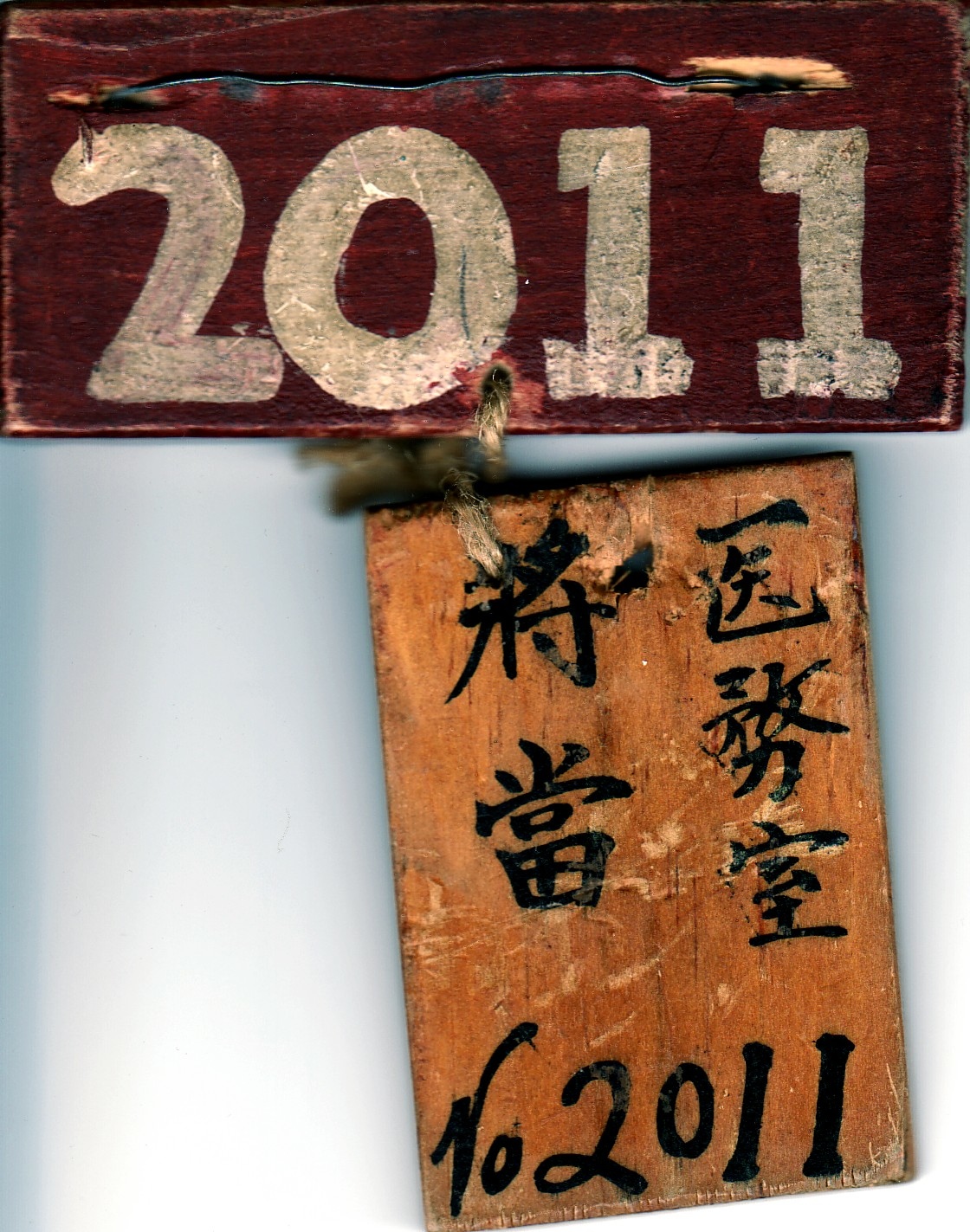
Robert E. Thompson's POW Badge
Below is a letter sent to Vice President Biden last week by the American Defenders of Bataan and Corregidor Memorial Society. It suggests that the path being taken by the American POWs of Japan to achieve justice can be a model for Tokyo to pursue historical reconciliation with its other victims. The Memorial Society asks the Vice President to continue to press the Japanese to achieve full and meaningful contrition toward the POWs and work to preserve their history. The goal is the establishment of a permanent fund for educational and research activities on the POW experience in the Pacific.

November 25, 2013

Dear Mr. Vice President:

As you meet next week with members of Japan’s government to confirm the significance of the U.S.-Japan Alliance, I hope that you will share with them the importance of remembering those American veterans who became prisoners of war of the Imperial Japanese during World War II.

With the help of President Obama’s Administration one aspect of Japan’s reconciliation with American POWs began. In 2009, a Japanese government Cabinet-approved apology was offered and in 2010 a program of understanding and visitation to Japan was initiated for former POWs. This year it was expanded to include widows. The visitation program’s success should encourage Japan to do more: educating future generations in Japan and the U.S. on the POW experience in the Pacific and its lessons for war and peace needs to be the goal.

How Japan addresses its responsibilities toward the American POWs can be a model for Tokyo on how the historical reconciliation process can proceed. The American POWs ask for respect and that history to be not revised, but preserved. They want Japan’s great multi-national corporations to acknowledge their use of POW slave labor. They ask the United States Government to aid and preserve their experiences under Imperial Japan for future generations

We ask that you take a moment in your talks in Tokyo, to speak up for those veterans who defended America in the Philippines, Java, and Wake Island and how, as captives, endured the horrors of the Bataan Death March, the “Hell Ships,” enslavement on the Thai-Burma Railway, and the brutal conditions in slave labor camps in Japan.

We ask that the United States Government express its strong desire for Japan to establish a permanent fund for education, remembrance, and reconciliation. The goal is to: continue the POW visitation program for former POWs, widows and descendants; a program for research, documentation, education, and people-to-people exchanges and national memorials to the POWs who slaved and died on Japanese controlled soil or aboard the “Hell Ships.”

Respectfully yours,

Ms. Jan Thompson
President
American Defenders of Bataan and Corregidor Memorial Society
Daughter of PhM2 Robert E. Thompson USN, USS Canopus, Corregidor, Bilibid & Mukden