Thursday, December 09, 2021


From the Congressional Record [Page S8959]

NATIONAL PEARL HARBOR REMEMBRANCE DAY AND 
HONORING THE TANKERS OF MAYWOOD, ILLINOIS

December 7, 2012

Ms. DUCKWORTH. Mr. President, I rise today on Pearl Harbor Day to remind my colleagues that on December 7, 1941, Imperial Japan attacked not only Pearl Harbor but also the Philippine Islands, Guam, Wake Island, Howland Island, Midway, Malaya, Singapore, Hong Kong, Shanghai, and Bangkok.

In the Philippines that day, 89 men from Maywood, IL, who made up Company ``B'' of the 192nd Tank Battalion--federated National Guard units from Illinois, Wisconsin, Kentucky, and Ohio--defended Clark Field from invading Japanese forces. They had arrived in the Philippines less than 3 weeks earlier.

These Illinois tankers watched helplessly as Japan's modern planes flew beyond the reach of their guns and destroyed the airfield. They then fought valiantly on the Bataan Peninsula with antiquated weapons and dwindling supplies. Relief from the United States never came. Though they held out for months, the men, overcome with fatigue, starvation, and disease, were surrendered by their commanders on April 9, 1942.

What followed was the infamous Bataan Death March 100 miles up the peninsula to a makeshift prison camp. Thousands died. Maywood, a hamlet outside of Chicago, had the greatest number of men from any single American town on the Death March. They would not all make it home. Those who survived the initial march endured 3 and a half years of death camps, brutal forced labor, and unimaginable abuse. More than half the Americans taken prisoner on Bataan died before they could see the war's end. Of the 89 Maywood men of Company ``B'' who left the U.S. in 1941, only 43 returned home in 1945.

For 79 years, Maywood has celebrated and remembered its heroes of Bataan with an annual September Memorial. Like many important celebrations in COVID, this was the second year that the memorial had to be postponed. But we do not forget the men of Maywood. From the Bataan-Corregidor Memorial Bridge in Chicago to Maywood's Bataan Memorial Park, my home State of Illinois recalls daily their sacrifice for liberty.

As a retired member of the Illinois National Guard myself, today is a solemn day--a day that will forever live in infamy--when we are reminded of the sacrifices made and the brave lives lost in service to our Nation. I am proud to have served with my Illinois National Guard family and work to continue to bring respect, remembrance, and honor to such a strong legacy.

Therefore, I ask my fellow Senators to join me on this 80th anniversary of Japan's surprise attack on Pearl Harbor and to remember the other Americans who fought and died throughout the Pacific that day. Although the aim of the December 7 surprise attack on Hawaii's Pearl Harbor was to destroy the U.S. Pacific Fleet in its home port and to discourage U.S. action in Asia, the other strikes served as preludes to full-scale invasion and brutal military occupation.

I further ask my colleagues to join me in commending the hard work and dedication of Maywood Bataan Day Organization President Col. Richard A. McMahon, Jr., and his board of directors, as well as Ms. Jan Thompson, president of the Illinois-based American Defenders of Bataan and Corregidor Memorial Society, who are committed to honoring and preserving the history of the men and women of Bataan who gave so much in the fight against tyranny and fascism. They, too, are the part of the story of Pearl Harbor Day and in keeping the memory of the men of Maywood alive to this day.

Tuesday, December 07, 2021

Eighty Years Ago, Japan Assaulted More Than Pearl Harbor

Kota Bharu

On December 7, 1941, Japan expanded its war on the Asian mainland south and eastward into the Pacific.

by Mindy L. Kotler

National Interest, Dec 7, 2021

Eighty years ago today, December 7, 1941, critical airfields and ports across Southeast Asia and the Pacific were ablaze and in ruin. In just seven hours, Imperial Japan’s surprise attacks cripled British and American forces in the Far East, exposed the Dutch East Indies to invasion, and pushed Thailand into submission. The bombing of Pearl Harbor was but one of many that day. Casualties of the “Associated Powers,” likely exceeded those in Hawaii. One result of these unprovoked attacks was the creation of alliances that endure to this day.

Japan coordinated attacks on the U.S. territories of Philippines, Guam, Wake Island, Howland Island, and Midway and the British Empire in Malaya, Singapore, and Hong Kong. Japanese forces invaded and bombed Thailand’s airfields. In Shanghai, Japan took control of the International Settlement after blowing up the last two British and American gunboats on the Yangtze, the HMS Peterel and the USS Wake.  

The first attack, 70 minutes before Pearl Harbor, was on British-Indian forces at Kota Bharu, on the eastern side of Malaya. Hours before, a British flying boat was shot down by Japanese aircraft while monitoring the progress of the Japanese fleet. The British Royal Air Force crew and their Royal Australian Air Force observer became the first Allied casualties of the war. The ensuing defense of northeastern Malaya was fierce and savage with high casualties on both sides. 

Soon after, Bangkok was bombed and Japanese troops landed to its south and at various points along the Kra Peninsula on the southeastern coast of Thailand. Again, the invaders met with stiff resistance. Despite determined Thai forces, the fighting lasted only five hours. Prime Minister Plaek Phibunsongkhram agreed to a ceasefire and formed an alliance with Japan. The Kota Bharu landings were a prelude to the drive down the eastern side of the Malay peninsula, while the Japanese troops landed in Thailand advanced with Thai soldiers down the western side to seize Singapore and its naval base--the cornerstone of British power in the Indo-Pacific. Japanese planes bombed Singapore that day in warning.

Japan’s early morning attack on Pearl Harbor on Hawaii’s Oahu, was followed by the bombardments of the American airfields on Midway and Howland Island in the equatorial Pacific. Two of the four Hawaii settlers on Howland were killed. For his selfless defense of Midway, First Lieutenant George H. Cannon became the first U.S. Marine in World War II to receive the Medal of Honor.

Guam was shelled, bombed, and invaded. The American territory fell two days later. Of the nearly 500 American military personnel taken to Japan from Guam as prisoners of war, five were female nurses. Japanese troops occupied Batan Island above Northern Luzon in the Philippines before mounting a full-scale invasion. This approach on Aparri on the coast of Cagayan Valley, believed by American war planners as impractical, caught the defenders off-guard and unprepared. The success of the surprise assault was played out just this past fall when U.S., Filipino, and Japanese forces held their first joint amphibious exercises near this Northern Luzon town.

Six hours after the Pearl Harbor attack, the Japanese bombed Hong Kong’s Kai Tak Airport and pushed the defending British and Commonwealth troops to the defensive Gin Drinkers Line. The territory, however, was long regarded as indefensible. Nevertheless British, Indian, Canadian  units along with the Auxiliary Defence Units and Hong Kong Volunteer Defence Corps (HKVDC) held out for two weeks against a Japanese force twice its size.

The Japanese attacked Wake Island about the same time as they bombed Hong Kong. The Americans on Wake Island were composed of 400 Marines, a handful of soldiers and sailors, 45 Chamorro Pan Am employees,  and 1,146 unarmed civilian contractors building an airfield. They proceeded to do what had never been done before or after, hold off an Armada for nearly two weeks. They did not surrender until December 23rd.

The last Japanese actions on December 7th were the bombing of the Iba and Clark airfields in southern Luzon, the Philippines. As in Hawaii, the Japanese caught the American planes on the ground and the defense weak. The guns of neither the ageing artillery batteries nor tank battalions defending the fields could reach the high flying Japanese planes. Whereas the attack on Pearl Harbor damaged the Pacific Fleet, the attack on the Philippines and other U.S. territories destroyed the Far East Air Force. 

The first battle casualty of the Armored Force in World War II, Pvt. Robert Brooks of Kentucky’s Company D, 192nd Tank Battalion, took place on Clark Field. Back at Fort Knox, the home of the newly formed Armored Force, the Commanding General Jacob Devers responded to the news by ordering that the main parade ground at the base be named after the young tanker. This distinction was particularly significant as Brooks turned out to be African American.

On December 7, 1941, Japan expanded its war on the Asian mainland south and eastward into the Pacific. The primary objective was to knock out American and British opposition to its advance into Southeast Asia. The ultimate goal was occupation of the Indo-Pacific, control over  its valuable natural resources, and supremacy over the region's seas. As the sun set, Japan's success seemed possible.

Instead, the day’s debacles forged alliances with a resolve to fight fascist expansionism East and West. The “Associated Powers” (Britain, the Netherlands, and the United States) became the Allies and expanded to include India, Canada, Australia, New Zealand, and free forces from Japan’s occupied territories. The shared bitter experience of Imperial Japan’s wanton brutality and deceits provided the emotional bond to this warfighting coalition. Ironically, these very alliances are what Japan today looks to in defending its homeland. 

Monday, November 08, 2021

Remembering Dan Crowley - November 12, 2021


MEMORIAL FOR SGT DANIEL W. CROWLEY
US ARMY AIR CORPS, INFANTRY & MARINES

Nichols Field, Bataan, Corregidor, Palawan, Japan
Nippon Mining and Furukawa Mining copper mines

NOVEMBER 12, 2021, 2:00 PM followed by a reception
Simsbury, Connecticut (outside Hartford)

Service: Simsbury Meadows Performing Arts Center, 22 Iron Horse Blvd, Simsbury, CT 06070. 

Reception: Maple Tree Cafe, 781 Hopmeadow Street, Simsbury, CT 06070
All welcome! Hope to see you there.  Have an IP on Dan.


All are invited Friday, November 12th at 2:00PM in Simsbury, Connecticut for the Celebration of Life for WWII vet and former POW of Japan Sgt. Daniel Crowley. The program will feature U.S. Senator Richard Blumenthal, Pentagon, and White House officials as well as a color guard from the USS Bataan (LHD-5).

A lifelong Connecticut resident, Dan fought as an airman, infantryman, and Marine in the historic 1941-42 battle for Bataan and siege of Corregidor. He was a POW of Japan for over three years where he was forced to construct by hand with 300 other POWs the airfield on Palawan Island for the Imperial Japanese Army that is today the Antonio Bautista Air Base, which is instrumental in the U.S.-Philippines Enhanced Defense Cooperation Agreement.

This airfield was the site of the infamous Palawan massacre. Dan had been shipped to Japan in 1944 to work in copper mines owned by companies known today as JX Nippon Mining & Metals and Furukawa Company before his fellow POWs on the island were set afire and murdered. In 2003, he helped fund and dedicate a new new marker on the mass grave of 123 men massacred on Palawan who he had worked alongside building the airfield. Their remains were returned to the United States after the war and buried in a common grave at the Jefferson Barracks National Cemetery in St. Louis.


The program will be livestreamed HERE.

A video of the event will be found HERE.

Learn more about Dan's extraordinary life HERE.


Tax-deductible Donations to the ADBC-MS HERE.

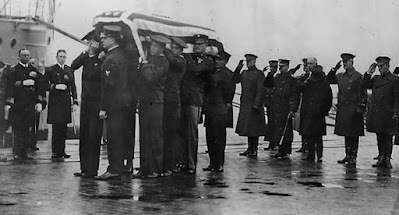
Honoring the Unknown Soldier

TOMB OF THE UNKNOWN SOLDIER - UNIQUE PUBLIC ACCESS

For the first time in nearly 100 years, and as part of the Tomb of the Unknown Soldier Centennial Commemoration, the public will be able to walk on the Tomb of the Unknown Soldier Plaza and lay flowers in front of the Tomb on Nov. 9 and 10, 2021, 9 a.m. to 4 p.m. 

On Veterans Day the public is invited to observe a joint full honors procession, meant to replicate elements of the World War I Unknown Soldier’s 1921 funeral procession followed by a flyover with aircraft from all the armed services branches.

Event Participation: What to Know.       Army Commemoration Website.

Registration is required at Eventbrite.com: https://anctomb100.eventbrite.com/

Of the more than 72,000 American service men and women are still missing from World War II, 65 percent or more than 47,000 are missing in the Indo-Pacific. Most are presumed lost at sea, many dying as POWs in Japanese hellships.

Wednesday, October 20, 2021

POW History Convention

11th annual American Defenders of Bataan and Corregidor Memorial Society Virtual Convention 

THIS WEEKEND: October 23 and 24, 2021. VIRTUAL 
The convention is free, but only open to members. Membership is a mere $40! JOIN HERE.

If you are interested in the history of the war in the Pacific or POW history this is a must join organization.


Schedule Here. 

Click the links to order the books.

Saturday, September 11, 2021

Telling Time

Took a licking and kept on ticking

‘Emotional moment’ to get watch for longtime WT supporters

by JON MARK BEILUE, West Texas A&M University

September 1, 2021

Photo: Bitsy Downing, longtime business manager and director of finance at WT, and son Stu hold the watch this summer of  late husband and father Scott Downing, who had it taken from him by the Japanese after he was captured in 1945.

The small package arrived on June 1, taking three months and 6,154 miles by way of ship and through customs from outside of Tokyo to the mailbox on Fulton Drive in Amarillo.

Stu Downing and his mother Bitsy knew what was inside. That only made carefully opening the package that much more poignant.

“It was an emotional moment for me,” Bitsy said, “because I kept thinking about Scott’s emotions at the time of his capture when he was tied to a tree near a village. I just imagined his emotions when he had to give up his possessions – his belt, his ring, and of course, his watch.”

His watch.

First Lt. Scott Downing of Canyon was a bombardier among a crew of 11 on a B-29 on what was his 20th – and as it turned out, final – combat mission on May 25, 1945. Only 2 ½ months remained of World War II, but they had no way of knowing that. They, like most, suspected a long protracted war with Japan.

They left the Tinian Islands on a six-hour flight to the heart of Tokyo. The objective was to bomb an industrial complex four miles southeast of the Imperial Palace. Dangerous? Was there a combat mission that wasn’t?

A Japanese Zero attacked the B-29 near Tokyo. The right engine caught fire. The crew bailed out 9,500 feet over Japan. Three could not get out of the plane and died. Downing was able to parachute down in a rice field 15 miles southeast of Tokyo.

His ordeal was just beginning. With 15 minutes, villagers ran toward him, carrying hoes, pitchforks, any crude implement they could get their hands on. Downing was tied to a tree until two Japanese soldiers arrived, one with a bayonet on the end of a rifle.

In his book A Ball of Rice and a Cup of Water, Downing said he was prepared to die, and die like a proud American. Instead, he was stripped of all personal possessions, blindfolded and marched to building with a dirt floor.

This was the beginning of three months as a prisoner of war. Nineteen soldiers were initially crammed into an 8-by-12-foot horse stall. There were beatings if Japanese soldiers saw POWs talking to each other and beatings anyway. Downing was beaten by a bamboo pole when an interrogation didn’t go the way the Japanese wanted. POWs were threatened with decapitation or a bullet in the temple.

Most POWs thought they would die at the hands of guards in retaliation of the atomic bombs dropped on Hiroshima and Nagasaki on Aug. 6 and Aug. 9, 1945. On Aug. 15, Emperor Hirohito announced the unthinkable – the surrender of Japan to the Allied forces.

Two weeks later, on Aug 29 and four days before the Sept. 2, 1945, formal surrender aboard the USS Missouri, Downing was among those at the Omori prison camp who were released to the Americans. His roommate on a transport ship was James “Pappy” Boyington, decorated Marine pilot and Medal of Honor recipient. [Today, the Omori camp location, an artificial island built by American POWs, is Heiwajima, a motorboat racing revenue owned by the Sasakawa organization that supports Japanese government public diplomacy.]

Men returned home to restart their lives. For Downing, he found himself back in Canyon. He became a longtime building contractor. Scott and Bitsy were married on the West Texas A&M University campus at the Joseph A. Hill Chapel on Sept. 1, 1951.

WT became a key part of their lives. Bitsy was assistant business manager and director of finance at WT from 1957 to 1982. Scott helped build the presidential home of James Cornette. He and his brother Jack also helped build the original Pioneer Village at the Panhandle-Plains Historical Museum.

Scott was the youngest of 10 children, and Bitsy was the youngest of nine, but Stu was their only child. He graduated from WT in 1978. There was no a bigger fan of WT athletics than the former bombardier. He had season tickets to football and men’s and women’s basketball games for so long that no one could remember when he didn’t. A WT flag flew in the front yard of their Amarillo home where they moved in 2004.

That was passed down to Stu. Even today, if anyone wants to find Stu, just go to a WT athletic event and holler out his name. He’s usually there.

Finding the watch, or the watch finds them

His dad didn’t dwell on his combat missions and never, to anyone’s knowledge, suffered from PTSD. But it was always a part of him. Like novelist William Faulkner said, “The past is not dead. It’s not even past.”

Scott made four trips to Japan. The first was in 1947 to testify at a Japanese war crimes trial. He and Bitsy went on sightseeing tours there in 1986 and 1994. Then in 2015, just two years before his death at age 98, Scott and Stu were among an American POW contingent on a reconciliation tour sponsored by the Japanese Ministry of Foreign Affairs and the U.S. State Department [and the American Defenders of Bataan Memorial Society].

At one event was a PowerPoint presentation by a man named Nakazato. It was all in Japanese so neither Downing knew the man was saying his grandparents were among those who tied a parachuting American to a tree. He had a watch that was the man’s which had been handed down by his grandparents.

But Dr. Isao Arai, a researcher with the group who is fluent in English, relayed what Nakazato said. Wait a minute, a watch? Could it be Scott’s watch? What were the odds?

Then they did some digging. Only officers were issued military standard Bulova watches. There were four officers on that downed B-29. Two were captured nowhere near the site. A third didn’t land too far from Downing, but he avoided detection for six days and was captured along the coast.

Eventually the Downings were convinced the watch was Scott’s. They put that on the backburner as they returned home, but it would be nice to one day get that watch back if possible.

Nancy Samp, the historian of the 505th Bomb Group, agreed. She was instrumental in persuading Arai to take steps to return the watch. It didn’t take much persuasion. Arai was 12 when he witnessed the B-29 crash. He has spent much of his life researching B-29 crashes in Japan and bringing closure to families. The grandson also knew the watch belonged to someone else.

“Scott always told me and everyone he knew that the Japanese people were kind and considerate,” Bitsy said. “He only had fault with the military. They ruled the country at the time, and they were brutal. The citizens were not. The grandson needs to be commended for releasing it.”

The Downings were sent a photo last year of the watch. It was inscribed as a Type A-11 with a serial number of AF4380602. A Google search pronounced it from the 1940s.

Arai and Stu exchanged a series of emails to finalize the return. In one of his last emails, Arai wrote: “It is not just an old watch. I think of it as the spirit of a soldier returning home after 75 years.”

The watch was put on a boat in Japan on March 9, six years after its rediscovery and four years after Scott’s death. It finally returned home on June 1. But after 75 years-plus, what was another three months? Wife and son held the watch like a newborn. They were the first Downings to touch the band since May 25, 1945. The face read 12:07.

“The little second hand still runs,” Bitsy said. “We wound it up very carefully when we got it, and the second hand started running. It was like it was telling us, ‘I’m happy to be home. It’s good to be back in the United States.’”

The last Sunday in August was the 76th anniversary of Downing’s release. Sept. 2 marks the 76th anniversary of the formal end of World War II and the surrender of Japan.

The watch will not stay in the Downing home much longer. Sometime this fall, they will take it to the B-29 museum in Pratt, Kan., a restored World War II parachute building at Pratt Air Field. There it will remain among other artifacts from the war.

“We got it home and we got to touch it again,” Bitsy said. “That’s what’s important. I think Scott would want it up there.”